


Victorian Cranberry Glass Vase
A victorian cranberry glass vase brings a deep, warm hue and rich tint to a room, catching the light in a way clear glass simply cannot match.
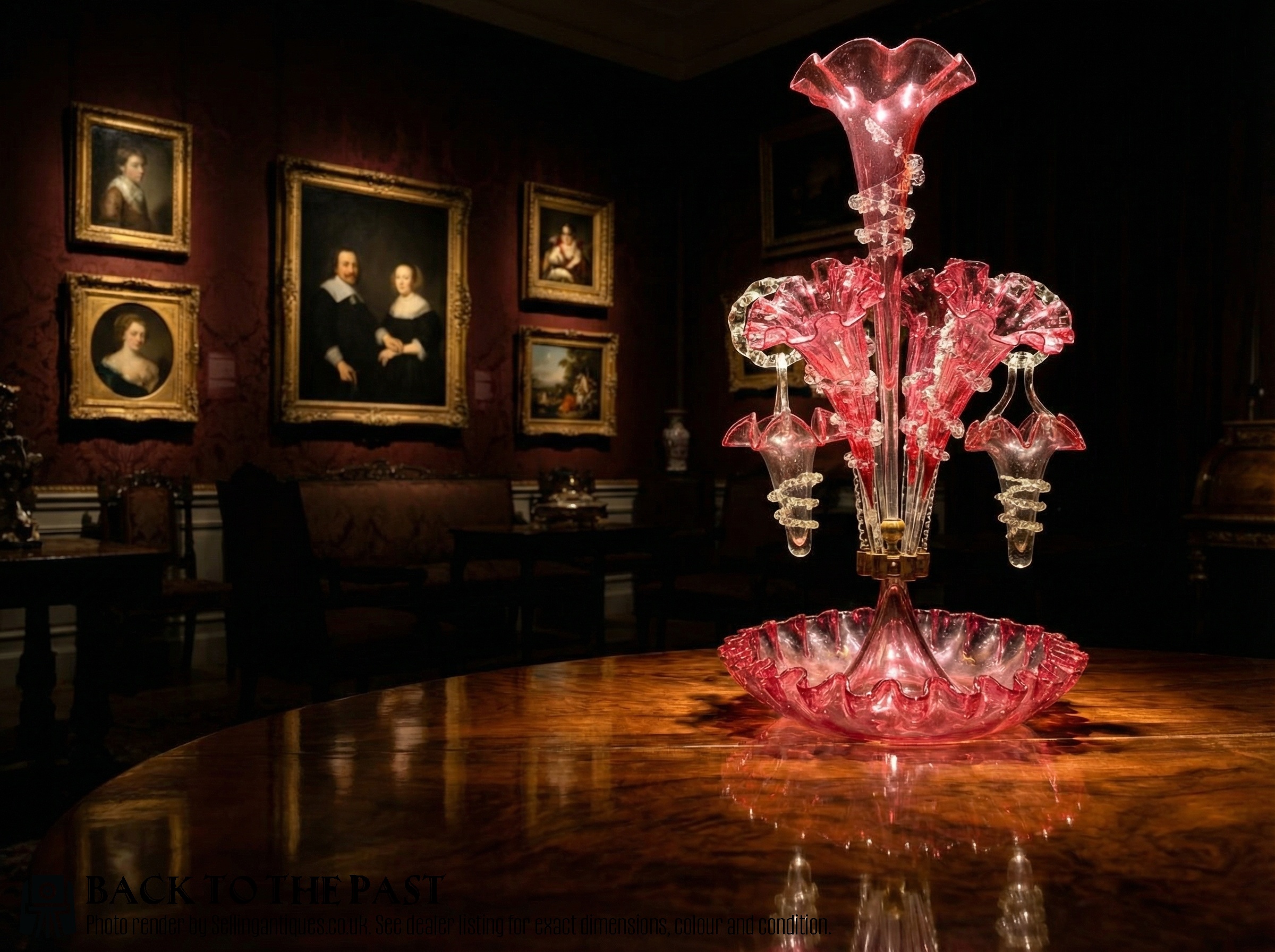
Victorian Cranberry Glass Vase
A victorian cranberry glass vase is a striking piece of coloured glassware, commonly found in trumpet shapes, jack-in-the-pulpit forms, and grand epergnes dating from the nineteenth century. These objects draw their distinctive deep pink or red coloration from the addition of gold chloride to the molten metal during production.
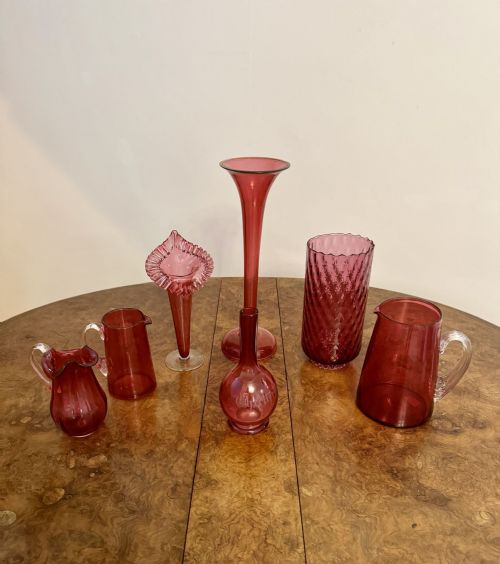
Most examples encountered on this page originate from the Victorian period, spanning the decades between eighteen-sixty and nineteen-hundred. Alongside standard single vases, buyers regularly see mantle lustres, celery vases, and elaborate table centrepieces featuring clear glass or brass mounts.
English and Bohemian workshops produced the majority of these items, employing techniques such as crystal overlay, enamel painting, and gilding. The forms range from small mantel ornaments to large floor vases and multi-trumpet epergnes designed to hold flowers or stand alone as decorative focal points.
Materials and technique
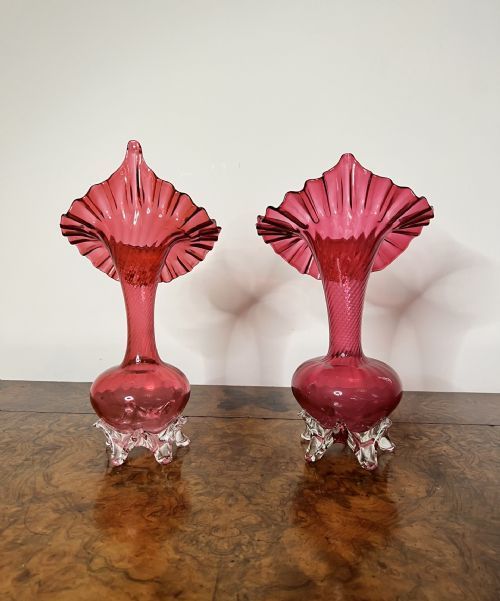
Makers achieved the iconic cranberry colour by introducing real gold into the glass batch while it was molten, a costly process that produced variable depth and richness in the finished tint. This glass was often mouth-blown into moulds or free-blown before being shaped by hand into ruffled rims and flared trumpet profiles.
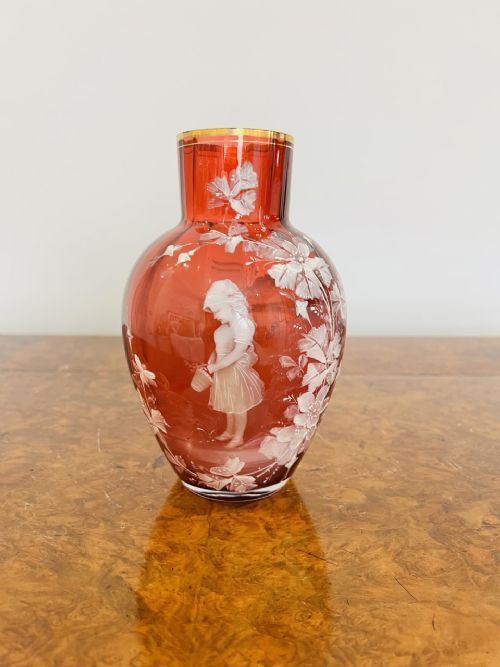
Many high-grade pieces incorporate crystal overlay, where a layer of clear glass covers the cranberry core or vice versa, allowing craftsmen to cut away sections to create contrasting patterns. Additional decoration frequently included hand-painted white enamel scenes, gold leaf gilding, and applied clear or uranium green glass feet.
Listings for this phrase feature pieces from the eighteen-sixties through to nineteen-hundred, incorporating materials like gold leaf, enamel, and uranium green glass.
Judging quality
Quality in these vases rests primarily on the depth and saturation of the glass colour, alongside the skill of the hand-forming. Superior examples display an even, rich tint throughout the body without muddy patches, coupled with crisp, confident handling of ruffled rims and applied trailing.
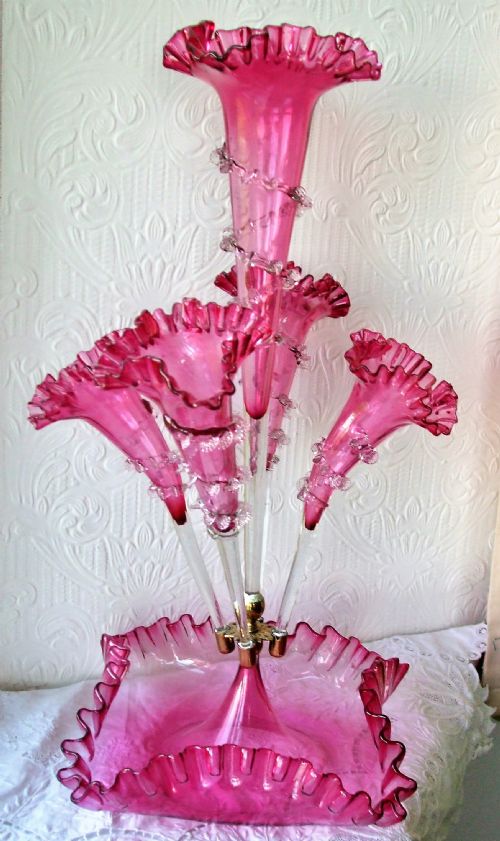
The sophistication of secondary ornamentation separates ordinary production from finer work. Finely detailed white enamel figures, heavy gilding, and complex crystal overlay cutting elevate a piece, as does the presence of matching pairs or complete, unblemished multi-horn epergne assemblies.
Bohemian Glass Houses·English Victorian Potteries
The Victorian Cranberry Glass Vase Glossary
- Cranberry Glass
- A transparent pinkish-red glass coloured with gold oxide. It was highly popular during the Victorian era for decorative tableware and mantle items.
- Jack-in-the-Pulpit Vase
- A nineteenth-century glass vase featuring a distinctive flared, sweeping rim that resembles the shape of the jack-in-the-pulpit wildflower. The form required considerable skill from the glassblower to shape correctly.
- Epergne
- A large table centrepiece featuring a central bowl with multiple detachable arms, trumpets, or baskets for holding fruit or flowers. Victorian versions in cranberry glass often included hanging crystal prisms.
- Mantle Lustre
- A decorative glass vase fitted with a ring of dangling cut crystal pendants around the rim. They were designed to sit on a fireplace mantelpiece and catch the ambient light.
- Mary Gregory
- A style of glass decoration featuring white enamel silhouettes of children playing, usually set against a contrasting background colour such as cranberry glass. The attribution often refers to the decorative style rather than the specific artist.
- Overlay
- A technique where a layer of coloured glass is cased inside or outside a layer of clear or contrasting glass. Craftsmen then cut through the outer layer to expose the colour beneath.
Victorian Cranberry Glass Vase: Frequently Asked Questions
Were these vases used for fresh flowers?
Many smaller forms, such as celery vases and trumpet vases, were designed for practical domestic use on dining tables and sideboards. They held cut flowers or celery stalks during formal meals.
Larger floor vases and elaborate mantle lustres served primarily as decorative showpieces. Their intricate shapes and applied glass trails made them less practical for everyday floral arrangements.
How can I tell genuine Victorian cranberry glass?
Examine the glass closely for tiny bubbles, striations, and pontil marks on the base, which indicate traditional hand-blown manufacturing methods. The colour should be struck from within the glass itself rather than applied as a surface paint or stain.
Consider the weight and proportion of the piece alongside period characteristics like crystal overlay, Mary Gregory enamel work, or Victorian brass fittings. Genuine nineteenth-century examples show appropriate age-related wear on the undersides.
What is the difference between ruby and cranberry glass?
Cranberry glass relies on gold chloride to produce a lighter, pinker, translucent red hue reminiscent of the fruit. Ruby glass often utilises different metallic oxides, such as copper or selenium, resulting in a deeper, darker, and sometimes more opaque crimson colour.
In period pieces, the terms sometimes overlap in descriptions, but true cranberry possesses a characteristic warm, bright pinkish-red glow when held to the light.