



19th Century Floor Vase
When you search for a 19th century floor vase, you meet substantial vessels made to anchor grand rooms.
19th Century Floor Vase
A 19th century floor vase brings considerable scale to a room, frequently standing well above average household vessels. The examples you encounter span Chinese export porcelain, Japanese Meiji period bronzes, and European earthenware.
Many of these large pieces originate from the Qing dynasty and Japanese export workshops, designed to command attention in substantial halls. You also meet heavy glass demijohns and glazed stoneware jugs among the broader selection.
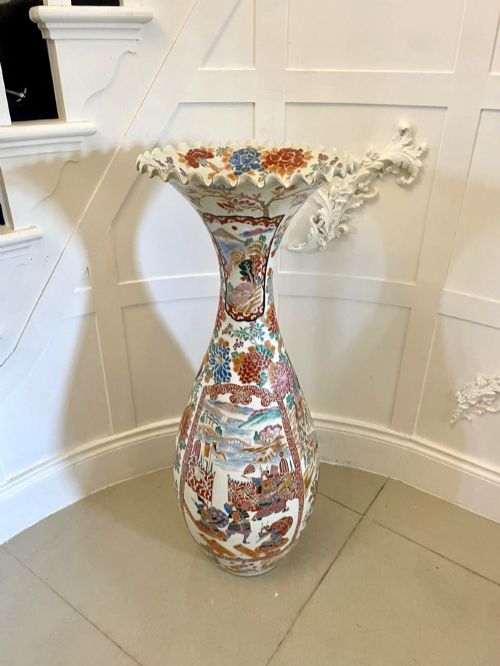
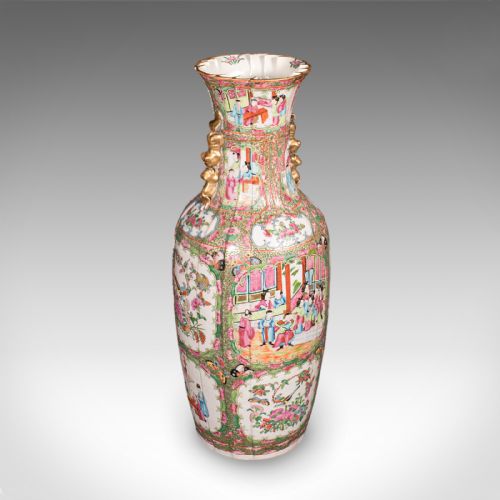
The aesthetic divides between the intricate enamels of Cantonese famille rose palettes and the robust patterns of Japanese Imari wares. These substantial vessels served as interior centrepieces rather than simple flower holders.
How they were made
Makers utilised heavy ceramic bodies, bronze, and ironstone as foundations for intricate surface decoration. Cloisonne examples rely on delicate copper wires soldered to metal bases to form cells for colourful enamel pastes.
Potters shaped massive porcelain and earthenware vessels in sections before kiln firing at high temperatures. Artisans then applied hand-painted overglazes, gold leaf, and lacquer finishes, sometimes firing the pieces multiple times to fix the pigments.
The selection includes pieces associated with the Qing dynasty, the Meiji period, and the Victorian era.
What varies in quality
The discipline of the hand-painted brushwork dictates the distinction between standard production and exceptional studio pieces. Crisp lines in Imari palettes and well-defined enamel borders separate finer examples from simpler work.
Weight and structural balance matter significantly in objects of this scale, where thicker bronze walls and dense porcelain bodies provide stability. The preservation of original surface gilding and intact enamel cells also governs the standing of an individual vessel.
The 19th Century Floor Vase Glossary
- Imari
- A traditional Japanese style of porcelain decorated in underglaze blue and contrasting overglaze red, green, and gold. This palette became widely exported to European markets during the nineteenth century.
- Cloisonne
- A metalwork technique where fine wires are affixed to a base to create compartments filled with enamel paste. The surface is subsequently fired and polished smooth.
- Famille Rose
- A prominent palette of Chinese ceramic glazes distinguished by an opaque pink or rose enamel. The style gained popularity during the Qing dynasty and heavily influenced European collections.
- Demijohn
- A large, narrow-necked glass or earthenware vessel traditionally used for holding liquids. Nineteenth century examples often appear encased in protective wicker or heavy glass walls.
- Baluster
- A vertical architectural form with a swelling lower body tapering toward the top. Many large ceramic vases adopt this distinct silhouette for visual balance.
19th Century Floor Vase: Frequently Asked Questions
Where did people place these large vases?
These tall vessels stood directly on the floor in entrance halls, grand staircases, and principal reception rooms. Their considerable height allowed them to fill empty architectural corners.
Pairs often flanked fireplaces or large doorways to create a symmetrical focal point in nineteenth century interiors.
How do I live with a floor vase?
Position your vessel away from heavy household traffic where it might be knocked, as objects of this scale have high centres of gravity. Many large pieces require no additional contents because their painted surfaces provide enough visual weight.
If you choose to display botanical stems, use a secondary interior container rather than filling the antique body directly with water.
How do I tell Japanese Imari from Chinese porcelain?
Japanese Imari typically relies on a distinct palette of deep cobalt blue, rusty iron red, and generous gold highlights upon a bright white body. The decorative motifs frequently feature dense floral patterns and brocade borders.
Chinese export porcelain of the period often incorporates more pastel enamel shades, such as the pinks found in Rose Medallion and famille rose wares.
What is the difference between a floor vase and a palace vase?
Palace vases generally refer to exceptionally monumental vessels created for high-status settings or international exhibitions. They demand immense floor space and feature highly intricate, multi-panel decorative schemes.
Standard floor vases encompass a broader range of heights and everyday export forms while maintaining substantial presence.