


Victorian Glass Trumpet Vase
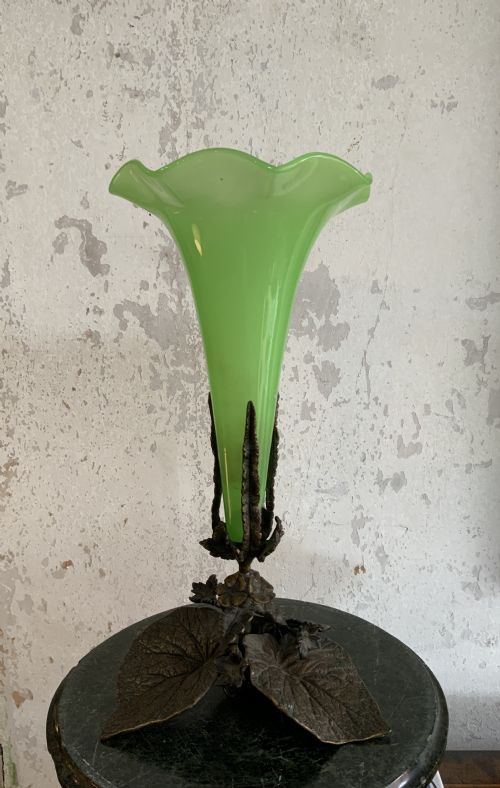
A victorian glass trumpet vase brings brilliant colour and dramatic height to a room, offering the bold shapes that define late nineteenth-century display.
Victorian Glass Trumpet Vase
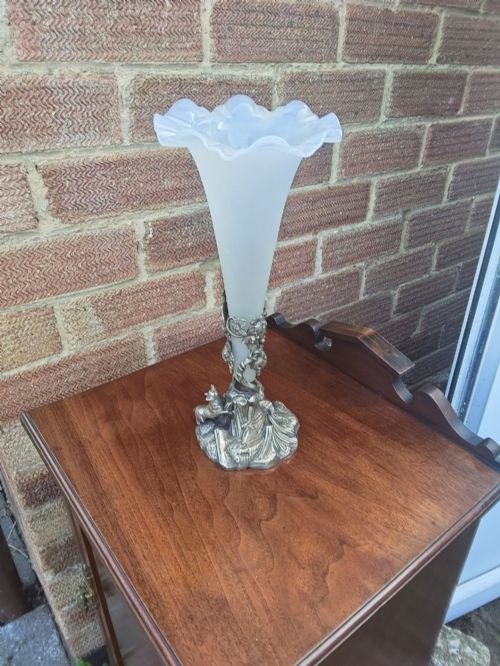
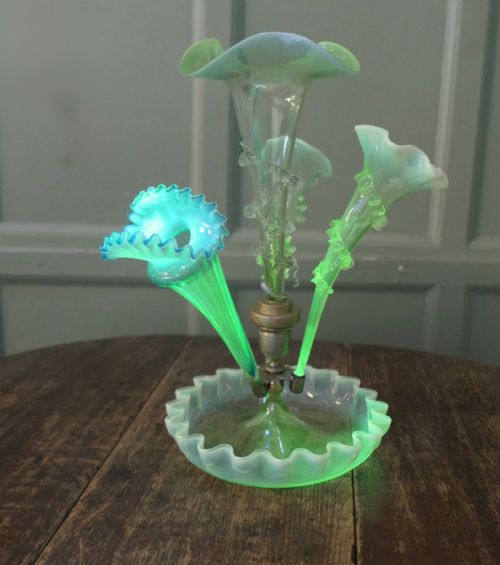
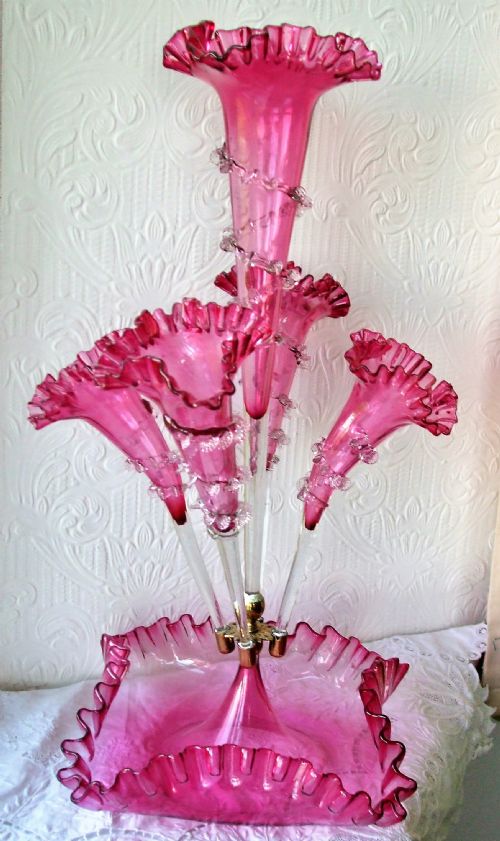
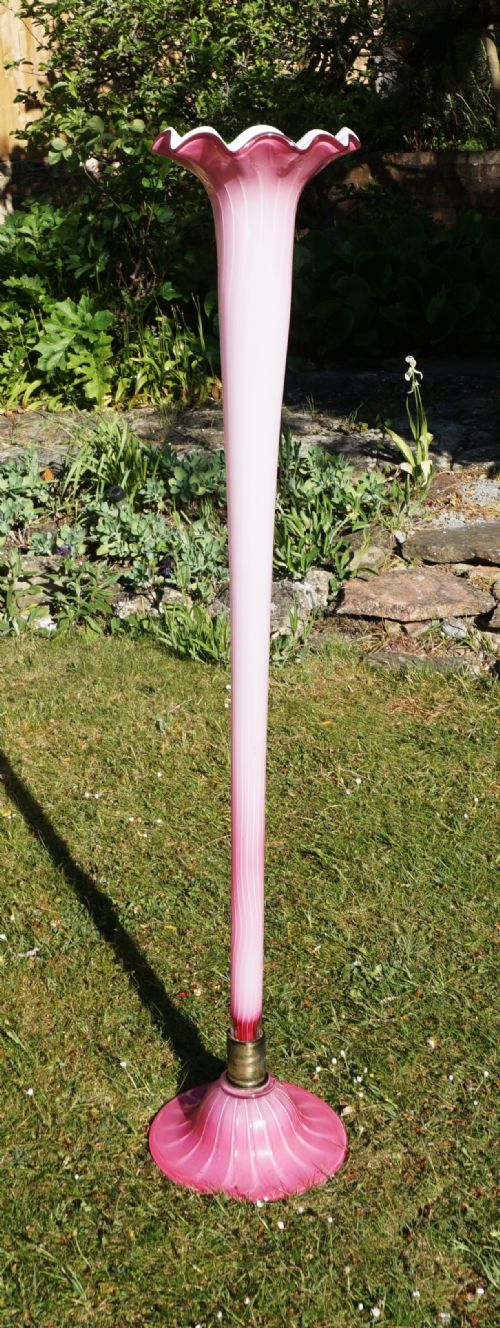
A victorian glass trumpet vase takes the form of a slender, flared vessel designed to display single blooms or to rise as the central horn of a multi-piece epergne. These pieces emerge in styles ranging from standard Victorian manufacture to Art Nouveau curves and French gilt bronze mountings, spanning the nineteenth century.
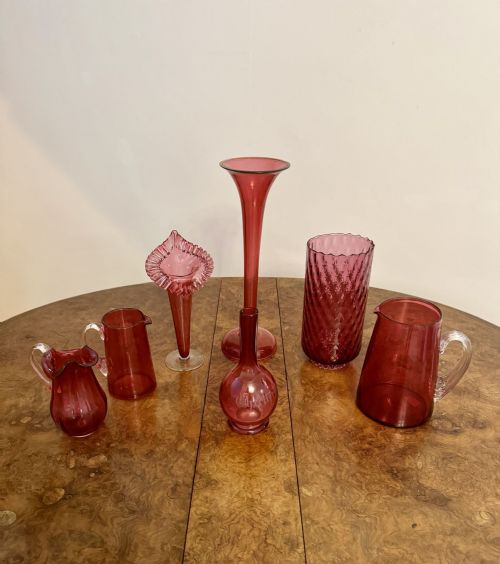
The selections here frequently appear as cranberry glass or vibrant vaseline glass, often paired with clear crystal, brass, or carved wood stands. Collectors encounter individual floor vases, table centrepieces, and posy vases alongside complex multi-trumpet table ornaments.
Makers and origins recorded in these pieces stretch across English production, London workshops, and French houses such as Baccarat, demonstrating the broad geographical scope of nineteenth-century glassmaking.
How they were made
Glassmakers utilised free-blowing and hand-forming techniques to shape the molten metal into sweeping, elongated trumpet profiles. Artisans often applied cased glass layers, white cane decoration, and coloured trails to the exterior while the material remained hot.
Many vessels incorporate decorative additions such as engraving, gilding, and silver or white metal mounts. Workshops combined these glass components with brass, bronze, carved wood, and silver plated bases to construct stable floor and table centrepieces.
One towering pair of nineteenth-century trumpet vases reaches an impressive forty inches in height.
What varies in quality
The distinction between standard production and exceptional work rests on the depth of the glass colour, such as rich cranberry or glowing uranium tones, and the complexity of applied trails or cased layers. Superior examples display crisp hand-engraving and precise gilding rather than simple moulded surfaces.
The quality of the supporting structure dictates overall merit, separating simple glass vessels from those featuring elaborate silver, bronze, or carved Black Forest wood mounts. Intricately pierced silver fittings and heavy crystal components indicate superior workshop output.
Fox & Grapes·Josiah Williams & Co·Powell or Nazeing·Baccarat
The Victorian Glass Trumpet Vase Glossary
- Epergne
- A large table centrepiece featuring a central bowl or basket surrounded by smaller detachable trumpet vases for fruit and flowers. These multi-part dining ornaments dominated formal Victorian tables.
- Cranberry glass
- A deep red-pink transparent glass coloured through the addition of gold chloride to the molten batch. This rich hue characterises a large portion of nineteenth-century decorative tableware.
- Vaseline glass
- A yellowish-green glass containing uranium dioxide that emits a distinct fluorescent glow under ultraviolet light. Victorian makers frequently utilised this material for posy vases and epergne trumpets.
- Cased glass
- A vessel constructed from two or more distinct layers of coloured glass fused together while hot. Artisans often cut through the outer layer to reveal contrasting colours beneath.
- Posy vase
- A small vessel designed to hold a single short bunch of flowers rather than large botanical arrangements. These diminutive pieces often sit on decorative silver or bronze bases.
Victorian Glass Trumpet Vase: Frequently Asked Questions
How do I identify uranium glass?
Uranium glass displays a characteristic transparent yellow-green colour under normal daylight. When exposed to an ultraviolet light source, the glass emits a strong green fluorescent glow.
Nineteenth-century manufacturers added small amounts of uranium to the molten batch purely for this decorative colour effect. Collectors verify these pieces using a standard ultraviolet pocket torch.
Where were these vases made?
Production centres for these pieces span English glasshouses, London workshops, and French manufacturing houses. Specific pieces link to makers such as Baccarat, Powell, and Nazeing.
Workshops also collaborated across materials, combining English glass vessels with French gilt bronze mounts or carved Black Forest wood frames from Switzerland and Germany.
How do I clean antique glass?
Cleaning requires warm water and mild soap applied gently with a soft cloth. Harsh detergents and abrasive scrubbing pads will damage delicate gilding, engraved patterns, and applied glass trails.
Metal mounts and silver components must be kept dry to prevent corrosion of the underlying brass or white metal. Detachable trumpet vases should be lifted carefully from their bases before washing.