




English Glass Centrepiece
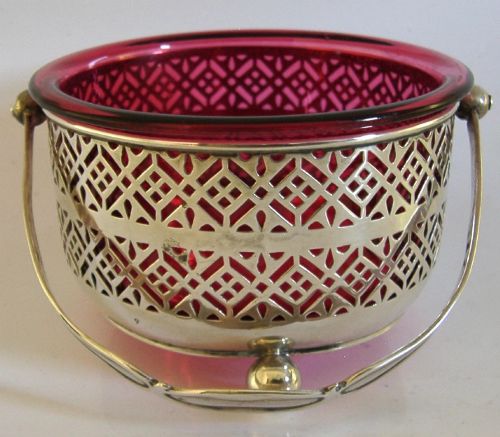
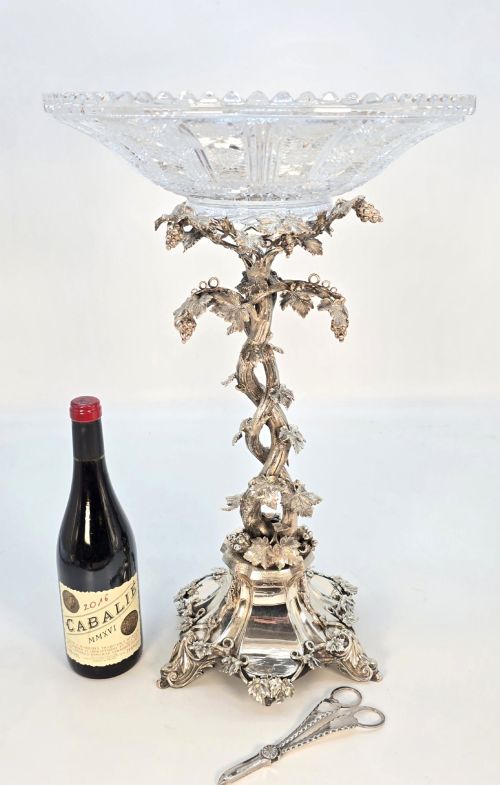
An English glass centrepiece commands the middle of the table with cut crystal, cranberry glass, and silver plate.
English Glass Centrepiece
An English glass centrepiece serves as a striking focal point for the dining table, drawing the eye with varied forms and reflective surfaces. These decorative items range from grand epergnes and pedestal bowls to swinging baskets and tazza dishes.
The most common examples you will encounter on this page date from the nineteenth century, including Victorian and Edwardian periods, alongside later Art Deco and Arts & Crafts designs. They often combine moulded or cut glass with mounts of silver plate, sterling silver, or brass.
Makers and designers from Stuart for Liberty to Graystan contributed to this tradition, producing pieces that function as both ornamental vessels and practical receptacles for fruit or flowers.
How They Were Made
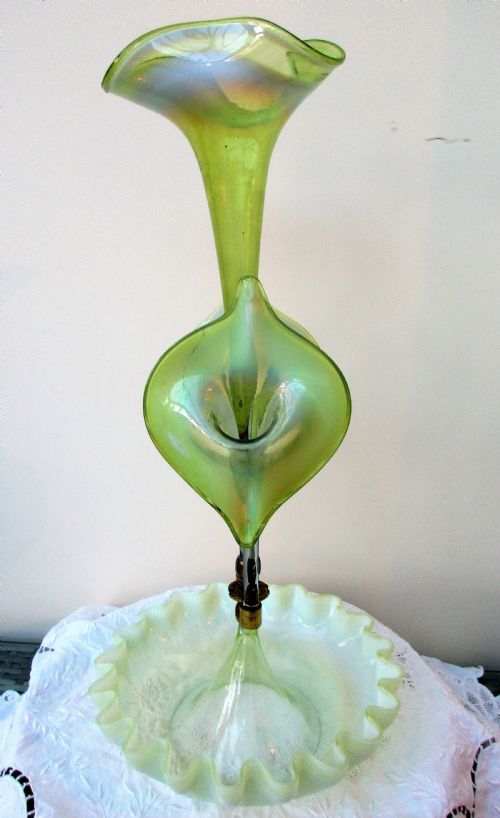
Makers utilised techniques such as deep cutting, etching, and moulding to shape clear glass, cut crystal, and coloured wares like cranberry glass and green glass. Molten material was blown into moulds or manipulated by hand before undergoing cooling and finishing.
Metal mounts in silver plate, sterling silver, and brass were cast, chased, or electroplated to hold the glass securely. These metal frameworks often feature decorative details such as grape vines, nautical motifs, or swing handles.
Listings feature items spanning the nineteenth and twentieth centuries, encompassing Victorian, Edwardian, Art Deco, and Arts & Crafts styles.
What Varies in Quality
The weight and clarity of the glass set superior pieces apart, with heavy cut crystal and deep, uniform colour saturation indicating finer production. Crisp facets and precise wheel-cut patterns demonstrate the skill of the glasscutter.
The integration of the metal mount with the glass vessel reveals the standard of craftsmanship. Substantial silver plate or sterling silver mounts with detailed casting and secure fixings elevate a piece above simpler brass or basic plated alternatives.
Stuart for Liberty·Elizabeth Graydon-Stannus·Jobling
The English Glass Centrepiece Glossary
- Epergne
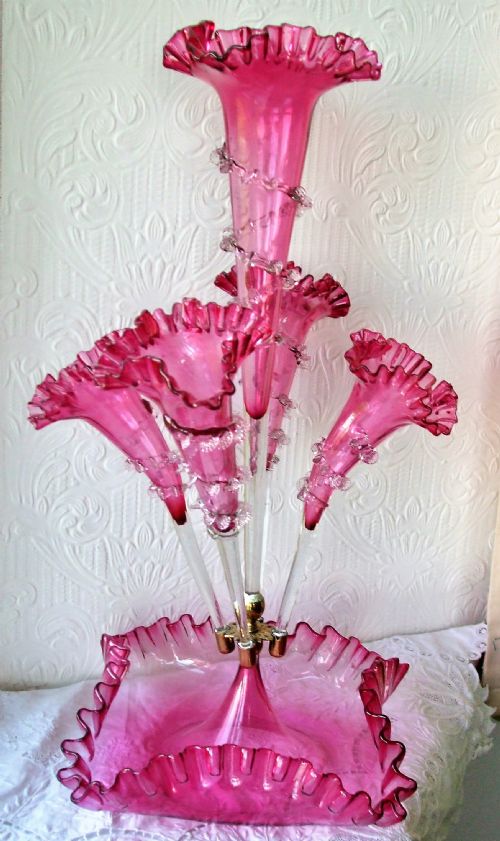
- A large table centrepiece featuring a central dish surrounded by multiple smaller hanging baskets or vases. They were popular for displaying fruit and flowers at Victorian dinners.
- Tazza
- A shallow ornamental bowl raised on a high foot or pedestal. These glass or crystal vessels were frequently used to serve sweetmeats or display fruit.
- Silver Plate
- A base metal, such as copper or Britannia metal, coated with a thin layer of silver using electroplating or older fusing methods. It provided the look of solid silver at a lower cost.
- Cranberry Glass
- A rich red-pink transparent glass coloured with gold chloride during production. It became a hallmark of Victorian tablewares.
- Cut Crystal
- Glass containing lead oxide that is cut and polished with geometric or floral patterns. The lead content increases the refractive index, making the material sparkle brilliantly.
English Glass Centrepiece: Frequently Asked Questions
What is an English glass centrepiece?
An English glass centrepiece is a decorative table ornament made primarily of glass or crystal, often combined with silver plate or brass mounts. These pieces were designed to anchor the middle of a dining table.
They take forms such as epergnes, pedestal bowls, tazza dishes, and baskets. Many served to hold fruit, flowers, or sweetmeats during formal meals.
How do I date a centrepiece?
Dating relies on identifying stylistic markers, manufacturing techniques, and any registered design numbers or maker signatures present on the piece. Victorian and Edwardian examples often feature heavy cut crystal and elaborate silver-plated frames.
Later pieces from the twentieth century shift towards Art Deco or Arts & Crafts aesthetics, utilising opalique glass or simpler geometric forms. Comparing the mount style and glass colour helps narrow down the decade of production.
How were centrepieces used?
These objects held pride of place in the middle of dining tables during large meals and social gatherings. They combined utility with display.
Owners filled the bowls and baskets with fresh flowers, fruit, or confectionery. Epergnes allowed multiple blooms to be suspended at varying heights above the table surface.
How do I care for antique glass?
Careful handling and gentle cleaning preserve the condition of antique glass and its metal mounts. Wash pieces by hand in warm water using mild soap.
Avoid soaking metal mounts, particularly silver plate, to prevent damage to the plating. Dry thoroughly with a soft cloth to maintain the shine of both the glass and the metal.