



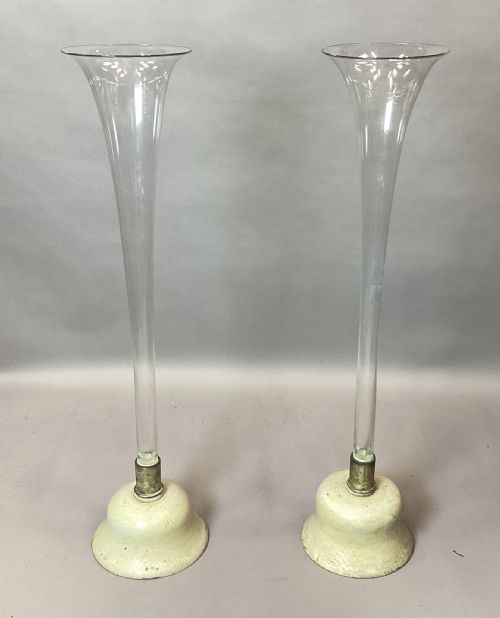

Pair of Trumpet Vases
A pair of trumpet vases brings striking symmetry and height to a mantelpiece, most often met here in sterling silver and colourful glass from the nineteenth and twentieth centuries.
Pair of Trumpet Vases
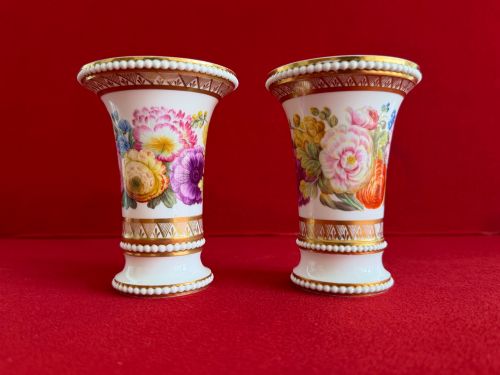
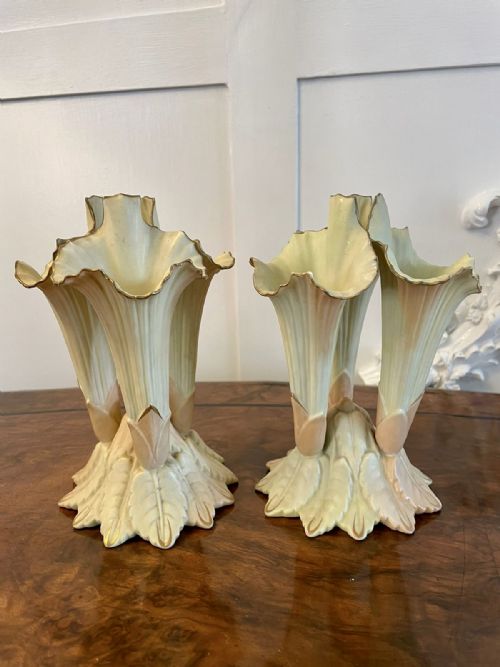
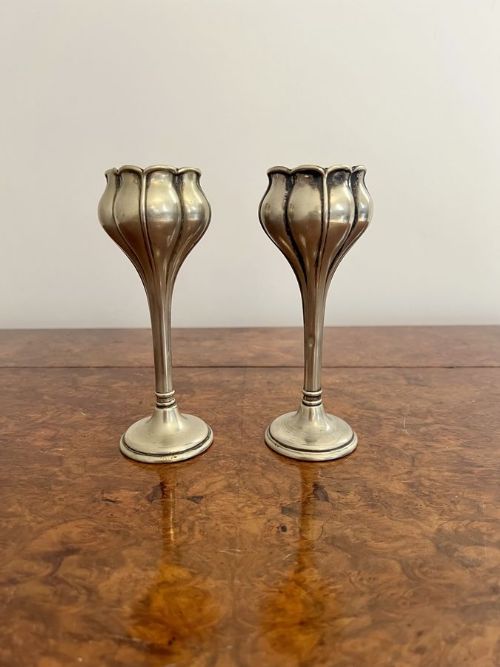
When a buyer searches for a pair of trumpet vases, they encounter items shaped with a flared, spreading rim that narrows towards a slender stem or a stable foot. These vessels served primarily to display cut flowers, holding stems aloft in domestic interiors across the Victorian, Edwardian, and Art Deco periods.
The versions most frequently met on this page range from small silver bud vases to large floor standing examples and ceramic spill vases. They appear in diverse materials, including porcelain, brass, and cranberry glass, spanning origins from English workshops to Japanese Meiji period kilns.
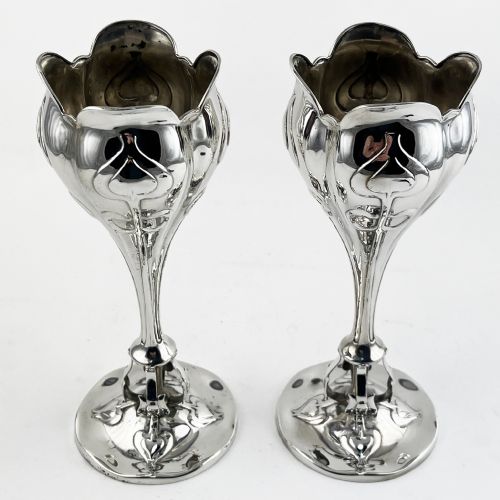
Makers adapted the trumpet silhouette to suit changing tastes, applying Celtic Revival motifs, Secessionist lines, or traditional Imari patterns. Surviving pairs demonstrate how dining tables and drawing rooms relied on symmetrical arrangements for decorative balance.
Materials and Technique
Silver vessels were shaped through spinning or hammering sheet metal, often completed with pierced scrolling galleries and cast floral mounts soldered to the rim. Workshops in Birmingham and Chester hallmarked these pieces, utilising sterling silver or silver plate over a base metal.
Glassmakers blew cranberry and clear crystal into moulds or shaped the molten material by hand, sometimes casing layers together to achieve rich colour saturation. Ceramic pieces combined thrown porcelain bodies with hand-painted enamel decoration, followed by high-temperature kiln firing.
Some nineteenth-century silver trumpet vases arrived with fitted glass liners, protecting the metal from the damp company of fresh flowers.
Standards of Execution
Quality rests upon the crispness of detail in cast mounts, the depth of hand-pierced silver scrollwork, and the weight of the metal used in the body. Superior examples maintain structural balance without excessive solder repairs, showing clean lines along the fluted rim.
In glass and ceramic pieces, excellence appears in the uniform saturation of colour, the absence of firing bubbles, and the precision of hand-painted enamels. Finer silver-plated items retain their original coating without base metal showing through high-friction areas.
Locke & Co.·Josiah Williams & Co·Daniel & Arter·J. Gloster Ltd
The Pair of Trumpet Vases Glossary
- Spill vase
- A small vessel designed to hold taper spills used for lighting fires and candles. These often share the slender proportions of early trumpet vases.
- Pierced work
- Metal sheet cut through to create openwork decorative patterns such as scrolls or lattice designs. This technique lightened the visual weight of heavy silver vessels.
- Cranberry glass
- Transparent glass coloured with gold chloride to achieve a distinctive pinkish-red hue. It gained immense popularity during the Victorian era.
- Imari
- Japanese porcelain decorated in underglaze blue and overglaze iron red, gold, and green. This palette was widely exported and imitated in the West.
- Hallmark
- A series of stamped marks on precious metals indicating the standard of purity, the assay office, the maker, and the year of manufacture. British silver pieces rely on these to establish a timeline.
Pair of Trumpet Vases: Frequently Asked Questions
How were trumpet vases used?
These vessels functioned primarily as table decorations for holding cut flowers, arranged in pairs to balance a mantelpiece or a dining sideboard. Smaller bud variants held single stems, while larger floor versions stood independently.
Their flared rims supported drooping flower heads, keeping blooms fanned out and upright. Domestic spaces utilised matching pairs to create symmetrical centrepieces during formal dinners.
How do I clean silver trumpet vases?
Silver pieces require gentle washing in warm, soapy water using a soft cloth, followed by thorough drying to prevent water spots. Avoid abrasive dips that strip away the character of the metal.
When polishing is necessary, use a quality cream applied with minimal pressure, keeping polish out of pierced crevices and engraved lines.
What is cranberry glass?
Cranberry glass is a transparent red-pink material created by adding gold particles to the molten batch during manufacturing. It became a staple of Victorian decorative arts.
Makers combined this glass with clear crystal overlays or shaped it into tall lily and trumpet forms for dramatic display on wooden furniture.
How can I tell the period?
Silver items carry hallmarks that indicate the assay office and date letter, providing an exact year of manufacture. Stylistic cues such as heavy cast floral mounts point to the Victorian era.
Sleek geometric lines and chrome point towards later Art Deco production, while organic flowing curves identify Art Nouveau pieces from the turn of the twentieth century.