


Cranberry Glass Centrepiece
A cranberry glass centrepiece brings a rich crimson hue and striking height to a dining table.
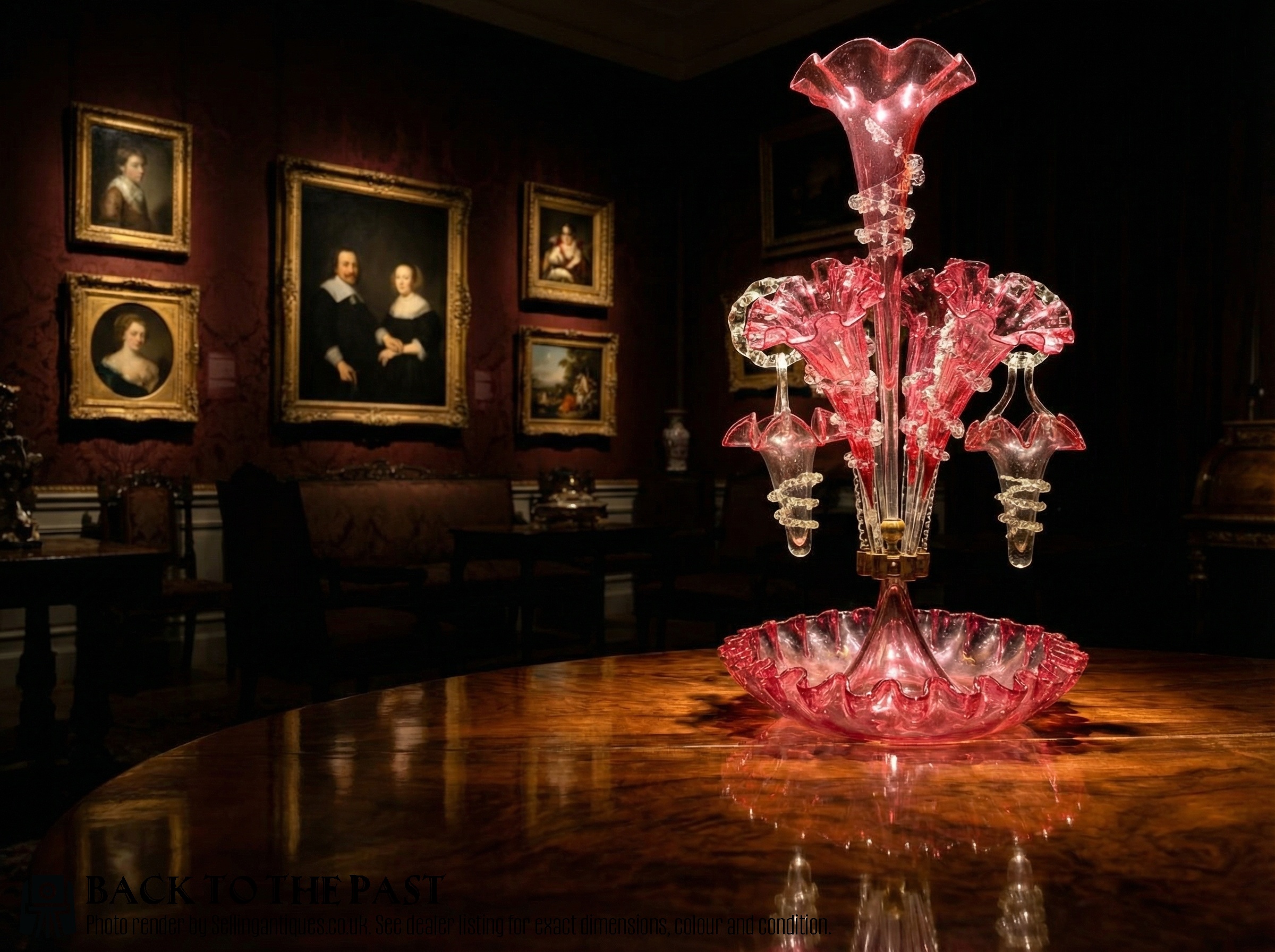
Cranberry Glass Centrepiece
A cranberry glass centrepiece is a striking table decoration, most frequently encountered here in Victorian and Edwardian forms. Buyers searching for a cranberry glass centrepiece will find pieces ranging from towering epergnes to delicate sugar baskets and frilled dishes.
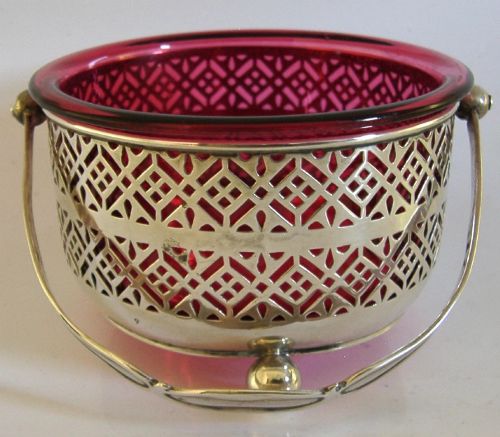
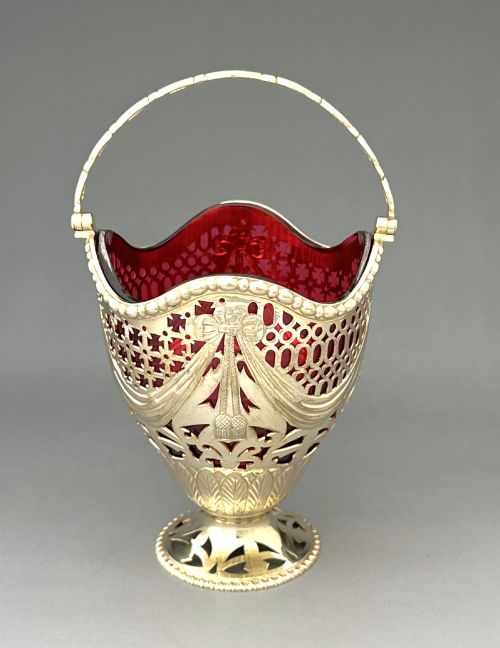
The selection on this page relies heavily on nineteenth and early twentieth century origins, spanning the Victorian and Edwardian eras. These objects combine deep pink and ruby glassware with supportive mounts in silver plate, sterling silver, silver gilt, and brass.
Materials and construction
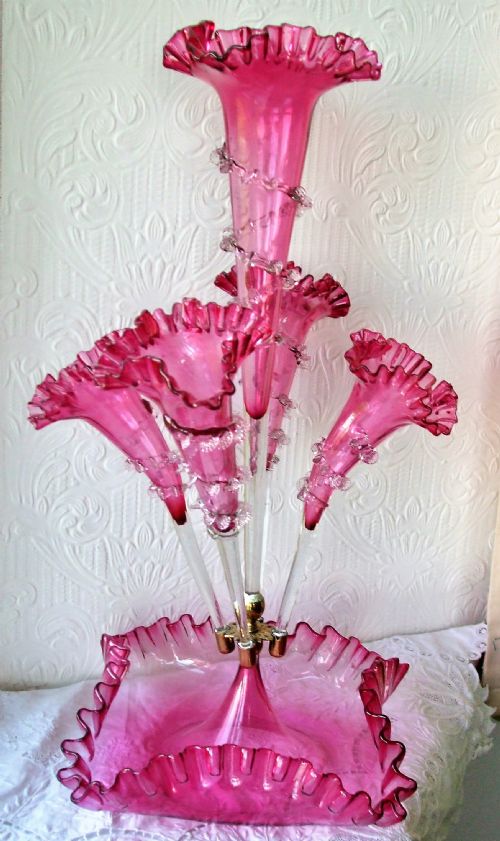
The vibrant colouring of the glass is achieved by adding gold to the molten batch before blowing and shaping. Artisans often combined the cranberry glass with clear glass elements to create visual contrast on fluted rims and trailing details.
Metalwork frames and stands were manufactured using brass, silver plate, or sterling silver to hold the fragile glass vessels securely. Pierced silver plating and swing handles demonstrate the standard metalworking techniques applied to sugar baskets and dishes during the period.
Listings feature items spanning from the Victorian era through to the Edwardian period, incorporating sterling silver, silver gilt, and brass.
Assessing quality
Quality rests upon the depth and evenness of the glass colour, alongside the complexity of the vessel's form. Multi-horn epergnes and intricately frilled dishes reflect greater skill in the hot-shop than simple plain bowls.
The standard of the metal mount further dictates the grade of the piece, with substantial sterling silver or heavy silver gilt frames indicating a higher tier of production than basic brass or thin silver plate.
The Cranberry Glass Centrepiece Glossary
- Epergne
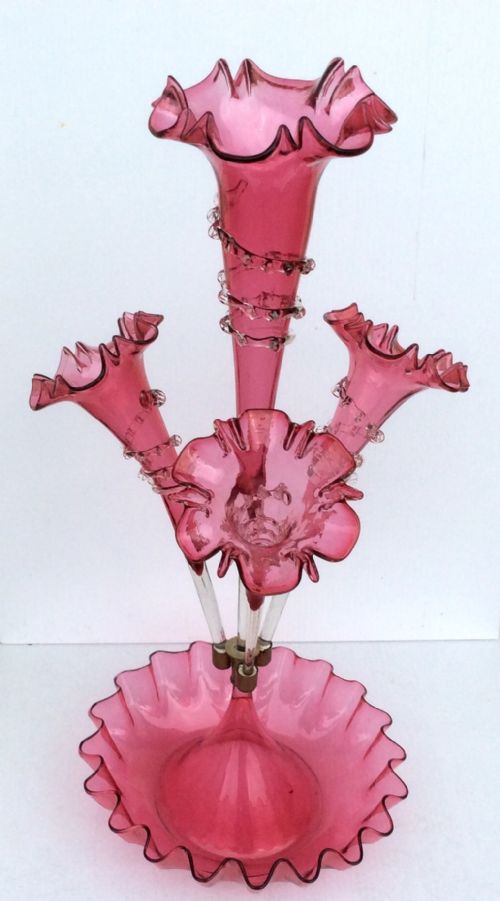
- A large, multi-Vase table centrepiece designed to hold fruit, flowers, or sweetmeats. These tall structures usually feature a central trumpet surrounded by smaller hanging baskets.
- Tazza
- An ornamental shallow cup or dish mounted on a stem and foot. They frequently appear in gilded ruby glass.
- Silver gilt
- Silver that has been coated with a thin layer of gold on its surface. This technique provides a warm golden sheen alongside the durability of a silver base.
- Frilled
- A decorative edge manipulated into ruffles or waves while the glass remains hot. This technique adds texture and movement to the rim of a dish or basket.
Cranberry Glass Centrepiece: Frequently Asked Questions
What is a cranberry glass centrepiece?
A cranberry glass centrepiece is an ornamental table display made from gold-infused pink glass, often paired with silver or brass stands. These items served as focal points for formal dining tables during the Victorian and Edwardian periods.
They appear in various configurations, from elaborate multi-trumpet epergnes to swing-handled sugar baskets and decorative dishes designed to hold fruit or flowers.
How do I date a cranberry glass centrepiece?
Dating relies on the style of the metal mounts, the complexity of the glassware, and hallmarks where silver is present. Victorian examples often feature frilled epergnes, whilst Edwardian pieces frequently utilise pierced silver plated or sterling silver frames.
Comparing the manufacturing techniques of the metal stand against known period patterns helps narrow down the decade of production.
How were these centrepieces used?
Victorians placed these striking glass objects in the middle of the dining table to display fresh blooms, sweetmeats, or fruit during formal meals. The brilliant crimson tone added dramatic colour to candlelit dinner parties.
Smaller basket forms were often utilised for serving sugar or small treats, while towering epergnes dominated the table landscape.
How do I clean cranberry glass?
Careful washing in warm, soapy water using a soft cloth is the best method for maintaining these delicate glass items. Harsh chemicals and abrasive sponges must be avoided to protect both the glass surface and any metal mounts.
Silver or brass stands require specific polishing products kept well away from the glass itself to prevent staining or damage.