




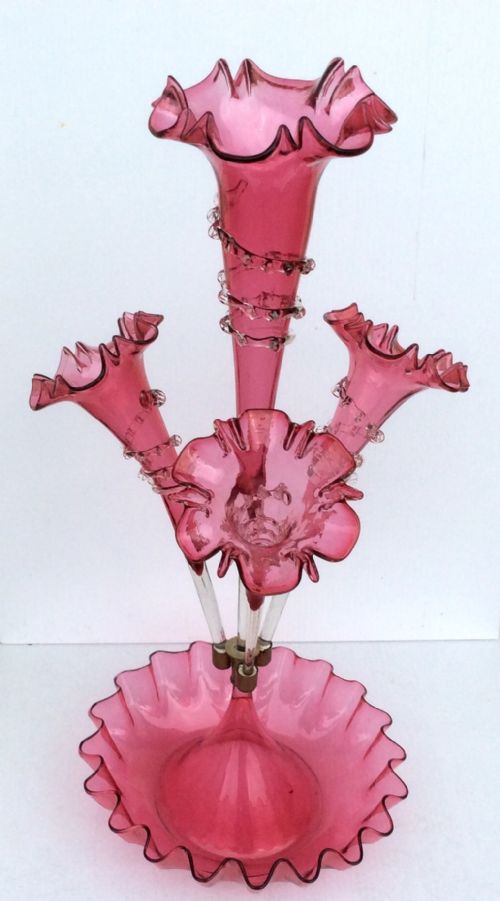
Hand Blown Glass Centrepiece
These hand blown glass centrepieces are striking decorative bowls, epergnes, and comports designed to anchor a dining table or sideboard with colour and presence.
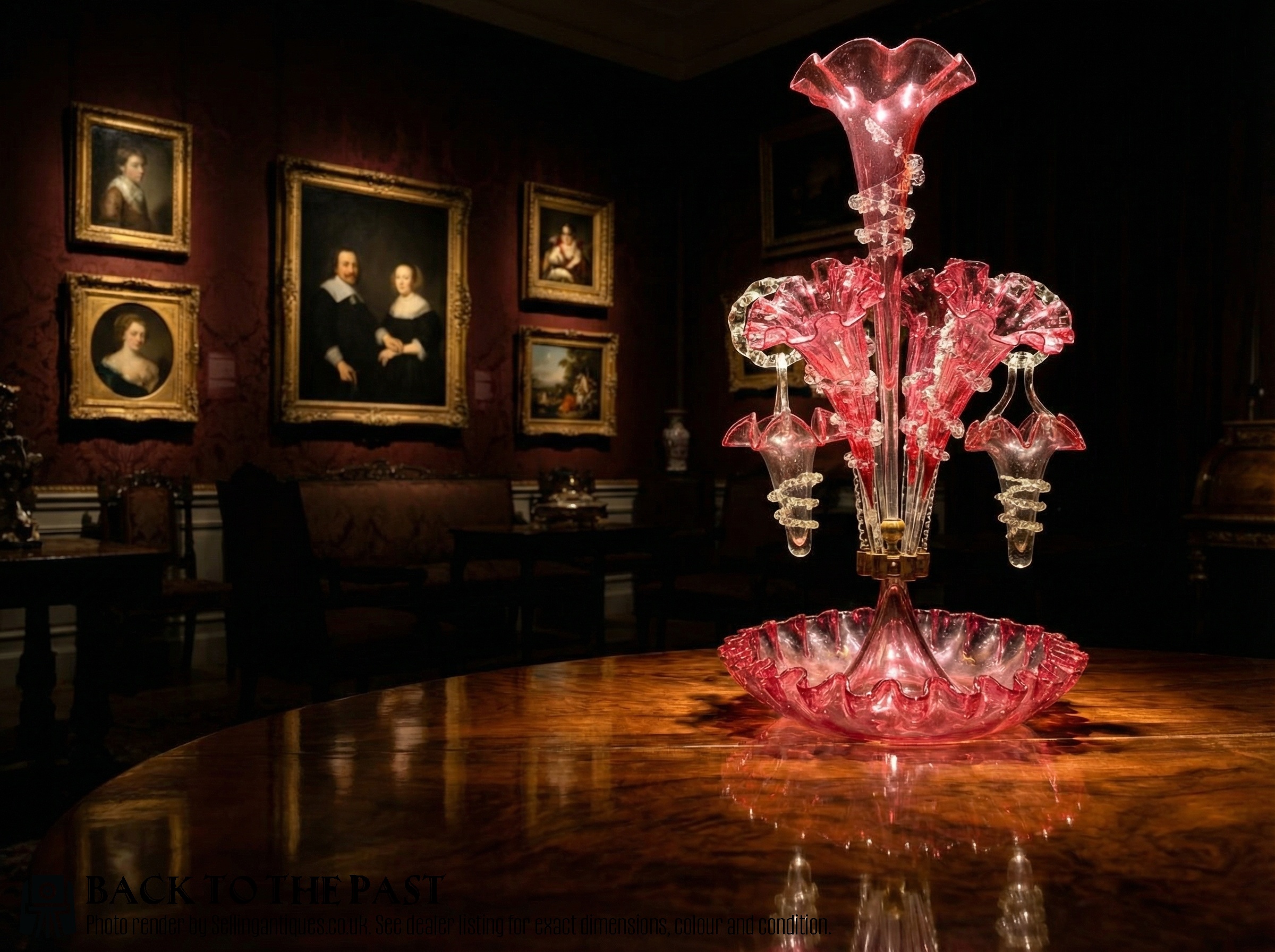
Hand Blown Glass Centrepiece
A hand blown glass centrepiece stands as the focal point of a table or sideboard, bringing height and colour to a room. When you search for a hand blown glass centrepiece, you encounter items shaped by artisans across several distinct eras.
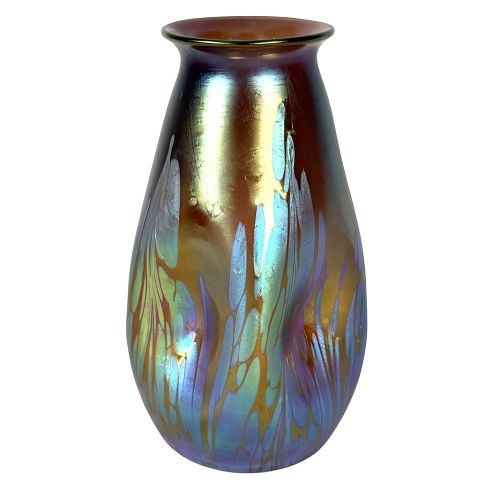
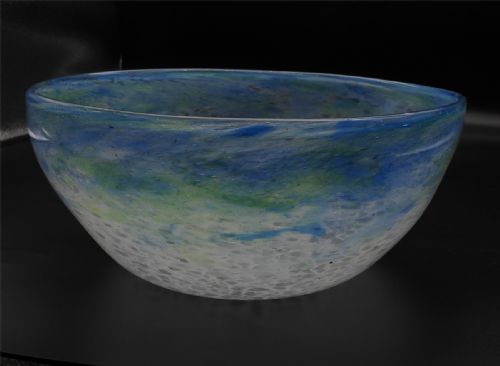
Victorian examples often feature cranberry glass or vibrant green glass, while later pieces show the smooth silhouettes associated with Monart output. Each object serves primarily to draw the eye, whether holding fruit, flowers, or standing alone as a display piece.
How they were made
Makers shaped these centrepieces using traditional glassblowing techniques, gathering molten material on a blowpipe and manipulating it by hand. This process created organic contours and individual character in every vessel.
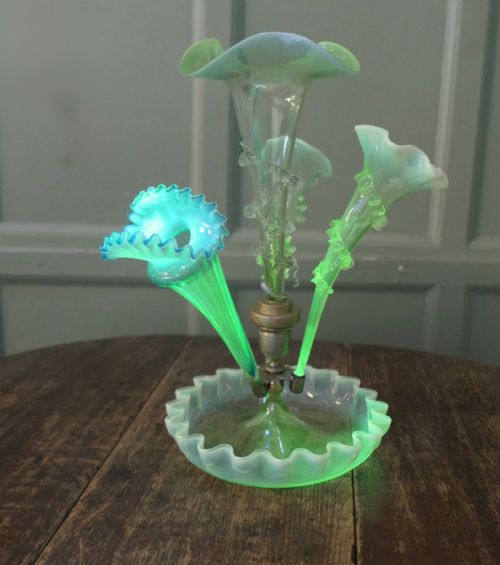
Many items incorporate specialised glass types such as cranberry glass, ruby glass, or uranium glass, achieved by introducing specific metallic oxides into the hot batch. Artisans then added detail through hand cutting on pedestal bowls and tazzas, or formed complex multi-trumpet epergnes by fusing distinct blown components together while hot.
Listings feature hand blown glass centrepieces spanning the Georgian, Victorian, and art deco periods, utilising cranberry glass, uranium glass, brass, and clear crystal.
What varies in quality
Quality in these centrepieces rests upon the balance of the form, the depth and consistency of the glass colour, and the precision of any applied hand cutting. Superior vessels display a pleasing weight and proportion that speaks to the skill of the original blower.
Complex forms like multi-trumpet epergnes demonstrate higher artistry when the individual trumpets align symmetrically and attach cleanly to the central bowl. Simpler Monart bowls rely entirely on the subtle interplay of suspended air bubbles and coloured strata within the glass body to achieve distinction.
Monart Glass
The Hand Blown Glass Centrepiece Glossary
- Epergne
- A large table centrepiece featuring a central bowl with multiple detachable trumpets or arms used for holding fruit, flowers, or sweetmeats. They dominate a dining surface with height and branching glass forms.
- Comport
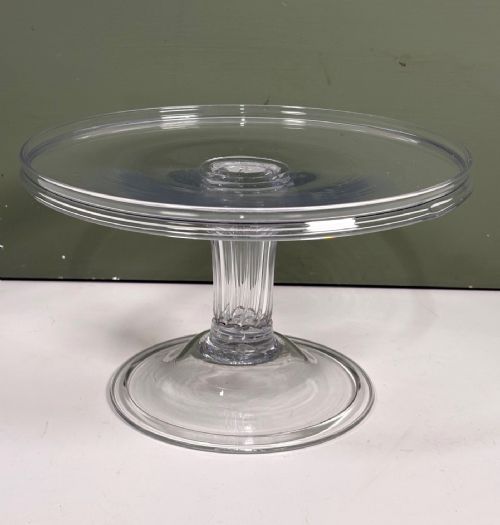
- A pedestal bowl or dish raised on a stem, traditionally used for serving fruit or small dishes at the table. They lift the display above the tabletop surface.
- Tazza
- An Italian term for a shallow saucer-like dish mounted on a stem and foot, used for display or serving. Georgian examples frequently use this form in clear glass.
- Cranberry glass
- A rich pinkish-red transparent glass produced by adding gold chloride to the molten batch. It gained immense popularity during the Victorian era for decorative tableware.
- Uranium glass
- Glass containing small amounts of uranium oxide, which glows bright green under ultraviolet light. It appears in Victorian and earlier decorative wares.
Hand Blown Glass Centrepiece: Frequently Asked Questions
What is an epergne used for?
An epergne served as a grand table centrepiece during formal dining, holding fruit in the base bowl and cut flowers in the surrounding trumpets. Victorians used them to bring height and vibrant colour to the centre of the dining table.
Today, they function primarily as decorative display items on sideboards or large tables. Their branching design makes them striking focal points in a room without needing additional adornment.
How do I identify a Victorian epergne?
Victorian epergnes typically feature rich cranberry or vaseline glass, often with ruffled rims and multiple detachable trumpet vases fitted into a central base bowl. The glass exhibits the characteristic softness and slight irregularities of nineteenth-century hand blowing techniques.
They frequently combine blown elements with applied clear glass trails or frilled borders. The presence of these vibrant colours and complex multi-part forms points directly to the Victorian period.
What distinguishes a comport from a bowl?
A comport stands elevated upon a distinct stem and foot, lifting the display vessel above the level of the table. Standard decorative bowls sit directly on their base without this vertical pedestal stem.
This raised form was traditionally designed for serving fruit or sweetmeats at table. The pedestal gives the piece a more architectural and formal silhouette than a standard bowl.