
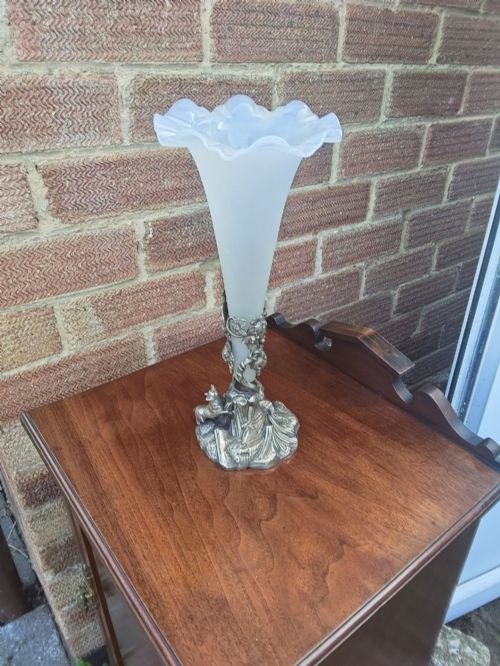
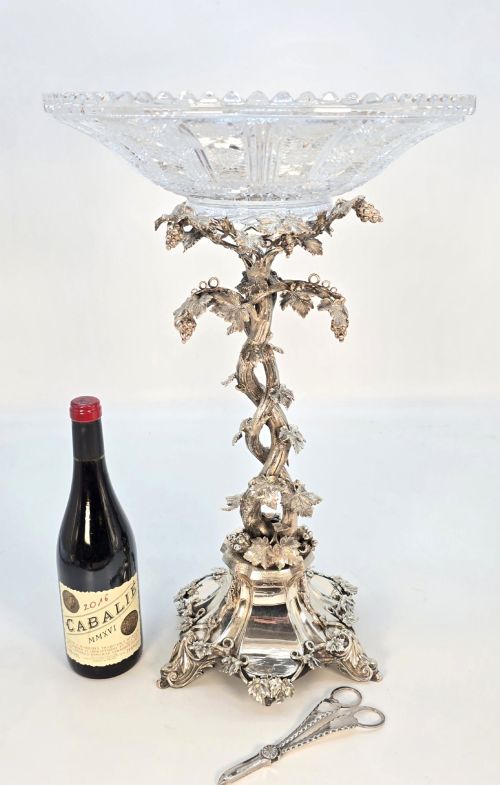


Silver Glass Epergne
A silver glass epergne brings height and colour to a table centre, combining metal stands with blown or moulded glass flutes.
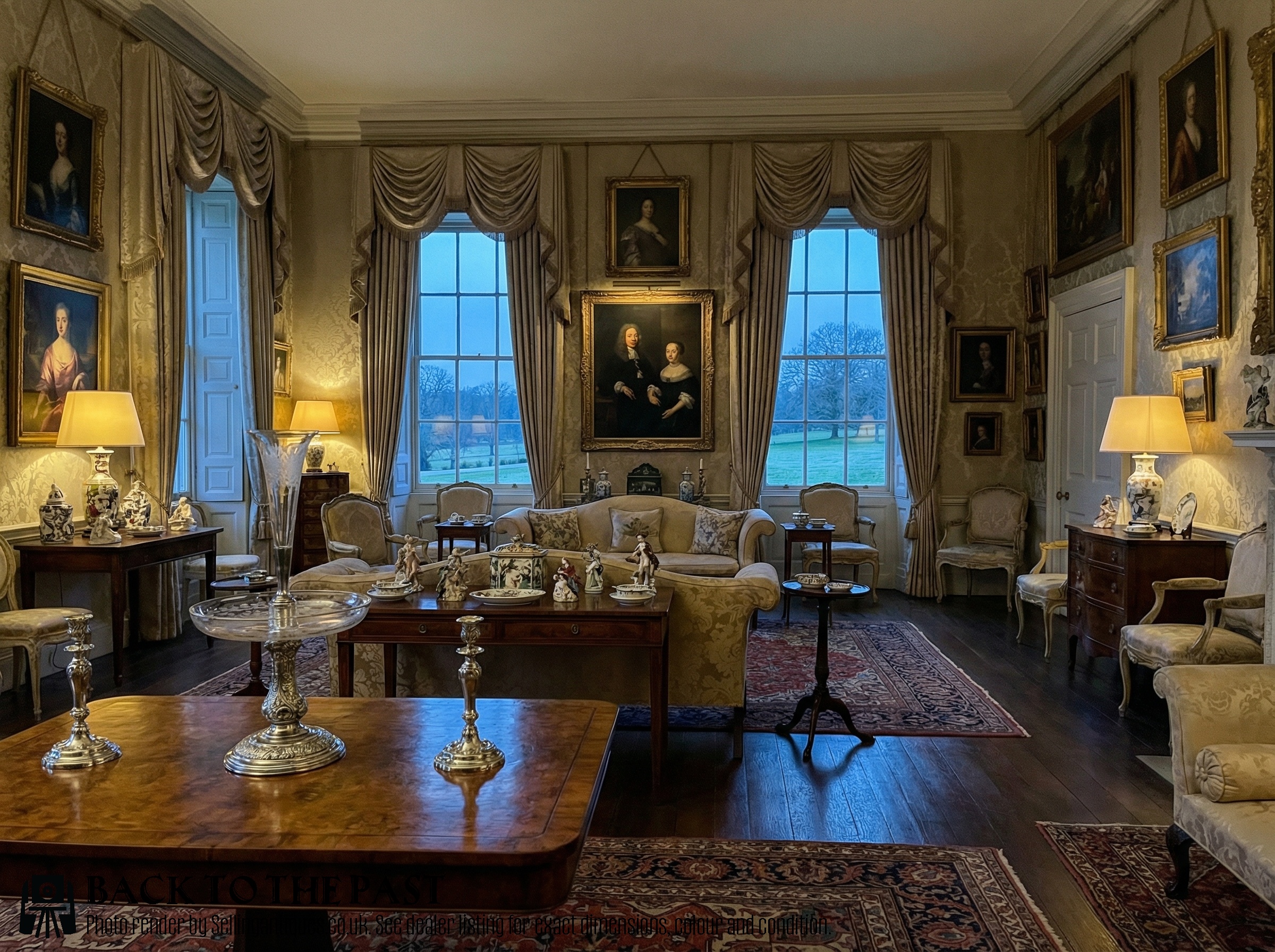
Silver Glass Epergne
A silver glass epergne acts as a dramatic table centrepiece, designed to hold fruit, flowers or sweetmeats during formal dining. These multifunctional pieces combine a supportive metal stand with removable glass trumpets, baskets or flutes.
You will most frequently meet Victorian and Edwardian examples on this page, spanning the nineteenth and early twentieth centuries. Forms range from single posy vases to grand multi-horn table centrepieces and candelabra combinations.
The aesthetic bridges functional tableware and decorative display, drawing on Regency, Victorian, Edwardian and Art Nouveau styles. English origins dominate the available pieces, often utilising silver plate alongside coloured or clear glass.
How they were made
Makers constructed the structural framework using silver plate, Old Sheffield plate, sterling silver or white metal. These metal bases provided the sturdy footing and intricate branches necessary to support heavy glass inserts.
The glass components typically involved cut glass, cut crystal, or specialised decorative media such as vaseline glass, opaline glass, cranberry glass, uranium glass and pearlescent or opaque glass. Artisans blew and etched these glass flutes to catch candlelight and daylight alike.
Assembly relied on fitted sockets and screw threads to secure the glass trumpets into the metal arms without cracking the fragile material. Matching individual glass flutes to specific metal stands required precise hand craftsmanship.
Listings feature pieces spanning the nineteenth century up to the Edwardian period, executed in silver plate, sterling silver, cut glass, and vaseline glass.
What varies in quality
Quality rests heavily on the complexity of the glass work and the weight of the metal stand. Etched, layered or reactive glass colours like cranberry and vaseline distinguish higher-grade pieces from standard clear or opaque versions.
The integrity of the metal plating and the presence of fully matching sets of original glass flutes determine the standing of an epergne. Replacements or mismatched horns alter the visual harmony and historical completeness of the object.
Fox & Grapes·Walker & Hall·James Dixon
The Silver Glass Epergne Glossary
- Epergne
- A large table centrepiece featuring multiple branching holders for fruit, sweetmeats or flowers. This multi-tiered vessel dominated formal dining room tables during the Victorian period.
- Vaseline glass
- A transparent or translucent yellowish-green glass containing uranium dioxide, which glows brightly under ultraviolet light. It appears frequently in late nineteenth-century decorative tableware.
- Silver plate
- A base metal, such as copper or white metal, coated with a thin layer of silver. This technique allowed makers to produce elaborate, luxurious centrepieces at a lower cost than solid sterling silver.
- Cranberry glass
- A rich red-pink glass created by adding gold chloride to the molten batch. It is widely seen in Victorian tablewares and epergne flutes.
- Old Sheffield plate
- An early method of fusing a thin sheet of sterling silver to a thicker copper ingot before rolling them together. This technique predates modern electroplating.
Silver Glass Epergne: Frequently Asked Questions
How were silver glass epergnes used?
These pieces served as grand table centrepieces during formal dinners, holding fresh fruit, sweetmeats, or cascading floral arrangements. The branching design allowed hosts to display flowers at eye level without blocking conversation across the table.
In domestic settings, smaller posy vases functioned independently on sideboards or mantelpieces. Their reflective glass and polished metal surfaces amplified the flickering light of candles during evening meals.
How do I clean an epergne safely?
Wash the glass flutes gently in warm, soapy water using a soft cloth, removing them entirely from the metal stand first. Avoid submerging silver-plated or antique metal frames in water to protect the underlying base metals and plating.
Polish the metal components sparingly with a non-abrasive silver cloth, taking care not to snag cloths on delicate wirework or soldered joints. Ensure all parts are completely dry before reassembling the glass inserts into their sockets.
How can I tell Victorian from Edwardian pieces?
Victorian examples tend to feature heavy ornamentation, complex branching frames, and vibrant coloured glass such as cranberry or vaseline. The overall aesthetic leans towards opulent, detailed presentation and robust construction.
Edwardian pieces often display lighter proportions, simpler silver mounts, and softer pastel or pearlescent glass tones. Design influences shifted towards cleaner lines and greater integration with contemporary interior styling.
Can missing glass flutes be replaced?
Finding exact period matches for broken or missing glass flutes proves challenging due to hand-blown variations in diameter and fitter size. Collectors usually search for vintage replacements that match the exact colour, etching style, and period of the original stand.
Mismatched inserts disrupt the visual balance of a multi-horn centrepiece. Buying pieces with their complete, original set of glass elements remains the preferred approach.