


Victorian Dessert Stand
A Victorian dessert stand brings tiered elegance to the table, offering a practical yet decorative centrepiece for serving sweets and fruit.
Victorian Dessert Stand
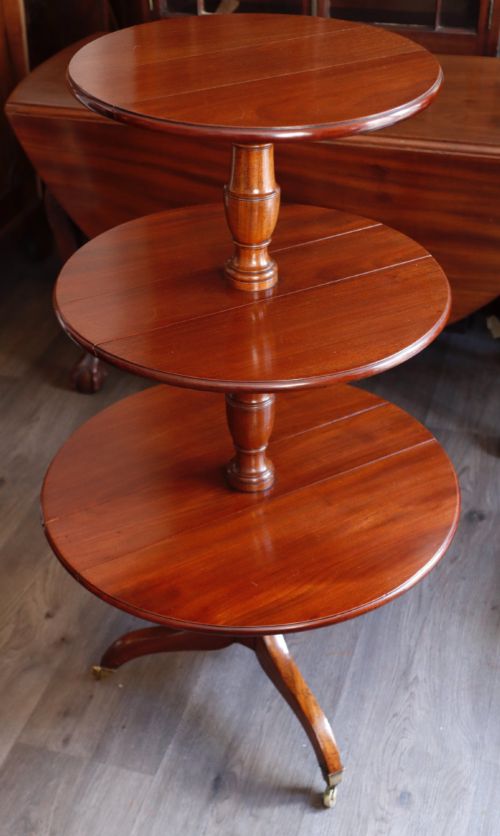
A victorian dessert stand encompasses multi-tiered pieces designed to present food or hold tableware during dining. The most common form met here is the mahogany dumb waiter, often built with three graduating tiers supported by a central column.
Makers produced these stands across the nineteenth century using styles spanning Georgian, Regency, and Victorian Rococo Revival. They served both practical dining functions and decorative display roles within formal households.
Materials and technique
Makers relied heavily on solid mahogany and walnut, frequently shaping wood into circular tiers supported by turned pedestals. Some examples incorporate brass fittings, amboyna veneer, or ebonised wood details to enhance the visual weight of the stand.
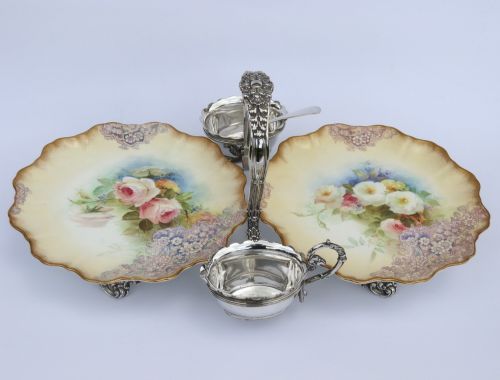
Ceramic components such as bone china and porcelain were shaped and hand-painted for dessert services and tureens. Metal elements received silver plating or gold leaf application to achieve a polished finish.
German workshops contributed an oak cake display stand complete with a mirrored gateau centrepiece.
What varies in quality
The refinement of the timber and the crispness of the turned woodwork separate standard examples from finer pieces. Superior items display well-figured mahogany grains and balanced proportions across every tier.
Detailing on associated ceramic plates and metal mounts dictates the grade of the piece. Hand-painted decoration and maker attribution elevate the standing of a dessert service.
Walker and Hall·Doulton Burslem·Mintons·Davenport·Maple and Co
The Victorian Dessert Stand Glossary
- Dumb waiter
- A multi-tiered freestanding piece of furniture used to hold dishes or dessert items without the aid of a servant.
- Tazza
- A small shallow cup or saucer on a raised pedestal, frequently utilised for serving fruit or sweets.
- Amboyna veneer
- A decorative wood covering derived from the burl of the amboyna tree, known for its rich speckled grain.
- Tureen
- A deep covered bowl designed for serving sauces, cream, or dessert courses.
Victorian Dessert Stand: Frequently Asked Questions
What is a Victorian dessert stand used for?
These stands were historically utilised to serve fruit, sweet dishes, and cakes during formal dining occasions. They allowed hosts to keep extra tableware and courses accessible near the table.
Today, they function well as display pieces or serving tiers for afternoon tea and gatherings.
Are these stands made from solid wood?
Many tier edges and central columns utilise solid timbers such as mahogany, oak, or walnut. Finer variations incorporate veneers like amboyna laid over secondary woods.
Careful inspection of the grain helps determine the construction methods used by the maker.
How do I care for a wooden tier stand?
Keep wooden furniture away from direct heat sources and strong sunlight to prevent the timber from drying out. Dust regularly with a dry cloth and apply suitable furniture wax sparingly.
Avoid placing wet items directly onto unprotected antique wood surfaces.