
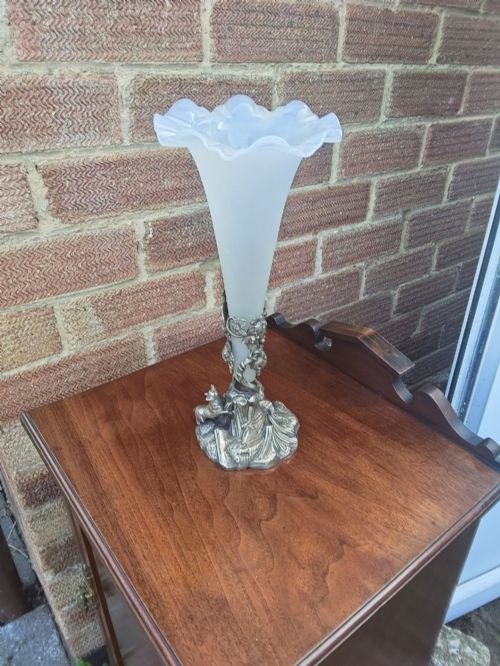
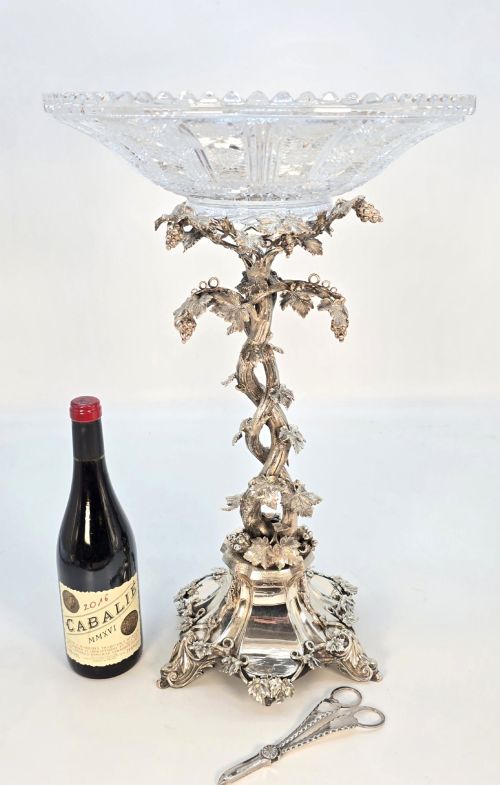


Victorian Silver Epergne
A victorian silver epergne commands the table with tiered glass and silver plate, bringing dramatic height and sparkle to formal dining.
Victorian Silver Epergne
A victorian silver epergne stands as a grand table centrepiece, combining a substantial metal stand with multiple detachable vases, bowls or candle holders. Most pieces you meet on this page date from the nineteenth century, ranging from mid century examples to the year nineteen hundred.
These multi-branch forms function primarily as ornamental table centrepieces, though many designs incorporate holders for flowers, fruit or candles. The typical format deploys a central trumpet vase flanked by smaller hanging baskets or subsidiary vases on curved arms.
The style spans plain Victorian silver plate to elaborate Victorian Naturalism, featuring decorative motifs such as palm trees, elephant heads and nautical figures. You will encounter both single grand centerpieces and matched pairs designed for long dining tables.
How they were made
The framework relies heavily on silver plate, EPNS, white metal and solid sterling silver, shaped into elaborate stands that support the upper tier. Master silversmiths cast and chased the metal bases, incorporating figural supports, branching arms and detailed botanical motifs.
Glass components take various forms including cut glass, cut crystal, opaque glass, opaline glass, cranberry glass, vaseline glass and uranium glass. These glass flutes and bowls were hand-blown, moulded and frequently etched or polished by hand to catch the light.
Certain elaborate Victorian stands feature elephants and palm trees, bringing an unexpected touch of jungle drama to the dining table.
What varies in quality
The distinction between ordinary and exceptional pieces lies in the crispness of the metal chasing and the complexity of the glass work. Elaborate cast figures like elephants or nautical motifs demand superior skill compared to standard geometric wirework frames.
The integration of the glass elements defines the upper tier of quality, particularly where vaseline, cranberry or uranium glass retain their original matching character. Complete sets with all matching subsidiary vases intact achieve greater harmony than pieces assembled later.
Fox & Grapes·Walker & Hall·James Deakin·James Dixon·Carles Henry Hattersley·Charles Stuart Harris·Elkington
The Victorian Silver Epergne Glossary
- Epergne
- A large table centrepiece designed for holding fruit, flowers or sweets, featuring multiple branching arms and detachable vessels. This form dominated formal dining tables during the Victorian era.
- Silver Plate
- A base metal, often copper or white metal, coated with a thin layer of real silver through electroplating or older fusion methods. EPNS is a common specific type.
- Vaseline Glass
- A transparent yellowish-green glass coloured with uranium oxide, highly reactive under ultraviolet light. It appears frequently in nineteenth-century decorative tablewares.
- Cranberry Glass
- A rich pinkish-red glass produced by adding gold chloride to the molten batch. It provides vivid colour contrast against silver plated metal stands.
- Posy Vase
- A small vessel designed to hold a single small bunch of flowers. These often form the outer hanging attachments on multi-branch table centrepieces.
Victorian Silver Epergne: Frequently Asked Questions
What was an epergne used for?
Victorian households placed these grand tiered structures in the centre of the dining table during formal meals. They held fruit, sweetmeats or fresh flowers in the upper glass baskets to decorate the room.
Some variants also incorporated candle holders, allowing the piece to serve as both a floral display and a light source during evening dinners.
How do I clean a silver plated epergne?
Use a soft cloth and a gentle silver polish specifically formulated for plated items, taking care not to scrub abrasive materials against the metal surface. Remove all glass inserts before cleaning the metal stand to avoid chemical contact with the glass.
Wash the cut glass, vaseline glass or cranberry glass components separately in warm soapy water. Dry them thoroughly with a lint-free cloth before reassembling the piece.
Are the glass vases usually original?
Many surviving pieces retain their original blown or moulded glass inserts, which match the proportions and mounting rings of the metal stand precisely. Because the glass elements were fragile and easily broken over generations of use, replacements do occur.
Examine the fit of the glass stems inside the metal collars and check for consistent colour and wear patterns across all matching flutes.
How do I date a Victorian centrepiece?
Makers' marks stamped onto the metal base provide the most reliable guide to the manufacturing period. Researching the specific registry marks or company ciphers helps narrow down the exact decade of production.
Stylistic cues such as heavy Victorian Naturalism, specific glass colours like uranium or vaseline, and construction techniques also help place the piece within the nineteenth century.