


Cut Glass Centrepiece
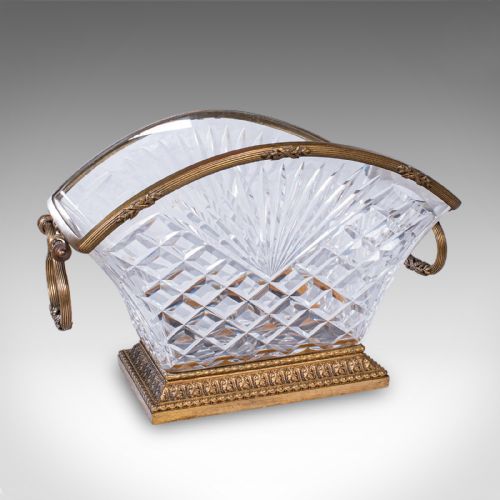
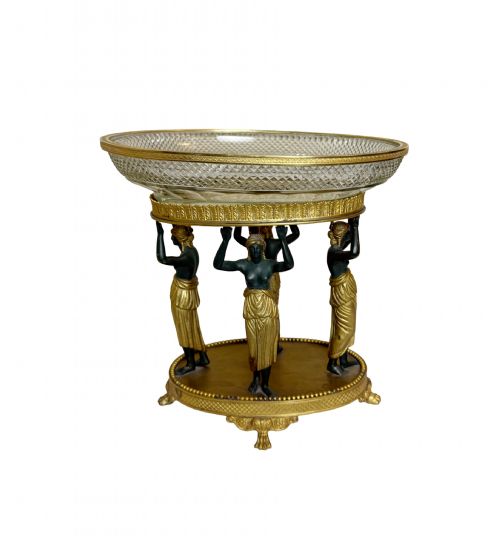
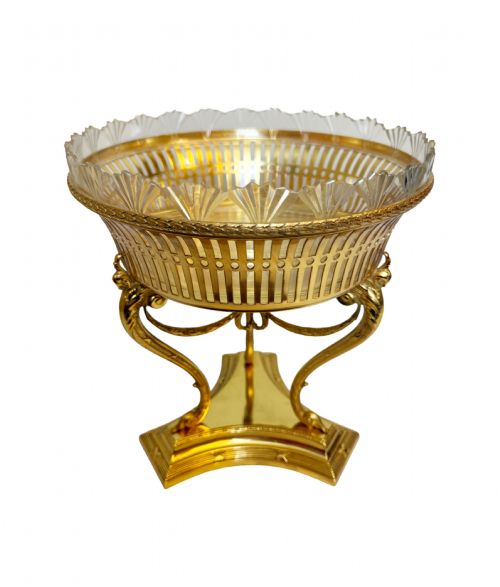
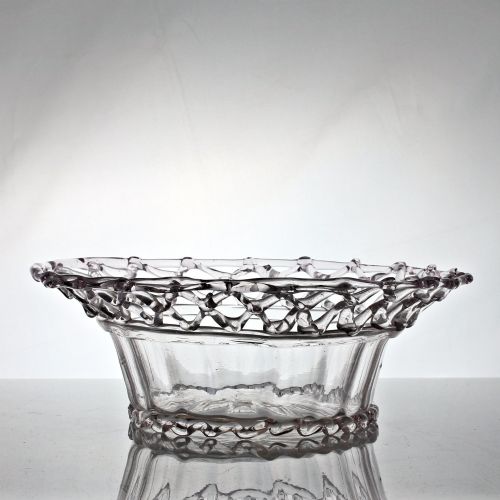
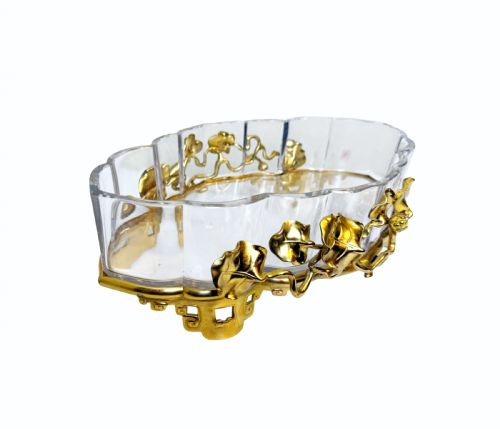
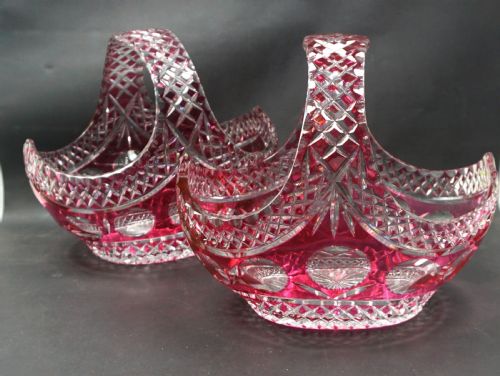
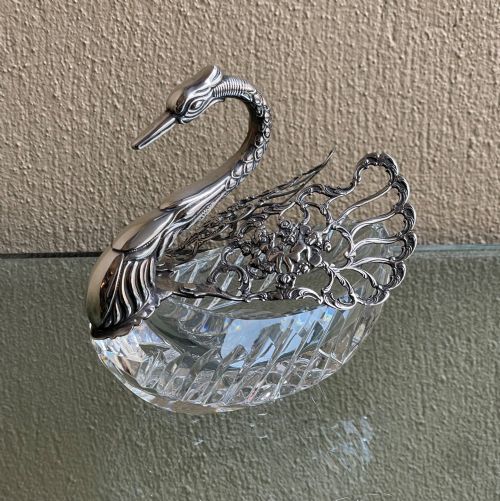
These cut glass centrepiece items combine heavy, faceted crystal with metal mounts to anchor a dining table.
What a cut glass centrepiece is
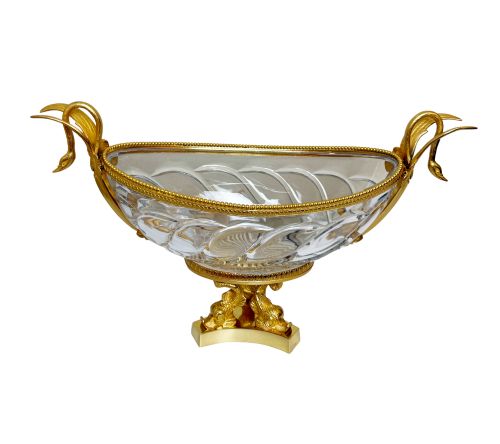
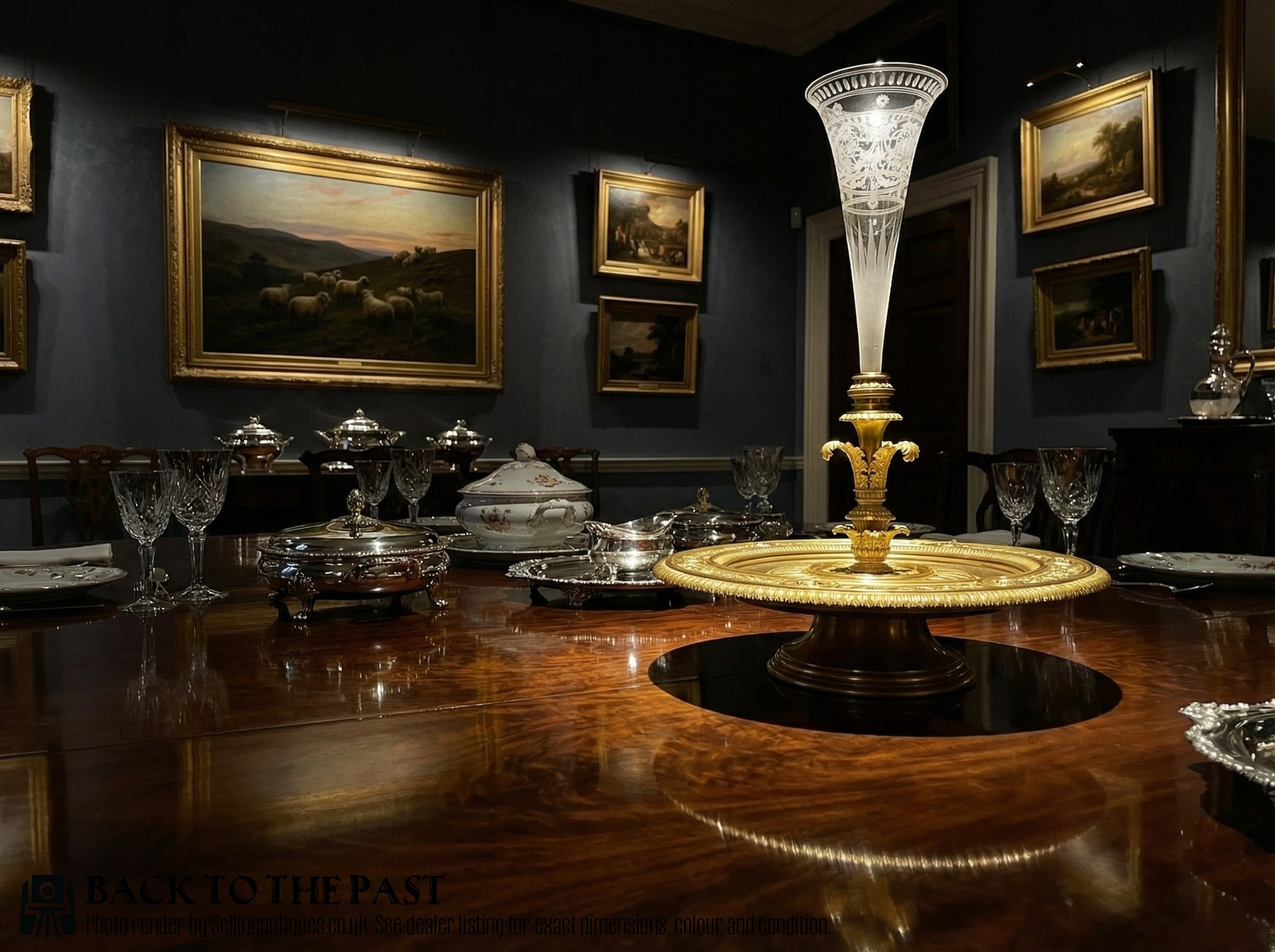
A cut glass centrepiece stands as the focal point of a formal table setting, designed to hold fruit, flowers, or sweetmeats during a meal. The form brings together a substantial vessel of heavy crystal glass with a supporting base or frame.
Most examples encountered on this page date from the nineteenth century, including Victorian, Regency, and Edwardian periods. Pieces range from large pedestal bowls to elaborate epergnes featuring multiple hanging baskets or candelabra arms.
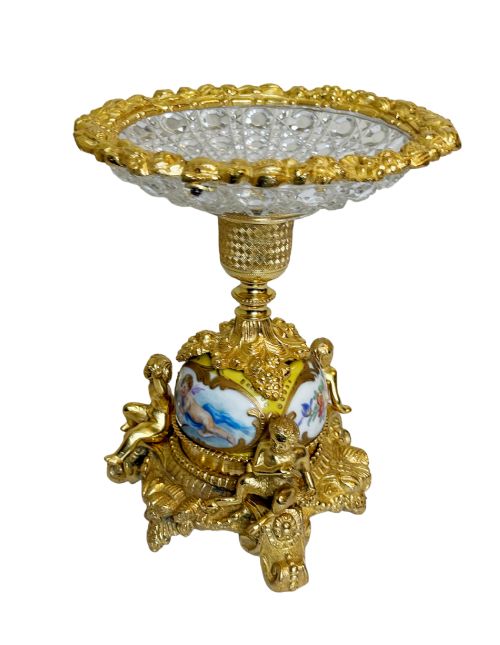
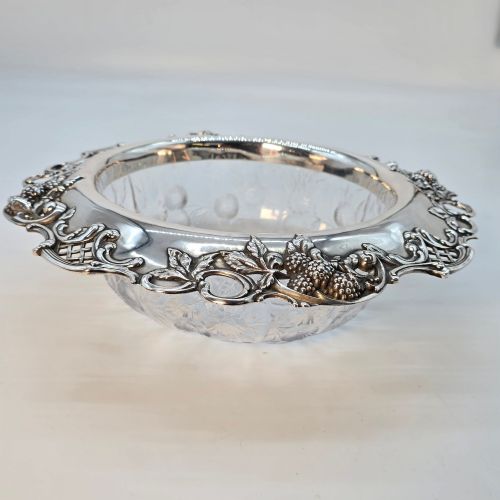
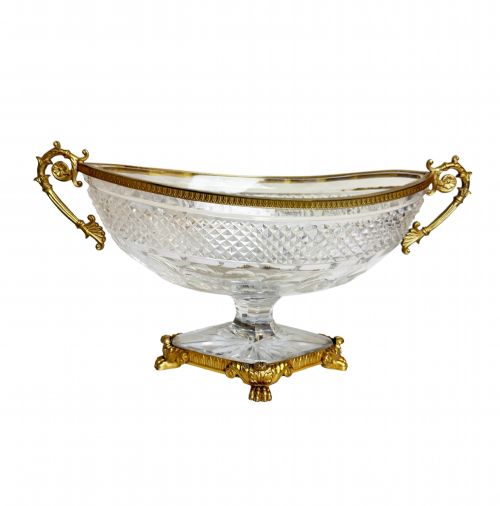
Origins span English, Scottish, Irish, and continental workshops. Makers combined deep glass cutting with mounts in silver plate, Old Sheffield plate, sterling silver, gilt bronze, and ormolu.
How they were made
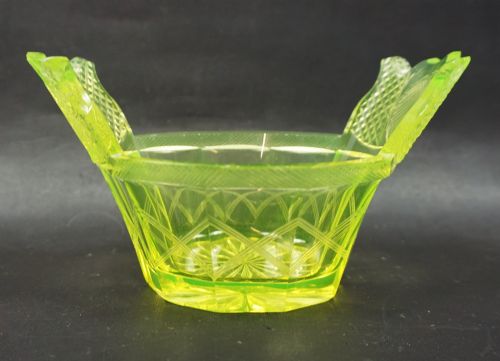
Makers formed the glass vessels by blowing molten metal into moulds or gathering it freehand before cutting geometric patterns across the surface on rotating iron and stone wheels. This cold-cutting process created sharp facets, flutes, and star bottoms that catch and refract candlelight.
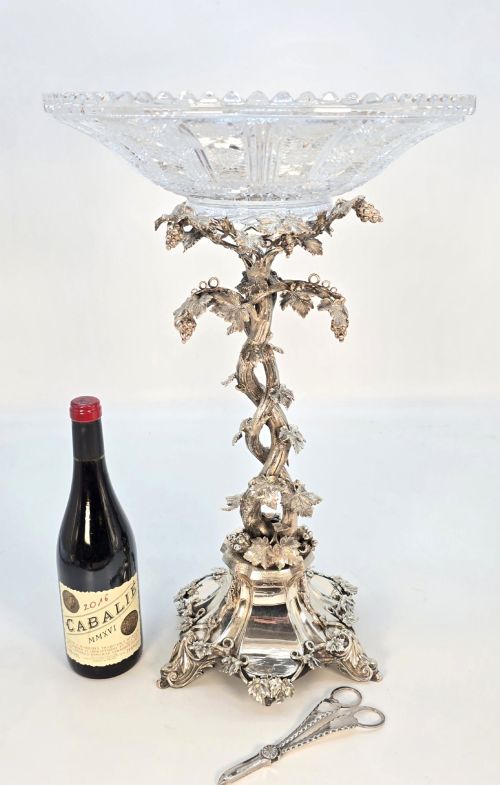
Metal mounts and frames were cast, spun, or beaten from silver, silver plate, Old Sheffield plate, gilt bronze, and ormolu, often incorporating naturalistic chased details such as grape vines or stag figures. The glass bowl or trumpet then secured into the metal frame using collars, pins, or weighted bases.
Some nineteenth-century tables required guests to peer around towering glass epergne baskets laden with grapes and silver stags just to converse.
What varies in quality
Quality rests on the depth, crispness, and precision of the wheel-cut facets on the glass. Superior pieces display sharp, clean lines with high clarity in the metal content, while lesser examples show softer cutting and minor bubbles or inclusions in the handle or bowl.
The architectural ambition of the metal framework also separates the tiers. Finely chased ormolu, heavy cast silver plate, and complex multi-tier epergne structures with detachable baskets demand greater artisanal skill than plain spun metal collars.
The Cut Glass Centrepiece Glossary
- Centrepiece
- A large decorative vessel placed in the middle of a dining table. These objects typically combine glass bowls with metal stands.
- Epergne
- An ornamental centrepiece featuring a central bowl with multiple branching arms or smaller hanging baskets. Such pieces held fruit, flowers, or sweetmeats.
- Old Sheffield Plate
- A method of fusing a thin sheet of silver to a thicker copper base before rolling and fabrication. This technique predates modern electroplating.
- Ormolu
- Gilt bronze ornaments applied to furniture and decorative objects. The finish is achieved by applying a mercury and gold amalgam to the bronze base.
- Comport
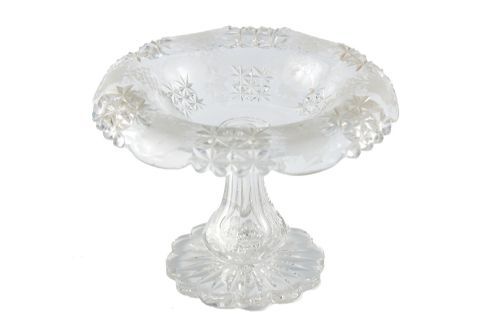
- A decorative dish or bowl raised on a high foot or stem. Comports frequently form part of larger dessert services.
Frequently Asked Questions
What is a cut glass centrepiece?
A cut glass centrepiece is a large decorative table vessel made from heavy crystal with deep wheel-cut geometric patterns. It usually sits on a metal base of silver plate, ormolu, or sterling silver.
These pieces were traditionally used to hold fruit, flowers, or sweetmeats during formal dining occasions in the eighteenth and nineteenth centuries.
How do I style a centrepiece at home?
Place the piece in the middle of a dining table or sideboard where it can catch natural or artificial light. Large pedestal bowls and epergnes work well on their own as sculptural objects.
Alternatively, fill shallow bowls with seasonal fruit or use epergne baskets for fresh flower arrangements to echo their original nineteenth-century dining room use.
How do I date a cut glass centrepiece?
Dating relies on combining the style of the glass cutting, the form of the metal mount, and any hallmarks present on silver elements. Regency and early nineteenth-century pieces often feature thick, heavy lead crystal with deep prismatic cutting.
Later Victorian and Edwardian examples introduce more naturalistic motifs, such as grape vines and chased silver-plated frames, alongside continental styles from the early twentieth century.
What is the difference between an epergne and a comport?
An epergne is a complex centrepiece that includes a main vessel plus multiple smaller hanging baskets or branching candelabra arms. This tiered arrangement allowed hosts to serve several different items from a single stand.
By contrast, a comport is a simpler raised dish or bowl on a single stem, functioning primarily to display fruit or sweetmeats without auxiliary hanging tiers.