


Silver Plated Epergne
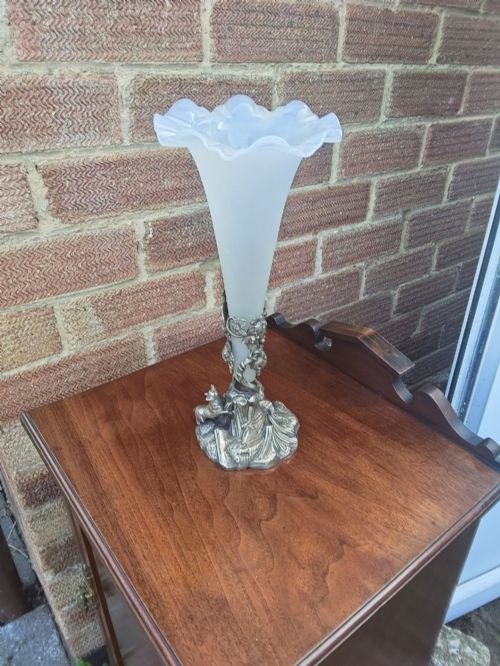
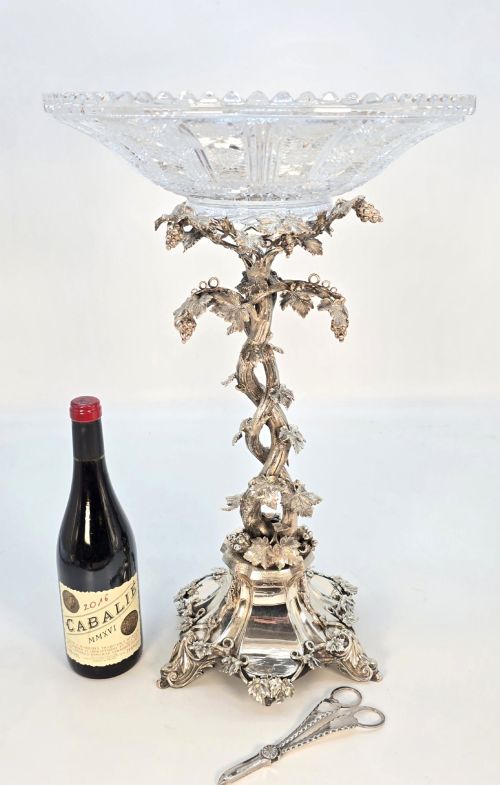
A silver plated epergne stands as a dramatic table centrepiece, bringing towering glass trumpets and tiered stands to grand dining tables.
Silver Plated Epergne
A silver plated epergne serves as a multi-tiered table centrepiece designed to hold fruit, flowers, or candles. These decorative arrangements anchor a dining table with vertical height and branching holders.
The versions most common on this page date from the nineteenth century into the Edwardian era. They combine metal stands with removable glass flutes, vases, or bowls.
Makers utilised various configurations, ranging from simple single-trumpet holders to elaborate five-branch and seven-flute centrepieces incorporating figural supports.
How They Were Made
Artisans combined silver plate or Old Sheffield Plate with blown, cut, or moulded glass components. Metal bases provided rigid support while glass inserts created contrasting colour and texture.
Specialised techniques such as etching, cutting, and plating allowed makers to produce intricate floral motifs and polished metallic surfaces. Coloured glass varieties like cranberry, opaline, vaseline, and uranium added vibrant hues to the arrangements.
Silver Plated Epergne Retail Price Guide 2026
Typical asking prices for silver plated epergne among the pieces listed under this phrase on Sellingantiques today, from the lower quarter to the upper quarter. They describe what is for sale here now, not the wider market.
Certain Victorian centrepieces proudly incorporate cast elephant heads and palm trees directly into the metalwork.
What Varies in Quality
Design complexity separates standard examples from exceptional pieces. Cast figural elements, such as animal heads or human figures, indicate higher production ambitions.
The integrity of the glass inserts influences desirability. Intricate cut crystal or specialised coloured glass flutes paired with substantial plated bases represent the upper tier of manufacture.
Fox & Grapes·Walker & Hall·James Deakin·James Dixon·Carles Henry Hattersley·George Wish·Daniel & Arter·Elkington
The Silver Plated Epergne Glossary
- Epergne
- A large table centrepiece with multiple branching holders for fruit, flowers, or candles. It dominates the centre of a formal dining arrangement.
- EPNS
- Electroplated Nickel Silver, a common base metal method utilised for nineteenth-century and later tableware. This technique provided an affordable alternative to solid silver.
- Old Sheffield Plate
- An early fusing method where a thin sheet of silver was fused to a copper base before rolling. This process creates a distinct appearance found in earlier pieces.
- Flute
- A tall, slender glass vase that slots into the metal framework of the centerpiece. Multiple flutes create the characteristic branching silhouette.
- Cranberry Glass
- A rich red-pink glass created by adding gold chloride to the molten batch. It appears frequently in Victorian table arrangements.
Silver Plated Epergne: Frequently Asked Questions
How do I clean the glass inserts safely?
Remove the glass flutes or bowls from the metal stand entirely before washing them in lukewarm soapy water. Avoid hot water on antique glass to prevent thermal shock and cracking.
Dry each piece thoroughly with a soft cloth before placing them back into the silver plated base to protect both materials.
Were these pieces used for food or flowers?
Victorian households utilised these multi-tiered stands for both fruit and floral displays depending on the occasion. Bowls held seasonal fruit while branching flutes supported cut flowers.
Some configurations also incorporated candle holders, allowing the same object to serve as a combined light source and decorative centrepiece during evening dining.
How do I date a silver plated epergne?
Examine the style of the metalwork and the type of glass used to establish a general timeframe. Victorian examples often feature naturalistic motifs and coloured glass, while later Edwardian pieces lean toward different aesthetic choices.
Manufacturer stamps and plate marks stamped onto the metal base provide additional clues for identifying specific workshops and production decades.
Are the glass parts usually original to the stand?
Replacement glass flutes occur frequently due to the fragile nature of blown and coloured glass over long periods. Inspect the fit where the glass meets the metal collar to see if the proportions match the base correctly.
Matching colour tones and consistent wear patterns across both the metal and glass components help confirm whether the combination is period-correct.