
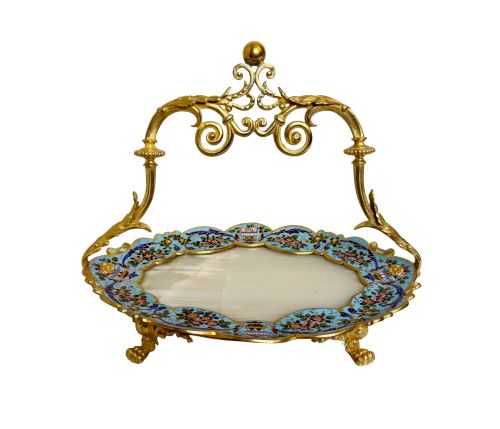
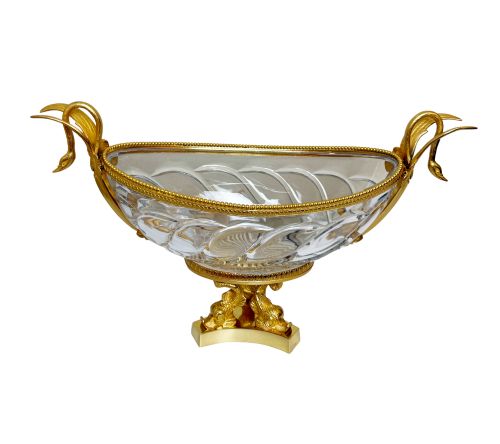
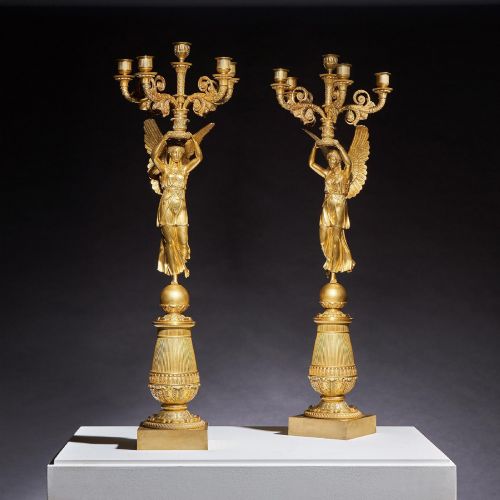
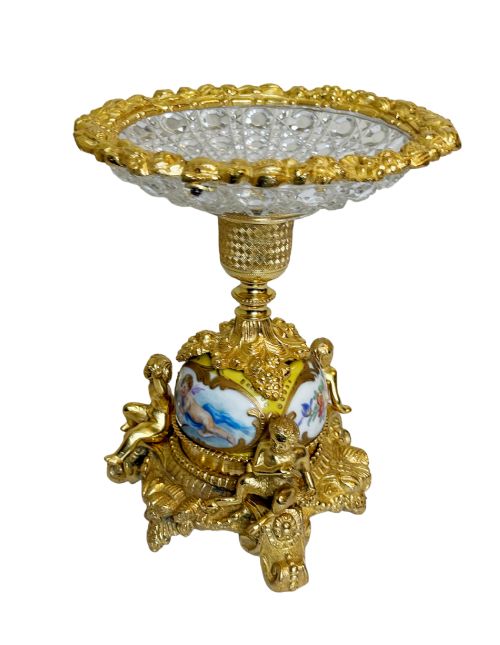
Gilt Bronze Centrepiece
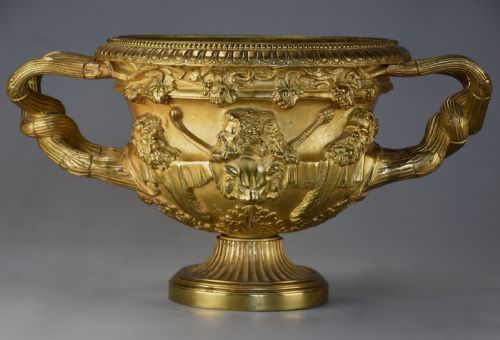
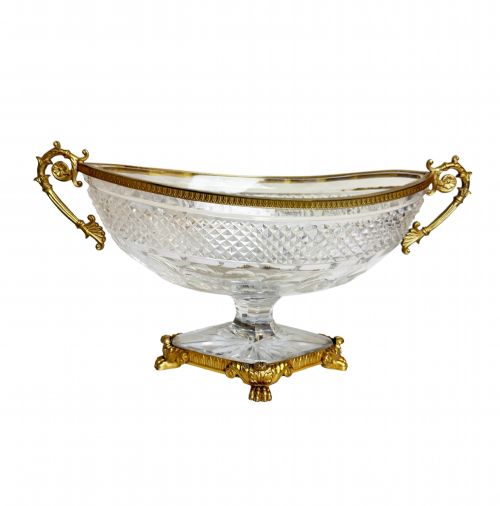
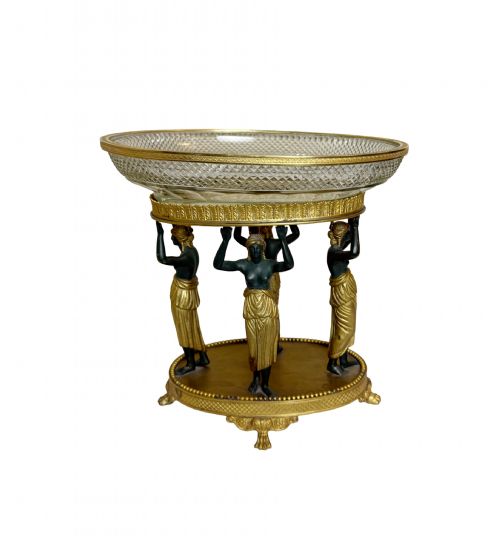
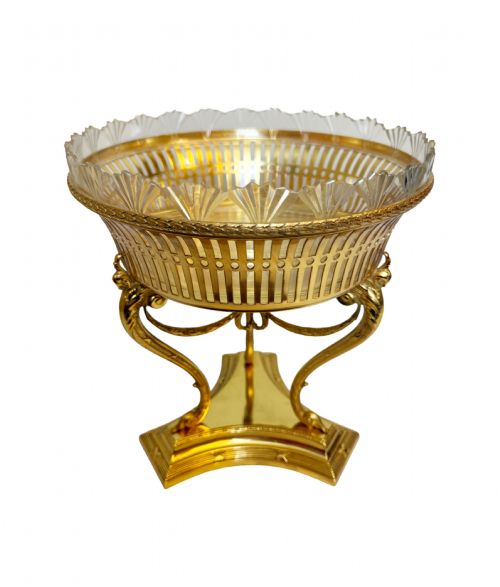
These gilt bronze centrepiece displays bring commanding presence to a dining table or sideboard through heavy cast metal and clear glass.
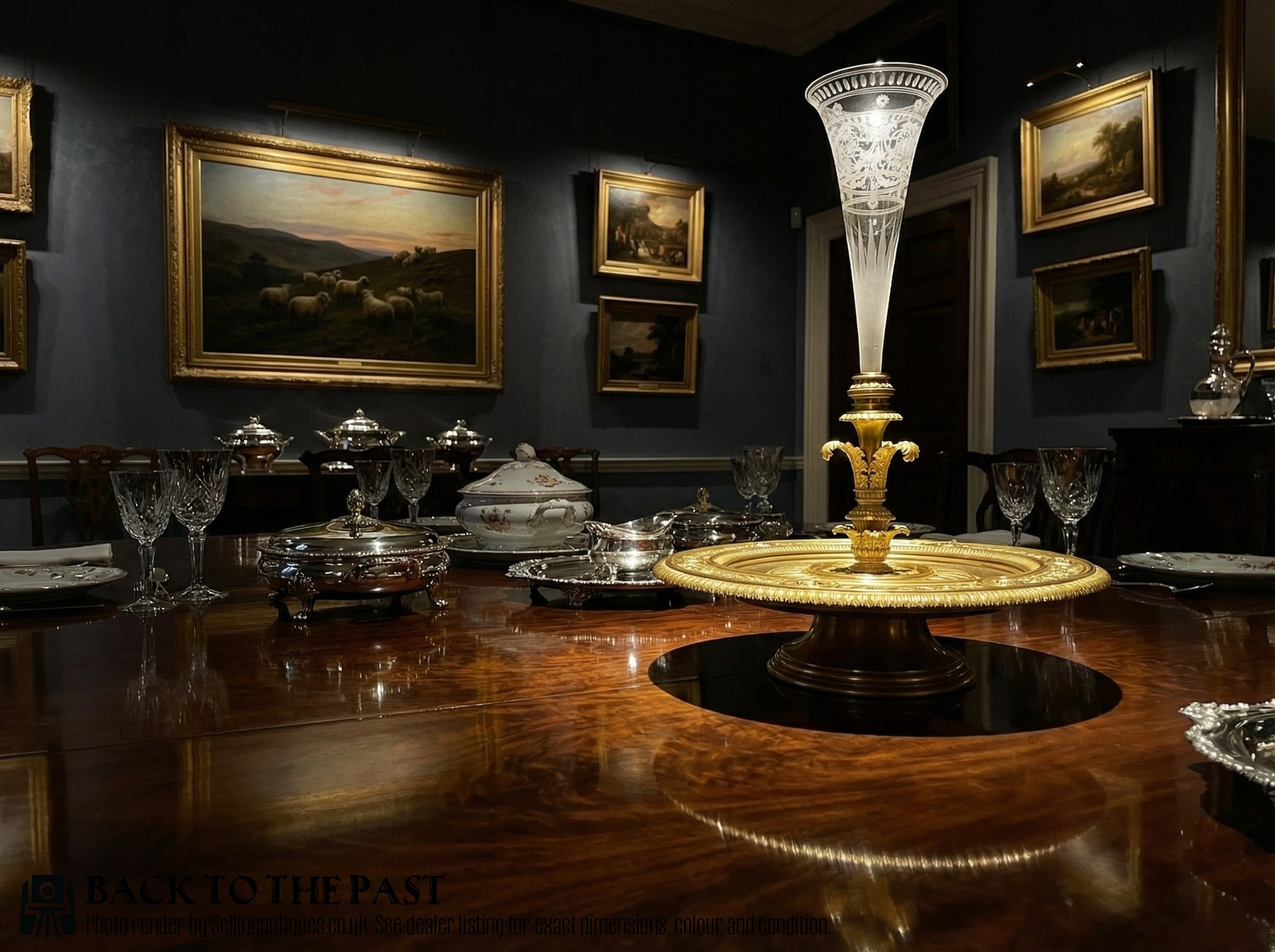
Identifying a gilt bronze centrepiece
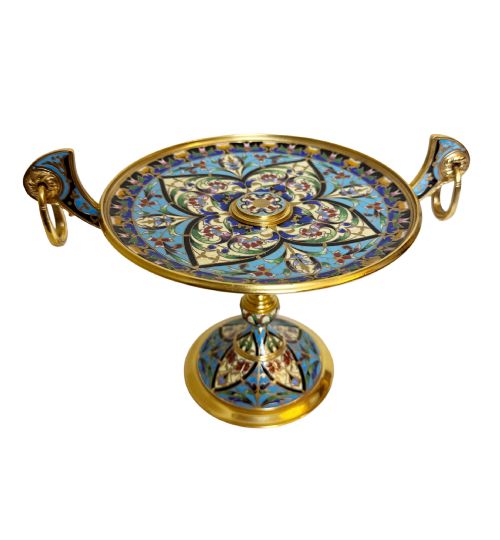
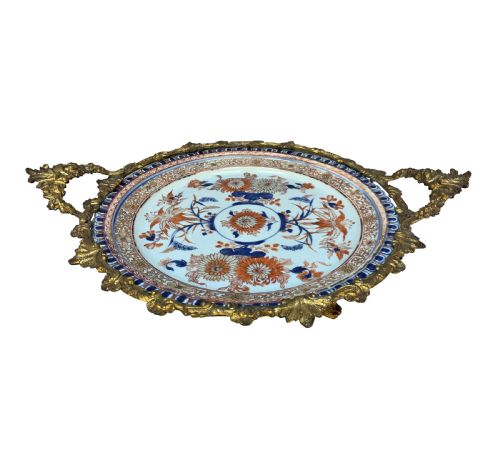
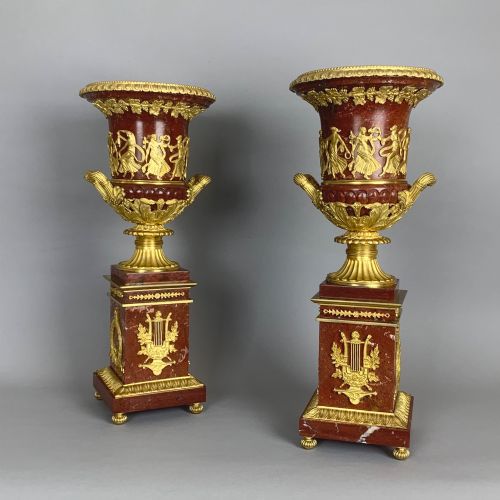
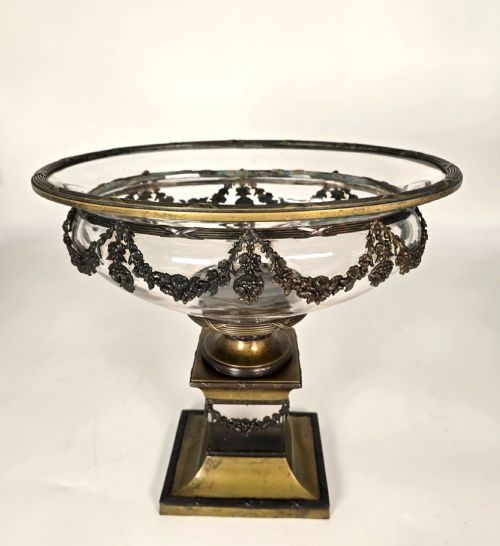
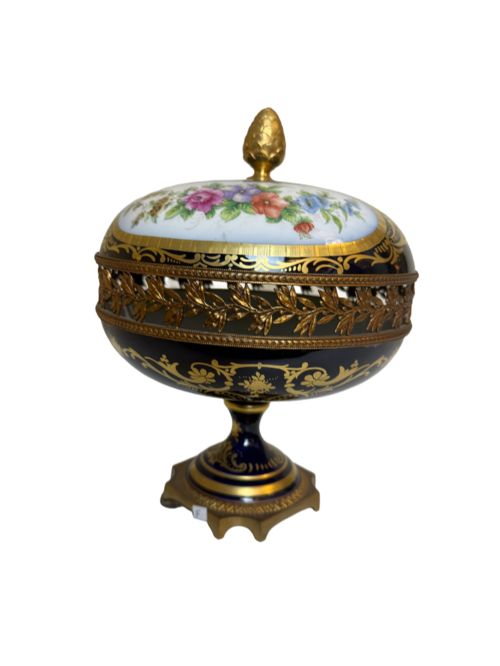
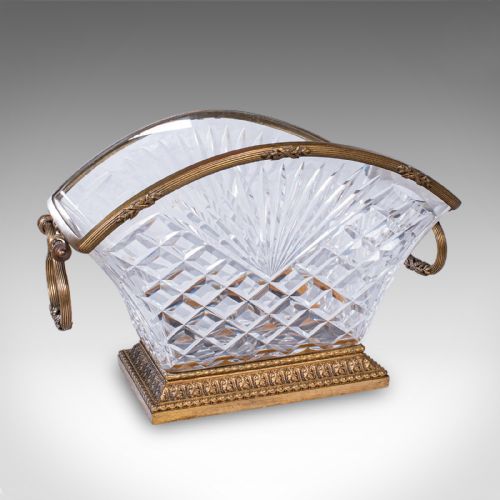
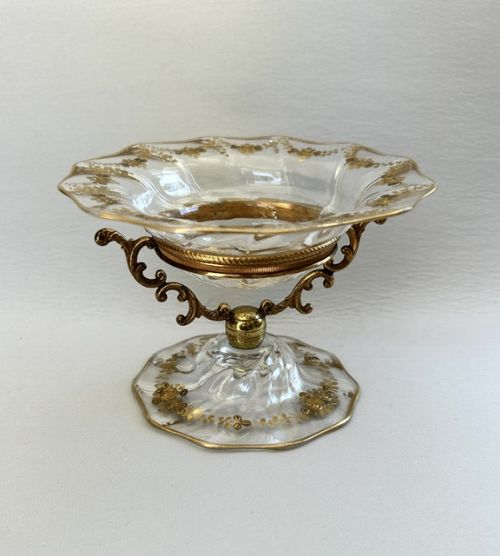
A gilt bronze centrepiece sits at the heart of a formal table display, combining a metallic stand with a glass or porcelain vessel. The form takes several shapes across the listings, from tazzas and urns to jardiniere planters and epergnes.
The pieces on this page span the nineteenth century and the early twentieth century, taking stylistic cues from French Rococo Revival, French Empire, Neoclassical, Art Nouveau, and Regency designs. Many examples originate from French workshops or draw heavily upon French chateau aesthetics.
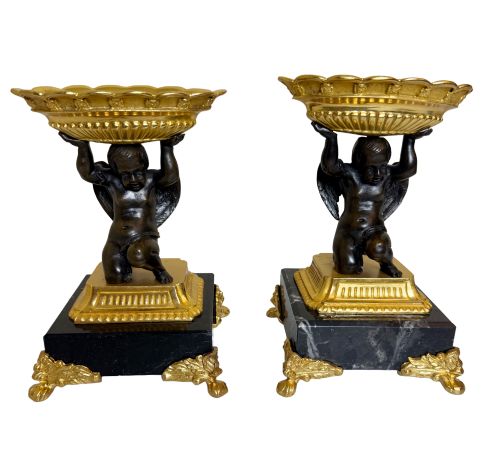
Buyers encounter items incorporating cut crystal inserts, glass bowls, champleve enamel panels, and Limoges plaques alongside patinated bronze and ormolu mounts. Figures such as cherubs and mermen frequently appear cast into the supporting metal frames.
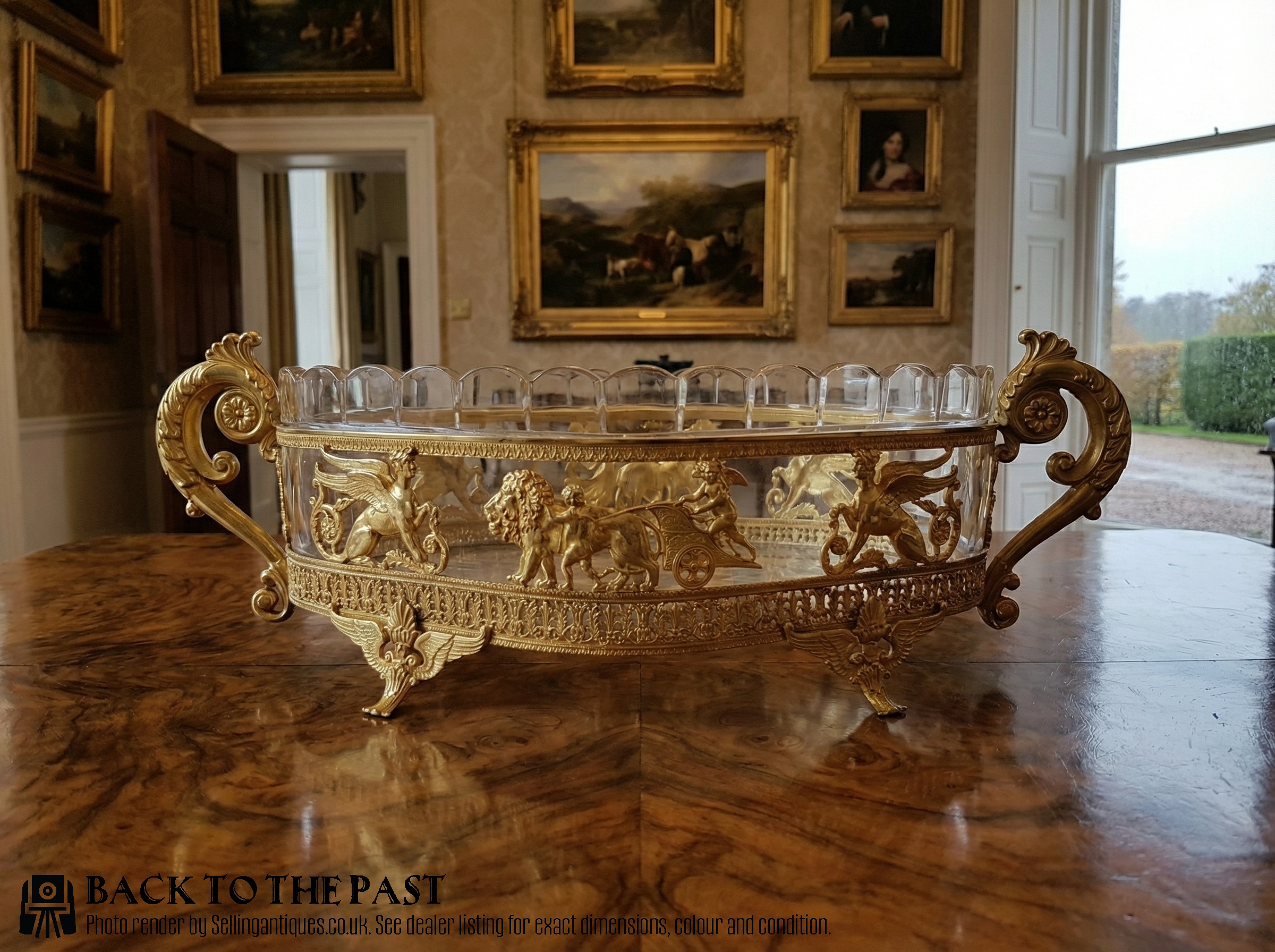
Materials and construction
Foundries created these objects using bronze casting methods, applying a layer of gold via mercury gilding or electroplating to produce the bright gilt bronze and ormolu surfaces. Patinated bronze often provides a contrasting dark tone next to the brilliant metallic finish.
Vessels and inserts required skilled glass cutting to produce heavy cut crystal and cut glass bowls that fitted securely into the metal mounts. Additional decorative elements relied on specialist crafts, including champleve enamel work and painted Limoges porcelain plaques.
Retail Price Guide 2026
Typical UK retail prices for gilt bronze centrepiece, calculated from the Sellingantiques database of over a million retail prices indexed since 2003. This retail price guide relies exclusively on Sellingantiques data; no external sources or auction records are used, so the figures do not describe the wider market.
Object forms featured in these records include tazzas, urns, jardiniere planters, and multi-branched epergnes alongside standard centrepiece bowls.
Assessing quality and workmanship
Quality rests upon the crispness of the metal chasing, where sharper relief in cast figures and foliate scrolls distinguishes superior pieces from softer, worn castings. The weight and thickness of the gilt bronze or ormolu frame also signal a higher grade of manufacture.
The integration between metal and insert reveals the maker's intent, with bespoke glass or crystal bowls ground to fit the frame precisely. Finer examples combine multiple costly materials, such as champleve enamel or porcelain plaques, rather than relying solely on metalwork.
The Gilt Bronze Centrepiece Glossary
- Ormolu
- Gilded bronze, where a layer of gold is applied to a bronze base object. The term is widely used to describe nineteenth-century French decorative metalwork.
- Tazza
- A shallow bowl or cup mounted on a stem and foot, used for display or serving. These items frequently form the central tiered element of a table arrangement.
- Champleve enamel
- A technique where troughs or cells are sunk into the surface of metal and filled with vitreous enamel powder before firing. This adds vibrant colour highlights to the gilt bronze frame.
- Epergne
- An ornamental centrepiece stand with multiple branching dishes or baskets for holding fruit or flowers. They stand tall above the table surface.
- Jardiniere
- An ornamental pot or receptacle designed to hold plants or floral arrangements. In these listings, they share the heavy metal and glass vocabulary of the table centrepiece.
Frequently Asked Questions
What is a gilt bronze centrepiece?
A gilt bronze centrepiece is a decorative table ornament featuring a gilded metal frame paired with a glass bowl, crystal dish, or porcelain insert. Makers designed them to command attention in the middle of a dining table or upon a sideboard.
These pieces combine sculptural metalwork with functional vessels intended for fruit, flowers, or simple display. They draw on historical European styles, notably French Rococo and Neoclassical designs.
How were they used historically?
Dining rooms of the nineteenth century utilised these large table centrepieces as focal points for formal meals and dinner parties. Servants filled the glass inserts with fresh fruit, sweetmeats, or floral displays.
Beyond dining tables, owners placed them on console tables and mantelpieces to reflect candlelight off the polished gilt surfaces and cut crystal glass.
How do I care for a gilt bronze centrepiece?
Maintain gilt bronze and ormolu surfaces by dusting gently with a soft, dry brush to avoid scratching the thin metallic layer. Keep moisture away from the metal to prevent corrosion or tarnishing of the underlying bronze.
Remove glass or crystal inserts carefully for washing in warm soapy water, ensuring they dry completely before placing them back into the metal frame.
How can I tell the period?
Dating relies on stylistic clues, such as the flowing asymmetrical curves of Rococo Revival or the sweeping botanical lines of later Art Nouveau pieces. The casting technique and the type of glass cutting also help establish whether an item belongs to the early nineteenth century or the turn of the twentieth.
Documentation or hallmarks on the bronze can sometimes point towards specific French workshops or Grand Tour origins, though many surviving objects remain unmarked.