
Neoclassical Bronze Urns
Neoclassical bronze urns bring classical proportion and rich patinated metalwork into an interior.
What neoclassical bronze urns are
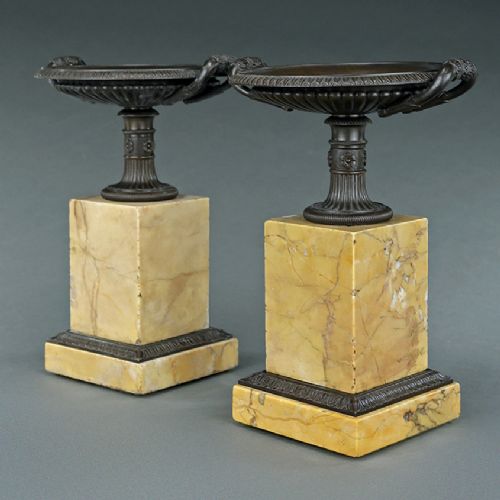
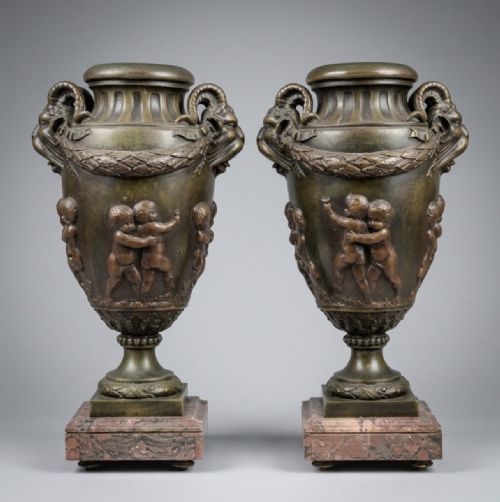
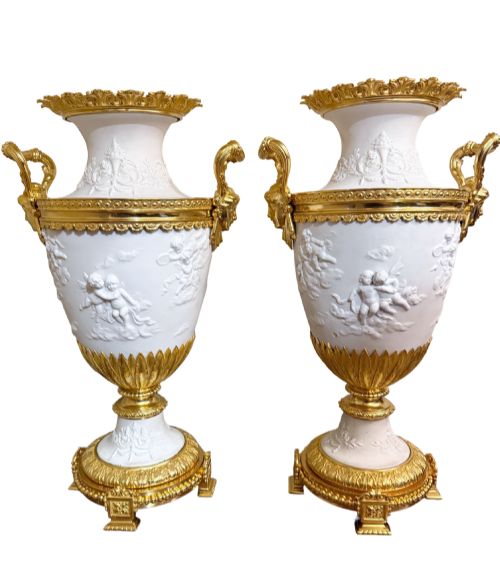
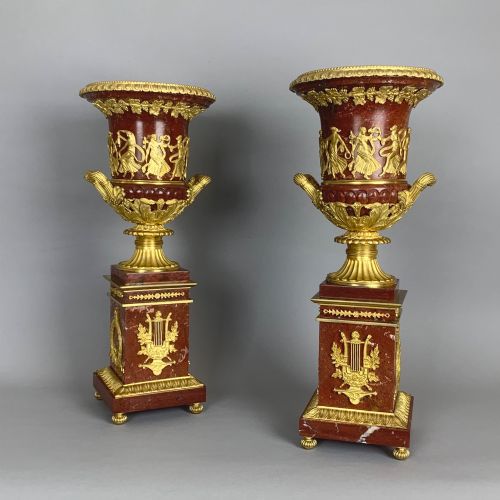
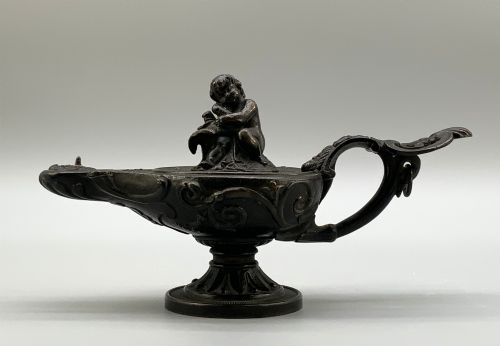
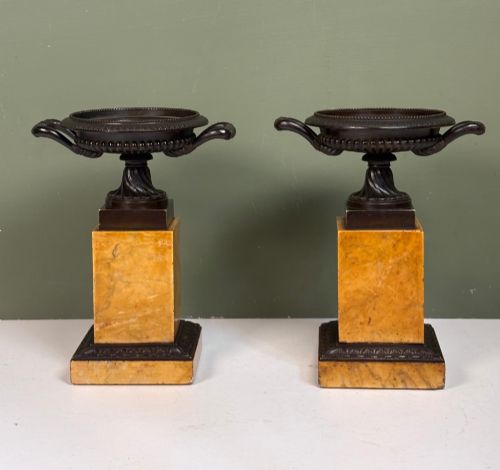
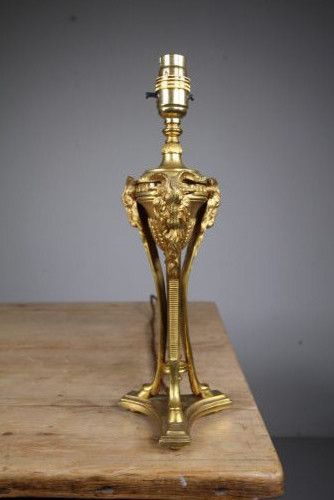
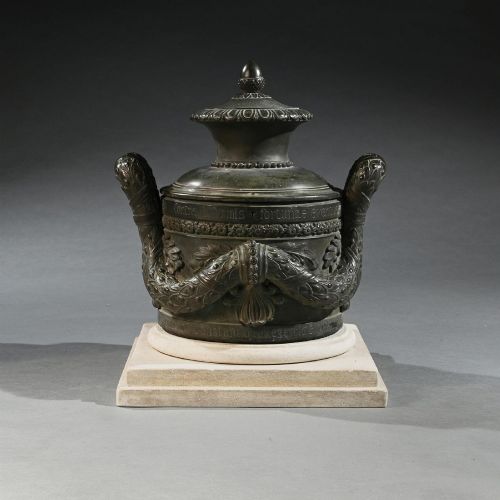
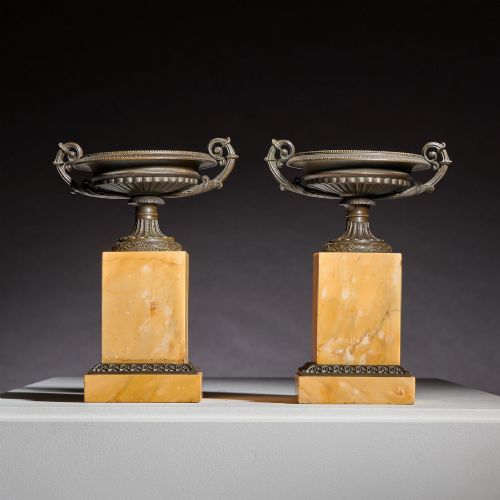
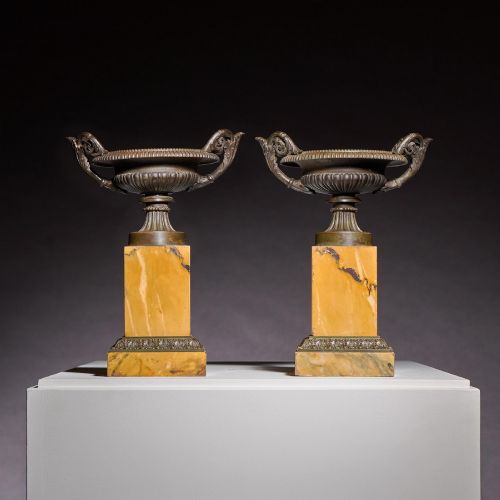
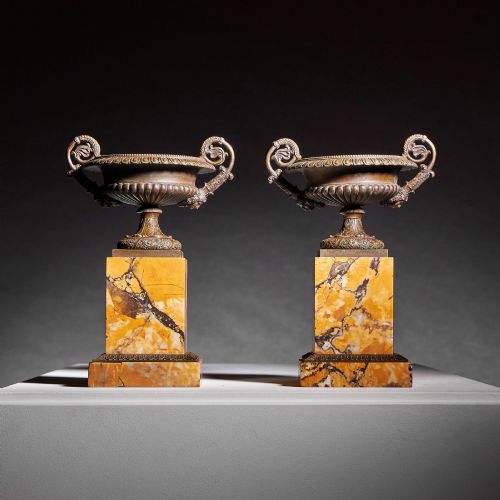
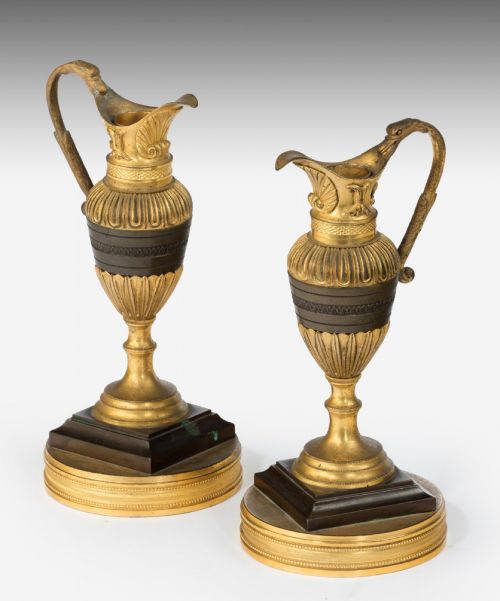
Neoclassical bronze urns take the form of classical vases, tazzas, ewers, and coupes rooted in ancient Greek and Roman design. When you search for neoclassical bronze urns, you encounter decorative vessels shaped by 19th-century makers working within French Empire, Regency, and Revival idioms.
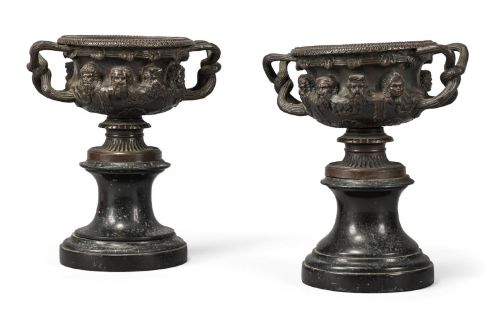
The pieces appearing on this page span the 19th century, including specific dates around 1830, 1860, and 1890. You find them most frequently mounted on heavy marble or slate pedestal bases, often formed as matched pairs intended for mantelpieces or side tables.
How they were made
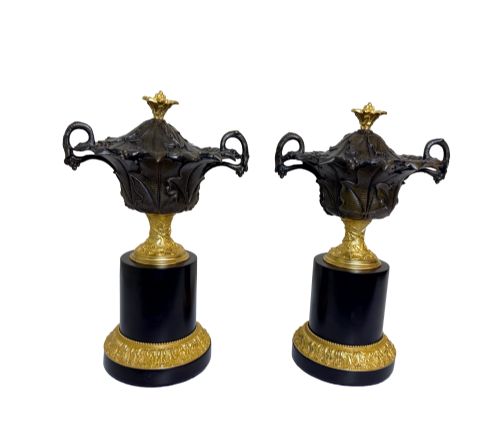
Maker's workshops cast these objects in bronze, utilising both dark patinated surfaces and bright ormolu, also known as gilt bronze. The juxtaposition of a deep, dark bronze body against polished gilt mounts creates the sharp contrast characteristic of the style.
Many examples incorporate turned marble or black slate plinths, combining heavy stone bases with detailed metal casting. The components are pinned or screwed together, uniting the metal vessel and its stone support into a stable architectural form.
Retail Price Guide 2026
Typical UK retail prices for neoclassical bronze urns, calculated from the Sellingantiques database of over a million retail prices indexed since 2003. This retail price guide relies exclusively on Sellingantiques data; no external sources or auction records are used, so the figures do not describe the wider market.
Listings feature 19th-century pieces spanning French Empire, Regency, and revival styles, utilising bronze, ormolu, marble, and slate.
What varies in quality
Quality reveals itself in the crispness of the chased detail across the ormolu mounts and the depth of the bronze patina. Superior examples display sharply defined classical motifs and clean joinery between the metal body and the stone plinth.
The choice and mass of the stone base also signal grade, with dense black marble and variegated pedestals lifting the better pieces above simpler cast variants.
The Neoclassical Bronze Urns Glossary
- Ormolu
- Gilt bronze produced by applying a mercury-gilding technique to cast bronze. This creates a durable, luminous golden surface that highlights the chased details.
- Patinated bronze
- Bronze treated chemically to achieve a dark, stable surface tone. It provides a foil for the brighter gilt-bronze mounts.
- Tazza
- A shallow bowl or vase raised on a stem and foot, frequently employed in classical revival metalwork. These vessels echo ancient Roman drinking vessels adapted for display.
- Plinth
- The flat slab or block serving as a base for a vase or urn. In these pieces, stone plinths add visual weight and grounding to the bronze structure.
- Grand Tour
- The 19th-century tradition where travellers collected classical antiquities and revival souvenirs across Europe. Objects from this context often translate ancient architectural forms into cabinet-sized decorative bronzes.
Frequently Asked Questions
What are neoclassical bronze urns?
Neoclassical bronze urns are 19th-century decorative vessels cast in bronze and ormolu, following ancient Greek and Roman designs. Makers often mounted these pieces on marble or slate plinths for display.
They appear as pairs of vases, coupes, ewers, or tazzas designed to emulate classical antiquity during the French Empire, Regency, and Revival periods.
How were these urns used historically?
Historically, these urns served strictly as ornamental objects rather than functional vessels. Wealthy households displayed them on mantelpieces, sideboards, and pedestals to signal classical learning and refined taste.
During the 19th century, travellers on the Grand Tour brought similar pieces home as symbols of European culture and classical education.
How do you style bronze urns today?
Bronze urns work best as symmetrical pairs on heavy furniture, mantels, or console tables where their classical proportions can anchor a room. Their dark patinated bodies and gilt highlights complement both traditional period interiors and clean, contemporary spaces.
Because they are complete decorative objects in their own right, they need no added floral arrangements or contents to command attention.
How do I identify a 19th-century piece?
Nineteenth-century pieces show distinct material traits, such as heavy cast bronze, fire-gilt ormolu mounts, and turned black marble or slate bases. Construction methods, including traditional hand-chasing and pegged joints, point to this era of revival craftsmanship.
Stylistic cues link them directly to French Empire, Regency, and 19th-century Revival workshops active between 1830 and 1890.