
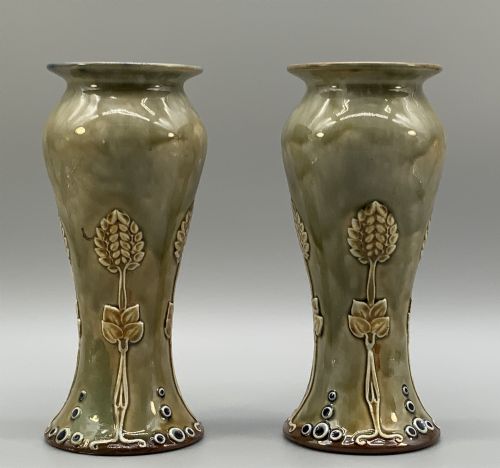
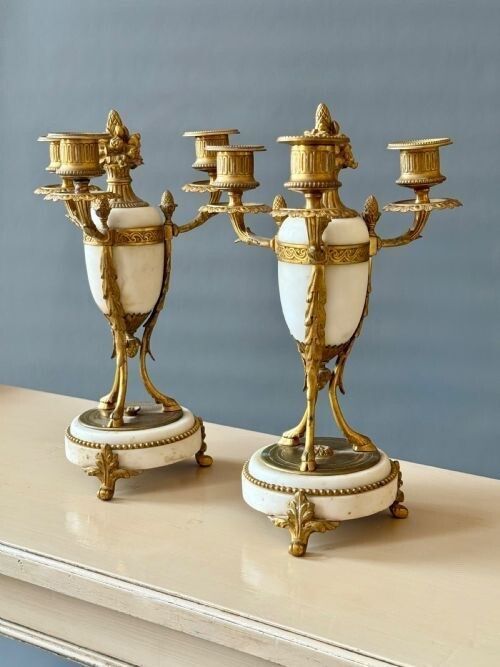
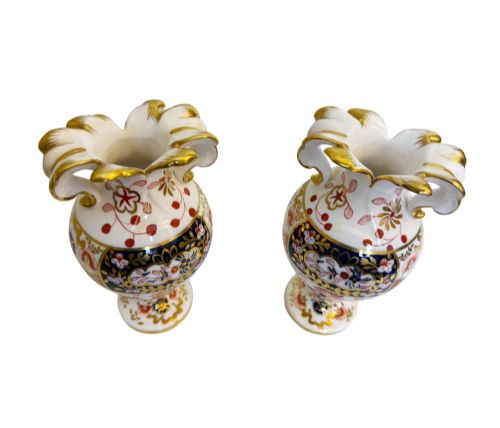

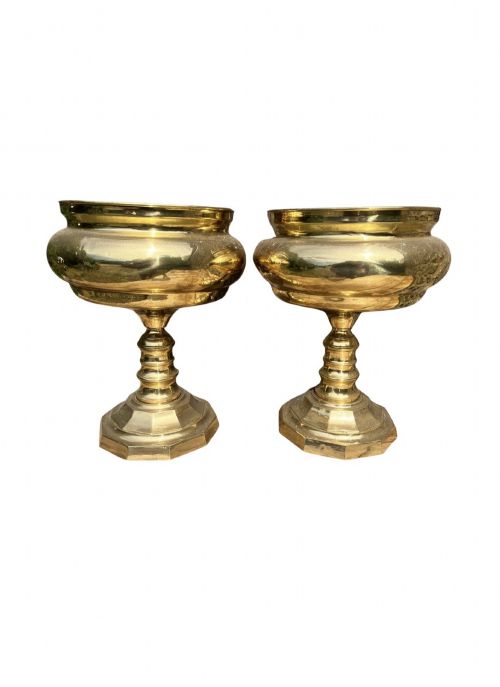


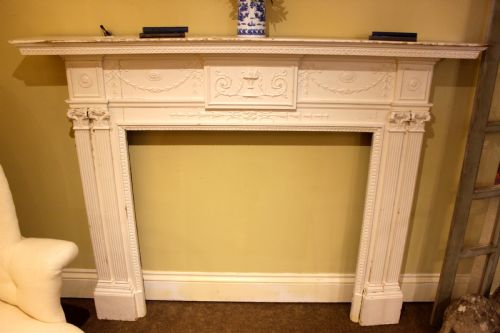


Antique Mantelpiece Urns
Antique mantelpiece urns bring classical symmetry and rich material texture to a room, offering the kind of decorative presence collectors seek for a focal mantel.

What antique mantelpiece urns are
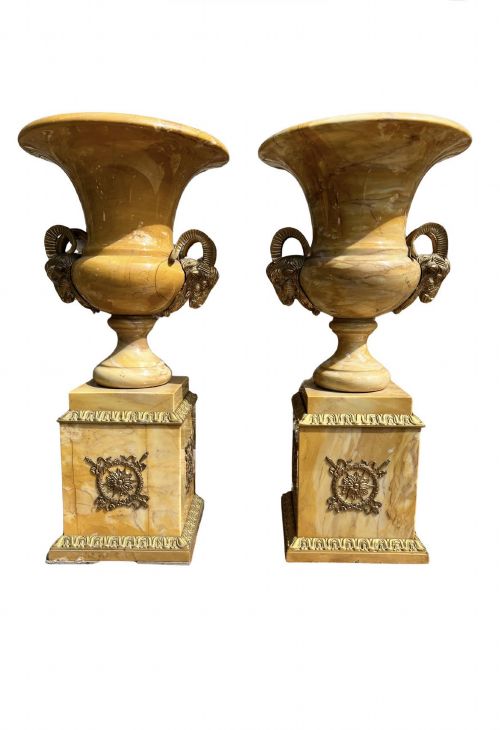
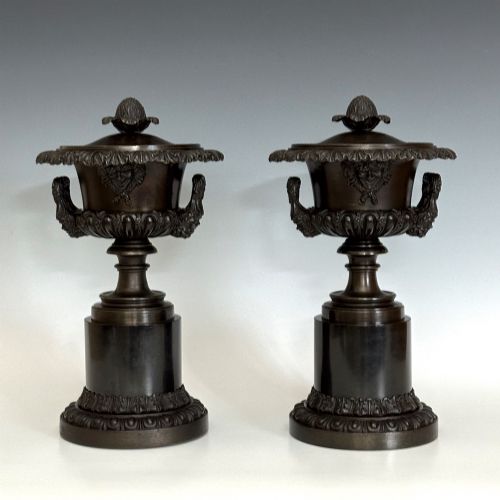
When searching for antique mantelpiece urns, a buyer is looking at decorative vessels designed specifically for display on a fireplace shelf, drawing upon classical antiquity for their inspiration. These pieces typically survive as symmetrical pairs rather than solitary objects, creating balanced arrangements that suit formal interior schemes.
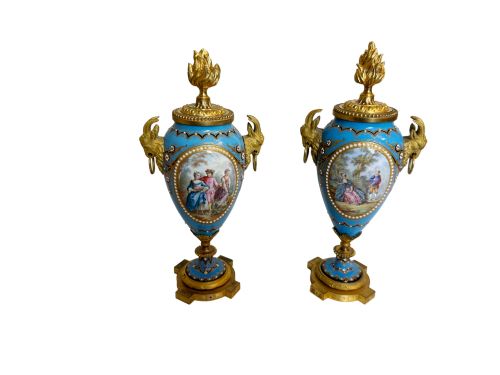
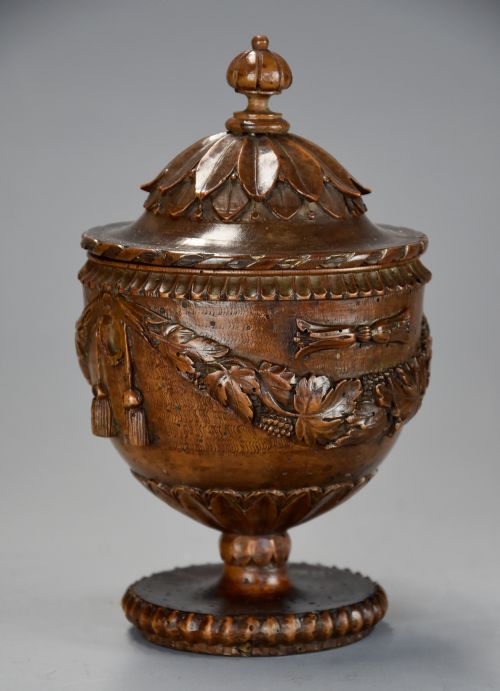
On this page, you are most likely to meet 19th-century and Victorian examples reflecting Neoclassical, Louis XVI, French Empire, and Grand Tour tastes. The forms vary from traditional classical urn shapes to cassolettes and vases with handles, translating ancient architectural motifs into portable ornaments for the domestic interior.
How they were made
The makers of these decorative urns utilised a combination of cast metals and carved stone, frequently pairing gilt bronze and ormolu with green or white marble. These components were often cast in sections and mechanically joined, allowing for intricate surface decoration and contrasting material textures.
Surface embellishments included applied gilt highlights, enamel detailing, and fine chasing upon the bronze elements. Porcelain bodies were painted and glazed, sometimes integrating metallic mounts directly into the ceramic structure to secure bases, rims, and handles.
Retail Price Guide 2026
Typical UK retail prices for mantelpiece urns, calculated from the Sellingantiques database of over a million retail prices indexed since 2003. This retail price guide relies exclusively on Sellingantiques data; no external sources or auction records are used, so the figures do not describe the wider market.
Current listings feature items from the 19th century and the Victorian period, utilising materials such as green marble, porcelain, and gilt bronze.
What varies in quality
The distinction between the top of the range and lesser examples lies in the crispness of the metal chasing and the depth of the gilding. Superior pieces display sharply rendered foliage and classical figures with clean undercutting, whereas lower-quality castings appear softer and rely on flat, uniform finishes.
Material selection also dictates the hierarchy of these objects, particularly the density and figuring of the marble or the purity of the porcelain body. Integrated mounts that fit seamlessly without visible pins or gaps separate masterwork production from more commercial studio output.
The Antique Mantelpiece Urns Glossary
- Ormolu
- Gilded bronze, where a layer of gold amalgam is applied to a base of cast bronze and heated to drive off the mercury. This technique produces a durable, rich metallic lustre characteristic of French decorative arts.
- Cassolette
- A decorative vessel shaped like an urn or vase with a reversible lid that functions as a small bowl or burner. They often feature pierced metal collars designed to release scents into a room.
- Grand Tour
- A traditional trip through Europe undertaken by upper-class young men in the 18th and 19th centuries to study classical art and architecture. Souvenirs brought back included miniature bronzes and marble vases.
- Neoclassical
- A style of art and architecture spanning the 18th and 19th centuries that drew direct inspiration from the classical art and culture of ancient Greece and Rome. It emphasises symmetry, straight lines, and classical motifs such as acanthus leaves and urns.
- Restoration period
- A phase in French design under the Bourbon Restoration, falling within the early 19th century. It bridges the decorative excesses of the Empire style with the more restrained bourgeois tastes that followed.
Frequently Asked Questions
How were they used historically?
In 19th-century interiors, mantelpiece urns functioned as permanent decorative centerpieces designed to anchor the visual weight of a fireplace. They demonstrated the owner's cultural literacy and appreciation for classical antiquity.
Pairs were arranged symmetrically alongside clocks or candelabra to create a formal display that commanded attention within a principal reception room.
How do I style them at home?
Place a matched pair symmetrically on a mantel shelf, sideboard, or bookcase top to establish an immediate sense of formal balance. Ensure the surrounding decor remains relatively uncluttered so the materials and silhouette of the urns can be appreciated.
Keep them out of direct sunlight if they feature delicate painted porcelain or enameled surfaces to prevent fading over time.
How do I tell Victorian from earlier styles?
Victorian examples often interpret earlier Neoclassical or French Empire designs through a domestic, heavier lens using local marbles and varied cast metals. Earlier 19th-century pieces, particularly those tied to the French Grand Tour or Restoation periods, frequently exhibit sharper metal chasing and more precise adherence to classical proportions.
Examining the construction methods underneath the base can reveal the age of the mounts and the purity of the materials used.