



Cast Iron Planters
Cast iron planters bring heavy sculptural weight to garden design, offering durable outdoor display vessels from the nineteenth and early twentieth centuries.
Understanding cast iron planters
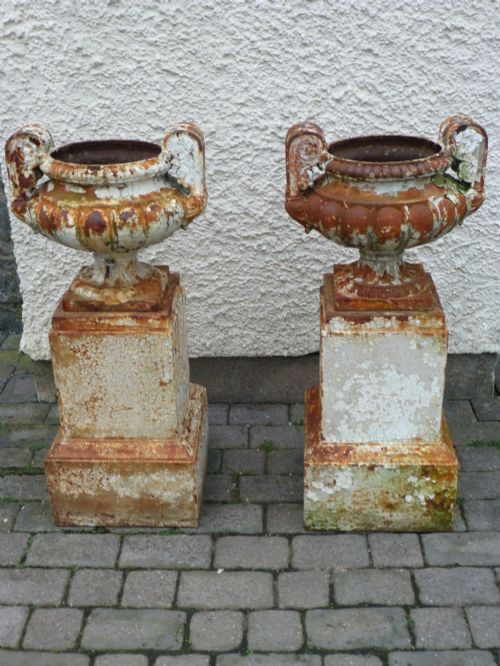
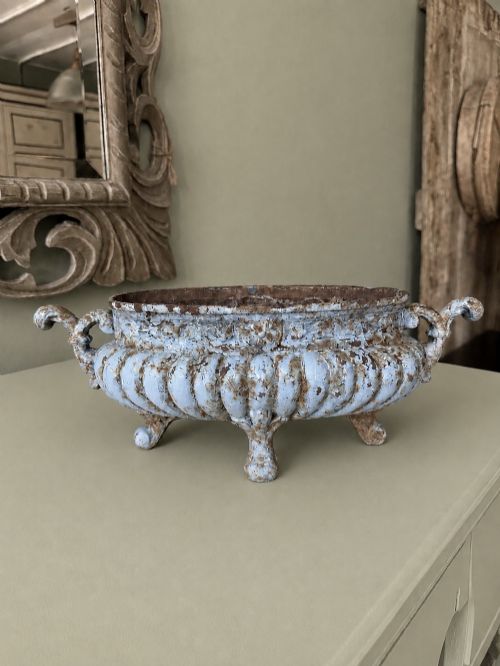
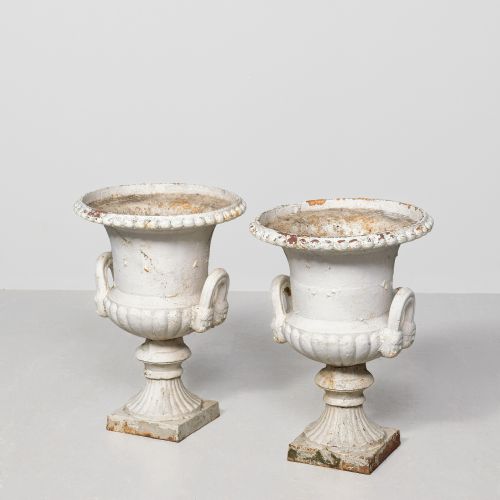
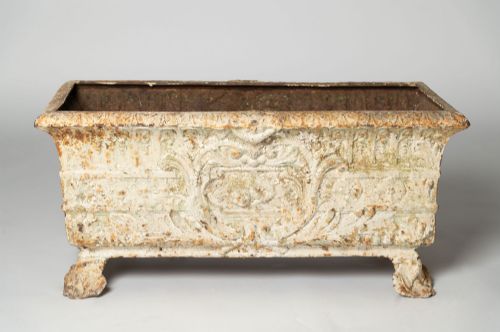
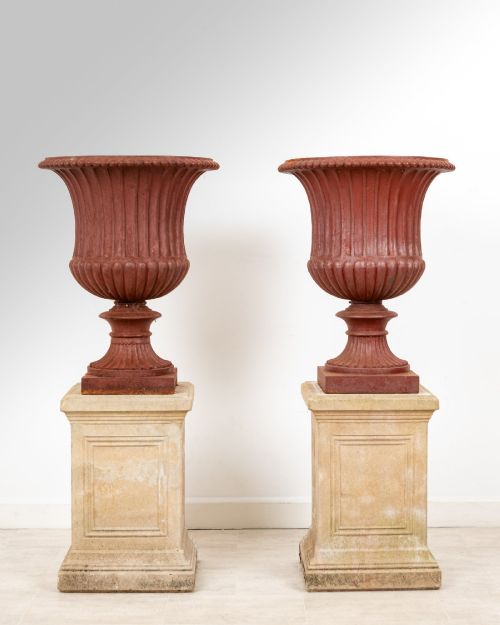
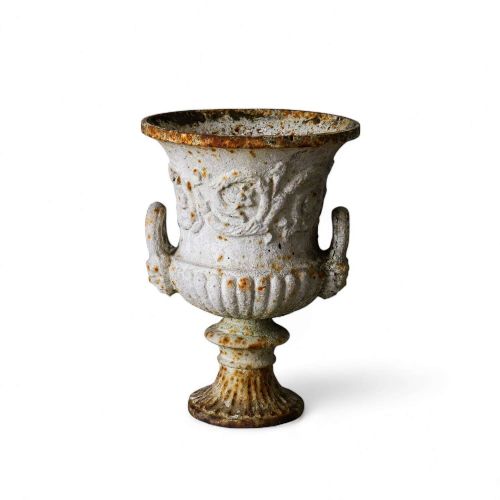
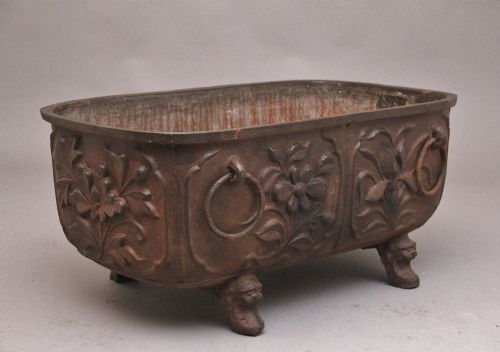
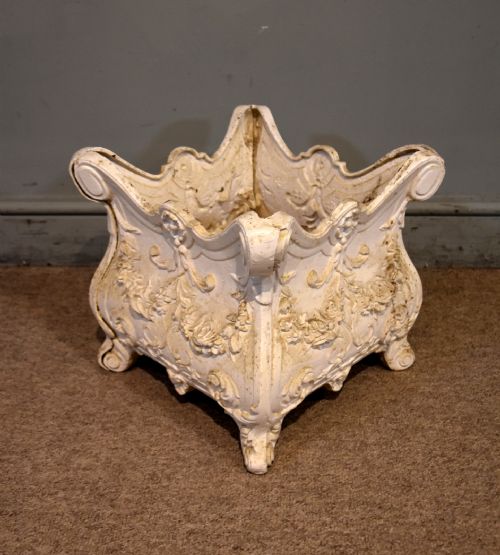
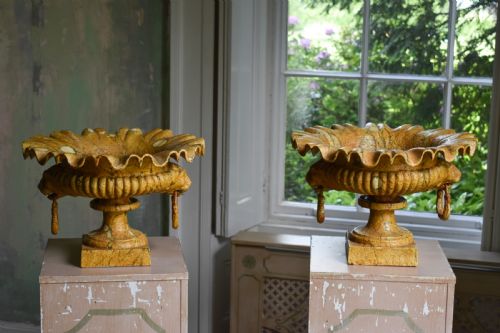
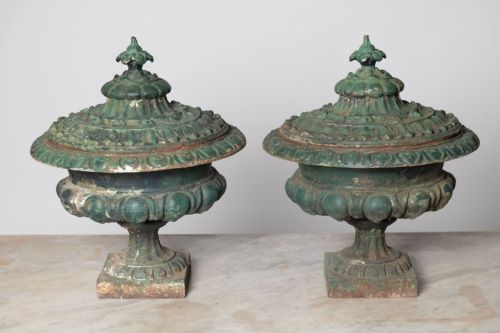
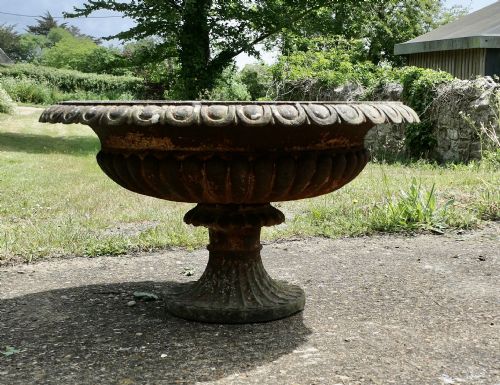
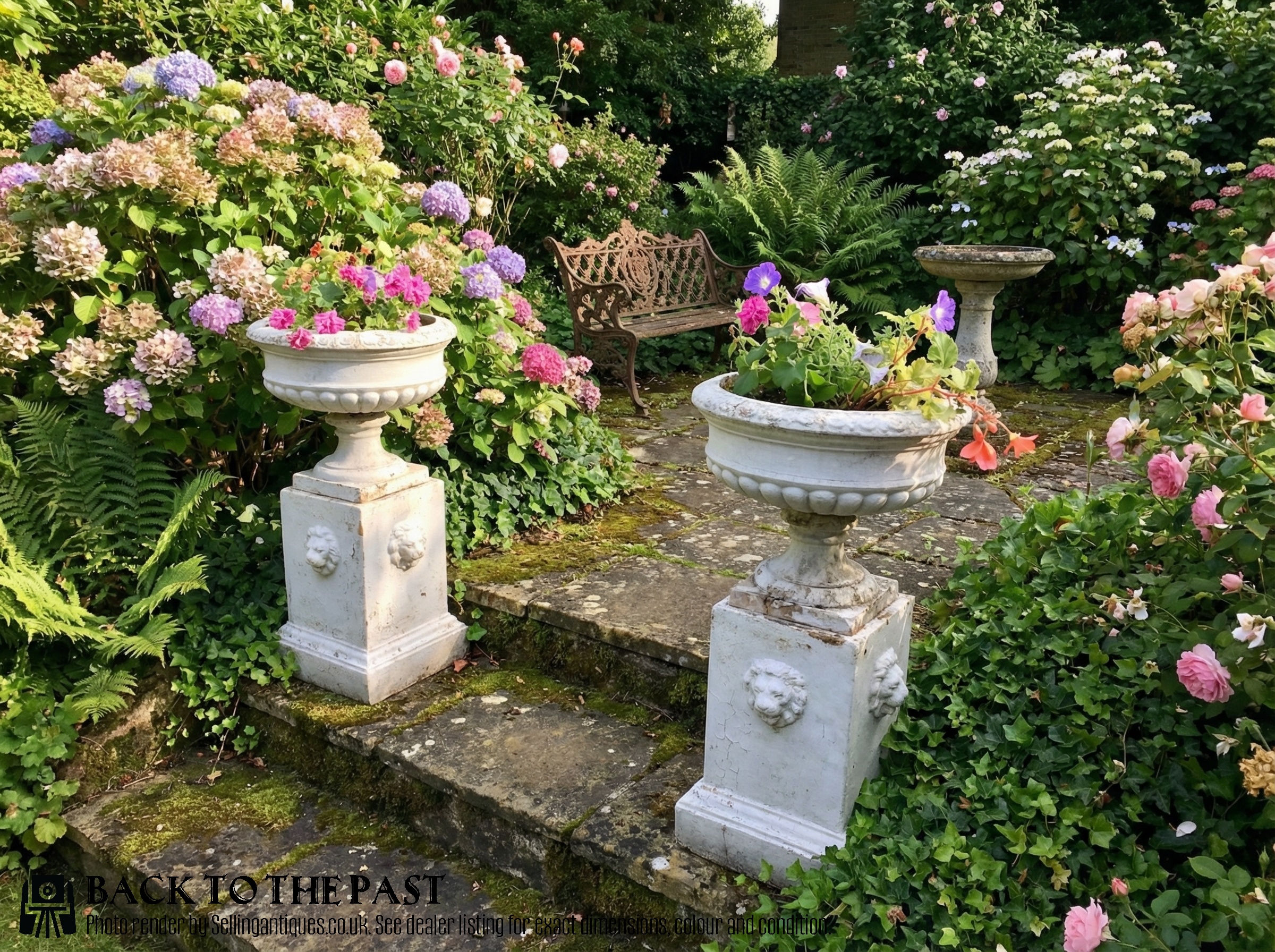
Cast iron planters are robust garden vessels designed for outdoor display, appearing most frequently on this page as pairs of Victorian garden urns, jardiniere planters, and novelty forms on stands. These pieces range from classical urns on plinths to lattice patterns, French designs, and architectural shapes.
The selection encompasses periods from the early nineteenth century through the Edwardian era and 1900, showing regional origins in England and France. Buyers frequently encounter matching pairs and sets rather than single vessels.
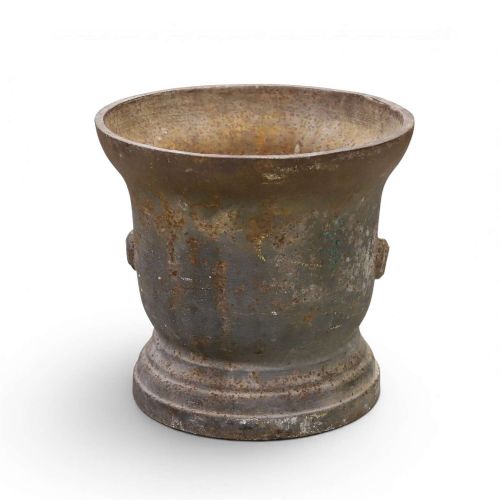
Forms vary from large pedestal urns to windowsill boxes and wall-hanging planters, providing substantial metal structure for historical gardens and terraces.
Evaluating quality and proportion
Quality rests upon the crispness of the cast ornament and the balance of proportion between the vessel body, stands, and plinth bases, where finer examples display sharp relief work rather than softened contours.
The presence of a true matching pair or a complete set elevates a piece above single utilitarian items, while sophisticated design details like lion paw feet or novelty animal motifs demonstrate higher foundry ambition.
Retail Price Guide 2026
Typical UK retail prices for cast iron planters, calculated from the Sellingantiques database of over a million retail prices indexed since 2003. This retail price guide relies exclusively on Sellingantiques data; no external sources or auction records are used, so the figures do not describe the wider market.
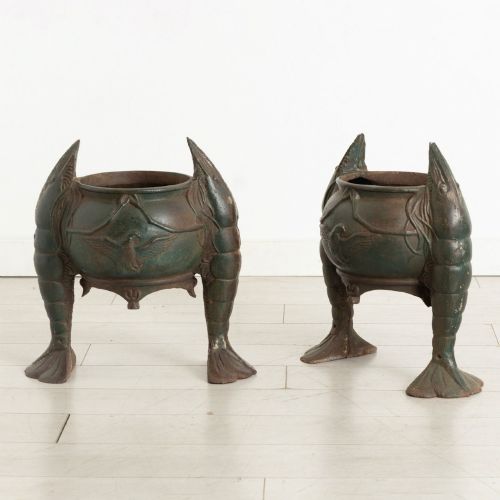
Foundries occasionally stepped outside classical restraint to cast planters shaped entirely as giant marine shrimp.
Coalbrookdale
The Cast Iron Planters Glossary
- Urn
- A rounded vase-shaped vessel, often set upon a pedestal or plinth base for garden display. These form the majority of large outdoor display pieces.
- Jardiniere
- An ornamental pot or receptacle intended for holding plants or flowers. They appear frequently in Victorian and Edwardian groupings.
- Plinth base
- A heavy rectangular or square block supporting an urn or planter. This architectural element elevates the vessel off the ground.
- Novelty form
- A sculptural vessel shaped to resemble an animal, creature, or distinct object rather than a standard geometric pot.
Frequently Asked Questions
How do I clean cast iron planters?
Remove loose dirt with a soft brush and wash gently with warm water.
Avoid harsh chemical detergents that strip protective paint layers.
Are these planters frost resistant?
Cast iron is extremely durable outdoors, though heavy frost can expand trapped moisture.
Ensure adequate drainage holes remain clear during winter months.
Can I leave them outside all year?
These robust garden vessels are specifically designed for permanent outdoor display in all seasons.
Their heavy weight prevents them from blowing over in high winds.
How do I distinguish Victorian from Edwardian pieces?
Victorian examples often feature heavier classical urn shapes, elaborate latticework, and deep relief casting.
Edwardian designs tend toward cleaner lines while maintaining traditional foundry methods.