





Classical Garden Planters
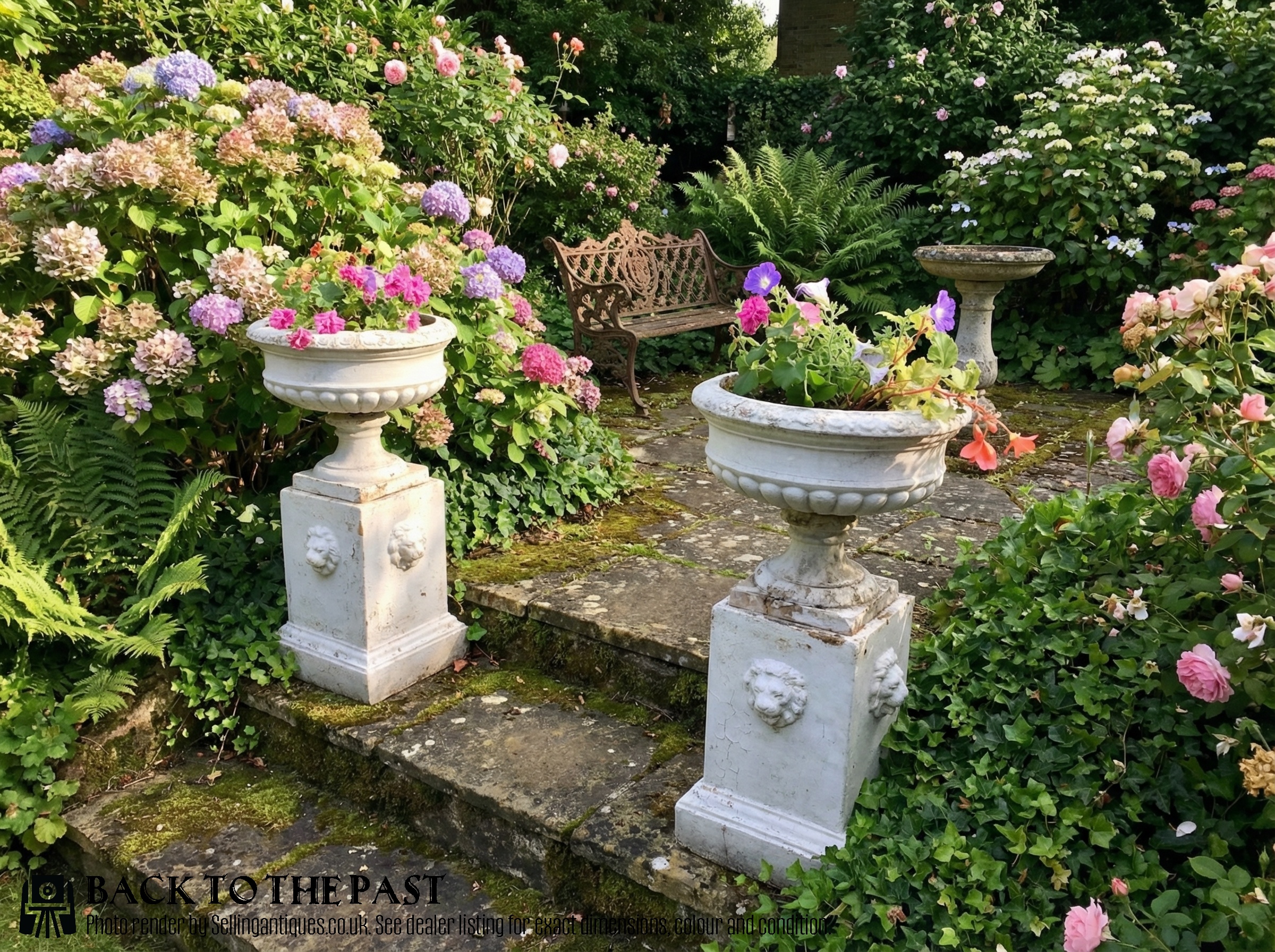
Classical garden planters bring architectural dignity to grounds, taking the form of cast iron and stone urns, cisterns, and tazza vessels.
Classical Garden Planters
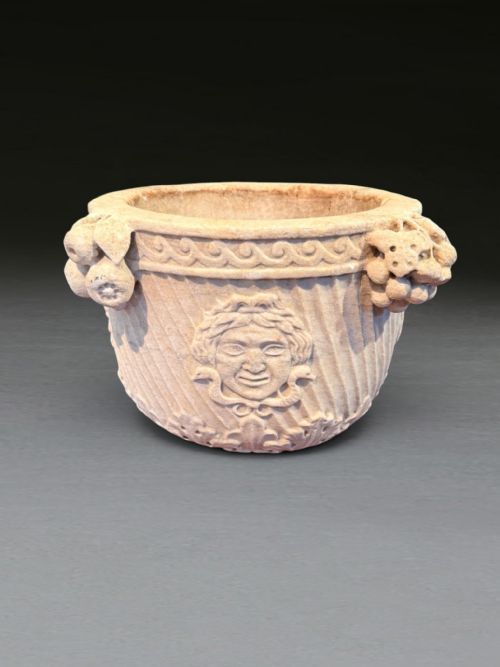
Classical garden planters encompass heavy cast iron urns, terracotta vessels, and stone containers shaped by neoclassical, Victorian, and Regency design principles. Buyers encounter garden urns, jardiniere pots, and carved stone cisterns produced across the eighteenth and nineteenth centuries.
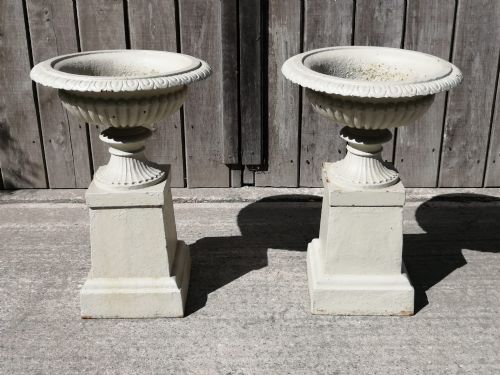
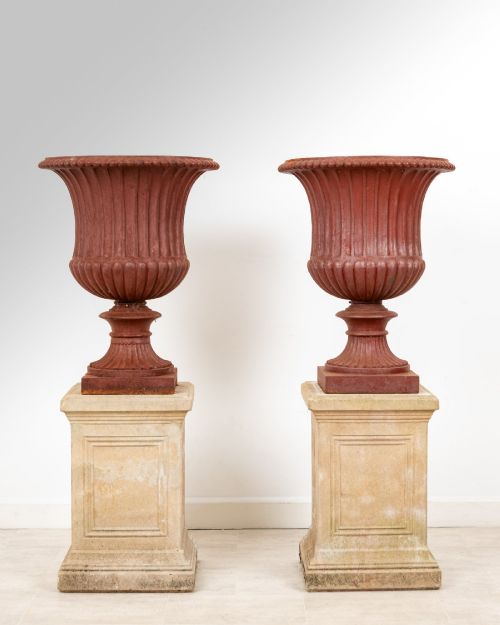
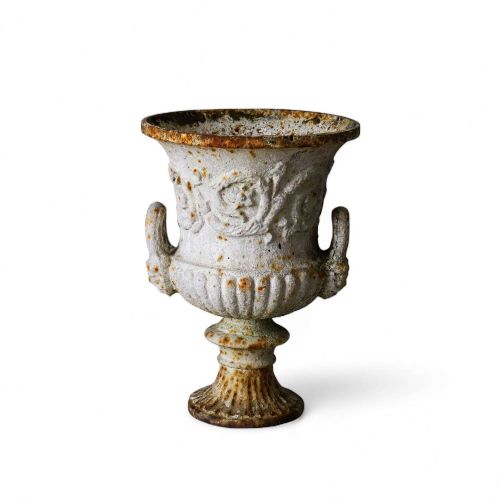
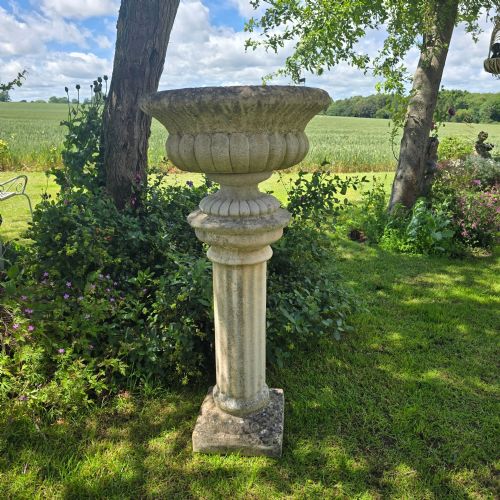
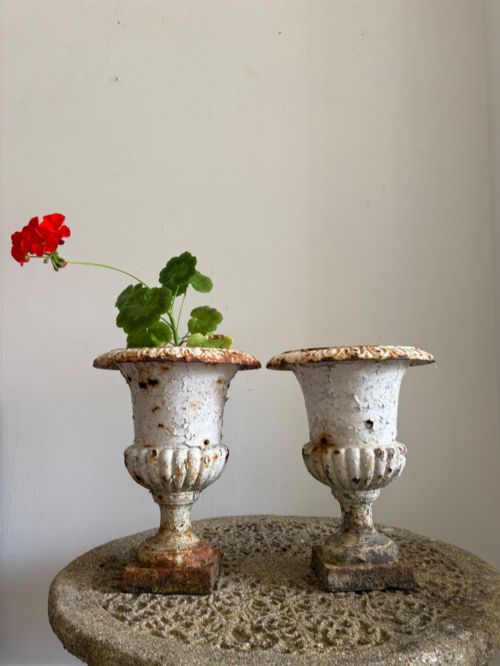
The cast iron campana urn stands as the most frequent form on this page, often raised on pedestals or plinths. These pieces translate classical architectural motifs into robust outdoor containers suited for terraces and formal lawns.
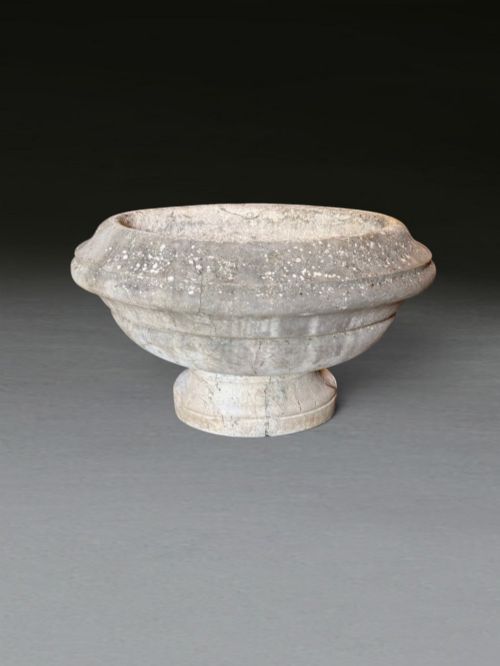
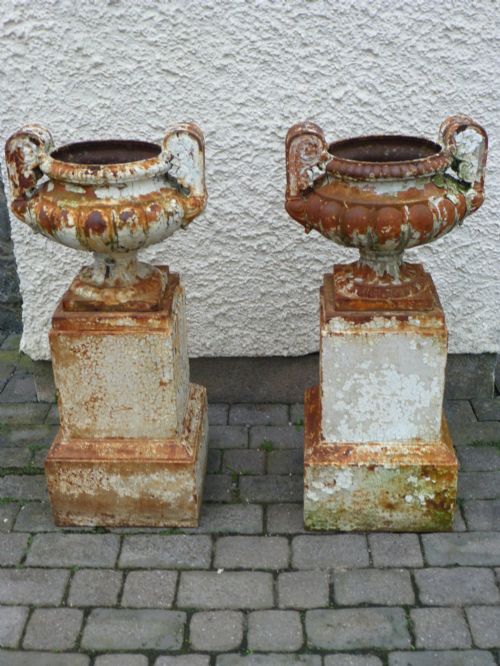
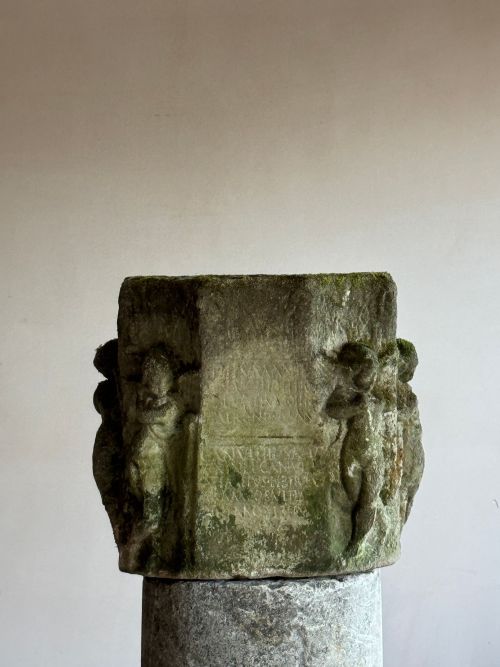
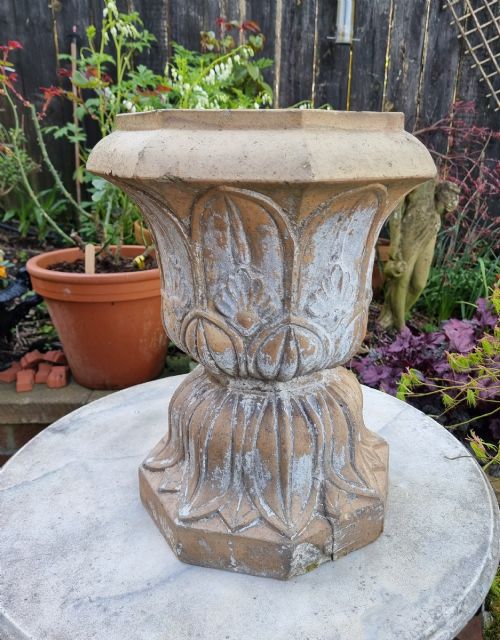
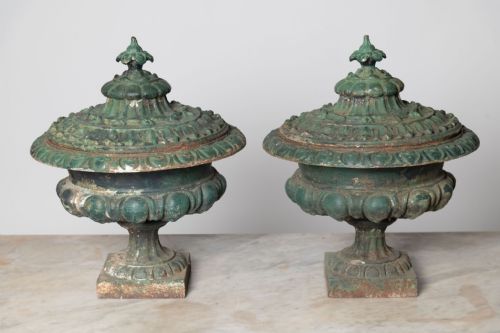
Earlier examples include eighteenth-century marble cisterns and carved stone baskets, while nineteenth-century foundries supplied robust cast iron and terracotta variations. Many survive in matched pairs, complete with weathered paint or natural patination.
Materials and foundry methods
Foundries utilised cast iron poured into moulds to produce durable garden urns, sometimes bearing foundry marks from prominent makers. Cast stone, reconstituted stone, and soft stone provided alternative structural bodies for architectural planters.
Terracotta and carved marble required skilled modelling and stonecutting, yielding garden vessels with porous walls or smooth classical contours. Artisans finished metal surfaces with protective layers of paint that weather over decades of outdoor exposure.
Classical Garden Planters Retail Price Guide 2026
Typical asking prices for classical garden planters among the pieces listed under this phrase on Sellingantiques today, from the lower quarter to the upper quarter. They describe what is for sale here now, not the wider market.
The listings show nineteenth-century cast iron as the predominant material, alongside terracotta, marble, and reconstituted stone.
Evaluating quality and proportion
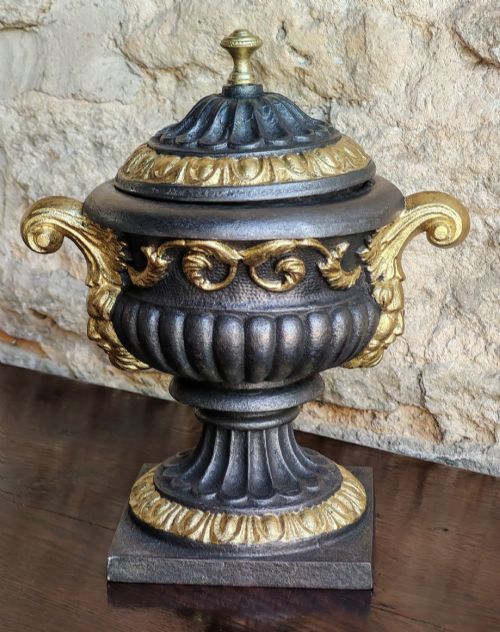
Quality rests in the crispness of the cast acanthus leaf ornament, the balance of the classical proportions, and the integrity of the original pedestals or plinths. Superior metalwork displays clean lines and sharp casting details without surface distortion.
The depth of the natural patination and the survival of original painted finishes distinguish well-preserved examples from later replacements. Weight and thickness in the cast iron or stone body indicate the substance of the original manufacture.
Falkirk Carron foundry·Coalbrookdale·Andrew Handyside·Val D Osne Foundry
The Classical Garden Planters Glossary
- Campana
- A bell-shaped garden urn derived from classical pottery forms. This silhouette remains a staple of nineteenth-century foundry production.
- Tazza
- A shallow cup-shaped vessel raised on a stem and foot. These open planters display trailing foliage effectively.
- Jardiniere
- An ornamental container designed to hold plants or flowers. These vessels appear in both cast iron and terracotta.
- Cistern
- A large rectangular or oblong basin used for water storage or planting. Eighteenth-century examples often feature carved neoclassical reliefs.
- Plinth
- A heavy base block supporting an urn or statue. Original matching pedestals complete the architectural composition.
Classical Garden Planters: Frequently Asked Questions
How do I secure heavy cast iron planters?
Heavy cast iron planters generally require no mechanical fixing due to their substantial weight and sturdy pedestals. Position them on a level stone or paved surface to ensure even weight distribution.
For elevated positions or windy terraces, ensure the supporting plinth is securely bedded. Avoid placing heavy metal vessels directly on soft soil where settlement might cause tilting.
Can I leave cast iron urns outside in winter?
Cast iron urns withstand winter frost successfully, provided drainage holes remain clear of debris. Trapped water freezing inside the metal body can cause structural stress over time.
Terracotta and stone vessels require closer attention during freezing conditions to prevent moisture absorption from cracking the material. Elevating planters on small feet prevents standing water from freezing underneath.
How do I clean weathered garden urns?
Wash weathered urns gently with clean water and a soft brush to remove loose dirt and organic moss growth. Preserve the existing patina and original paint surfaces by avoiding harsh chemical cleaners.
Allow stone and cast iron to dry naturally after cleaning. Regular light brushing prevents biological accumulation without altering the historic surface finish.
Are original plinths important for urns?
Original plinths maintain the correct architectural proportion and height intended by the foundry or designer. Matched pairs of urns and pedestals hold greater design integrity than assembled combinations.
Check whether the base and urn share the same period and material wear. A well-matched stone pedestal elevates the visual impact of a cast iron campana urn.