



Classical Garden Urns
Classical garden urns bring formal proportion and monumental presence to grounds, terraces and courtyards.
Classical Garden Urns
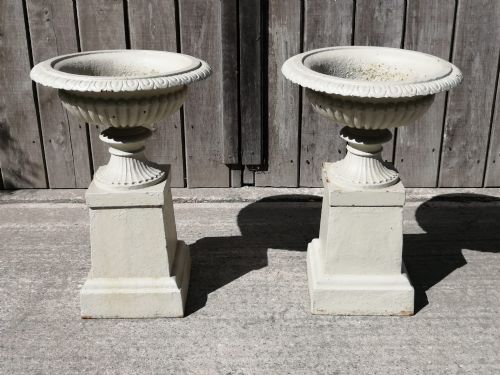
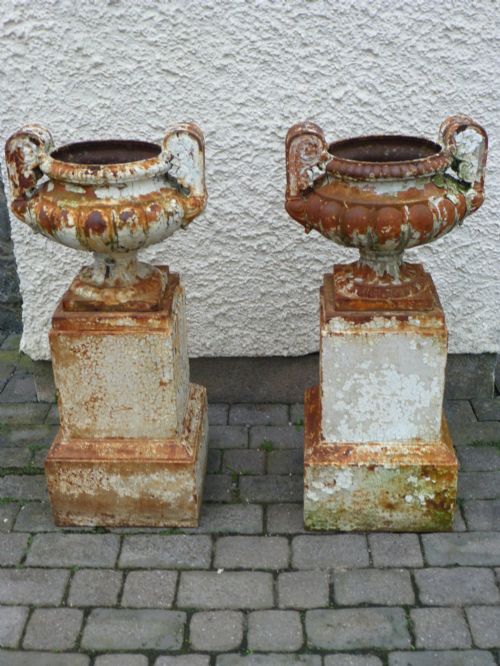
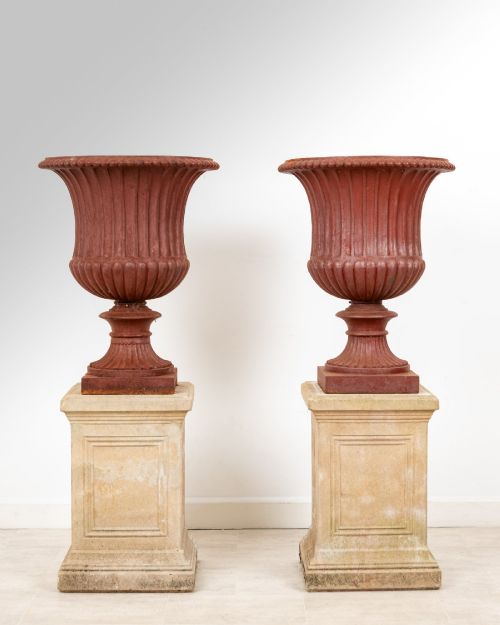
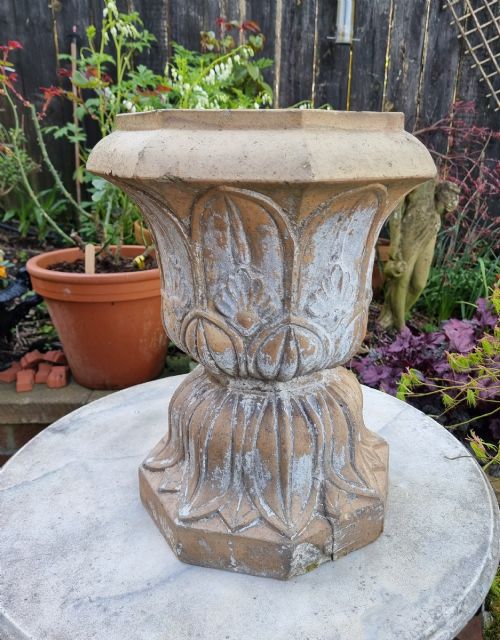
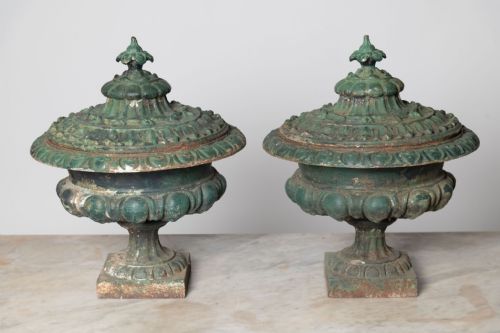
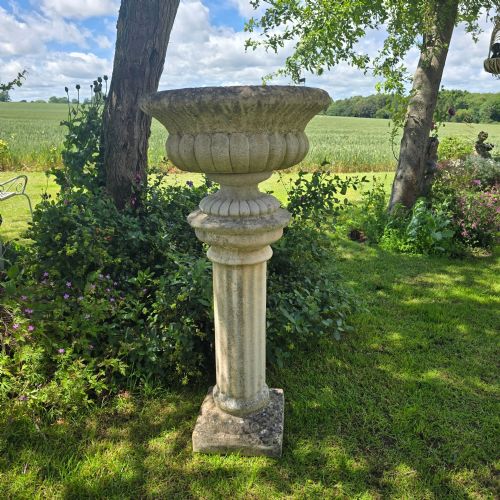
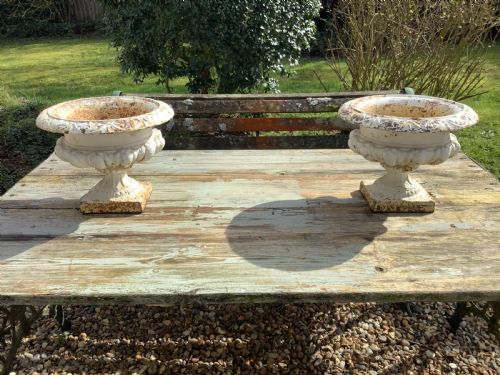
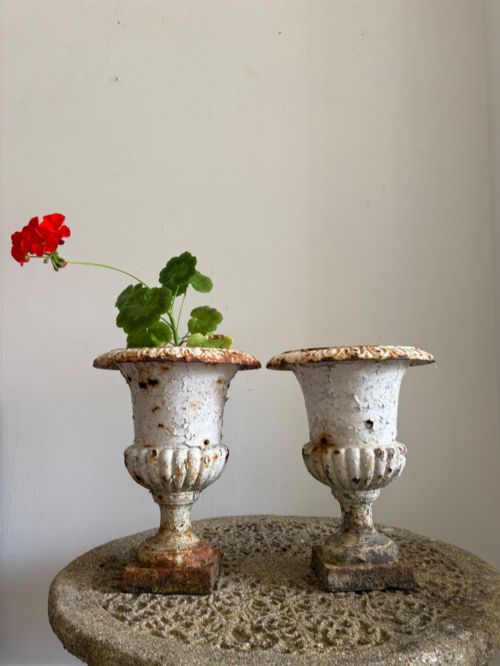
Classical garden urns stand as decorative focal points derived from antique funerary and ceremonial vessels, taking forms such as the Campana shape or tazza profile. Buyers meet cast iron examples from the nineteenth century alongside terracotta, reconstituted stone and marble vessels mounted on plinths or pedestals.
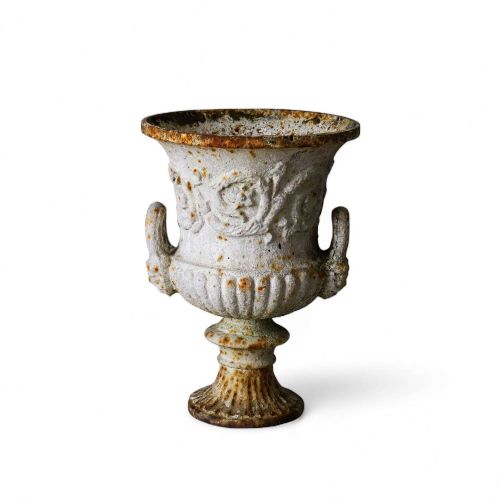
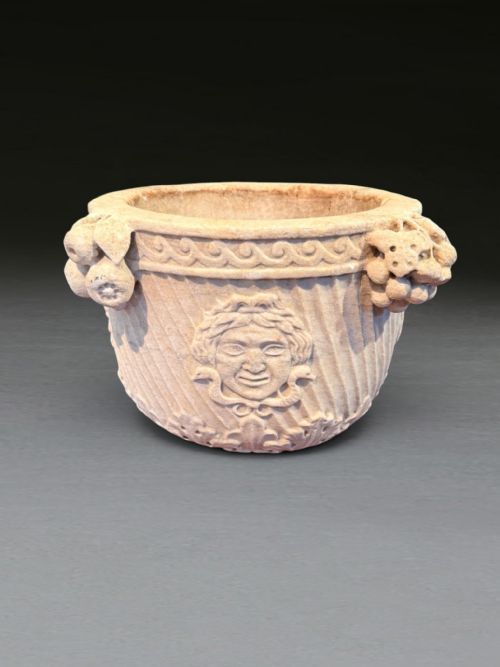
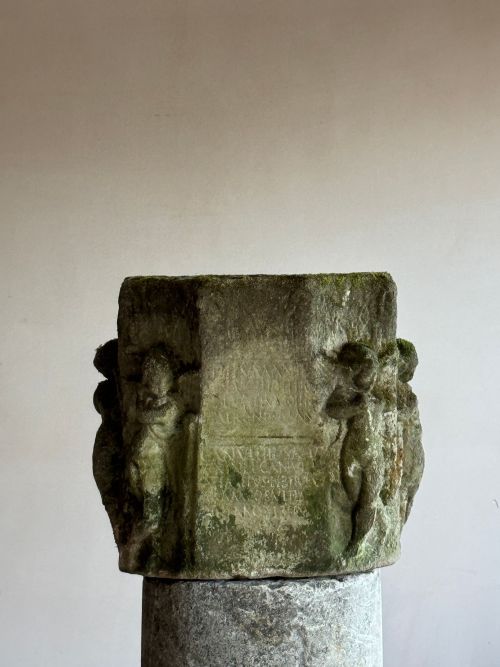
The selection ranges from sturdy pairs produced by British foundries to weathered continental pots and jardiniere planters. These objects often display neoclassical motifs including acanthus leaves and classical relief decoration suited to architectural landscaping.
Materials and foundry techniques
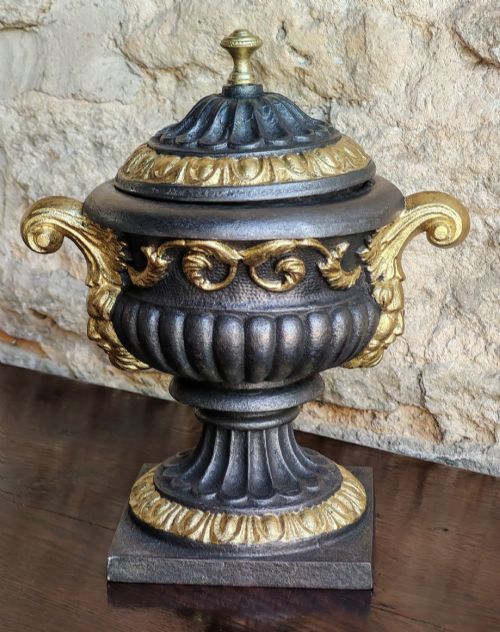
Foundries produced durable metal vessels by pouring molten iron into sand moulds, resulting in crisp surface details on Campana shapes and decorative panels. Cast iron urns frequently retain traces of early paint layers or develop a stable oxidized patina through outdoor exposure.
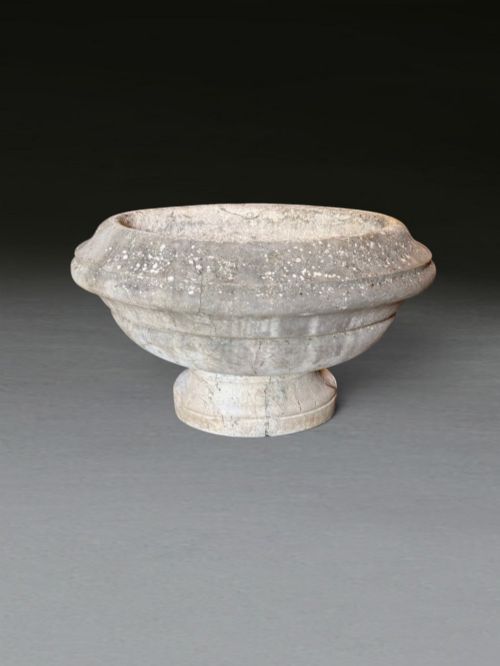
Makers fashioned earthenware vessels by pressing clay into moulds or throwing it on wheels before kiln firing, yielding porous terracotta bodies that weather over decades. Stone carvers and cast stone makers shaped limestone, marble and reconstituted mixes to replicate ancient carved monuments.
Classical Garden Urns Retail Price Guide 2026
Typical asking prices for classical garden urns among the pieces listed under this phrase on Sellingantiques today, from the lower quarter to the upper quarter. They describe what is for sale here now, not the wider market.
Listings feature items spanning the eighteenth century through the twentieth century, executed in cast iron, terracotta, marble and lead.
Assessing quality in garden urns
Quality rests in the sharpness of the cast ornament, where high-grade ironwork shows crisp acanthus foliage and well-defined rims without foundry pitting. Superior marble and stone examples demonstrate careful hand-carving and balanced proportions that maintain architectural harmony.
The presence of matching original plinths, pedestals or lids elevates an item's integrity within landscape settings. Surface character matters, as honest weathering and distressed historical paint finishes provide visual depth superior to modern repainting.
Falkirk Carron foundry·Coalbrookdale·Andrew Handyside·Val D'Osne Foundry
The Classical Garden Urns Glossary
- Campana urn
- A bell-shaped vessel with a flared rim and footed base. This form originates from classical antiquity and dominates nineteenth-century metal and terracotta garden production.
- Tazza
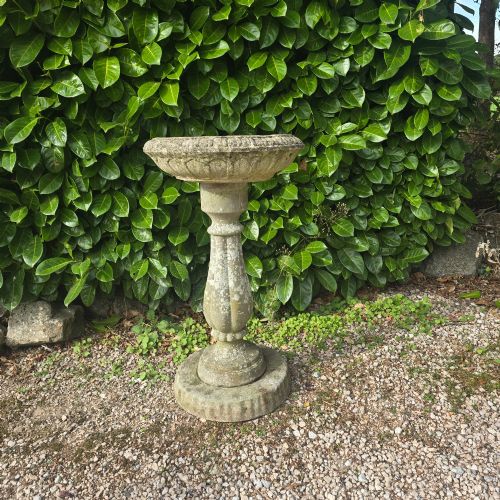
- A shallow cup or basin mounted on a stem and foot. These wide vessels serve as planters and display surfaces in formal garden settings.
- Reconstituted stone
- A durable material made from crushed stone aggregate mixed with cement and binder. Makers press this composite into moulds to replicate traditional carved stonework.
- Jardiniere
- An ornamental pot or stand designed to hold growing plants or flowers. These receptacles appear in terracotta, lead and cast iron across various historical periods.
- Plinth
- A heavy rectangular block or pedestal supporting an urn. Original matching bases provide structural elevation and visual completion to classical garden pieces.
Classical Garden Urns: Frequently Asked Questions
How do I place urns in a garden?
Position cast iron or stone urns symmetrically on stone pedestals at the ends of paths or flanking terrace steps to create formal architectural focal points.
Ensure stable ground placement because heavy metal and stone vessels require level foundations to prevent shifting during seasonal weather changes.
Can cast iron urns stay outside in winter?
Cast iron and reconstituted stone vessels withstand cold outdoor conditions well, provided drainage holes remain clear to prevent water accumulation and subsequent freezing damage.
Terracotta and softer stone pieces benefit from relocation to sheltered spaces during severe frost to avoid surface spalling and structural cracking.
How do I date a cast iron urn?
Nineteenth-century ironwork often bears foundry stamps, registration marks or characteristic sand-cast textures that distinguish period production from later reproductions.
Examine the bolt fixings, surface paint layers and weathering patterns, as genuine antique pieces display accumulated oxidation and historical wear consistent with age.
What is the difference between terracotta and stone?
Terracotta consists of fired clay that develops a porous, warm-toned body which acquires moss and lichen over decades of outdoor exposure.
Stone and cast stone offer heavier, rigid structures with neutral grey or buff colouration derived from natural mineral aggregates and carved masonry.