



Weathered Iron Urns
Weathered iron urns bring classical presence to gardens, forged from sturdy cast and wrought metals and aged by the elements.
Weathered Iron Urns
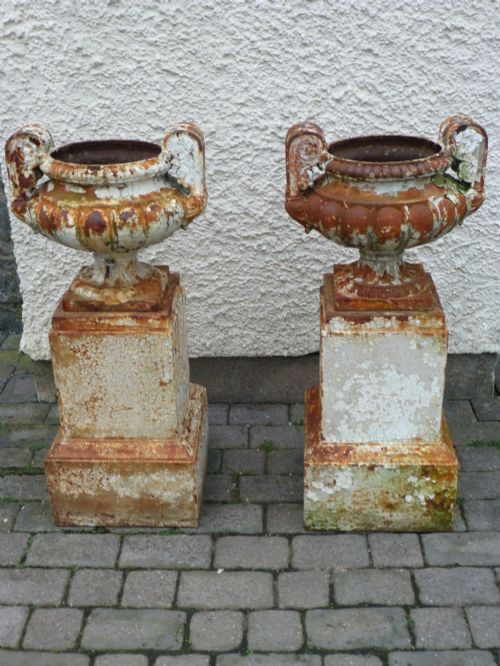
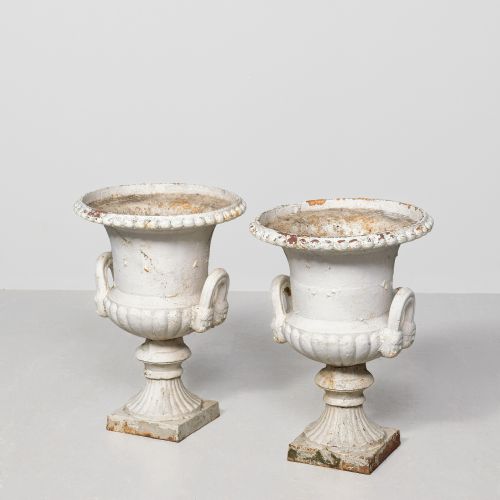
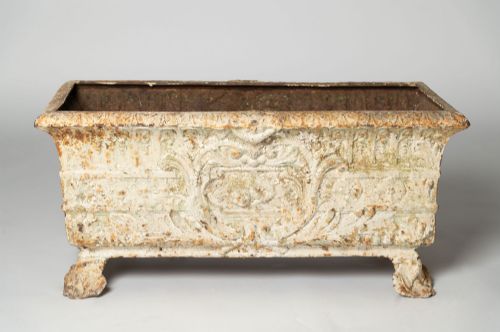
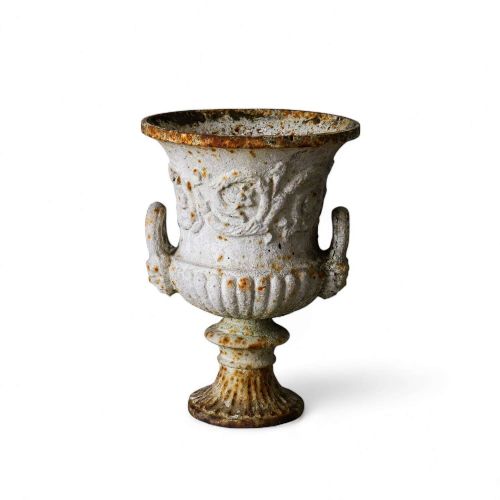
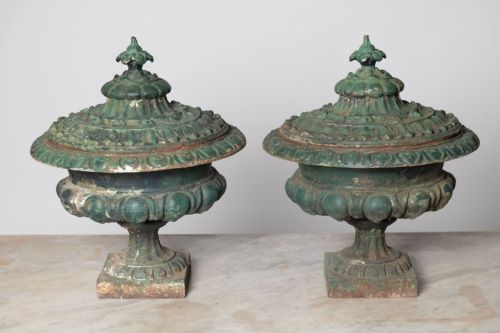
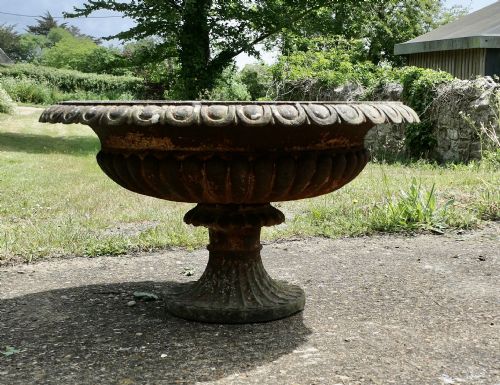
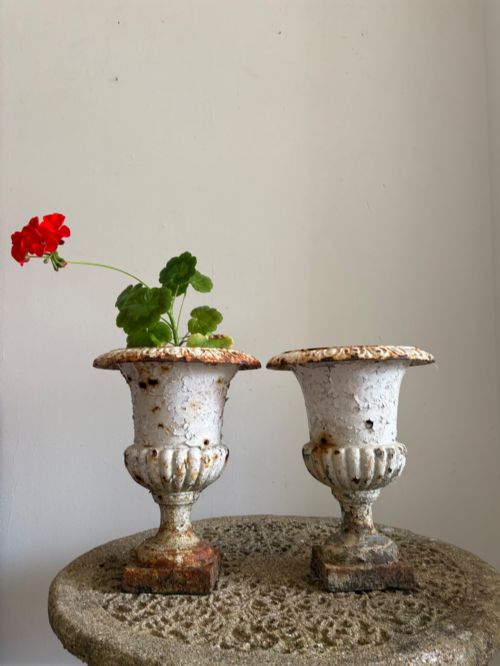
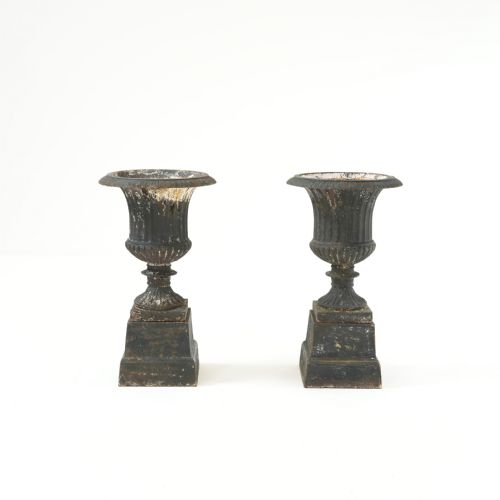
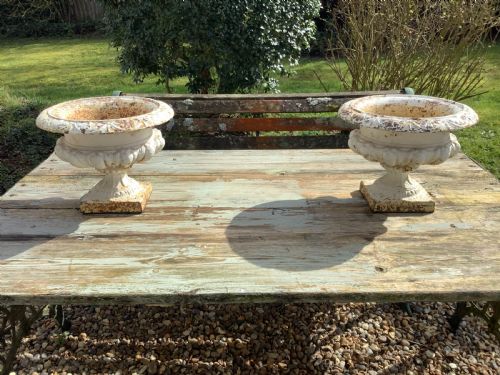
Weathered iron urns encompass garden vessels shaped largely in the campana and tazza forms, designed for outdoor display and planting. These pieces emerge predominantly from the nineteenth century, including Victorian and Regency periods, alongside later twentieth-century iterations.
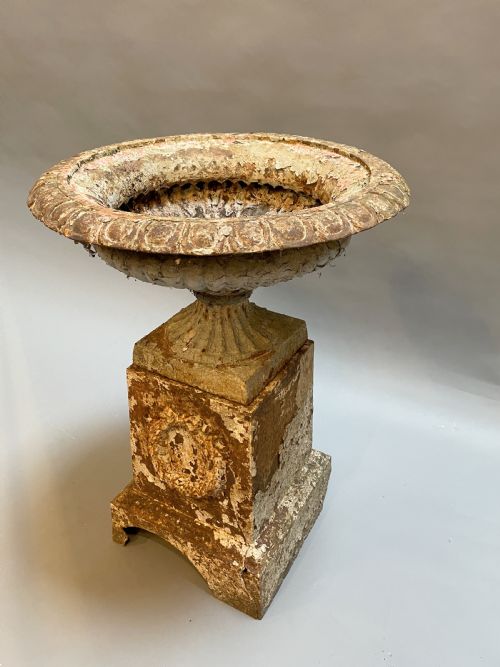
Buyers encounter matching pairs on plinths as well as single garden planters and table urns. The forms draw on neoclassical and classical revival aesthetics, featuring gadrooned bodies and original painted surfaces.
Factors of quality
Quality rests in the crispness of the cast classical ornamentation and the structural integrity of the metal. Finer examples retain their original matching plinths and lids, demonstrating balanced proportions in campana or tazza profiles.
The character of the aged paint surface contributes significantly to the visual appeal. Greater distinction belongs to pieces bearing documented foundry origins, such as Carron or Handyside, combined with heavy, substantial metal casting.
Weathered Iron Urns Retail Price Guide 2026
Typical asking prices for weathered iron urns among the pieces listed under this phrase on Sellingantiques today, from the lower quarter to the upper quarter. They describe what is for sale here now, not the wider market.
Listings demonstrate that nineteenth-century cast iron urns frequently incorporate classical campana and tazza forms paired with sturdy plinths.
Falkirk Carron foundry·Andrew Handyside
The Weathered Iron Urns Glossary
- Tazza
- A shallow bowl-shaped vessel raised on a stem and foot. These open forms serve as garden urns or planters on terraces.
- Gadrooned
- Decorated with a series of convex curves or flutes moulded along the body of the urn. This ornamental carving adds texture to classical metalwork.
- Plinth
- A heavy rectangular or square base supporting the garden urn. Original plinths elevate the vessel and complete the classical composition.
Weathered Iron Urns: Frequently Asked Questions
Where should I place a heavy iron urn?
These robust vessels suit garden terraces, formal lawns, and entranceways where their classical weight anchors the outdoor layout. Paired urns work effectively flanking doorways or paths.
Ensure the ground beneath provides firm support for cast metal garden items. Placing them on original plinths elevates the iron above damp soil.
How do I identify a nineteenth-century cast iron urn?
Nineteenth-century examples display traditional campana or tazza forms influenced by classical revival styles. Look for heavy casting weight and period surface characteristics such as distressed paint.
Foundry marks or specific structural proportions associated with Victorian production help confirm the era. Many pieces retain traces of early paint layers beneath later weathering.
Can weathered iron urns remain outside year-round?
Cast and wrought iron withstand outdoor elements effectively due to their durable metal composition. Decades of exposure typically develop the characteristic weathered surface collectors seek.
Ensure drainage holes remain clear if planting directly inside the urn to prevent water accumulation. Severe winter freezes warrant checking that trapped soil does not expand against the metal.
What is the difference between a campana and a tazza urn?
Campana urns feature a distinct bell shape with a deep bowl tapering down to a narrow base. They offer substantial volume for planting flowers or trailing foliage.
Tazza urns present a much shallower, wider bowl raised upon a defined stem. This open profile emphasises decorative rim details rather than large planting capacity.