


Cast Iron Urns
Cast iron urns bring heavy classical grace to lawns and garden paths.

What cast iron urns are
Cast iron urns are heavy ornamental vessels designed primarily for garden display as planters. When you search for cast iron urns, you encounter robust garden ornaments spanning the nineteenth century, the Victorian era, and early twentieth century production.
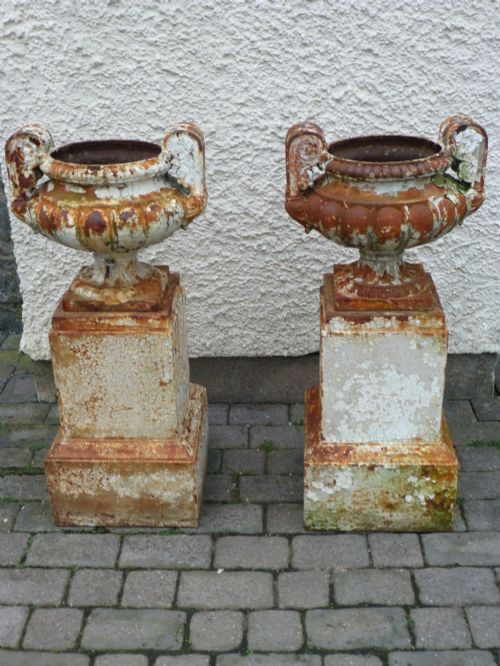
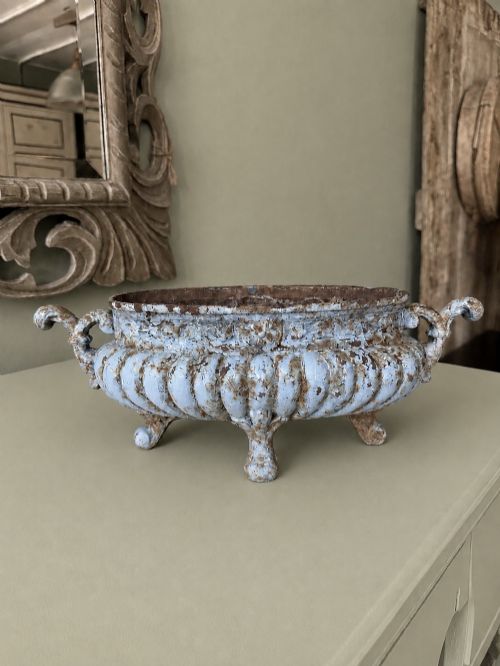
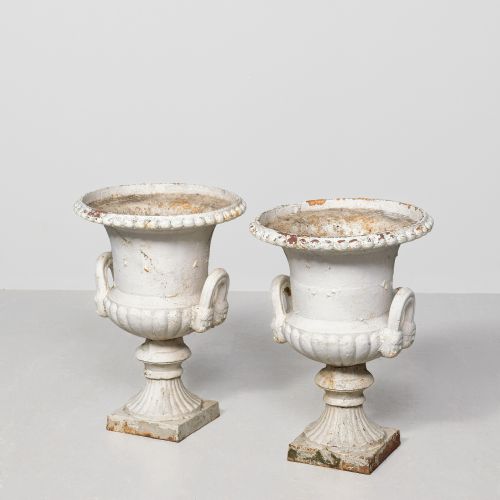
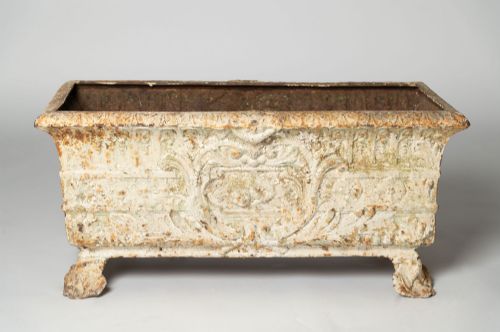
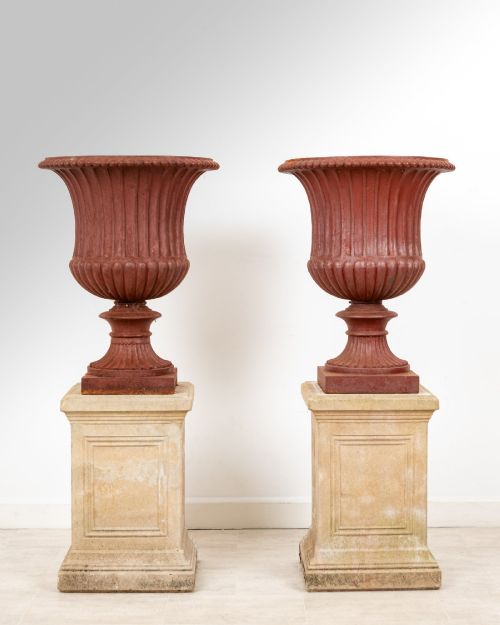
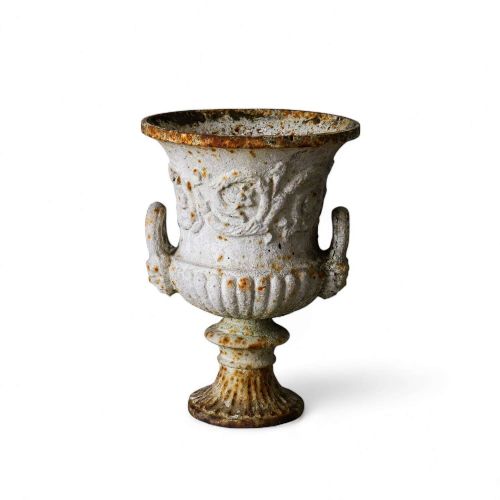
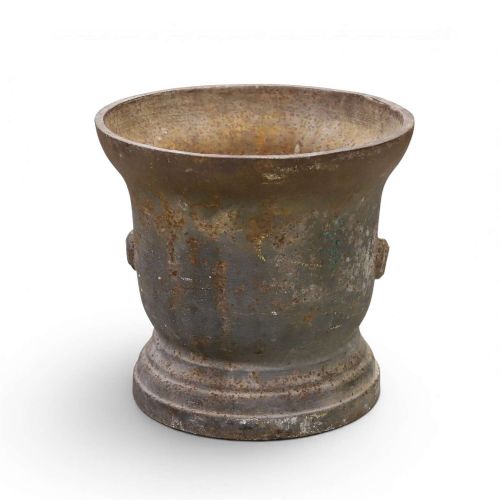
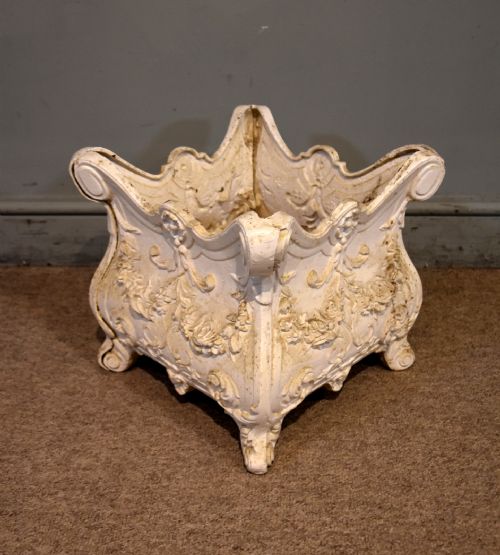
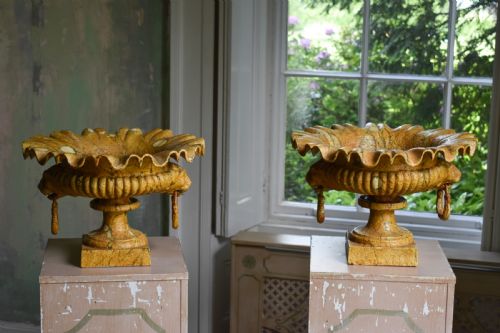
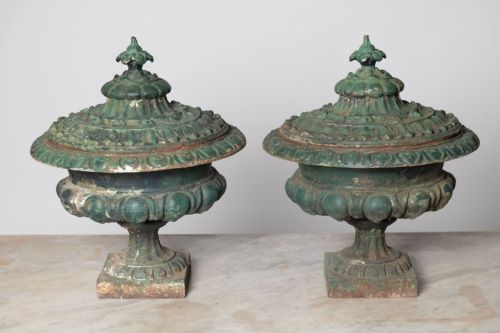
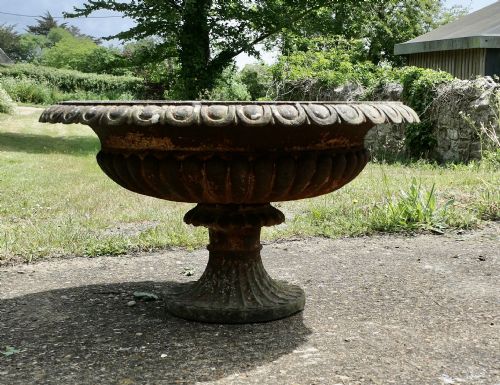
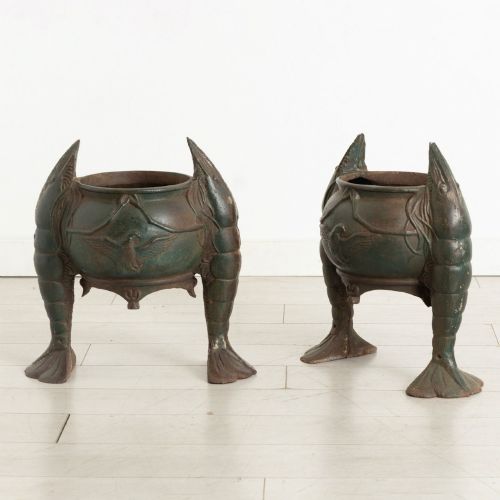
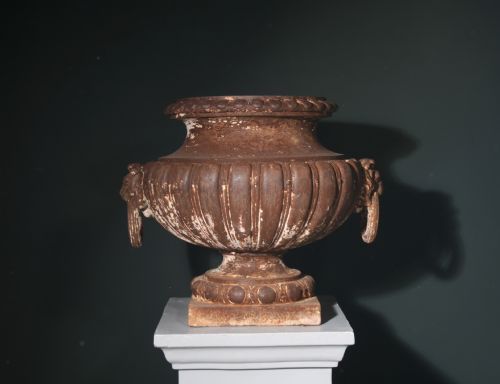
The pieces appearing on this page take various classic forms, from classical campana and Medici shapes to fluted designs, tazza bowls, and occasional novelty shrimp planters. Most examples survive as matched pairs, frequently paired with matching plinths or bases.
Origins stretch across English country houses and French workshops, utilising durable metal cast to withstand outdoor elements. These vessels function as focal points on terraces, beside pathways, or upon stone foundations.
How they were made
Foundries produced these garden vessels by pouring molten iron into sand moulds to achieve thick, rigid walls. This technique allowed makers to cast intricate classical details, twin handles, and fluted bodies directly into the metal.
Many surviving examples retain layers of original distressed paint or protective finishes applied over the bare iron. The heavy metal construction required robust casting methods to support large proportions and deep planting bowls.
Retail Price Guide 2026
Typical UK retail prices for cast iron urns, calculated from the Sellingantiques database of over a million retail prices indexed since 2003. This retail price guide relies exclusively on Sellingantiques data; no external sources or auction records are used, so the figures do not describe the wider market.
Listings feature nineteenth century periods alongside Victorian and Regency styles, constructed from cast iron with painted or stone finishes.
What varies in quality
Quality in these garden vessels rests upon the crispness of the cast ornament and the proportion of the classical form. Superior examples display sharp moulding on handles, rims, and fluting without the blurring common in later or worn casts.
Scale and substantial weight also distinguish finer specimens, particularly large proportions intended for substantial country house gardens. The presence of matching original plinths elevates the integrity of a pair.
Durene France
The Cast Iron Urns Glossary
- Campana
- A bell-shaped garden urn with a flared rim and tapering body. This classical silhouette is a common sight among nineteenth century examples.
- Medici
- A large bell-shaped urn featuring a decorated body and footed base, modelled after ancient marble excavations. These grand garden ornaments often sit on square plinths.
- Tazza
- A wide, shallow bowl form raised on a central pedestal foot. These pieces function well as elevated garden planters.
- Plinth
- A heavy base block that elevates an urn above ground level. Matching plinths provide proper architectural support for garden displays.
Frequently Asked Questions
How do I place cast iron urns in a garden?
Position pairs symmetrically along stone pathways, flanking entrance steps, or upon dedicated plinths to create a formal classical framework.
Ensure the ground beneath is firm and level to support the substantial weight of the iron vessels once filled with soil.
Can cast iron urns stay outside all winter?
The robust metal construction withstands outdoor weathering, often developing stable painted or rusted surfaces over decades.
Check that drainage holes remain clear so expanding ice does not crack the thick iron walls during freezing weather.
What is the difference between campana and Medici urns?
Campana urns feature a clean bell shape with flared rims, whereas Medici urns display a more ornate body profile with deeper decorative relief.
Both classical styles were widely reinterpreted by nineteenth century foundries for European gardens.
How do I date an antique cast iron urn?
Examine the casting quality, surface finish, and bolt construction, comparing the decorative motifs against nineteenth century Victorian and Regency design styles.
Heavier proportions and original distressed paint layers frequently point towards late nineteenth century production.