


Antique Iron Planters
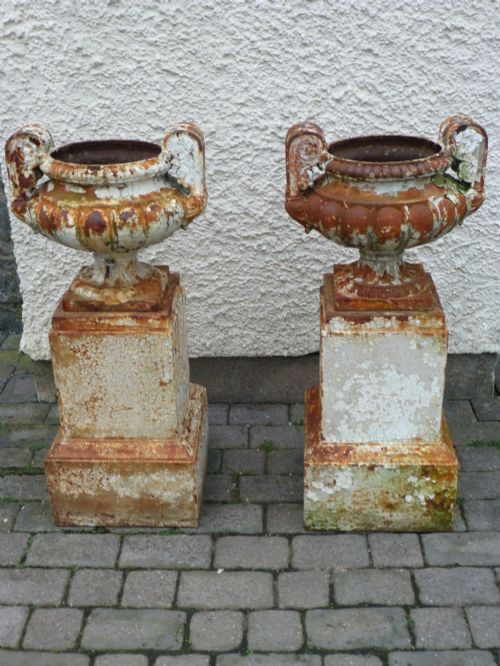
These antique iron planters bring structure and weight to gardens, taking the form of classical urns, wirework stands, and campana vessels.
Antique Iron Planters
When searching for antique iron planters, buyers encounter a range of heavy garden vessels designed to elevate flora. The selection spans the nineteenth century up to the mid-twentieth century, drawing on Victorian, Regency, and Georgian design vocabularies.
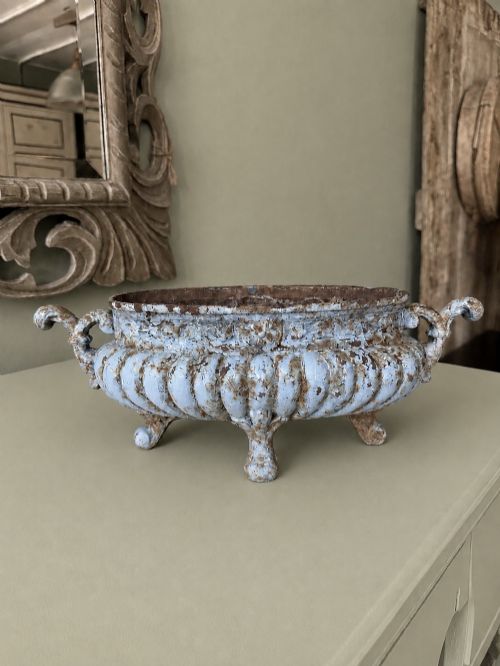
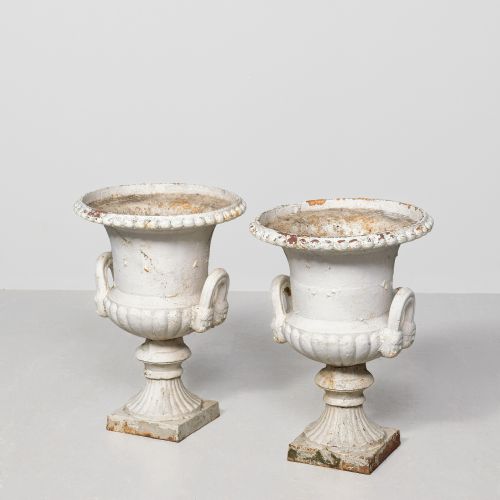
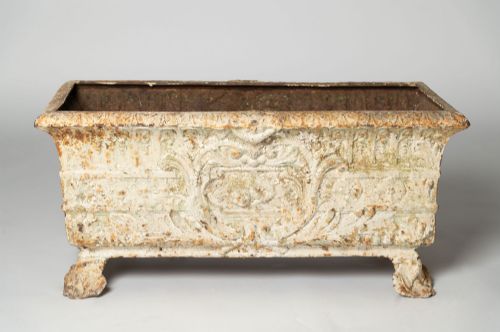
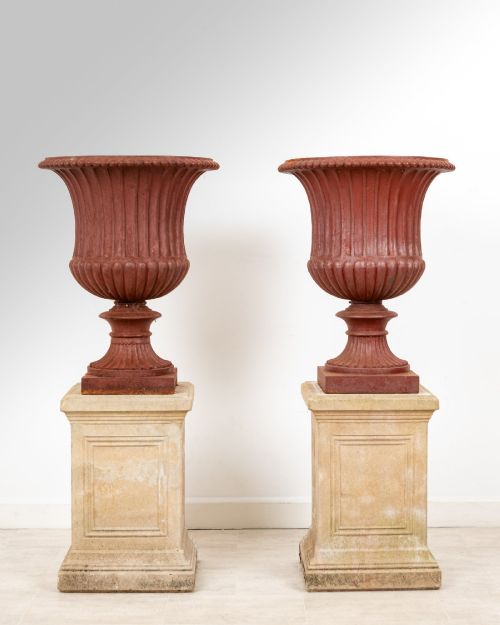
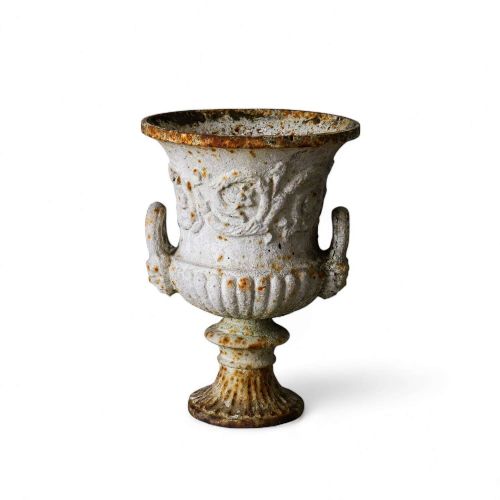
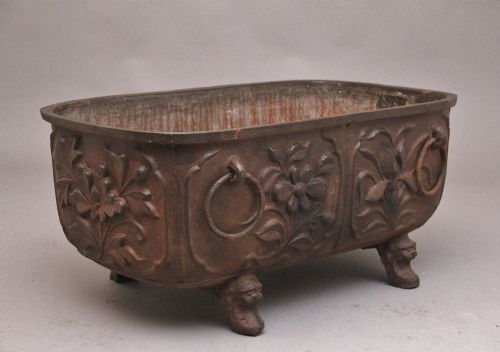
The objects take several distinct shapes, predominantly garden urns, campana vessels, plant stands, and jardinieres. French and English pieces dominate, often appearing in matched pairs intended for placement on terraces or flanking pathways.
Cast iron and wrought iron form the structural core of these items, frequently paired with stone pedestals or painted surfaces. Forms range from simple utilitarian wirework stands to ornate neoclassical urns bearing acanthus leaf decoration.
How they were made
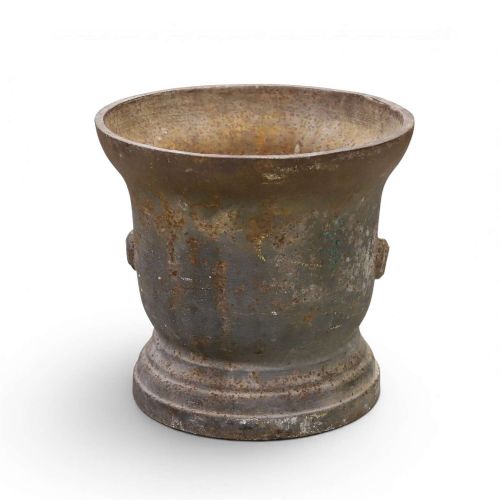
Foundries produced the heavy urns and jardinieres by pouring molten metal into sand moulds, a process that allowed for sharp relief details such as classical swags and acanthus leaves. Makers like Coalbrookdale and Falkirk utilised this cast technique to create durable vessels that could withstand outdoor elements.
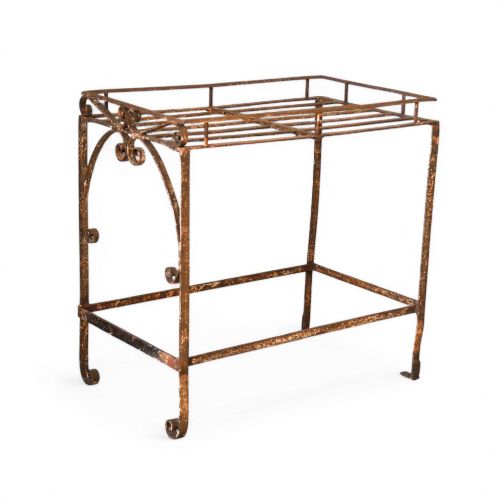
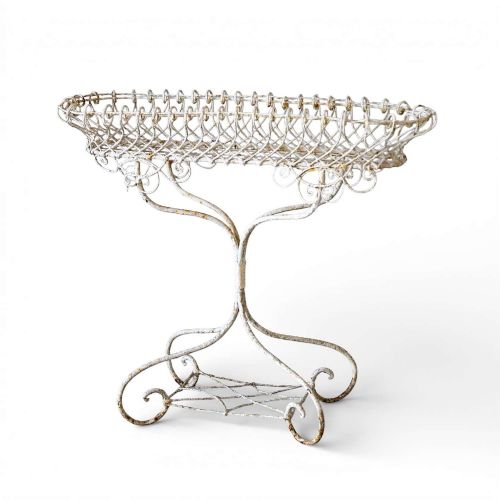
Wrought iron examples relied on the blacksmith's anvil, where strips of metal were heated, hammered, and riveted together to form plant stands and wirework conservatory frames. These pieces combined structural strength with lighter, open scrollwork baskets.
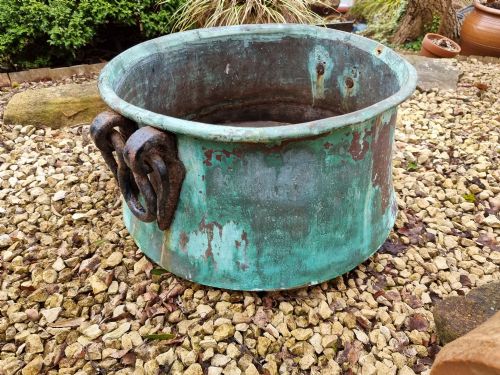
Surfaces were frequently finished with protective layers of paint, or left to weather naturally, developing patinas of verdigris and rust over decades of exposure.
Antique Iron Planters Retail Price Guide 2026
Typical asking prices for iron planters among the pieces listed under this phrase on Sellingantiques today, from the lower quarter to the upper quarter. They describe what is for sale here now, not the wider market.
Nineteenth-century makers cast occasional iron planters shaped precisely like marine shrimp.
What varies in quality
The crispness of the cast relief ornamentation sets finer foundry work apart from simpler production pieces. Sharp definition in leaves, fluting, and heraldic details indicates superior pattern-making and careful finishing.
Integrity of the original structure and the presence of matching components, such as original plinths or lids, determine the standing of a pair. Items retaining their early painted surfaces or showing uniform weathering demonstrate better historical survival.
The weight and thickness of the iron casting dictate the durability and presence of the vessel. Heavier walls and robust construction distinguish pieces intended for substantial estate gardens from lighter decorative items.
Falkirk Carron foundry·Coalbrookdale·Andrew Handyside·Val D'Osne Foundry
The Antique Iron Planters Glossary
- Campana
- A bell-shaped garden urn with a flaring rim and a footed base. This classical form became popular in British and French gardens during the nineteenth century.
- Jardiniere
- An ornamental pot or stand designed to hold growing plants or flowers. These vessels appear in both cast iron and copper configurations.
- Wirework
- Metal strands bent and soldered into open lattice patterns for plant stands and flower baskets. This technique allowed greenhouses and conservatories to display plants across multiple tiers.
- Plinth
- A heavy base or pedestal that elevates an urn or planter. Many nineteenth-century examples sit on matching stone or iron supports to increase their garden presence.
Antique Iron Planters: Frequently Asked Questions
How do I clean an antique iron planter?
Remove loose dirt and debris with a soft brush rather than harsh metal scrapers. Preserving the weathered surface protects the underlying metal.
Avoid chemical strippers that remove historic paint layers. Light applications of oil can help stabilise rusted surfaces without erasing the patina.
Can these planters stay outside in winter?
Cast iron withstands cold temperatures well, but trapped wet soil can expand and crack older vessels during severe frosts. Elevating the base prevents moisture from freezing underneath.
Lining the interior with protective material helps safeguard the historic metal from constant dampness.
Are pairs of urns original?
Foundries often cast urns in matched sets for formal garden layouts, though matching pairs can also be assembled later based on size and style. Examining the casting seams and wear patterns reveals whether the pieces originated together.
Slight variations in dimensions can indicate hand-finishing processes even within the same production run.
What is the difference between an urn and a jardiniere?
Urns typically feature a raised, footed bowl with a classical profile designed for focal placement. Jardinieres tend to have wider, straighter sides intended to house multiple potted plants.
Both forms served ornamental roles in nineteenth-century gardens and conservatories.