





Neoclassical Bronze Vases
Neoclassical bronze vases bring the sculptural dignity of ancient Greece and Rome into nineteenth-century interiors through cast metal and polished stone.
Neoclassical Bronze Vases
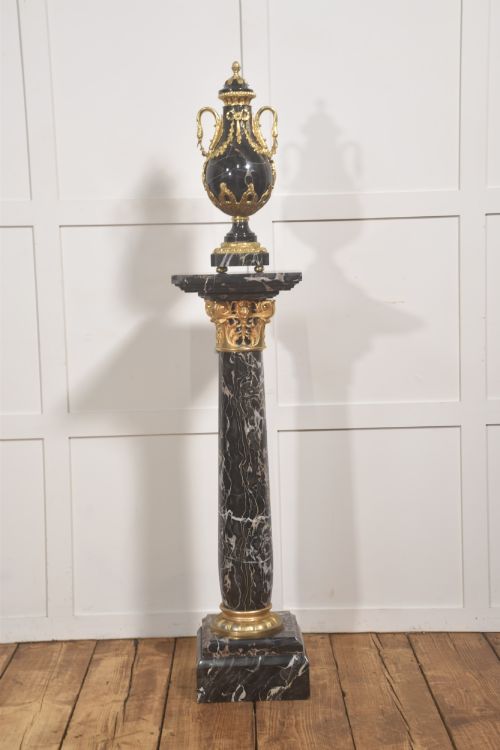
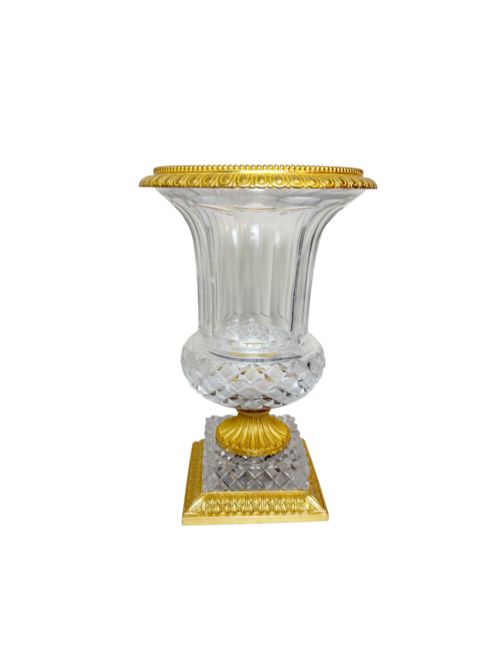
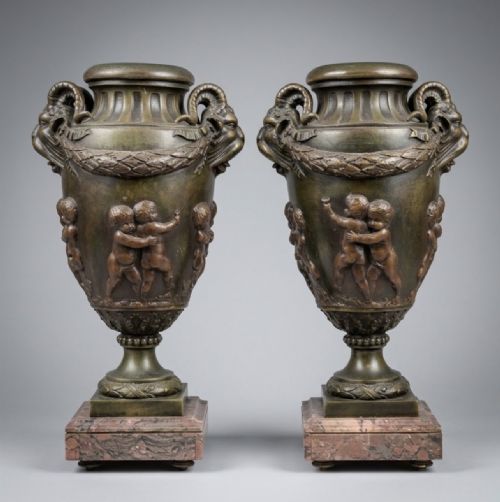
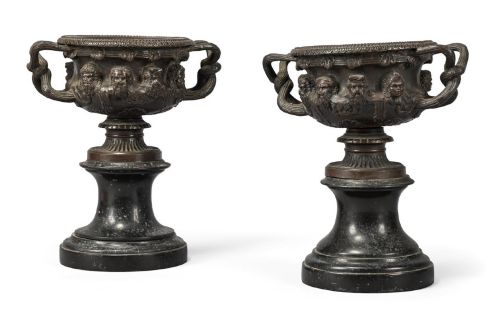
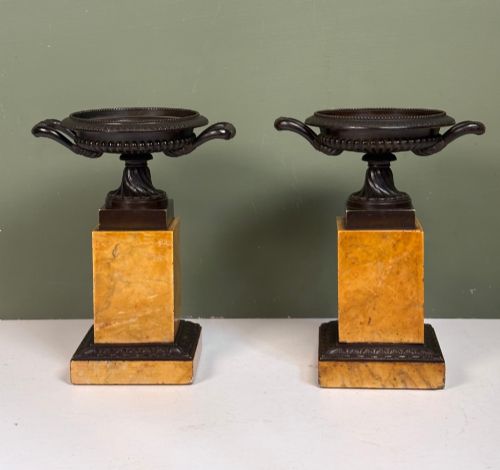
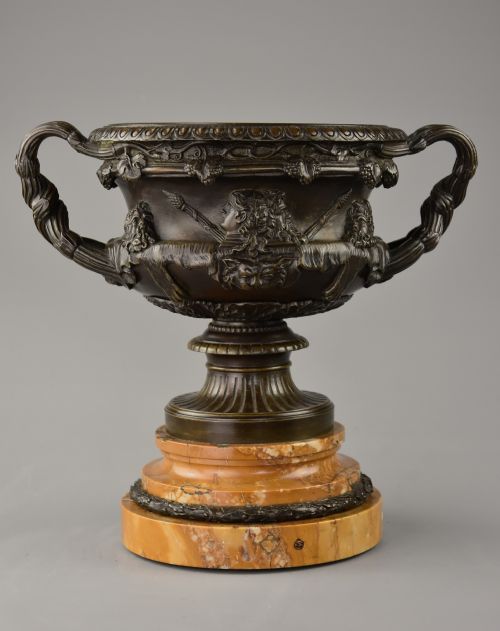
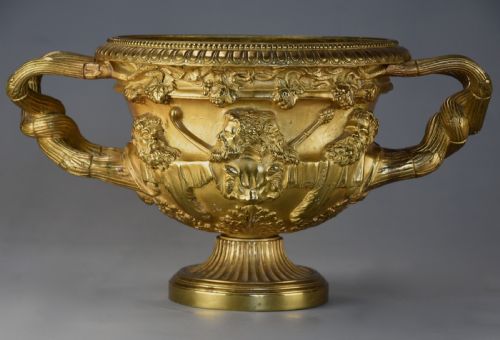
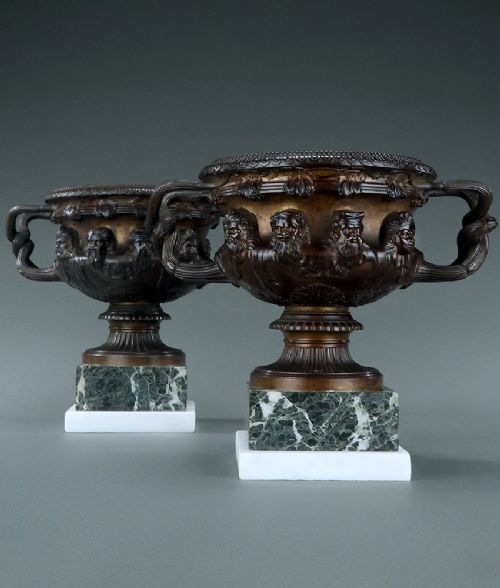
When you search for neoclassical bronze vases, you encounter nineteenth-century decorative urns, campana shapes, and classical ewers rooted in Grand Tour travel and French Empire design. These pieces adapt ancient archaeological models such as the Warwick and Borghese vases for domestic display. The versions most commonly met combine patinated or gilt bronze with marble, onyx, or porcelain plinths.
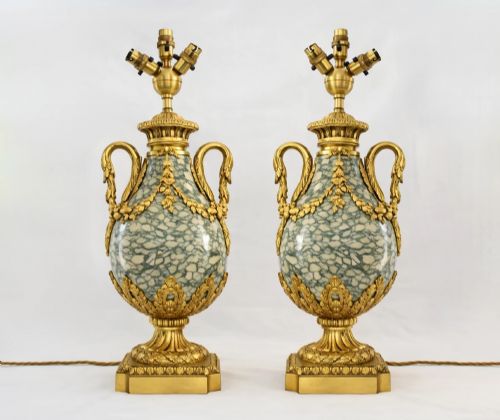
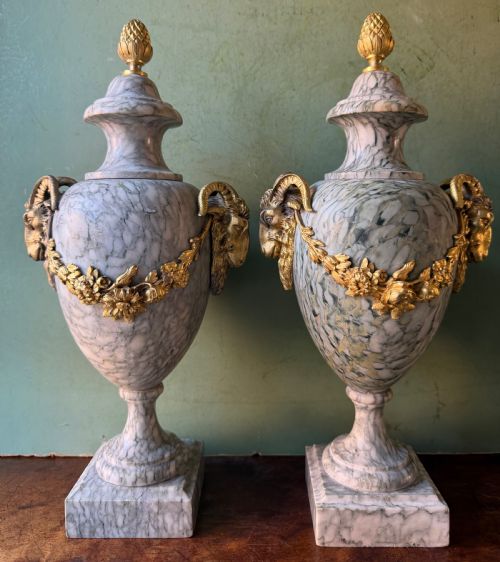
Many examples emerge from French and Italian workshops operating across the nineteenth century, reflecting the enduring influence of Louis XVI and Classical Revival styles. Makers frequently paired cast bronze with white, green, or rouge marble bases, sometimes adapting the vessels into table lamps or cassolettes. This selection demonstrates how nineteenth-century makers reinterpreted antiquity through decorative campana urns and amphora forms.
Materials and Technique
These pieces rely on the combination of cast bronze, patinated or finished with ormolu and gilt bronze, mounted onto turned stone plinths. Foundries shaped the metal through casting before applying detailed chasing and classical figural handles, such as Bacchus motifs and dolphins. Stonework components like white marble, green marble, alabaster, and quartz were turned and polished to support the metal bodies.
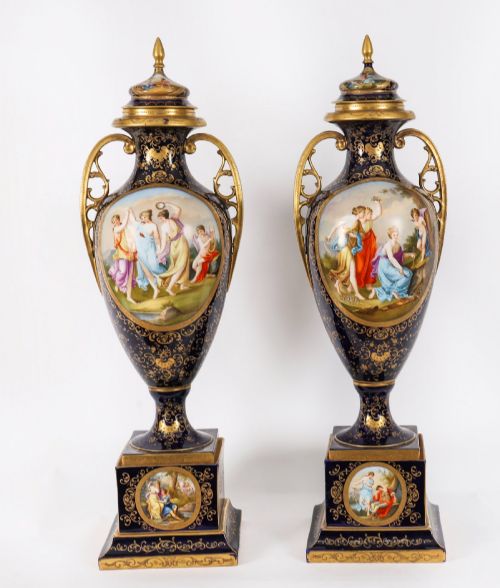
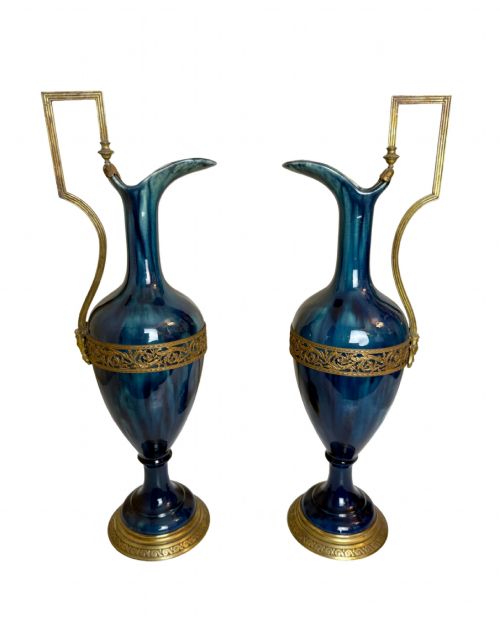
Makers integrated porcelain bodies, including Sevres and majolica ceramics, alongside spelter substitutes to achieve varied decorative textures within the classical vocabulary. Ormolu mounts and gilt bronze trim secure the porcelain and stone elements together, creating substantial weighted vessels designed for interior placement.
Neoclassical Bronze Vases Retail Price Guide 2026
Typical asking prices for neoclassical bronze vases among the pieces listed under this phrase on Sellingantiques today, from the lower quarter to the upper quarter. They describe what is for sale here now, not the wider market.
Listings feature pieces spanning the 1850s to 1900, alongside Regency period examples, constructed from bronze, marble, porcelain, and alabaster.
Quality and Execution
The distinction between standard production and superior execution lies in the crispness of the bronze chasing and the density of the cast. Finer examples display sharp definition in figural handles, acanthus leaf mounts, and relief friezes, whereas simpler pieces rely on softer surface detail or utilise spelter in place of bronze. The integration between the metal vessel and its stone base indicates the level of workshop care.
Material selection further separates the tiers of production, with dense green marble, rouge marble, and heavy fire-gilt ormolu marking the upper end of nineteenth-century output. Hand-finished patination and robust internal construction ensure stability, particularly in larger Grand Tour reductions and cassolette lamps.
Clodion
The Neoclassical Bronze Vases Glossary
- Campana urn
- A bell-shaped vessel with an everted rim, widely used in classical antiquity and replicated in nineteenth-century decorative metalwork. These pieces sit on stepped plinths and often feature classical figural handles.
- Ormolu
- Finely ground high-carat gold applied to bronze through a mercury amalgamation process, or modern electroplating that achieves a rich golden finish. This technique protects the bronze underneath while providing bright highlights.
- Cassolette
- A dual-purpose decorative vessel featuring a reversible lid that transforms an urn into a perfume burner or vase. They commonly incorporate marble bodies with gilt bronze mounts.
- Grand Tour
- A traditional educational journey of Europe undertaken by wealthy young men in the eighteenth and nineteenth centuries, which generated high demand for miniature bronze replicas of classical antiquities. Tourists purchased reductions of famous sculptures like the Warwick Vase to display at home.
- Warwick Vase
- A monumental ancient marble vase discovered at Hadrian's Villa and subsequently housed at Warwick Castle, frequently reproduced in bronze reduction during the nineteenth century. These scale models capture the deep relief Bacchus masks and vine-wreath decoration of the original.
Neoclassical Bronze Vases: Frequently Asked Questions
What is a Grand Tour vase?
A Grand Tour vase is a nineteenth-century miniature replica of a famous ancient Roman or Greek antiquity, acquired by travellers exploring European historical sites. These reductions allowed collectors to bring archaeological forms into domestic interiors.
Foundries in Italy and France produced these pieces in bronze, often mounting them on marble plinths to emulate museum displays. They serve as tangible records of nineteenth-century classical taste and travel.
How do you distinguish bronze from spelter?
Bronze is a heavy alloy of copper and tin that yields a cold touch and a resonant sound when struck, while spelter is a softer zinc-based metal that feels lighter and shows a duller sound. Nineteenth-century makers used both materials for decorative urns, but bronze offers superior durability and finer casting detail.
Examining the underside or the mount attachments often reveals the heavier weight and deeper patination characteristic of true bronze. Spelter pieces frequently display a painted finish rather than chemical patination.
What is the function of a cassolette?
A cassolette functions as a decorative urn with a reversible lid that switches between a solid top and an incense-burning insert. In nineteenth-century interiors, they sat on mantelpieces and tables as ornamental objects that could also scent a room.
Most surviving examples combine marble bodies with gilt bronze mounts, reflecting French taste under the Louis XVI style and later revivals.
How should neoclassical bronze vases be cleaned?
Neoclassical bronze vases require gentle dusting with a soft, dry cloth to prevent the accumulation of dirt on patinated or gilt surfaces. Avoid commercial metal polishes, which can strip historical patination and damage the underlying bronze or ormolu.
Marble and stone bases benefit from occasional wiping with a damp cloth, followed immediately by drying to protect the polished surface from moisture retention.