7,606  PAGES BROWSED TODAY PAGES TODAY 0  ANTIQUES UPLOADED TODAY NEW ARRIVALS
ID #SA1213701
FOR SALE
£1,275
Email
Save
Antique Pair French Grand Tour Gilt Bronze Classical Urns 19th C
Regent Antiques
for sale €1,492     $1,619
£1,275
Regent Antiques

Regent Antiques

Sellingantiques Verified Since Sep 2016
View Dealers Stock Page
  • About Us
    We specialise in english and continental furniture, silver, porcelain and decorative items.
  • Trade Associations
    Regent Antiques is a registered member of LAPADA  CINOA
Id #SA1213701
PDF SHARE
SAVE

Antique Pair French Grand Tour Gilt Bronze Classical Urns 19th C

19th century
For Sale by Regent Antiques
Description

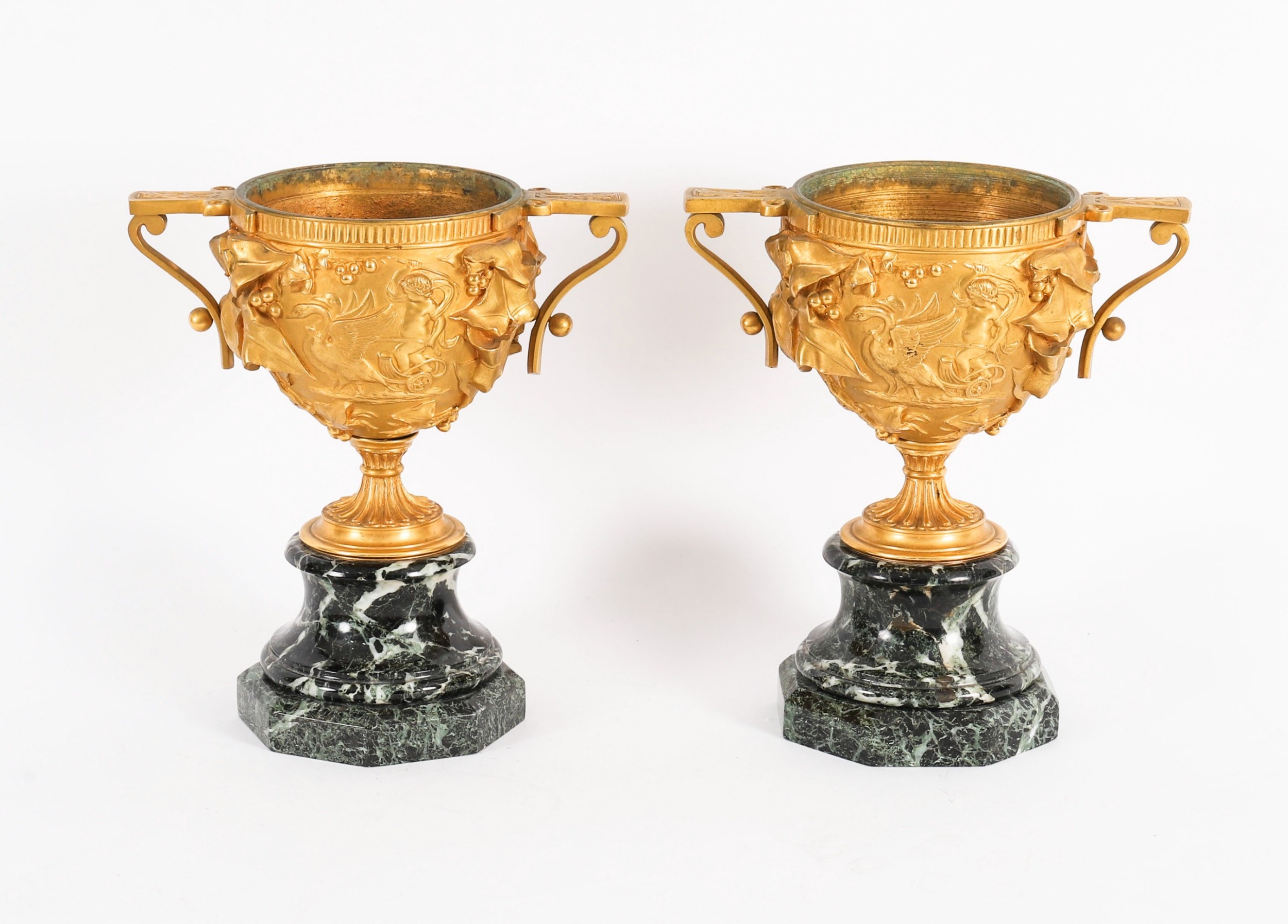
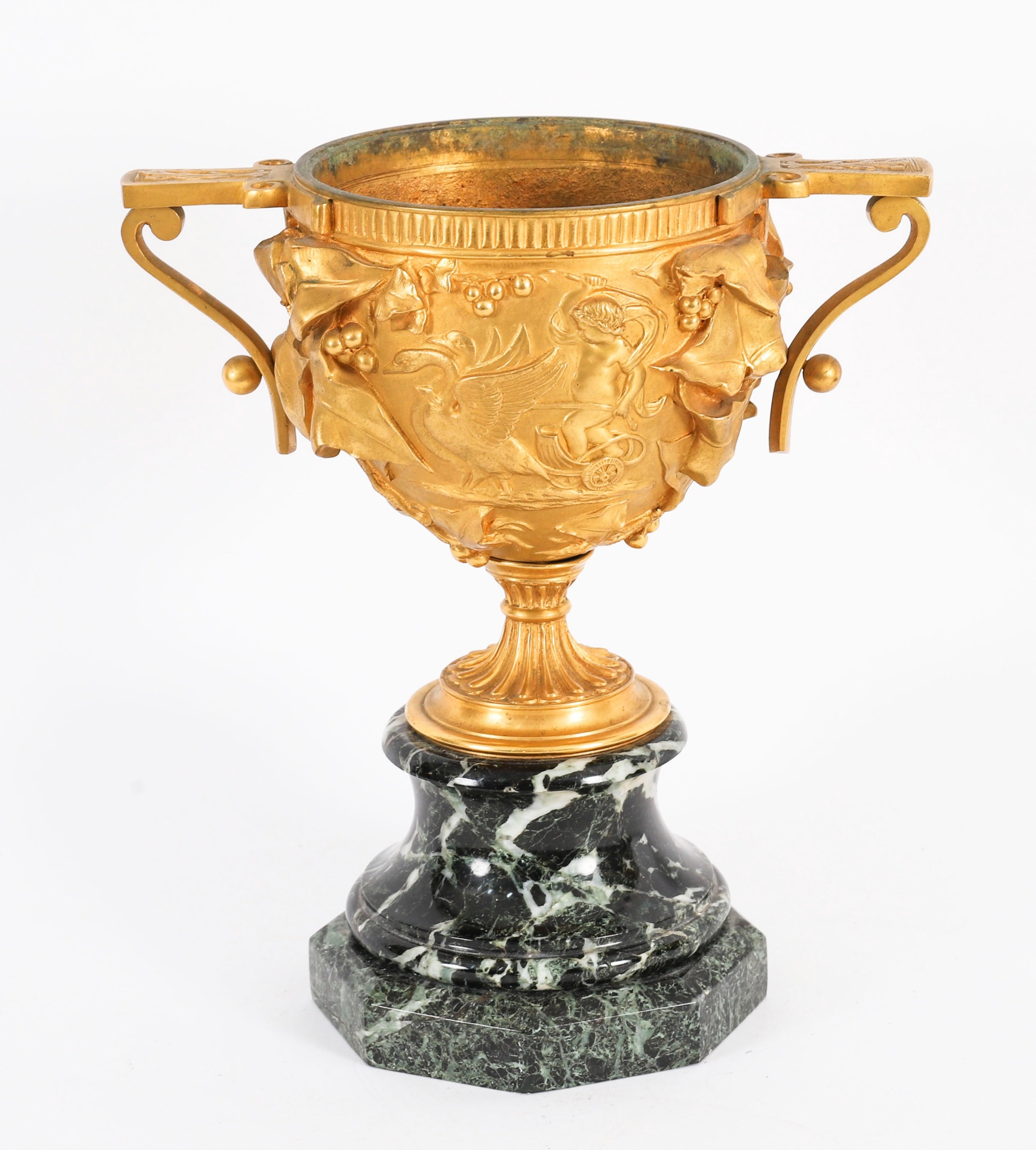
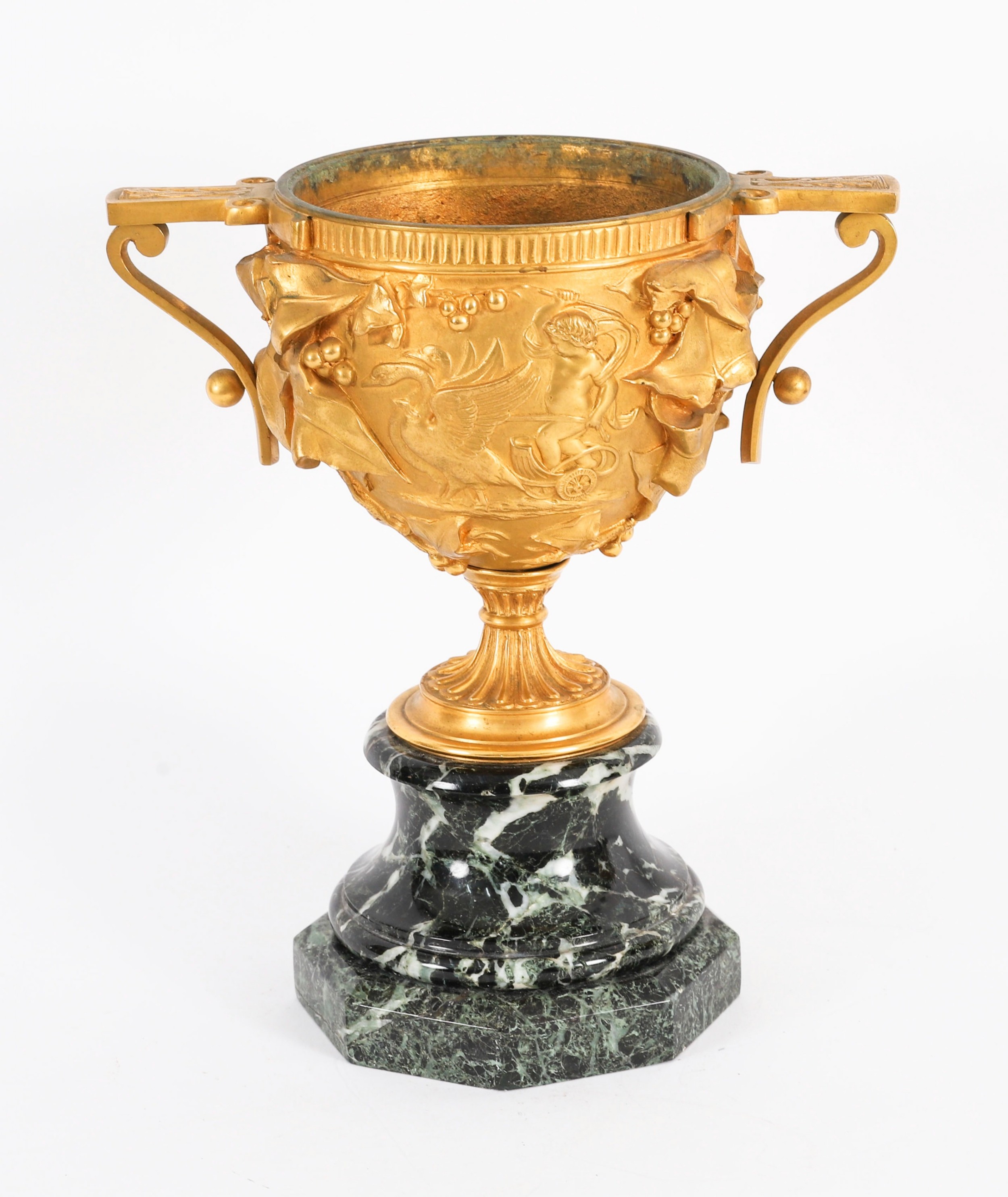
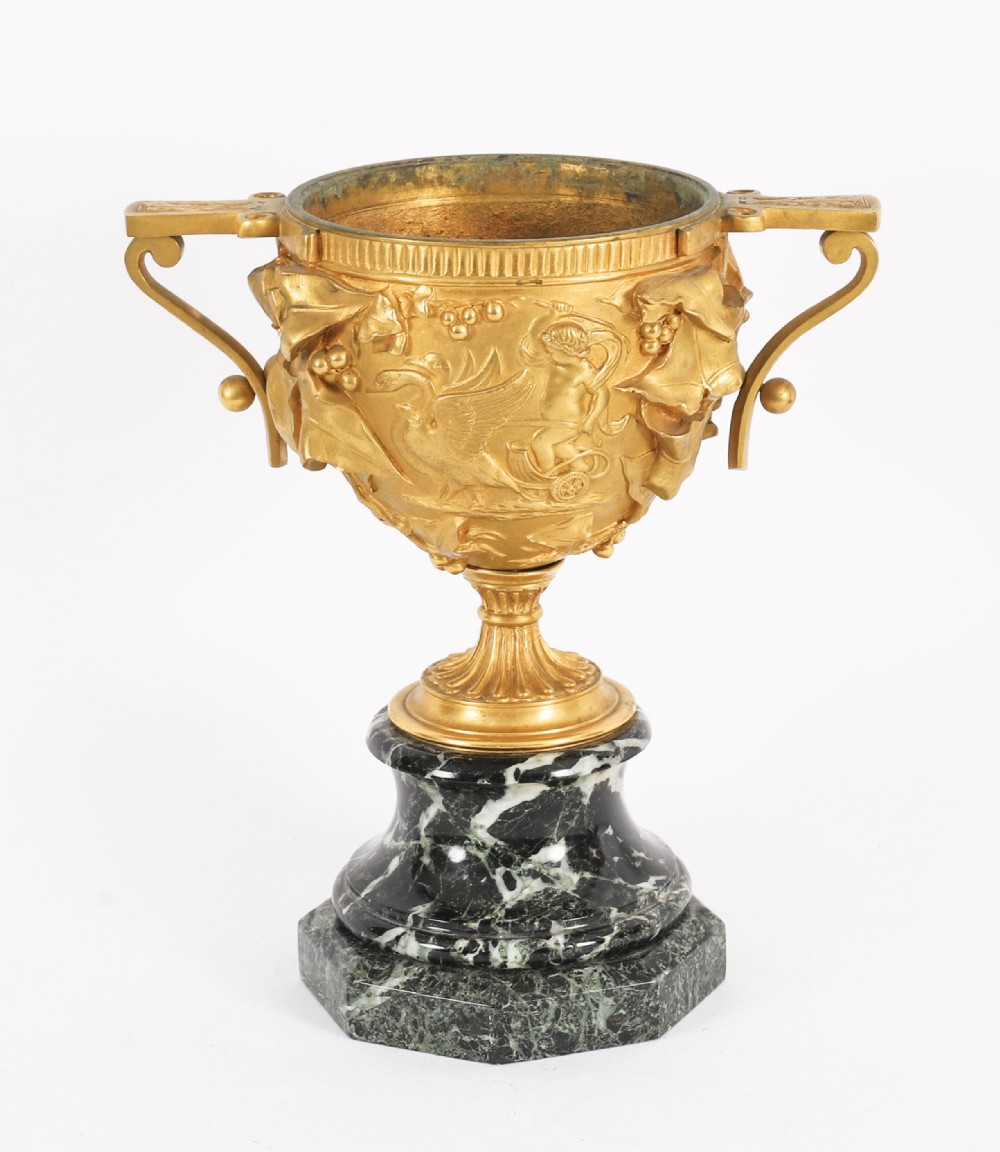
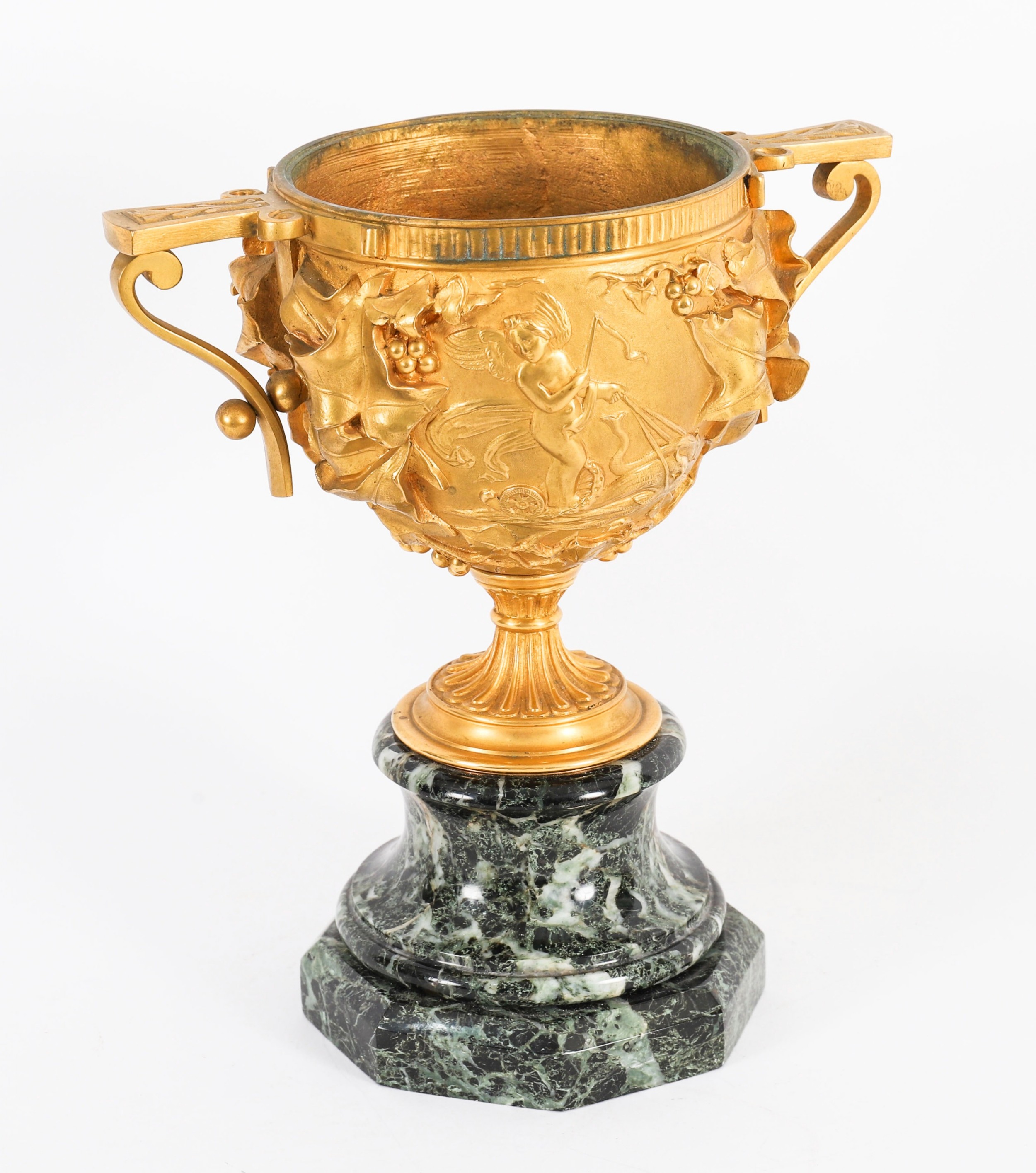
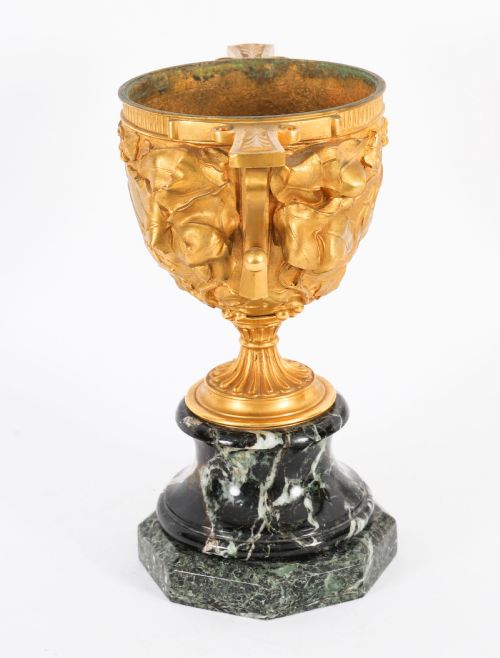
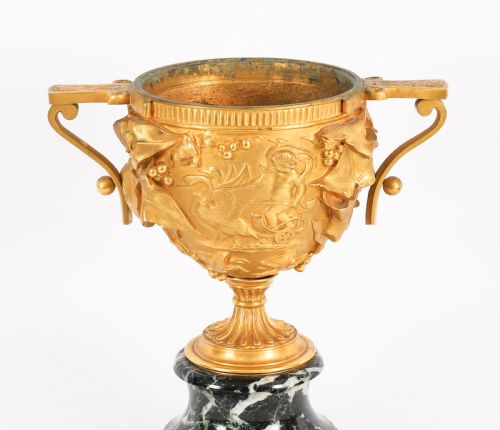
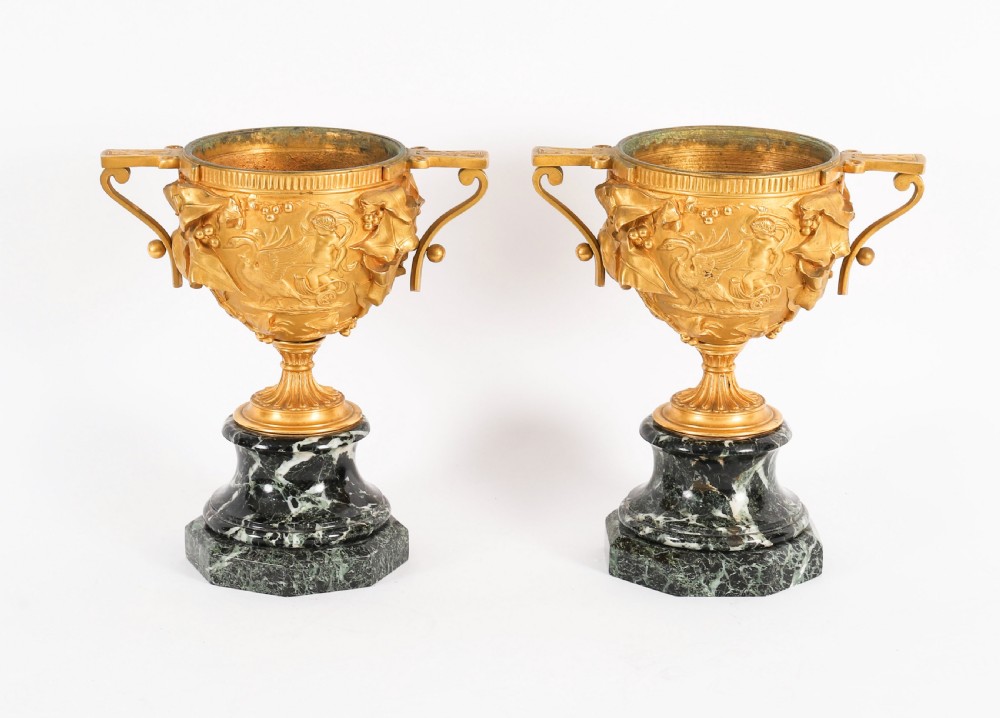
This is a remarkable pair of antique French Grand Tour ormolu and marble urns, circa 1860 in date.

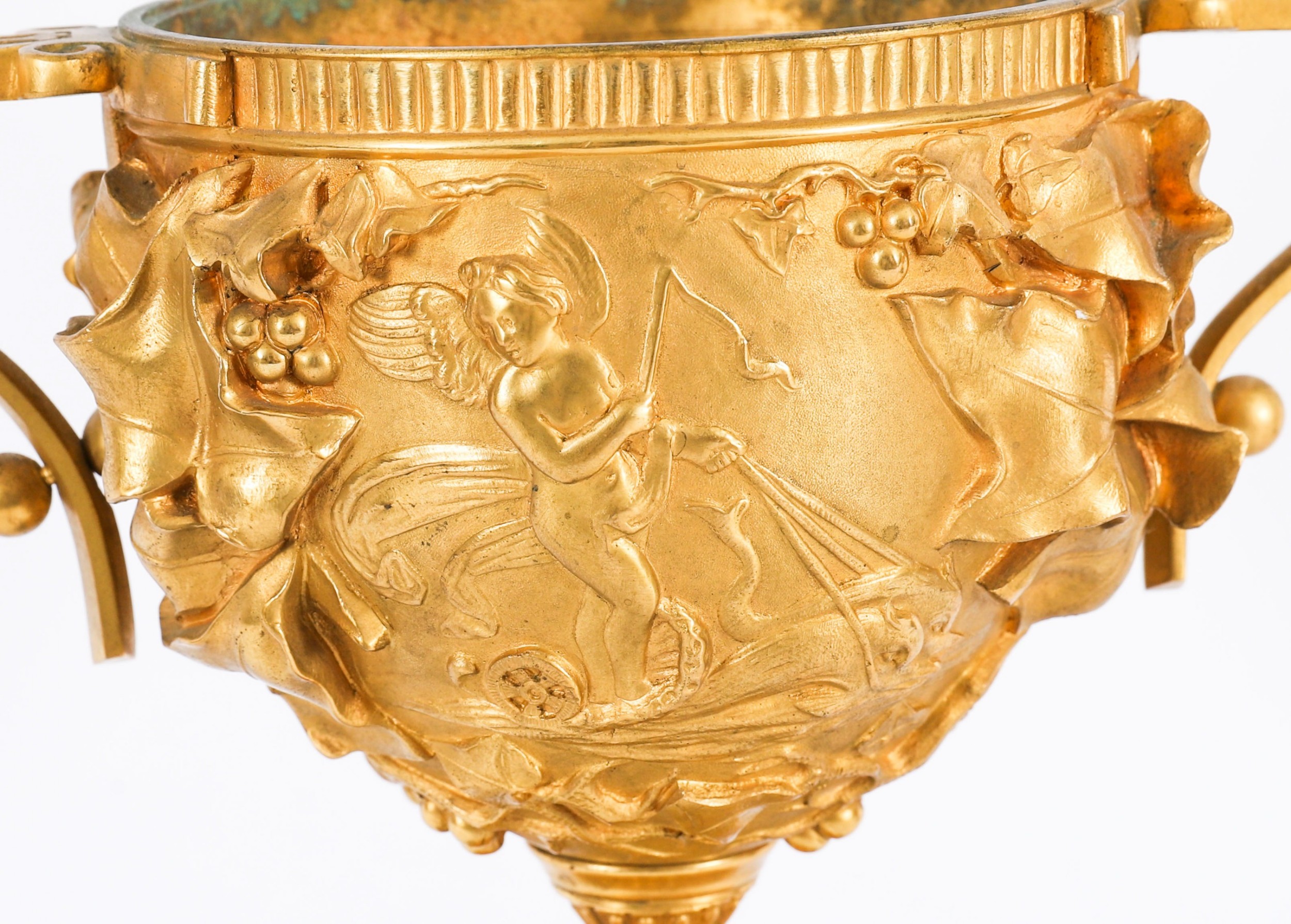
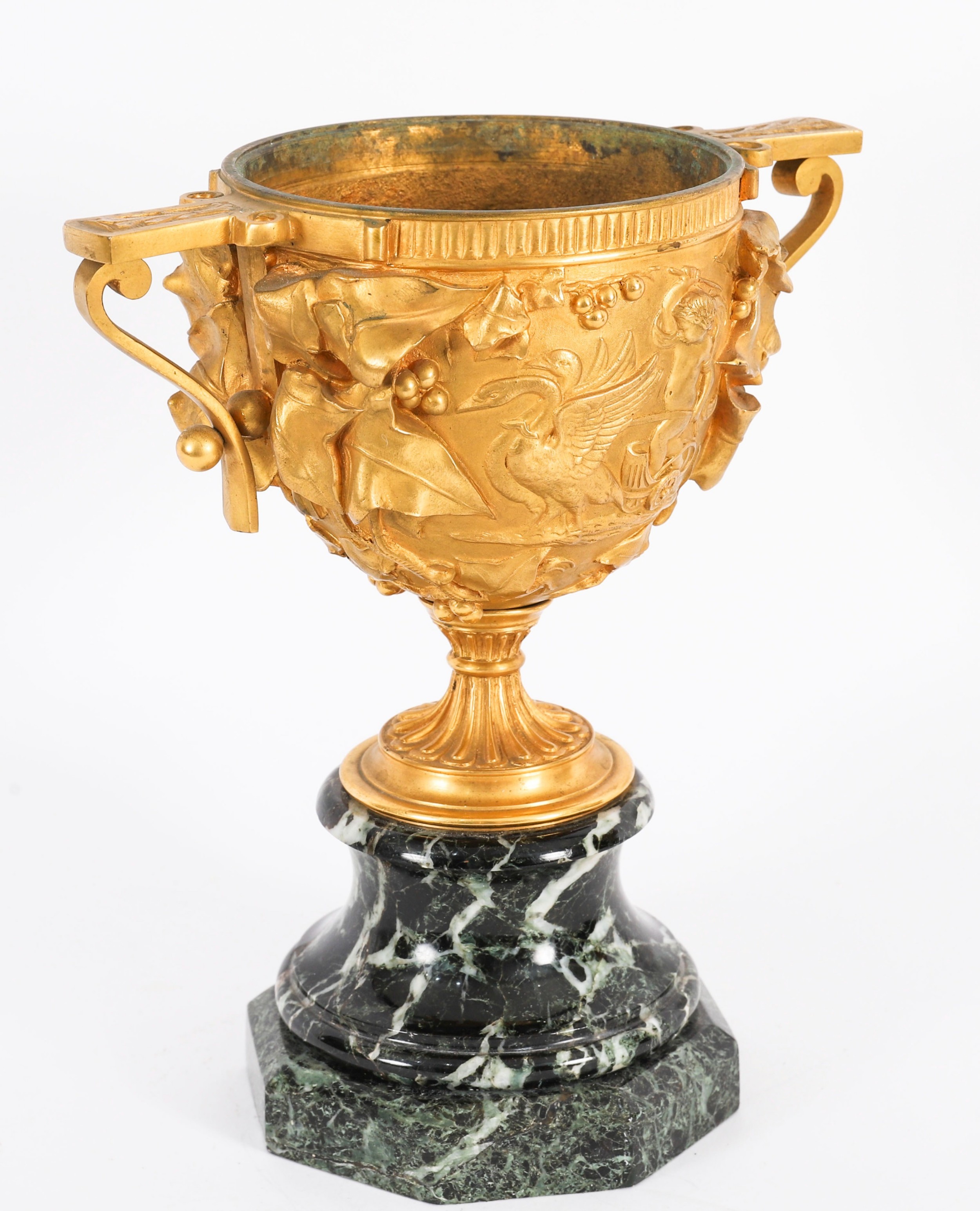
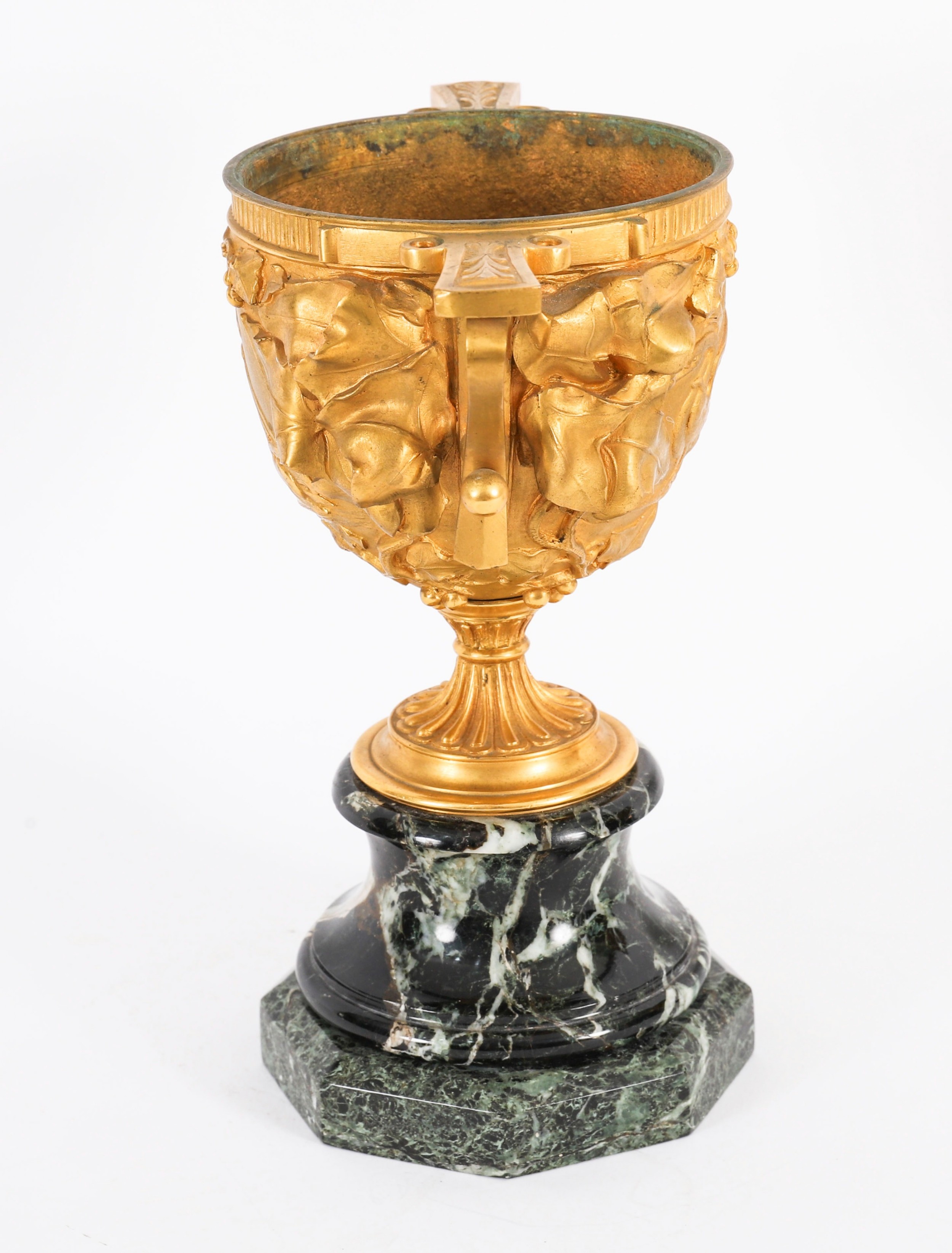
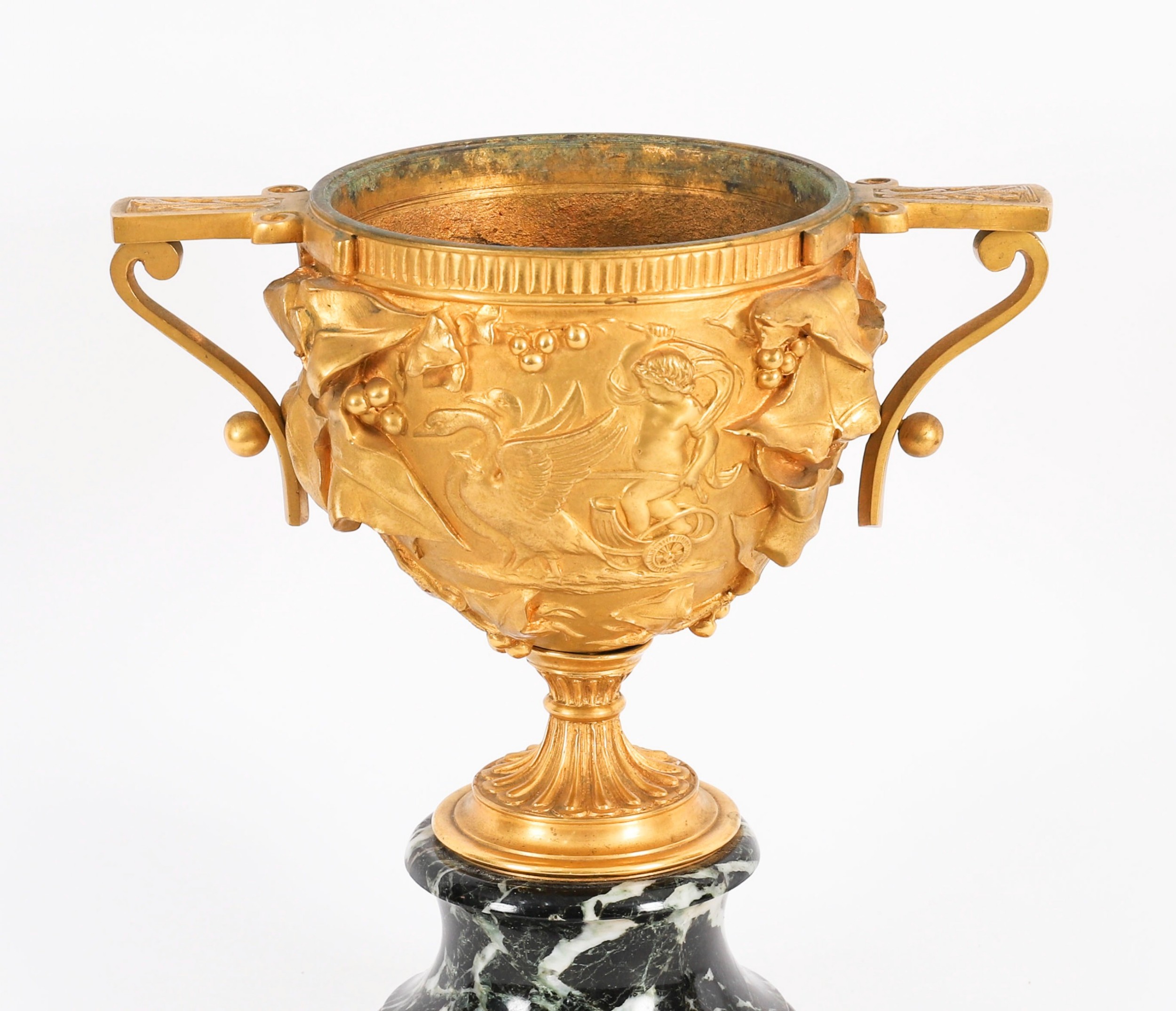
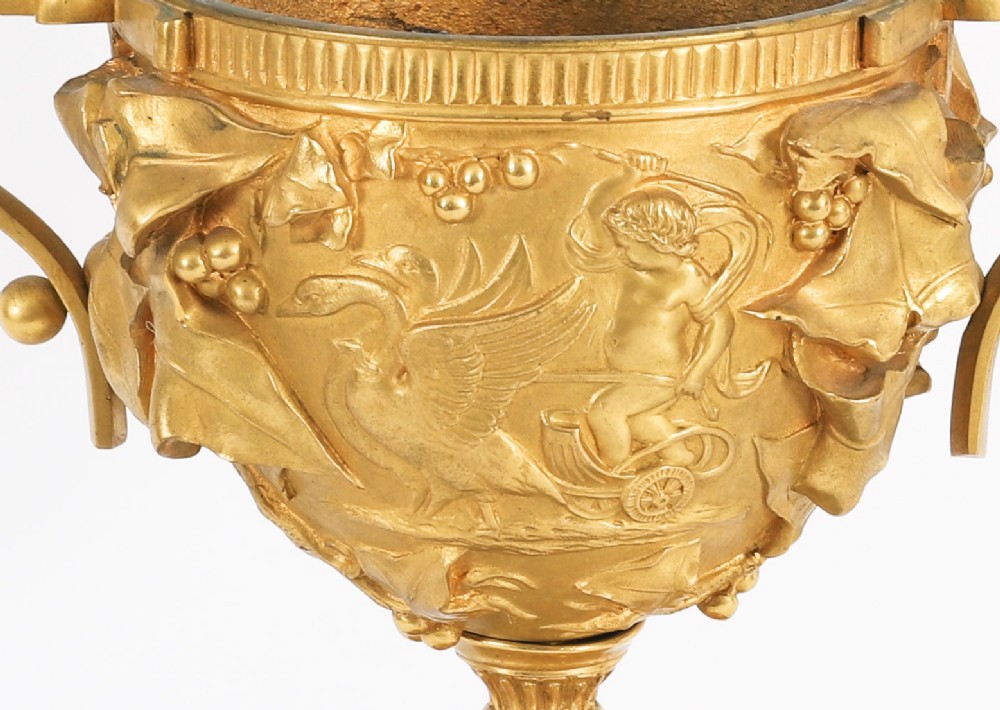
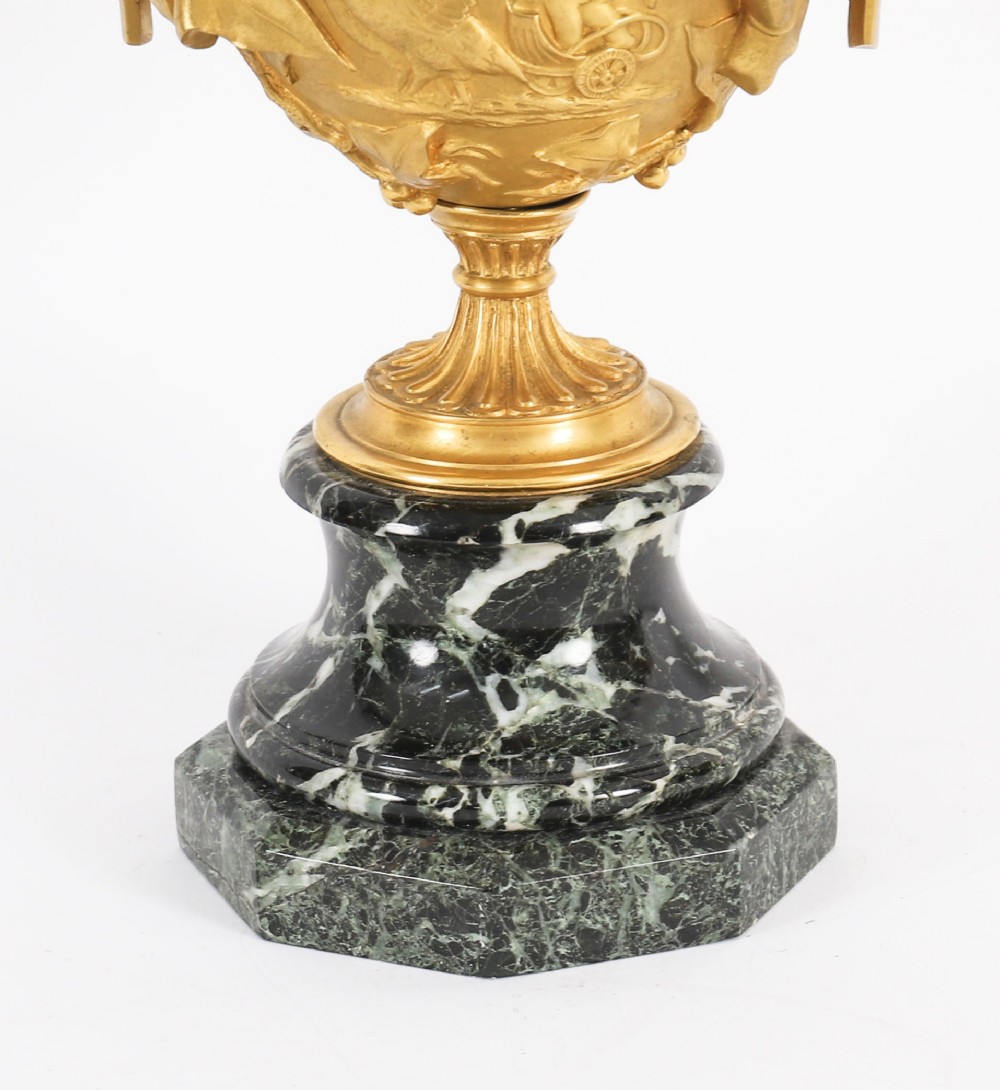
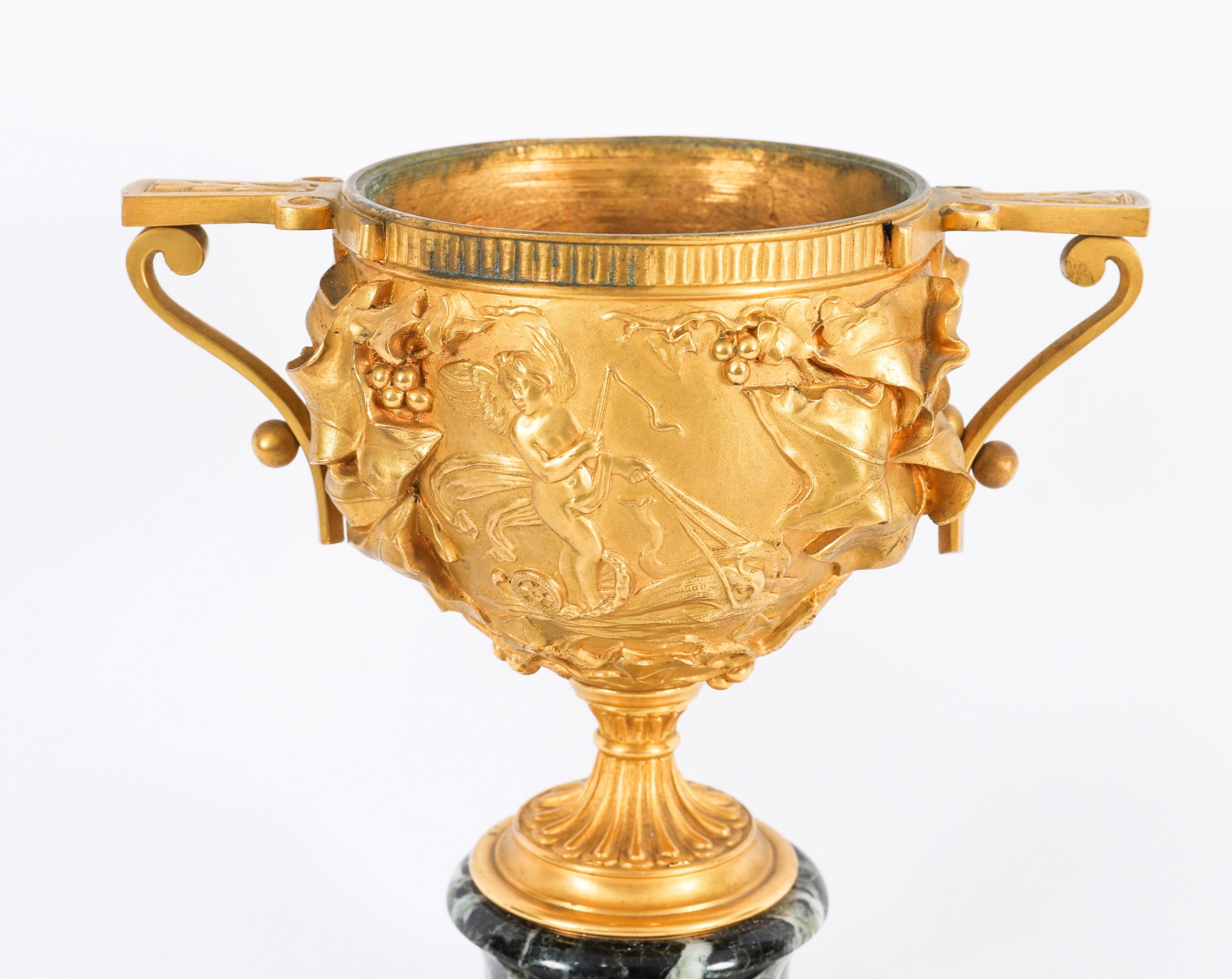
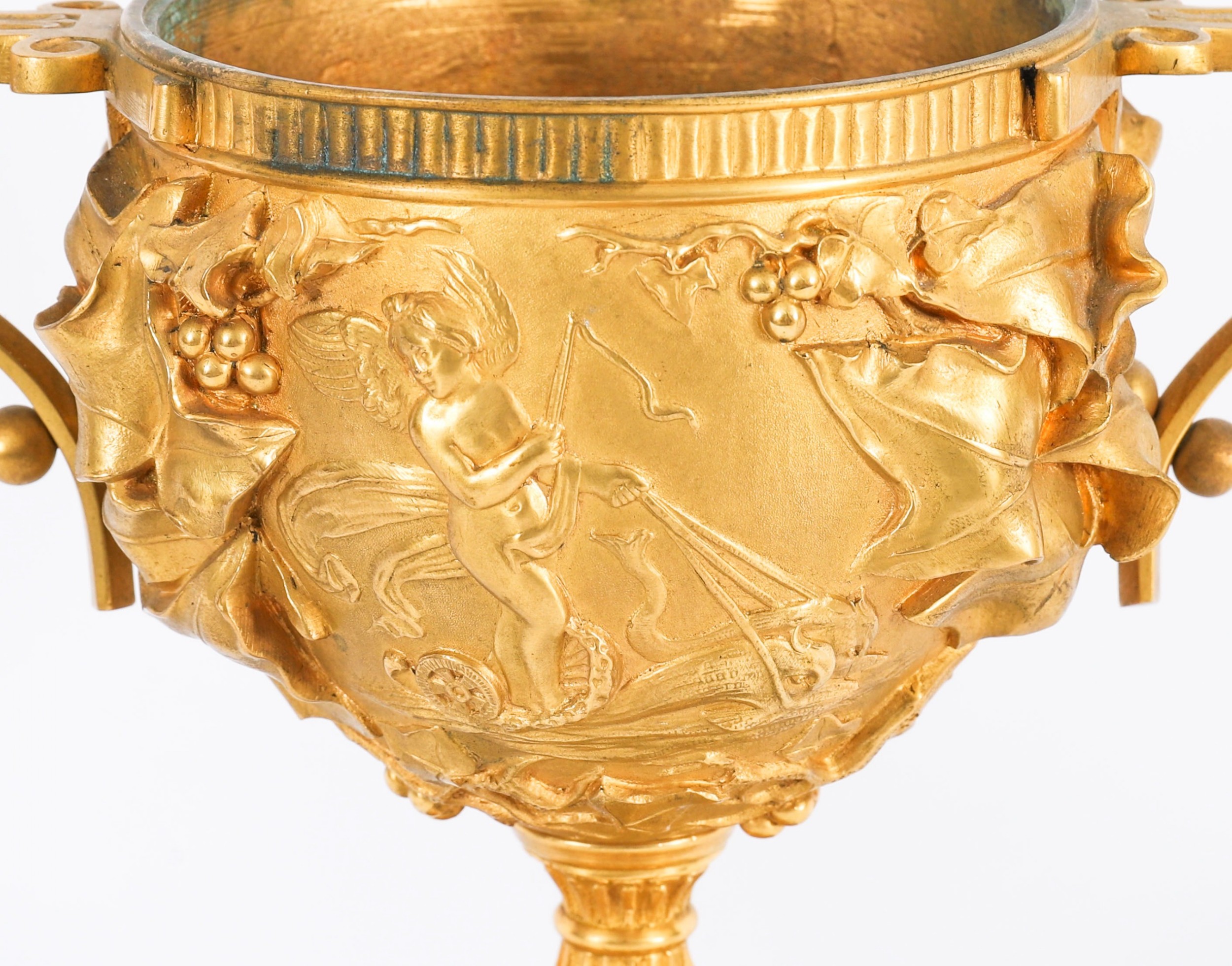
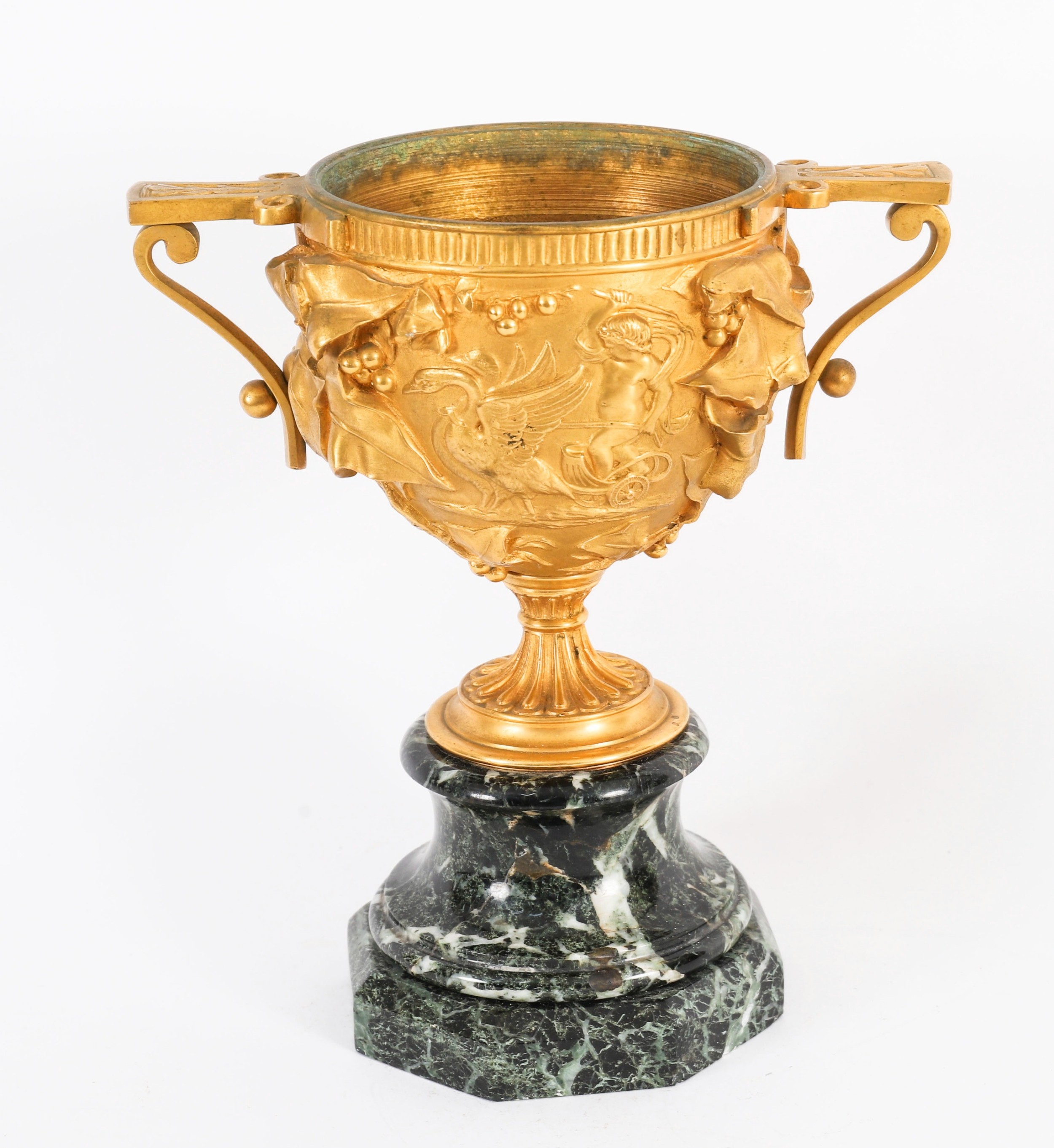
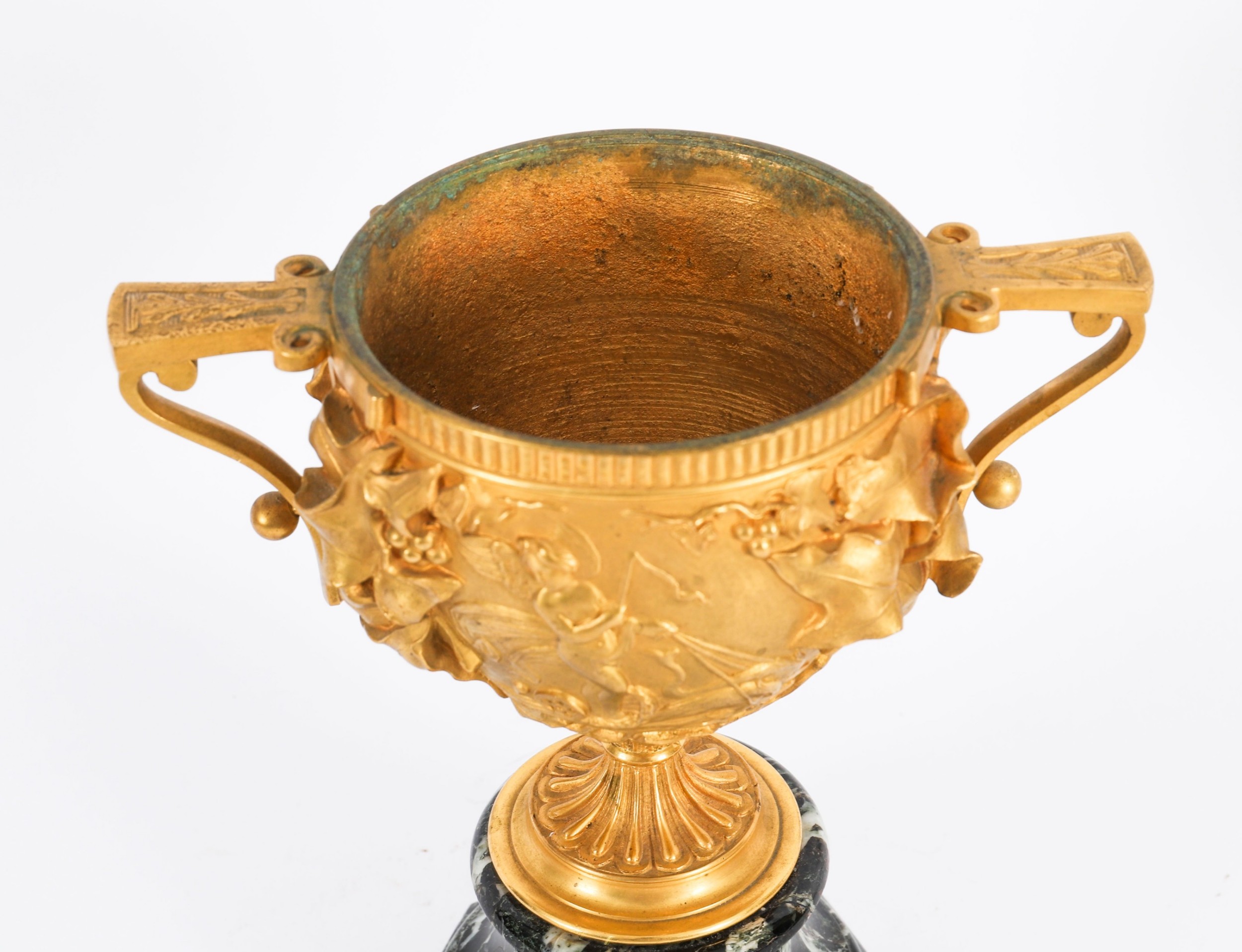
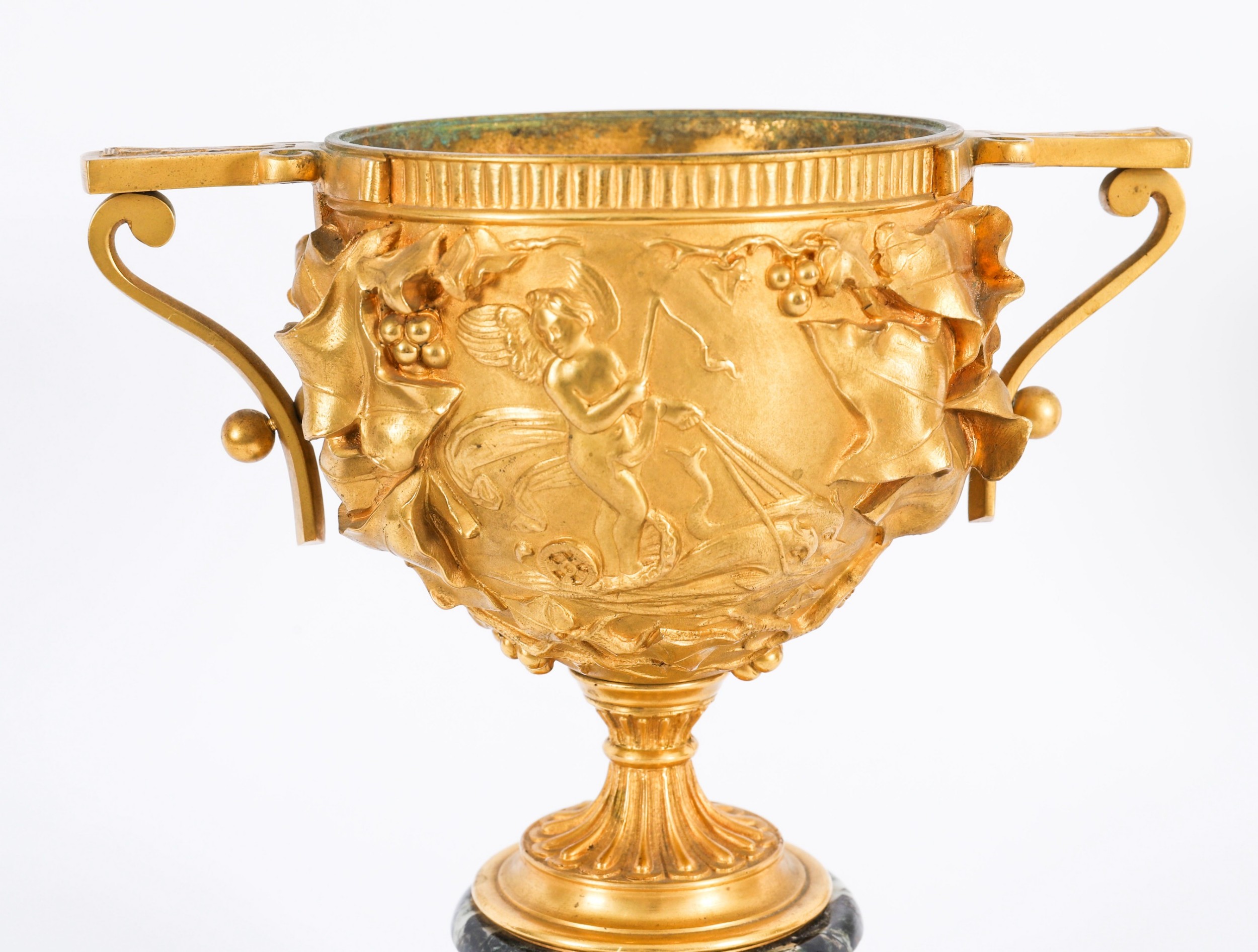
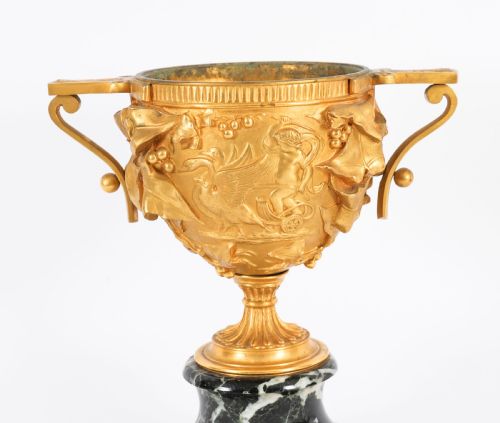
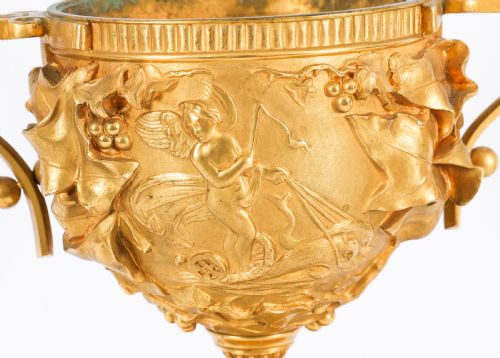
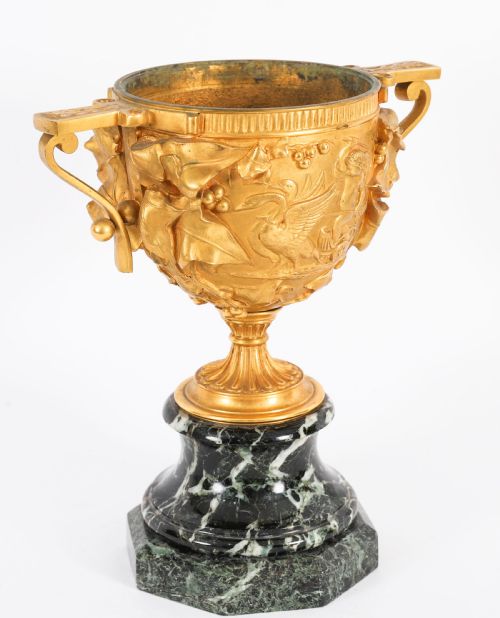
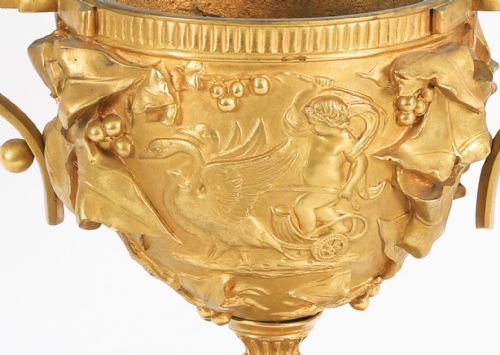
These two-handled urns have been superbly cast in the ancient Roman campana shaped form and feature rich foliate ornamentation in high relief with winged cherubs riding swan drawn chariots raised on cylindrical Empress green marble pedestals with octagonal bases.
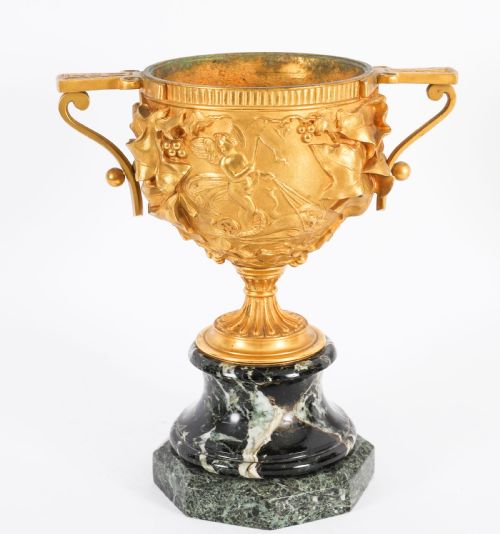
The attention to detail throughout is second to none and this pair of classical gilt bronze urns are sure to enhance great historical fascination wherever they are placed.

Condition:

In excellent condition, please see photos for confirmation.

Dimensions in cm:

Height 22 cm x Width 19.5 cm x Depth 11 cm

Dimensions in inches:Height 9 inches x Width 8 inches x Depth 4 inches
The Grand Tour

was the traditional trip of Europe undertaken by mainly upper-class European young men of means. The custom flourished from about 1660 until the advent of large-scale rail transit in the 1840s, and was associated with a standard itinerary.
It served as an educational rite of passage. Though primarily associated with the British nobility and wealthy landed gentry, similar trips were made by wealthy young men of Protestant Northern European nations on the Continent, and from the second half of the 18th century some South American, U.S., and other overseas youth joined in. The tradition was extended to include more of the middle class after rail and steamship travel made the journey less of a burden.
The primary value of the Grand Tour, it was believed, lay in the exposure both to the cultural legacy of classical antiquity and the Renaissance, and to the aristocratic and fashionably polite society of the European continent. In addition, it provided the only opportunity to view specific works of art, and possibly the only chance to hear certain music. A grand tour could last from several months to several years. It was commonly undertaken in the company of a knowledgeable guide or tutor.
The Grand Tour not only provided a liberal education but allowed those who could afford it the opportunity to buy things otherwise unavailable at home, and it thus increased participants' prestige and standing. Grand Tourists would return with crates of art, books, pictures, sculpture, and items of culture, which would be displayed in libraries, cabinets, gardens, and drawing rooms, as well as the galleries built purposely for their display; The Grand Tour became a symbol of wealth and freedom.
Ormolu - Gilt Bronze (from French 'or moulu', signifying ground or pounded gold) is an 18th-century English term for applying finely ground, high-carat gold in a mercury amalgam to an object of bronze.The mercury is driven off in a kiln leaving behind a gold-coloured veneer known as 'gilt bronze'.
The manufacture of true ormolu employs a process known as mercury-gilding or fire-gilding, in which a solution of nitrate of mercury is applied to a piece of copper, brass, or bronze, followed by the application of an amalgam of gold and mercury. The item was then exposed to extreme heat until the mercury burned off and the gold remained, adhered to the metal object.

Our reference: A5215

Physical Dimensions
Height
22cm (8.66")
Width
19.5cm (7.68")
Depth
11cm (4.33")
Declaration

Regent Antiques has dated these Gilt Bronze Classical Urns to the 19th Century.

Reference Numbers
Sellingantiques Reference
SA1213701
Dealers Internal Reference
A5215
Description
This is a remarkable pair of antique French Grand Tour ormolu and marble urns, circa 1860 in date.

These two-handled urns have been superbly cast in the ancient Roman campana shaped form and feature rich foliate ornamentation in high relief with winged cherubs riding swan drawn chariots raised on cylindrical Empress green marble pedestals with octagonal bases.

The attention to detail throughout is second to none and this pair of classical gilt bronze urns are sure to enhance great historical fascination wherever they are placed.
Regent Antiques
fig 1. A pair of nineteenth-century French gilt bronze classical urns featuring relief carvings and scroll handles, mounted on dark green marble bases.
fig 1. Antique Pair French Grand Tour Gilt Bronze Classical Urns 19th C

Condition:

In excellent condition, please see photos for confirmation.

Dimensions in cm:

Height 22 cm x Width 19.5 cm x Depth 11 cm

Dimensions in inches:Height 9 inches x Width 8 inches x Depth 4 inches

fig 2. A pair of nineteenth-century French gilt bronze classical urns featuring relief carvings and scroll handles, mounted on dark green marble bases.
fig 2. Antique Pair French Grand Tour Gilt Bronze Classical Urns 19th C

The Grand Tour

was the traditional trip of Europe undertaken by mainly upper-class European young men of means. The custom flourished from about 1660 until the advent of large-scale rail transit in the 1840s, and was associated with a standard itinerary.

fig 3. A pair of nineteenth-century French gilt bronze classical urns featuring relief carvings and scroll handles, mounted on dark green marble bases.
fig 3. Antique Pair French Grand Tour Gilt Bronze Classical Urns 19th C

It served as an educational rite of passage. Though primarily associated with the British nobility and wealthy landed gentry, similar trips were made by wealthy young men of Protestant Northern European nations on the Continent, and from the second half of the 18th century some South American, U.S., and other overseas youth joined in. The tradition was extended to include more of the middle class after rail and steamship travel made the journey less of a burden.

fig 4. A pair of nineteenth-century French gilt bronze classical urns featuring relief carvings and scroll handles, mounted on dark green marble bases.
fig 4. Antique Pair French Grand Tour Gilt Bronze Classical Urns 19th C

The primary value of the Grand Tour, it was believed, lay in the exposure both to the cultural legacy of classical antiquity and the Renaissance, and to the aristocratic and fashionably polite society of the European continent. In addition, it provided the only opportunity to view specific works of art, and possibly the only chance to hear certain music. A grand tour could last from several months to several years. It was commonly undertaken in the company of a knowledgeable guide or tutor.

fig 5. A pair of nineteenth-century French gilt bronze classical urns featuring relief carvings and scroll handles, mounted on dark green marble bases.
fig 5. Antique Pair French Grand Tour Gilt Bronze Classical Urns 19th C

The Grand Tour not only provided a liberal education but allowed those who could afford it the opportunity to buy things otherwise unavailable at home, and it thus increased participants' prestige and standing. Grand Tourists would return with crates of art, books, pictures, sculpture, and items of culture, which would be displayed in libraries, cabinets, gardens, and drawing rooms, as well as the galleries built purposely for their display; The Grand Tour became a symbol of wealth and freedom.

fig 6. A pair of nineteenth-century French gilt bronze classical urns featuring relief carvings and scroll handles, mounted on dark green marble bases.
fig 6. Antique Pair French Grand Tour Gilt Bronze Classical Urns 19th C

Ormolu - Gilt Bronze (from French 'or moulu', signifying ground or pounded gold) is an 18th-century English term for applying finely ground, high-carat gold in a mercury amalgam to an object of bronze.The mercury is driven off in a kiln leaving behind a gold-coloured veneer known as 'gilt bronze'.

fig 7. A pair of nineteenth-century French gilt bronze classical urns featuring relief carvings and scroll handles, mounted on dark green marble bases.
fig 7. Antique Pair French Grand Tour Gilt Bronze Classical Urns 19th C

The manufacture of true ormolu employs a process known as mercury-gilding or fire-gilding, in which a solution of nitrate of mercury is applied to a piece of copper, brass, or bronze, followed by the application of an amalgam of gold and mercury. The item was then exposed to extreme heat until the mercury burned off and the gold remained, adhered to the metal object.

Our reference: A5215

Height
22cm (8.66")
Width
19.5cm (7.68")
Depth
11cm (4.33")
Date of Manufacture

Regent Antiques has dated these Gilt Bronze Classical Urns to the 19th Century.

Reference Numbers
Sellingantiques Ref
SA1213701
Dealers Internal Ref
A5215
Regent Antiques
Regent Antiques
Sellingantiques verified Since Sep 2016

We specialise in english and continental furniture, silver, porcelain and decorative items.

Dealer Profile

You can view the stock and full dealer information on the Regent Antiques Profile Page

Trade Associations

Regent Antiques is a registered member of LAPADA  CINOA
PDF SHARE
SAVE
A pair of nineteenth-century French gilt bronze classical urns featuring relief carvings and scroll handles, mounted on dark green marble bases.
1 / 18
Archive I A pair of nineteenth-century French gilt bronze classical urns featuring relief carvings and scroll handles, mounted on dark green marble bases.

Antique Pair French Grand Tour Gilt Bronze Classical Urns 19th C
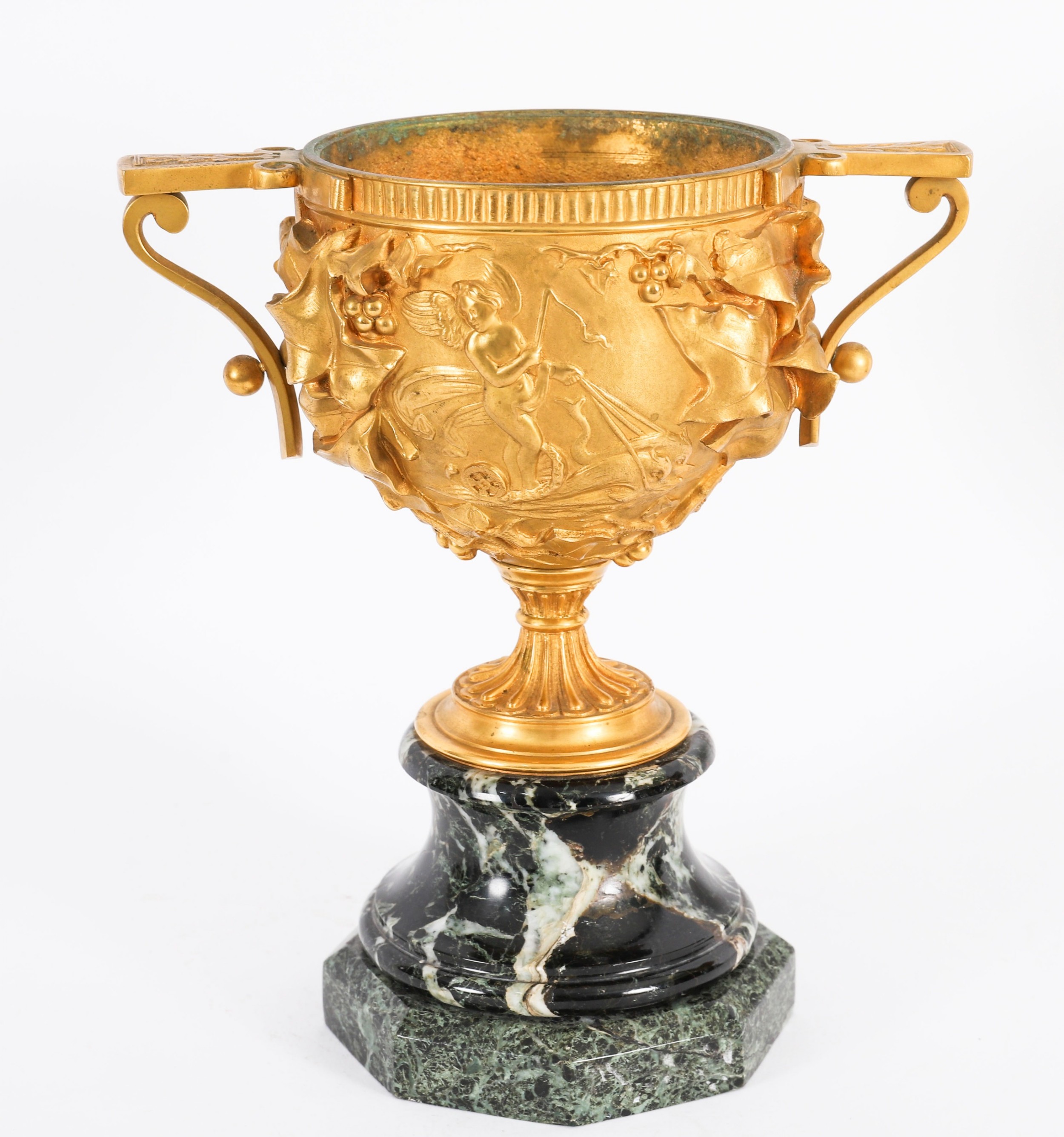
Archive II A pair of nineteenth-century French gilt bronze classical urns featuring relief carvings and scroll handles, mounted on dark green marble bases. View II
Archive III A pair of nineteenth-century French gilt bronze classical urns featuring relief carvings and scroll handles, mounted on dark green marble bases. View III
Archive IV A pair of nineteenth-century French gilt bronze classical urns featuring relief carvings and scroll handles, mounted on dark green marble bases. View IV
Archive V A pair of nineteenth-century French gilt bronze classical urns featuring relief carvings and scroll handles, mounted on dark green marble bases. View V
Archive VI A pair of nineteenth-century French gilt bronze classical urns featuring relief carvings and scroll handles, mounted on dark green marble bases. View VI
Archive VII A pair of nineteenth-century French gilt bronze classical urns featuring relief carvings and scroll handles, mounted on dark green marble bases. View VII
Archive VIII A pair of nineteenth-century French gilt bronze classical urns featuring relief carvings and scroll handles, mounted on dark green marble bases. View VIII
Archive IX A pair of nineteenth-century French gilt bronze classical urns featuring relief carvings and scroll handles, mounted on dark green marble bases. View IX
Archive X A pair of nineteenth-century French gilt bronze classical urns featuring relief carvings and scroll handles, mounted on dark green marble bases. View X
Archive XI A pair of nineteenth-century French gilt bronze classical urns featuring relief carvings and scroll handles, mounted on dark green marble bases. View XI
Archive XII A pair of nineteenth-century French gilt bronze classical urns featuring relief carvings and scroll handles, mounted on dark green marble bases. View XII
Archive XIII A pair of nineteenth-century French gilt bronze classical urns featuring relief carvings and scroll handles, mounted on dark green marble bases. View XIII
Archive XIV A pair of nineteenth-century French gilt bronze classical urns featuring relief carvings and scroll handles, mounted on dark green marble bases. View XIV
Archive XV A pair of nineteenth-century French gilt bronze classical urns featuring relief carvings and scroll handles, mounted on dark green marble bases. View XV
Archive XVI A pair of nineteenth-century French gilt bronze classical urns featuring relief carvings and scroll handles, mounted on dark green marble bases. View XVI
Archive XVII A pair of nineteenth-century French gilt bronze classical urns featuring relief carvings and scroll handles, mounted on dark green marble bases. View XVII
Archive XVIII A pair of nineteenth-century French gilt bronze classical urns featuring relief carvings and scroll handles, mounted on dark green marble bases. View XVIII
Enlarged Archival View
Location
Manor Warehouse
318 Green Lanes
London
N4 1BX
United Kingdom
Verified Since Sep 2016
Items For Sale 659
Items Sold 2,608
Regent Antiques
Regent Antiques
Verified Since Sep 2016
View Dealer Info
Location: Manor Warehouse, 318 Green Lanes, London, N4 1BX, United Kingdom
Verified
Sep 2016
For Sale
659
Sold
2,608
A pair of nineteenth-century French gilt bronze classical urns featuring relief carvings and scroll handles, mounted on dark green marble bases.
Antique Pair French Grand Tour Gilt Bronze Classical Urns 19th C
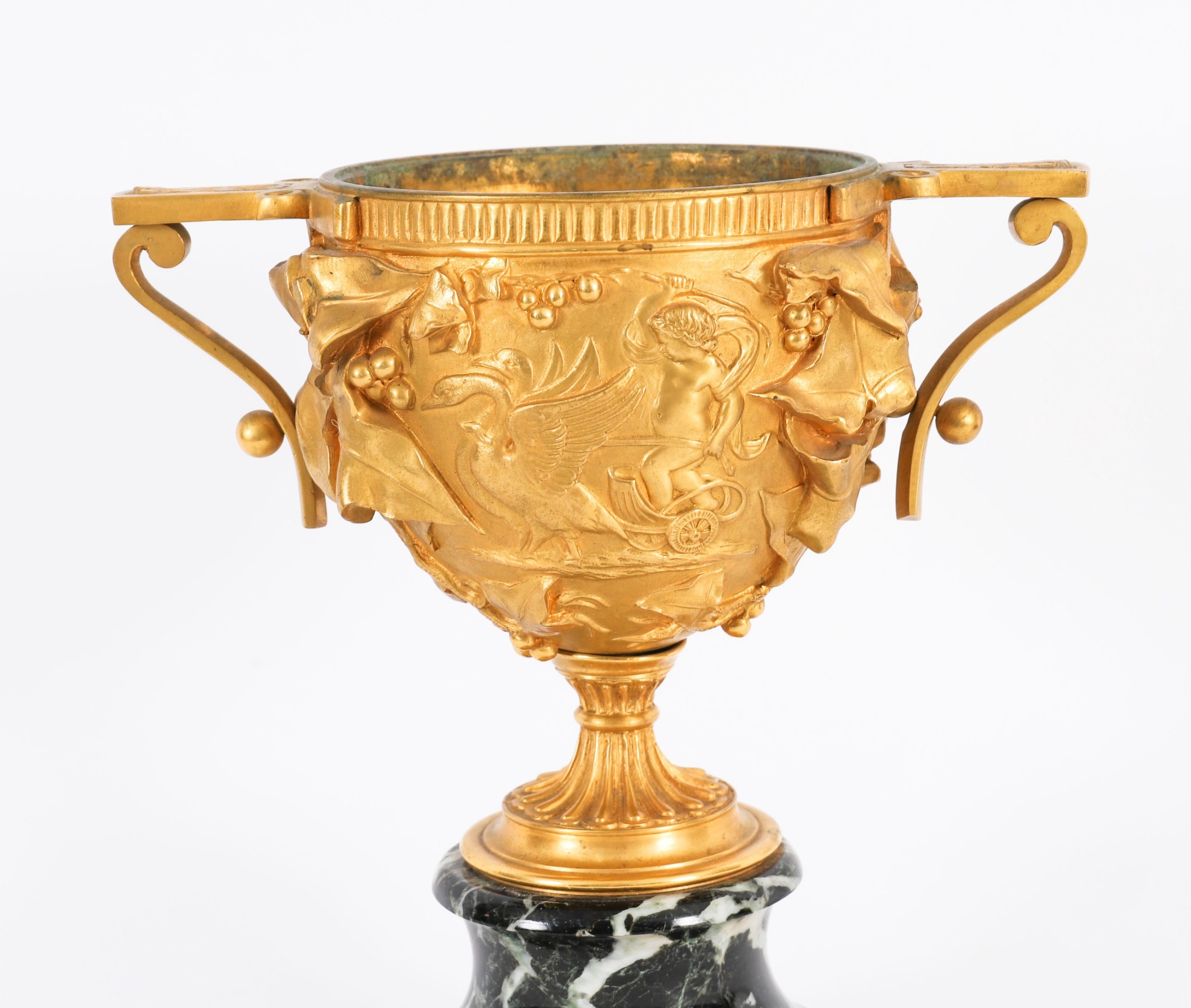
Ref: SA1213701
A pair of nineteenth-century French gilt bronze classical urns featuring relief carvings and scroll handles, mounted on dark green marble bases.
Detail View 1
Detail View 2
Detail View 3
Detail View 4
Detail View 5
Detail View 6
Detail View 7
Detail View 8
Detail View 9
Detail View 10
Detail View 11
Detail View 12
Detail View 13
Detail View 14
Detail View 15
Detail View 16
Detail View 17
Archival Detail
Every single antique dealer on our platform is individually approved by our internal team. We verify their professional trade history, ethical standards, and photographic quality to ensure a secure, high-standard buying environment. Upon joining, every dealer agrees to a strict 9-point code of conduct. While issues can occasionally arise, our dealers typically resolve them swiftly and directly with the buyer. In fact, since our founding in 2002, Sellingantiques has only had to step in to help resolve an issue on roughly five occasions—a true testament to the quality of our dealers and their dedication to your happiness.
Our dealers are highly experienced in packing and shipping fragile, high-value antiques. Because you are in direct contact with the dealer, you will be able to easily go through all available shipping and insurance options together to ensure your item arrives safely.
Antiques are the ultimate green purchase. By choosing historical pieces over newly manufactured goods, you completely eliminate the carbon footprint of modern mass production while preserving exceptional, timeless craftsmanship.

Grand Tour classical urns are nineteenth-century decorative items produced as keepsakes for European aristocracy, predominantly featuring design elements and motifs derived from ancient Roman and Greek archaeology.

These vessels were typically constructed using gilt bronze, also known as ormolu, which was cast and hand-chased before being mounted onto carved marble, serpentine, or porphyry plinths.

Authentic period pieces display crisp hand-chased detail, heavy cast metal construction, natural wear or oxidisation to the gilded surface, and genuine marble bases with period-appropriate thread fittings.

Positioning a symmetrical pair on a fireplace mantelpiece, sideboard top, or entrance console provides architectural balance and introduces historic texture into contemporary living spaces.

Dust gently using a soft dry natural-bristle brush or microfiber cloth, avoiding liquid polishes, water, or chemical cleaners that can strip the delicate gilded layer or stain the marble base.
items
Add keywords to the filter
Price
£100
£250000
Era
Movements
Material
Origin
Stock Location
Freshness
Online Payments
Categories