

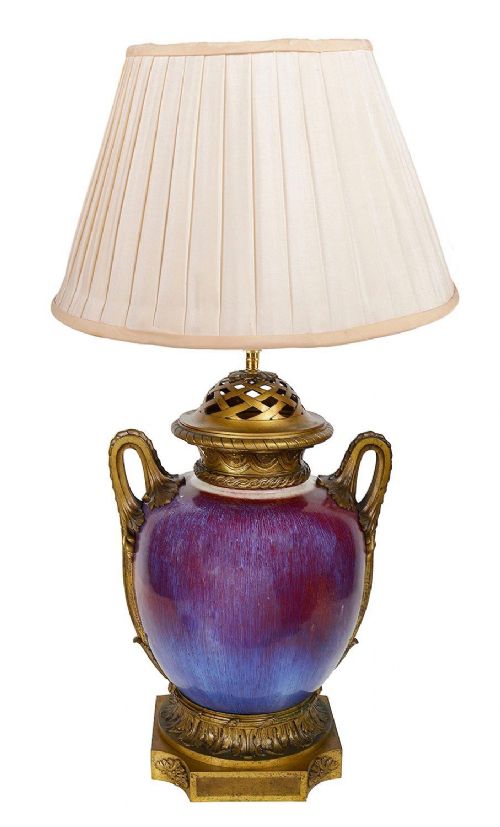
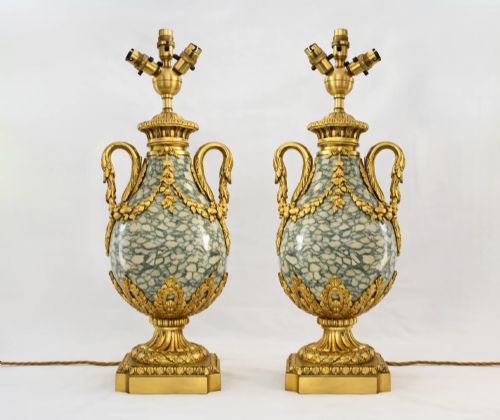

French Gilt Bronze Vases
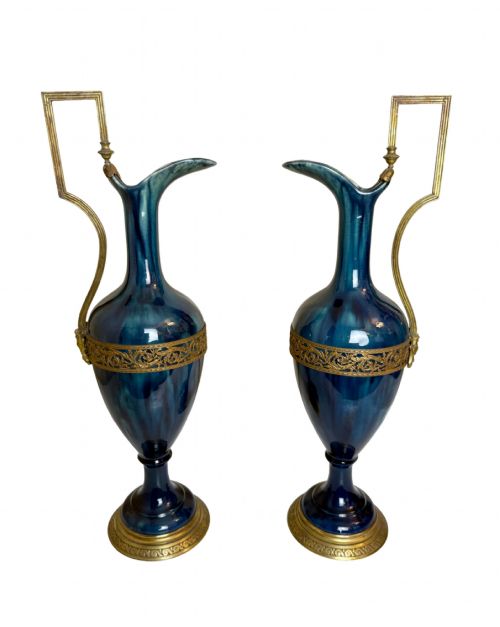
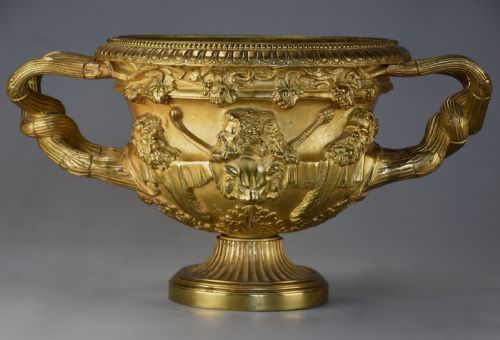
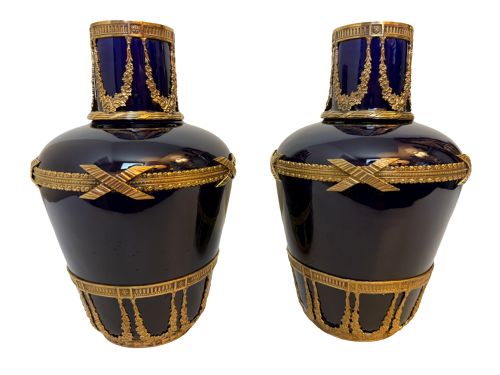
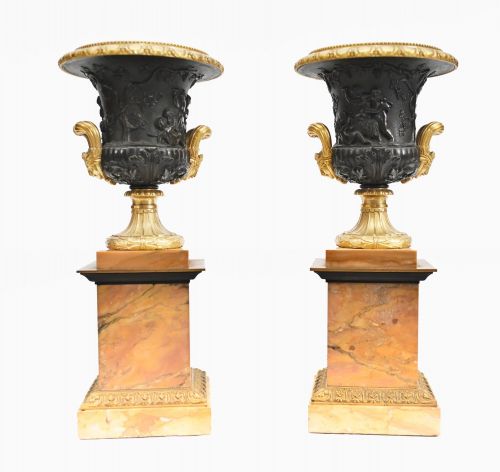
French gilt bronze vases bring neoclassical weight and chased metalwork into a room.
French Gilt Bronze Vases
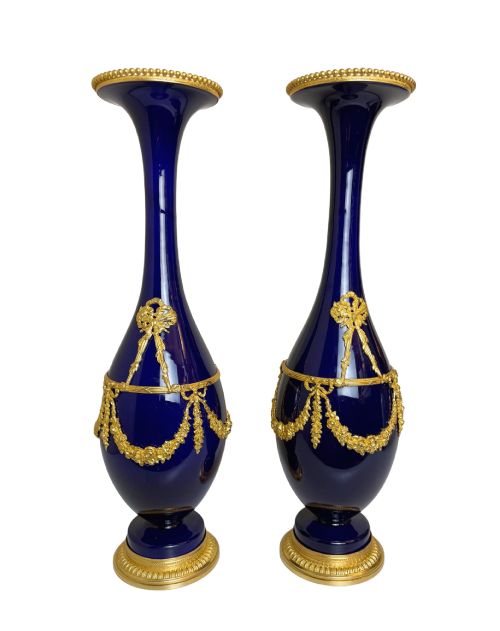
When you search for french gilt bronze vases, you enter a domain of 19th-century metalwork, decorative urns, and mounted vessels designed to catch the candlelight. The majority of pieces met on this page date from the nineteenth century, spanning Victorian and Louis XVI revivals alongside Grand Tour souvenirs.
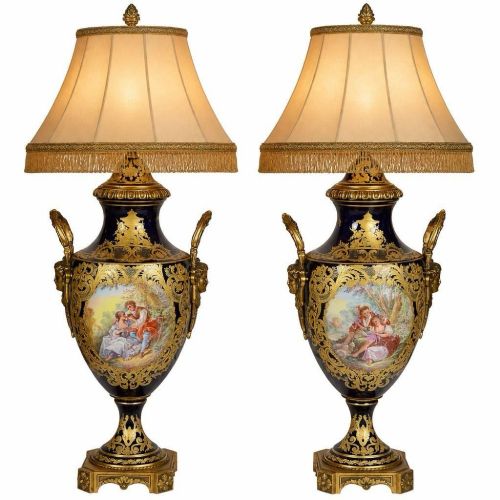
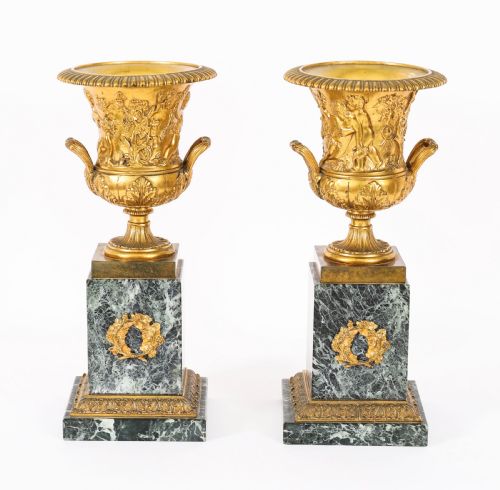
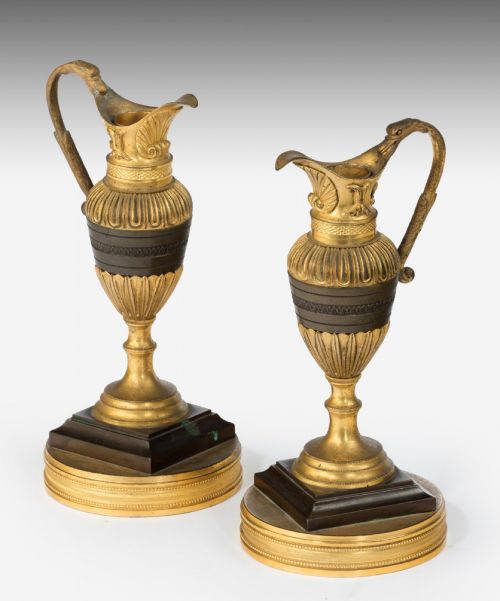
Makers and workshops combine cast bronze with contrasting bodies of porcelain, marble, onyx, and glass. Forms range from lidded cassolettes and ewers to table lamps adapted from earlier vases.
Origins stretch from French Parisian kilns to Chinese export porcelain fitted with European ormolu mounts. Buyers encounter pairs intended for mantelpieces as frequently as single monumental centrepieces.
How they were made
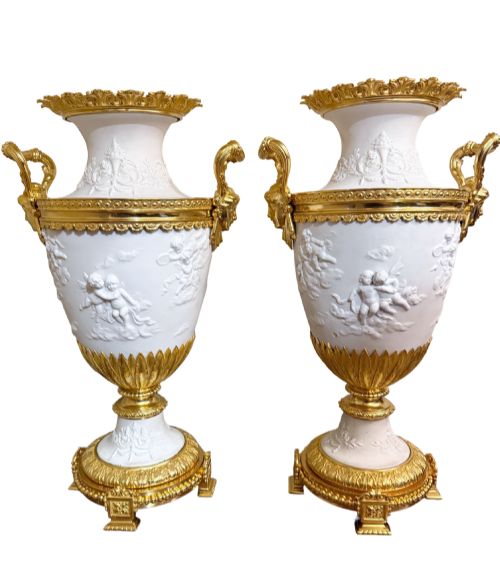
Foundries cast bronze into complex figural and foliate shapes before applying gold leaf or mercury gilding to create the characteristic ormolu finish. Chasing tools sharpen the surface detail of acanthus leaves, cherubs, and classical drapery after casting.
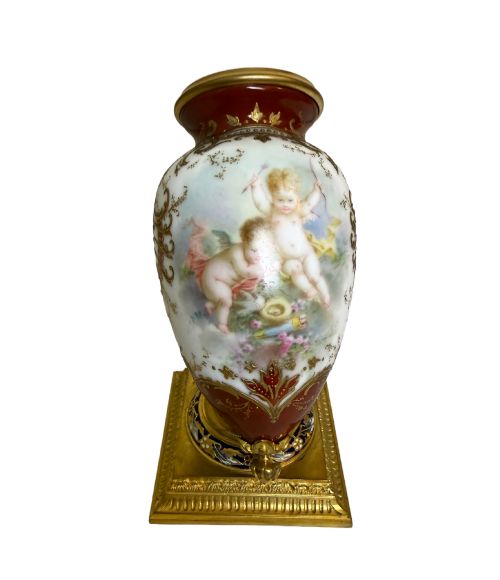
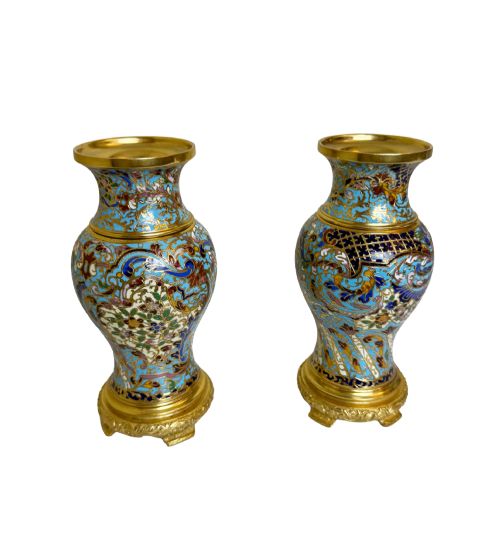
Ceramic bodies such as Sevres style porcelain, Paris porcelain, and cloisonne enamel integrate directly with bronze mounts, often held together by threaded internal rods. Marble, onyx, and green marble bases provide structural weight and a cool tactile contrast to the warm metal.
What varies in quality
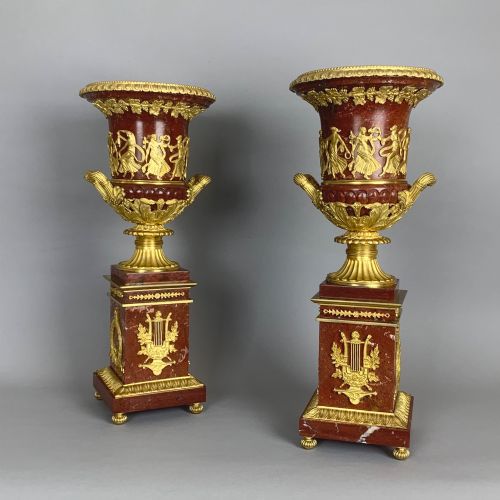
The crispness of the bronze chasing dictates the visual success of a piece, separating sharp hand-tooled acanthus leaves from soft, muddy cast forms. Richness of the mercury gilding or gold leaf application determines how the metal catches ambient light across a room.
Harmony between the central vessel and its bronze mounts reveals the maker's ambition, particularly where porcelain bodies carry hand-painted scenes or intricate pate-sur-pate decoration. Integrity of the stone bases and the snugness of fit at the mount joints complete the assessment.
Sevres·Meissen·Clodion
The French Gilt Bronze Vases Glossary
- Ormolu
- Gilt bronze mounted or applied to decorative objects and furniture. The term derives from the French phrase for ground gold.
- Cassolette
- A decorative vase or urn with a reversible lid that functions as a burner or solid vessel. These often appear in pairs flanking a clock or candelabra.
- Champleve
- An enamelling technique where troughs are dug into the bronze surface and filled with coloured vitreous paste before firing. This creates intricate geometric or floral patterns across the metal body.
- Campana
- A bell-shaped classical urn form popularised by ancient Roman excavations. Grand Tour examples often reproduce this specific silhouette in bronze.
- Pate-sur-pate
- A method of porcelain decoration where wet white slip is built up in successive layers over a coloured clay body. It produces a low-relief cameo effect on vases and lamps.
French Gilt Bronze Vases: Frequently Asked Questions
How were french gilt bronze vases used originally?
These vessels functioned primarily as decorative garnitures on drawing room mantelpieces, often arranged alongside matching clocks and candelabra. Some served as potpourri containers with pierced lids to scent the room.
Others were brought back as Grand Tour souvenirs to signal classical erudition and foreign travel. Later examples were frequently converted into table lamps as domestic lighting evolved.
How do I tell Louis XVI style from Empire style?
Louis XVI style pieces lean towards restrained neoclassical elegance, featuring delicate ribbon twists, slender urns, and refined acanthus foliage. They reflect an 18th-century French aesthetic revived during the 19th century.
Empire style objects display heavier military and imperial symbolism derived from Napoleon's reign, using bolder sphinxes, claw feet, and martial trophies. The bronze work on Empire pieces generally feels more solid and imposing.
What is the difference between ormolu and gilt bronze?
Ormolu is simply the traditional term for gilt bronze, originating from the French 'oupid moulu' denoting the gold-wash technique. Both terms describe a copper alloy base treated with a gold finish to mimic solid precious metal.
In older trade descriptions, ormolu specifically implies the high-grade mercury gilding standard on 18th and 19th-century luxury goods. Modern descriptions often use both words interchangeably for these decorative mounts.