


French Grand Tour Urns
French grand tour urns bring the classical sculpture and architecture of Italy directly into nineteenth-century domestic interiors through masterly metalwork and stone.
French Grand Tour Urns
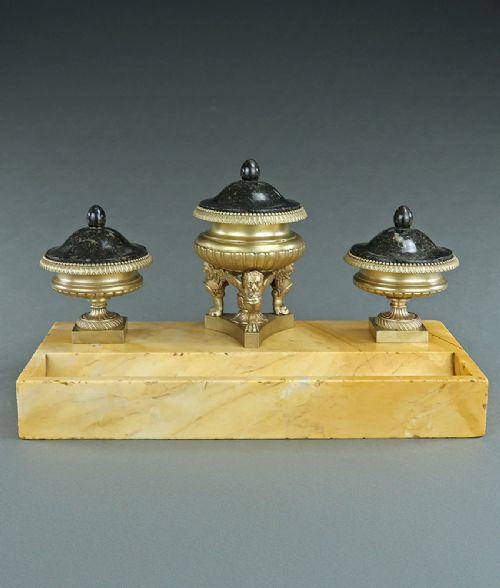
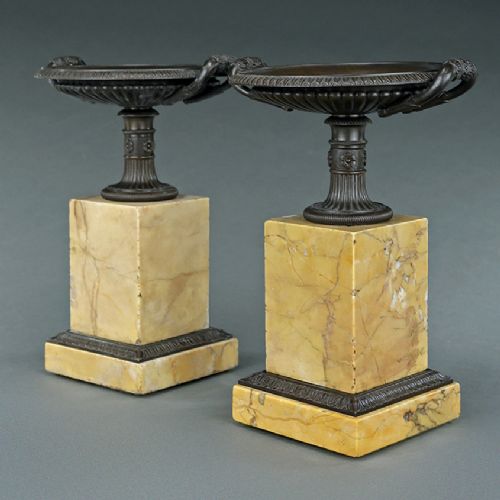
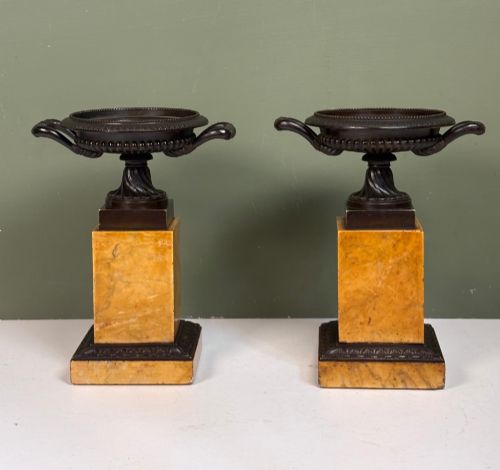
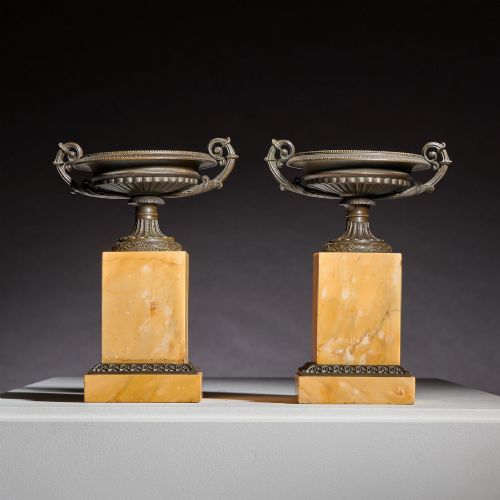
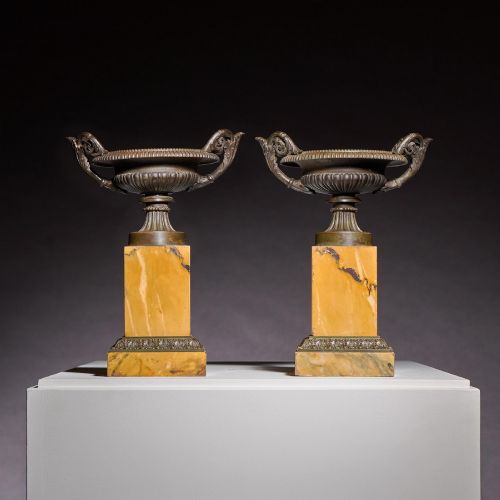
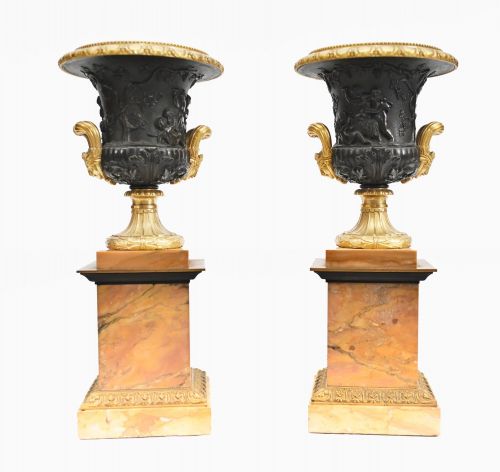
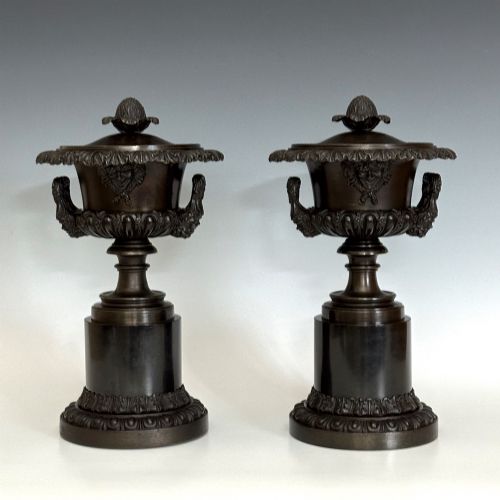
When you search for french grand tour urns, you encounter decorative vessels, tazzas, and cassolettes produced during the nineteenth century for travellers returning from European journeys. These pieces translate ancient Roman and Greek forms into domestic cabinet ornaments, library pieces, and table lamps.
The objects on this page predominantly date from the nineteenth century, including specific years like 1850, 1870, 1880, and 1890, alongside Regency and Victorian periods. Forms range from campana-shaped vases and lidded urns to tazzas, inkstands, and candelabras.
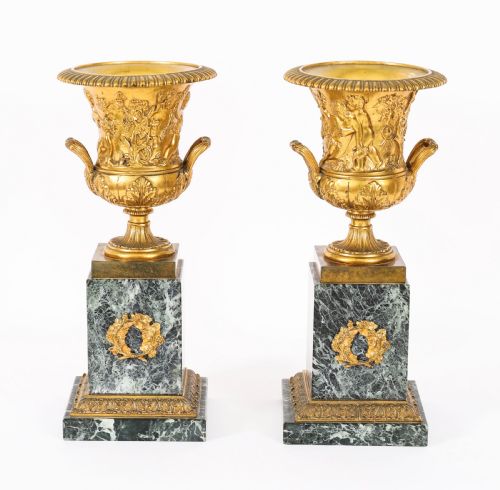
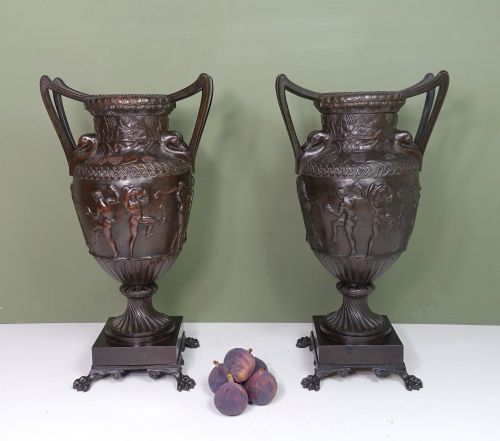
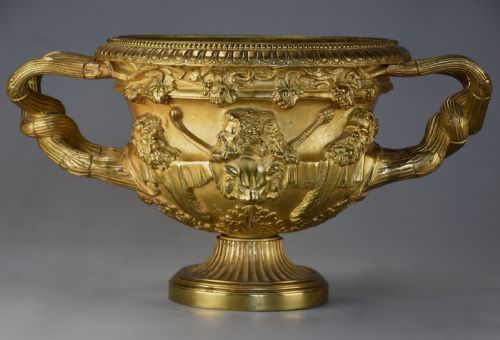
Makers drew heavily upon classical motifs, producing reductions of famous antiquities such as the Warwick Vase or modelling pieces after artists like Clodion. Neoclassical, French Empire, and Grand Tour styles dominate the selection.
How they were made
Artisans combined cast bronze, patinated bronze, gilt bronze, ormolu, and silvered bronze with contrasting sections of marble. Sienna marble, green marble, and standard marble serve as heavy bases and bodies that anchor the metalwork.
Foundries employed careful casting and chasing techniques to render fine details such as cherubs, Bacchus figures, and classical maidens. Gilding and silvering were applied to highlight specific architectural elements and figural reliefs on the vessels.
Listings feature 19th-century objects spanning Regency and Victorian periods, utilising bronze, gilt bronze, patinated bronze, silvered bronze, and marble.
What varies in quality
The distinction between ordinary and superior pieces rests on the crispness of the bronze casting and the depth of the chasing. Finer examples display sharp definition in figures like Bacchus or cherubs, whereas lesser objects show softer, shallower detailing in the metal.
Material selection also defines the tier of the piece, particularly the richness of the ormolu and the quality of the marble plinths. Richly variegated Sienna marble and heavy, well-balanced bronze mounts elevate an object above simpler cast iterations.
Clodion
The French Grand Tour Urns Glossary
- Campana
- A bell-shaped vessel form inspired by ancient pottery and metalwork. These flare outward toward the rim.
- Tazza
- A shallow bowl or vase raised on a slender stem and foot. They often function as decorative display pieces on tables or desks.
- Ormolu
- Finely ground high-carat gold applied to a bronze base using a mercury amalgamation process. This technique yields a deep, warm metallic lustre.
- Cassolette
- A decorative vase with a removable lid that can be reversed to function as a candle holder or incense burner. They appear frequently in nineteenth-century collections.
- Patinated bronze
- Metal treated chemically to produce a dark, stable surface finish. This treatment highlights the lighter gilt or silvered mounts.
French Grand Tour Urns: Frequently Asked Questions
How were french grand tour urns used?
Travellers used them as mantelpiece ornaments, library desk accessories, and decorative centrepieces to signal their cultural education and travel history. Some utilitarian forms served as inkwells or wine-coolers.
Over time, certain pieces were adapted for modern domestic utility, such as converting ewers into table lamps while retaining their classical appearance.
How do I style french grand tour urns at home?
Pair these pieces with dark wood furniture, leather-topped desks, or marble surfaces where their metallic finishes and stone plinths complement the setting. Their sculptural forms suit formal libraries and living rooms.
Allow sufficient space around larger tazzas or lidded urns so their cast details and figural mounts remain visible without visual clutter.
How do I tell periods apart in french grand tour urns?
Regency and early nineteenth-century pieces often feature severe neoclassical lines paired with rich Sienna marble bases. Later nineteenth-century items, such as those from the 1870s and 1890s, frequently employ elaborate cast bronze mounts and varied patination.
Examine the mounting techniques, the type of marble used, and the style of chasing to gauge whether an object belongs to the early Regency era or the later Victorian revival periods.