





Empire Style Bronze Urns
Empire style bronze urns are classical decorative vessels rooted in nineteenth-century neoclassical design, sought after for their bold architectural presence.
Empire Style Bronze Urns
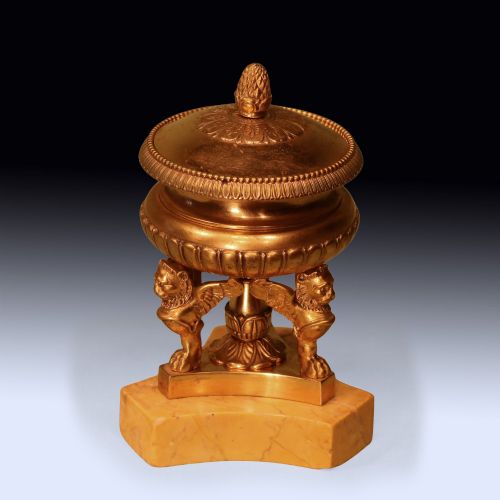
When you search for empire style bronze urns, you encounter decorative vessels, lamps and garnitures shaped by nineteenth-century French and English neoclassical design. These pieces draw directly on Greek and Roman antiquity, featuring campana profiles and classical ornamentation.
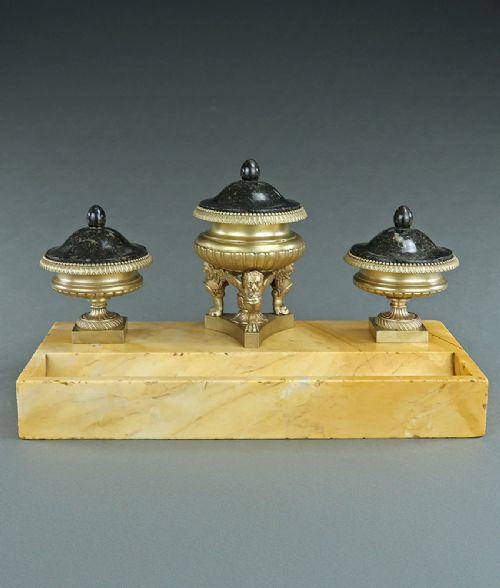
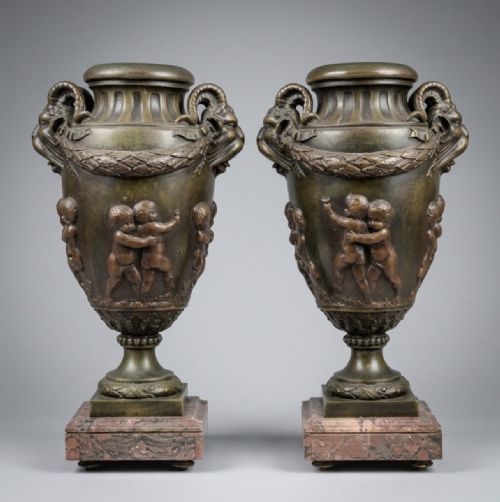
The selection ranges from decorative urns and cassolettes to functional table lamps and inkstands. Pairs intended for mantelpieces and console tables appear frequently across the listings.
How they were made
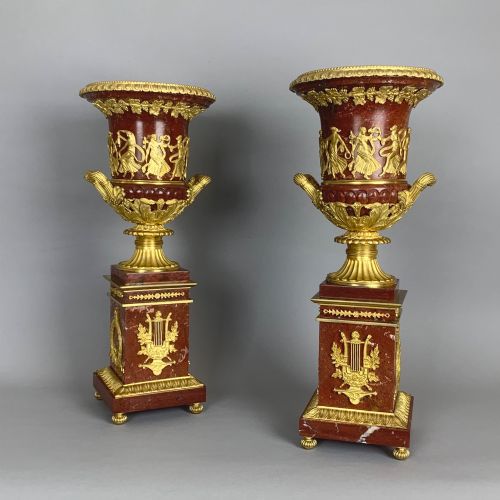
Foundry workers cast the primary bodies in bronze, utilising patination techniques to achieve deep brown or black surfaces, while ormolu and gilded bronze provided bright contrasting highlights. Many pieces combine cast metal with turned marble bases in Sienna, rouge or white varieties.
Chasing and fire-gilding defined the finest metalwork, creating crisp relief details on handles, rims and mounts. Individual components were joined with threaded rods and screws, allowing for complex multi-material construction.
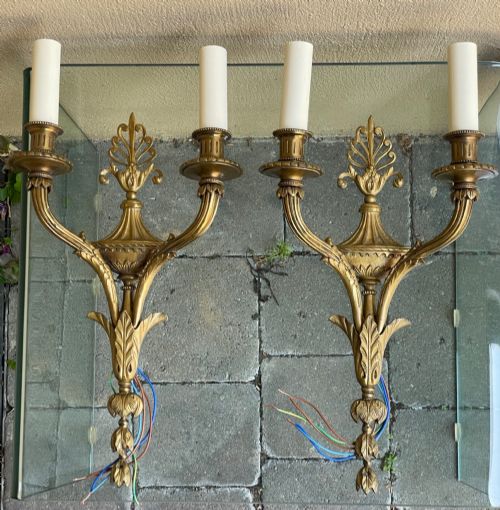
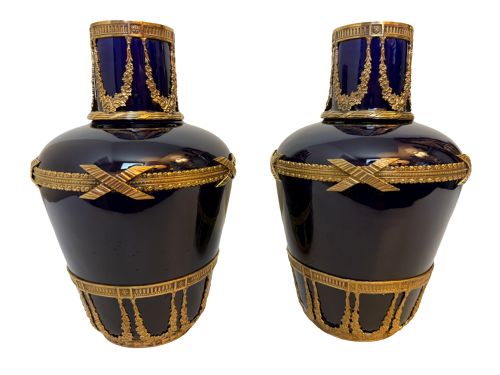
Listings feature nineteenth-century materials including Sienna marble, ormolu, patinated bronze and French glass across various lamp and urn forms.
What varies in quality
The definition and depth of the metal chasing separate standard production from superior work. Crisp leaf motifs, sharply rendered handles and clean casting seams indicate skilled workshop output.
The quality of the stone base and the richness of the mercury gilding determine the tier of the piece. Substantial marble turning and intact, vibrant gilding elevate the overall visual impact.
Lerolle Fres·Vincenti of Paris·James Ritchie and Son
The Empire Style Bronze Urns Glossary
- Ormolu
- Gilded bronze produced through an amalgam of mercury and gold applied to cast brass or bronze. This historical technique creates a warm, deep lustre that differs from modern electroplating.
- Campana
- A bell-shaped classical vessel form with a flaring rim and a pedestal foot. It originates from ancient Roman pottery and metalwork.
- Patinated bronze
- Metal treated with chemical solutions to darken the surface and create stable brown or black tones. It provides contrast against bright gilt mounts.
- Cassolette
- A dual-purpose decorative vase featuring a reversible or pierced lid that allows it to function as a perfume burner. These objects were popular in neoclassical interiors.
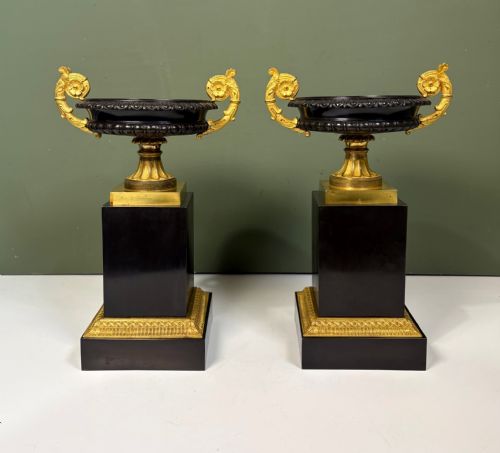
- Tazza
- A shallow saucer-shaped vessel raised on a stem and foot, often utilised in pairs for classical display. They frequently incorporate marble socles and bronze handles.
Empire Style Bronze Urns: Frequently Asked Questions
How were empire style bronze urns used?
Historically, they functioned as decorative garniture sets, table centrepieces or perfume burners in formal nineteenth-century reception rooms.
Today, many period urns have been adapted safely as table lamps while retaining their classical bronze and marble components.
How do I style empire style bronze urns at home?
Position pairs on heavy furniture such as marble-topped console tables, sideboards or mantelpieces to create symmetrical balance. Their dark patinated surfaces and bright ormolu mounts pair well with dark wood and stone.
Ensure adequate lighting highlights the chased details of the bronze and the contrasting tones of the marble bases.
How can I tell the period of these urns?
Examine the construction methods, such as hand-cut screws, cast bronze thickness and the composition of the marble base. Nineteenth-century pieces often display distinct patination and mercury gilding characteristics.
Stylistic cues like Regency handles or Napoleon III proportions help narrow down the manufacturing decade.