


Grand Tour Bronze Tazza
These grand tour bronze tazza pieces are classical souvenirs of the nineteenth century, bringing classical antiquity directly into the home.
Grand Tour Bronze Tazza
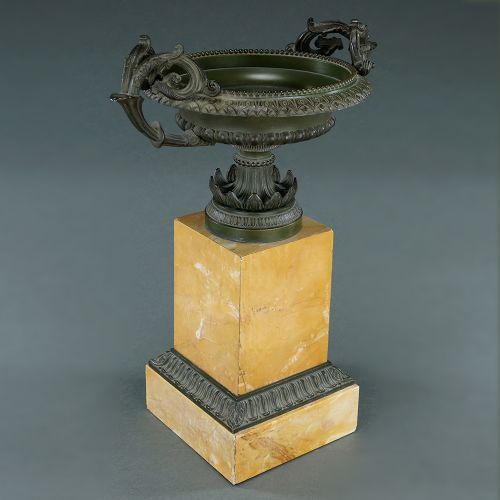
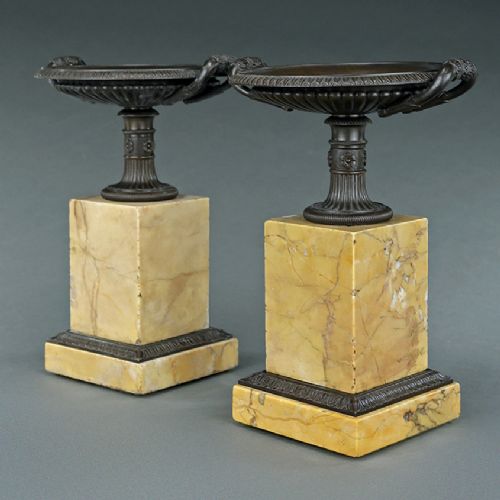
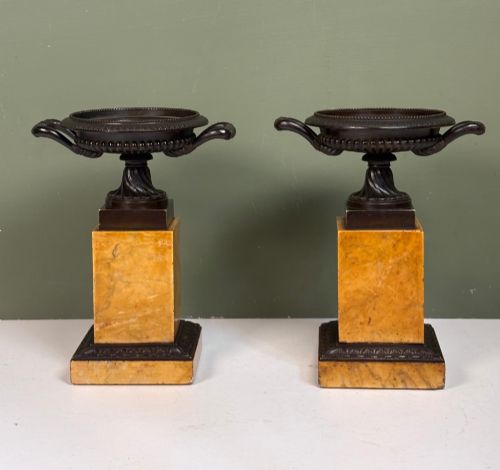
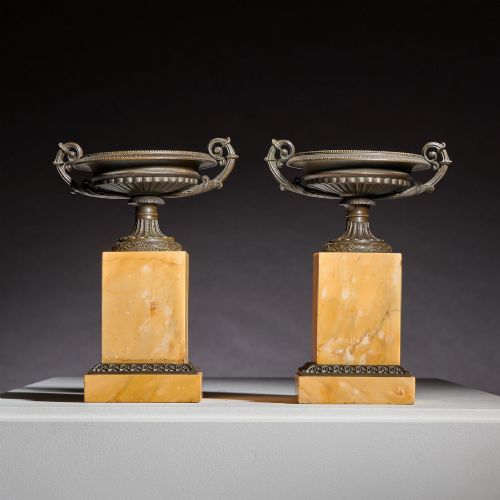
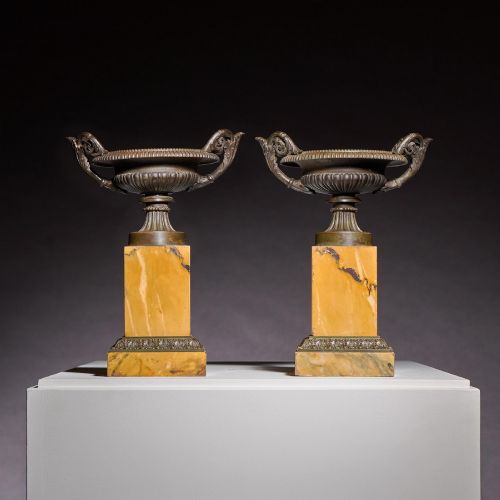
When you search for a grand tour bronze tazza, you are looking at nineteenth-century decorative vessels created as souvenirs of classical travels in Italy and France. These pieces take the form of shallow dishes, urns, and lidded cups mounted on pedestals, reflecting classical antiquity and archaeological discoveries.
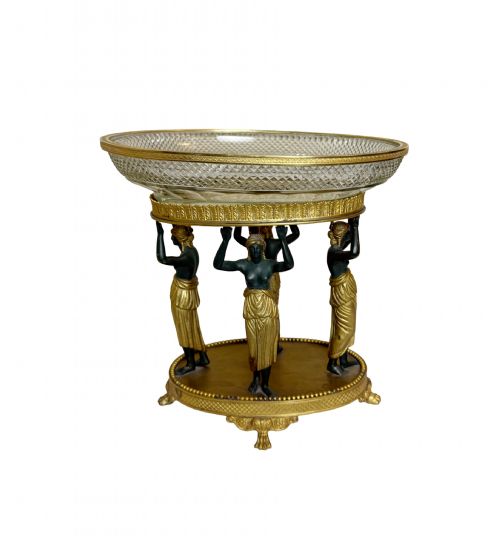
The objects seen here belong predominantly to the nineteenth century, spanning the Regency and French Empire styles. Many appear in pairs, combining classical bronze forms with rich stone bases, while others incorporate cut crystal and gilt bronze details.
Originating as mementos for travellers undertaking the Grand Tour, these decorative bowls and centrepieces served as displays of classical learning and refined taste. They function primarily as ornamental centrepieces and decorative objects, designed for display on mantelpieces and tables.
What varies in quality in grand tour bronze tazza pieces
The quality of a grand tour bronze tazza lies in the crispness of the casting and the selection of the materials used for the base and mounts. Superior examples demonstrate meticulous detail in classical ornamentation and employ fine stones such as Siena marble.
The harmony between the bronze vessel and its marble or crystal components determines the overall refinement of the piece. Well-proportioned handles, clean patination, and substantial mountings distinguish the finer decorative objects from simpler souvenirs.
Travellers returning home with heavy bronze tazzas proved that nineteenth-century luggage limits were entirely a state of mind.
The Grand Tour Bronze Tazza Glossary
- Tazza
- A shallow bowl or vase on a pedestal foot, used in classical antiquity and revived during the nineteenth century as a decorative centrepiece. These vessels often feature classical handles and relief decoration.
- Grand Tour
- A traditional trip through Europe, particularly Italy and France, undertaken by upper-class travellers in the eighteenth and nineteenth centuries to study classical art. Souvenirs bought on these journeys formed the basis of many home collections.
- Ormolu
- Gilt bronze, created by applying finely ground gold mercury amalgam to a bronze object. This technique produces a rich golden finish seen on classical mounts and details.
- Siena Marble
- A yellow marble quarried in Italy, featuring dark grey or brown veining. It is frequently utilised in the bases of nineteenth-century decorative objects.
- Patinated Bronze
- Bronze treated with chemicals or heat to alter its surface colour and texture. This finish gives the metal a dark, aged appearance characteristic of ancient artefacts.
Grand Tour Bronze Tazza: Frequently Asked Questions
What is a tazza used for?
A tazza served primarily as a decorative vessel or centrepiece on nineteenth-century tables and mantelpieces. These objects were designed to display classical motifs and celebrate ancient art rather than for practical dining use.
Today, they remain purely ornamental, functioning as focal points in period interiors and collections of classical antiquities.
How do I identify a Grand Tour bronze?
Grand Tour bronzes typically replicate ancient Greek or Roman statues, architectural models, or vessels seen during travels in Italy. They date predominantly to the nineteenth century and often incorporate Italian marbles in their bases.
Look for evidence of nineteenth-century casting techniques and patination combined with classical design elements derived from archaeological finds.
What is Siena marble?
Siena marble is a distinctive yellow ornamental stone quarried in Tuscany, Italy, marked by dramatic grey or brownish-purple veins. It appeared frequently in nineteenth-century decorative objects and furniture.
Found often on the bases of grand tour bronzes, this stone provided a colourful and luxurious contrast to dark patinated metal.
Where were these pieces made?
These pieces were produced mainly in workshops across France and Italy to satisfy the demand of travellers on the Grand Tour. Major centres like Paris and Rome manufactured them as high-end souvenirs.
Artisans in these cities cast the bronze elements and turned the marble bases to resemble authentic antiquities for foreign buyers.