


19th Century Bronze Tazza
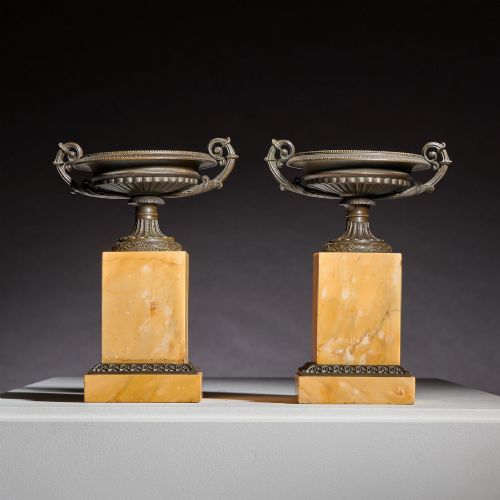
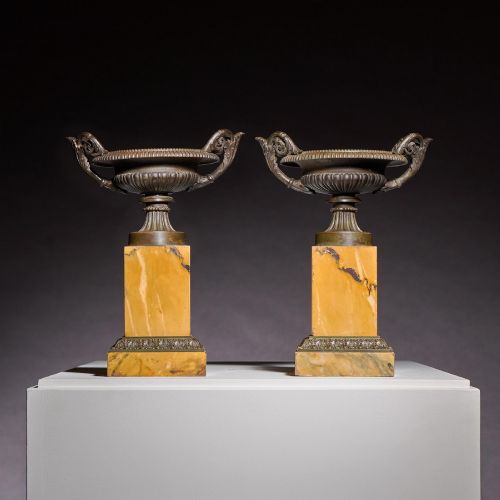
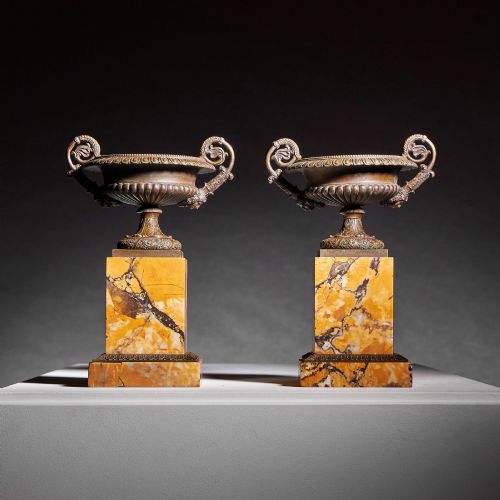
These 19th century bronze tazza pieces are classical pedestal bowls and dishes that elevate any interior with striking metalwork and sculptural presence.
19th Century Bronze Tazza
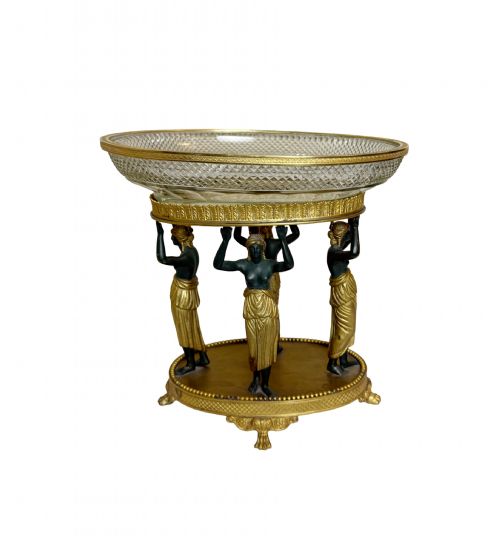
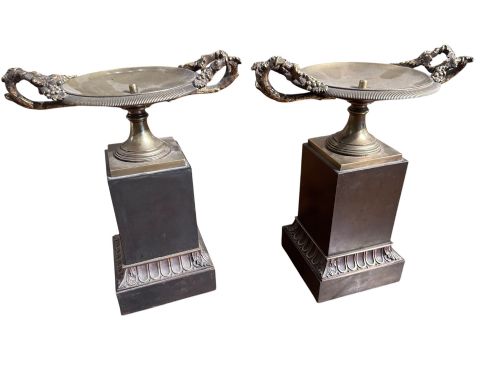
A 19th century bronze tazza functions as a decorative centrepiece, bowl, or comport, often displayed on tables and mantelpieces. Buyers seeking this search phrase frequently encounter French Empire, Grand Tour, and Regency designs originating from continental workshops.
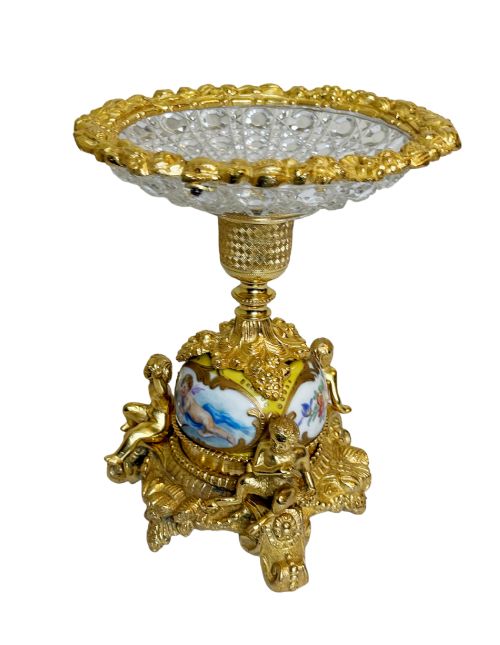
The form spans shallow dishes, twin-handled vessels, and lidded cups mounted on pedestals. Many examples incorporate classical motifs, mythological figures like mermen, or winged cherubs supporting the basin.
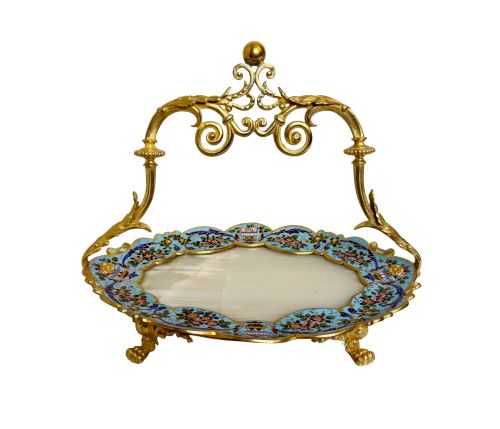
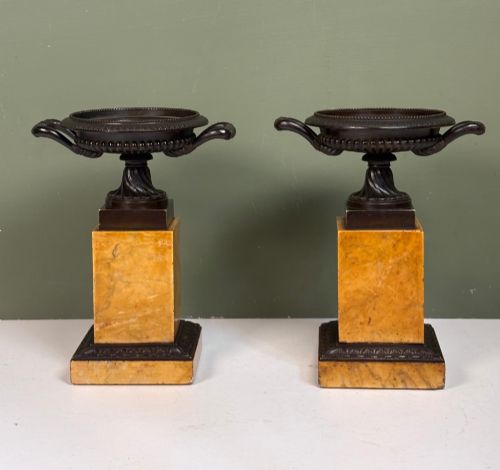
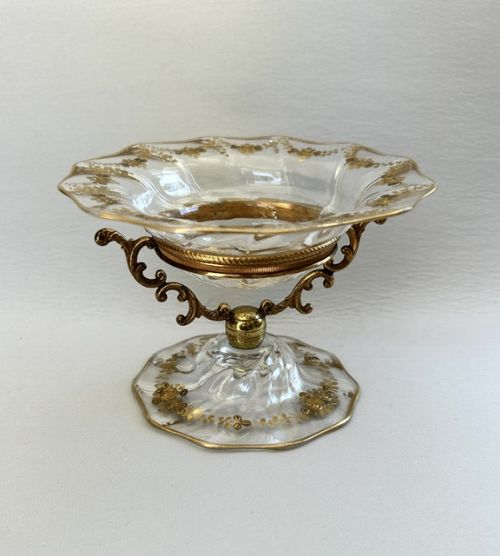
Materials combined with bronze include Siena marble, rouge griotte marble, green onyx, cut crystal, porcelain, and malachite. These varied substances create contrasting textures between the metallic mounts and the central vessel.
Materials and Technique
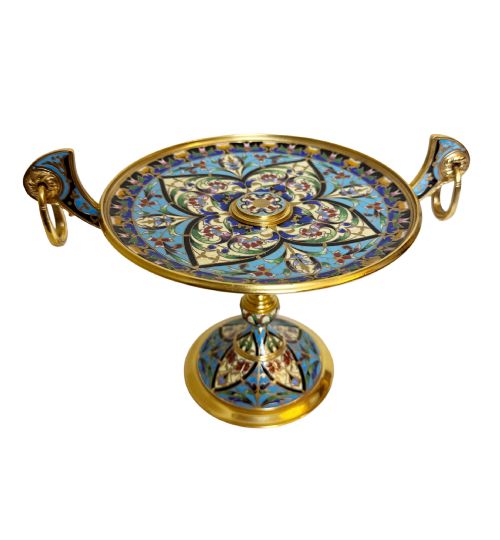
Foundry workers cast the metallic elements in bronze, frequently applying gilt or ormolu finishes to highlight sculptural details. Champlevé and Limoges enamel additions introduce vibrant colour panels into the metal framework.
Stone components such as marble and onyx are turned and polished to form contrasting bases and columns. Artisans assemble these mixed media objects using concealed pins and threaded screws to secure the metal mounts to the stone or glass bodies.
Listings feature 19th century bronze tazza pieces incorporating champlevé enamel, Siena marble, and Sevres style porcelain.
Standards of Execution
The crispness of the bronze chasing and the depth of the fire gilding distinguish superior examples from standard production. Finely chiselled details in figures and foliage demonstrate the skill of the original bronze-worker.
The selection and turning of associated materials reveal craftsmanship, particularly in the figuring of marble or the clarity of cut crystal and porcelain dishes. Harmonious proportions between the basin, stem, and base separate masterworks from simpler souvenirs.
Christofle Paris·Louis Pierre Malpass
The 19th Century Bronze Tazza Glossary
- Tazza
- A shallow bowl or cup mounted on a stem and foot, used historically for serving food or displaying items. Grand Tour examples adapt ancient classical forms for nineteenth-century travellers.
- Ormolu
- Gilt bronze produced by applying a mercury-gold amalgam to a bronze base and heating it. This technique creates a durable golden finish characteristic of French decorative arts.
- Champlevé
- An enamelling technique where troughs or cells are carved into the metal surface and filled with vitreous enamel paste before firing. The surrounding metal lines separate the vibrant colours.
- Comport
- A pedestal dish or bowl used on dining tables for fruit and sweetmeats. Nineteenth-century versions often pair ceramic basins with metal stands.
- Grand Tour
- A cultural journey undertaken by nineteenth-century Europeans visiting classical antiquities in Italy. Souvenirs purchased on these trips frequently included bronze architectural models and classical tazzas.
19th Century Bronze Tazza: Frequently Asked Questions
What is a bronze tazza?
A bronze tazza is a decorative pedestal bowl or shallow dish raised on a stem and foot. Nineteenth-century examples often serve as centrepieces on tables or architectural ornaments on mantelpieces.
Craftsmen combined cast bronze with materials like marble, porcelain, and enamel to create ornate display pieces inspired by classical antiquity.
How were tazzas used historically?
Historically, tazzas functioned as display vessels for fruit, sweetmeats, or ceremonial objects during formal dining. By the nineteenth century, many served primarily as decorative centrepieces.
Grand Tour travellers also collected smaller classical bronze tazzas as souvenirs of their journeys through Italy.
How do I style a tazza at home?
A tazza works well as a standalone centrepiece on a dining table, console, or sideboard. Its elevated form draws the eye upward and adds sculptural height to a surface.
You can leave the dish empty to showcase chased bronze or enamel details, or display small items like polished stones and decorative spheres within the basin.
What materials are found on these pieces?
Nineteenth-century tazzas frequently feature cast bronze with ormolu or gilt finishes. Artisans paired these metals with natural materials including Siena marble, rouge griotte marble, green onyx, malachite, and agate.
Some examples incorporate Sevres porcelain, Limoges enamel, champlevé enamel, or cut crystal to form the central basin.