


French Bronze Tazza
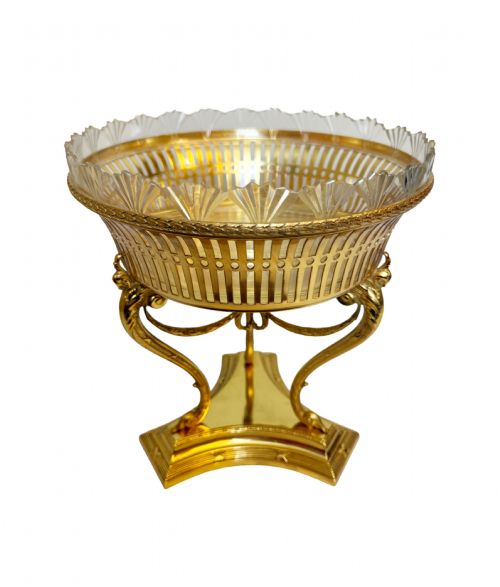
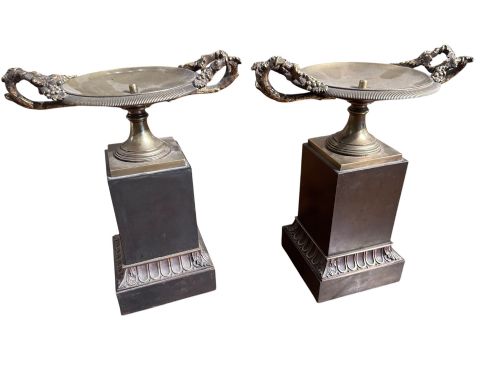
A french bronze tazza brings classical proportion and metalwork to a surface, serving as a decorative centrepiece or tazza bowl.
French Bronze Tazza
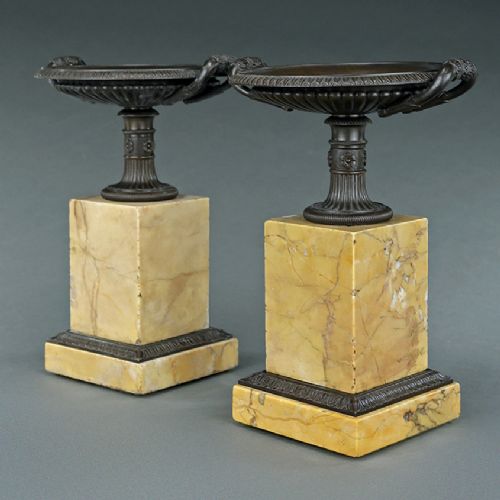
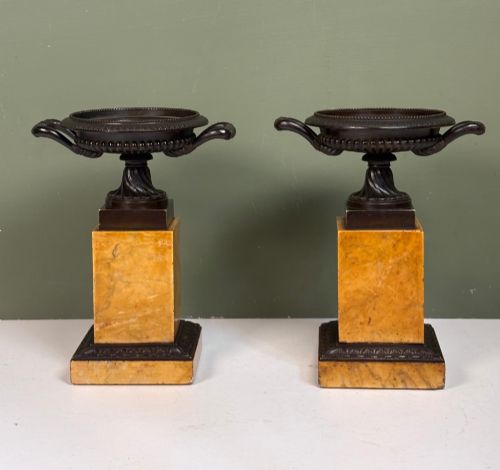
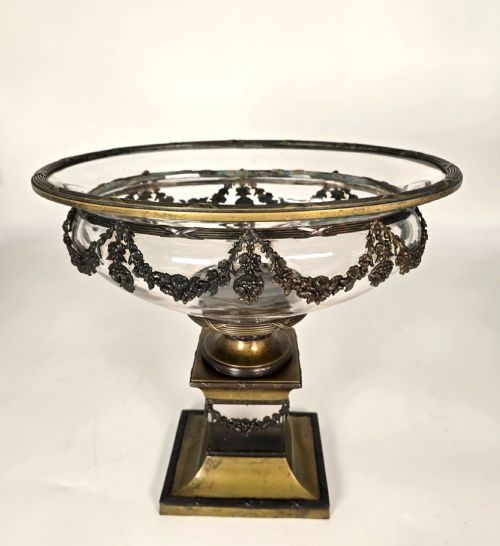
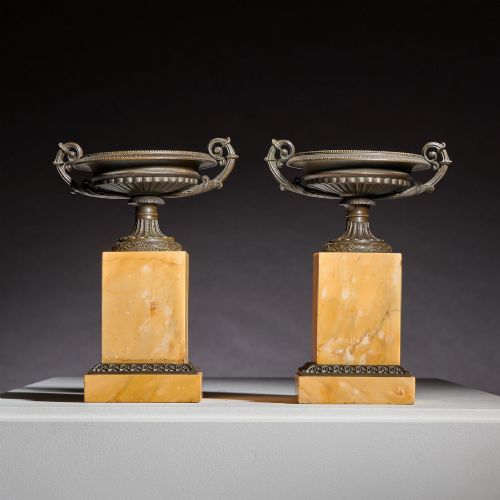
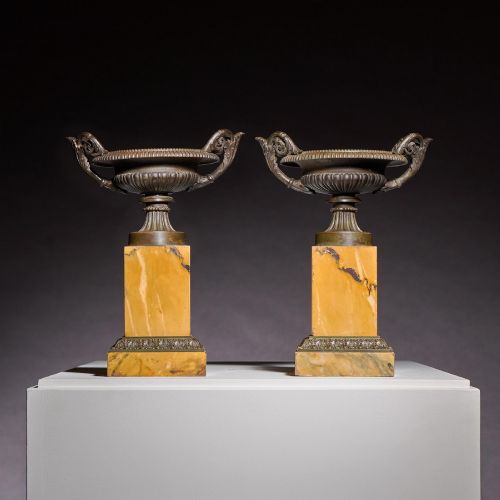
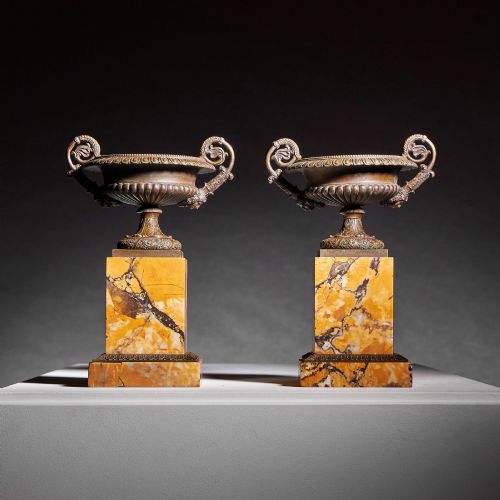
A french bronze tazza is a low, wide pedestal dish or shallow bowl designed for display on a table or cabinet. The form derives from classical antiquity, often taking the shape of a shallow dish supported by a column or stem above a plinth base.
The selections available here span from the Regency period and French Empire styles through to the later nineteenth century, including works from around 1800 to 1920. Many examples function as centrepieces, decorative bowls, or tazza vases rather than purely flat dishes.
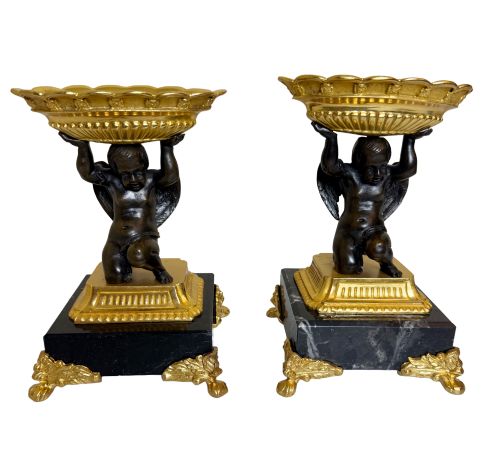
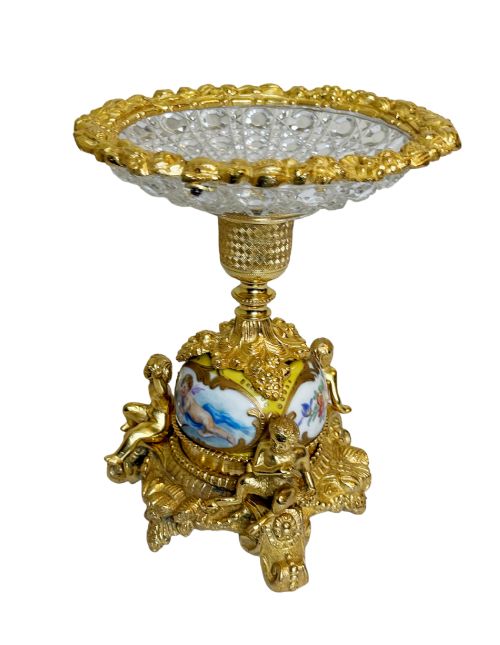
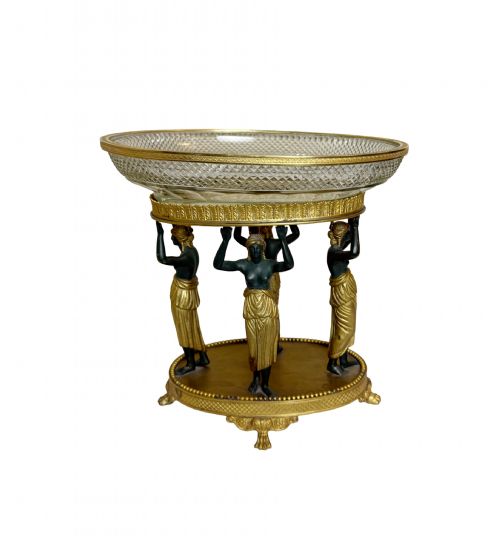
Makers and workshops combined bronze with other materials, creating varied silhouettes that range from simple classical forms to elaborate figurative compositions involving cherubs, mermen, or cornucopia handles.
How they were made
Foundry workers cast the bronze and ormolu components, applying patination or gilding to achieve contrasting metallic surfaces. Many pieces combine gilt bronze mounts with carved stone elements such as Siena marble, rouge marble, yellow antico, or green onyx.
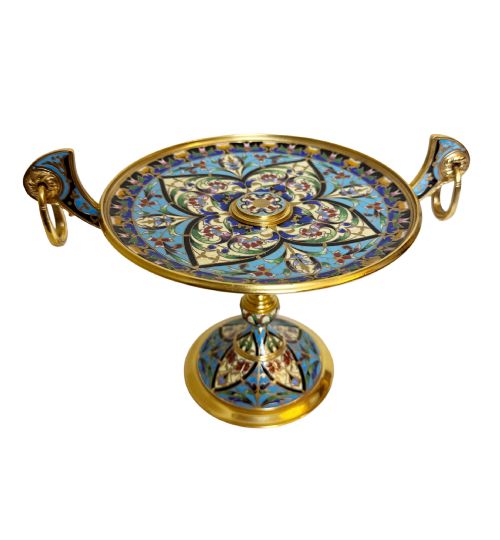
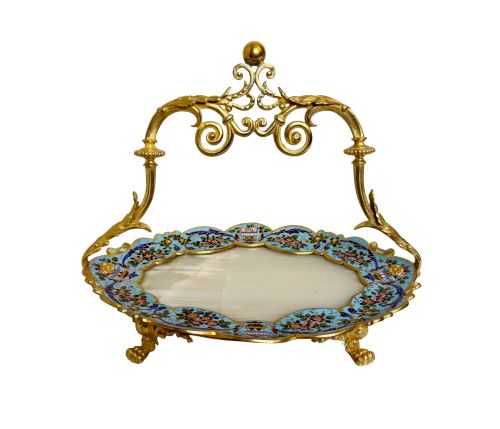
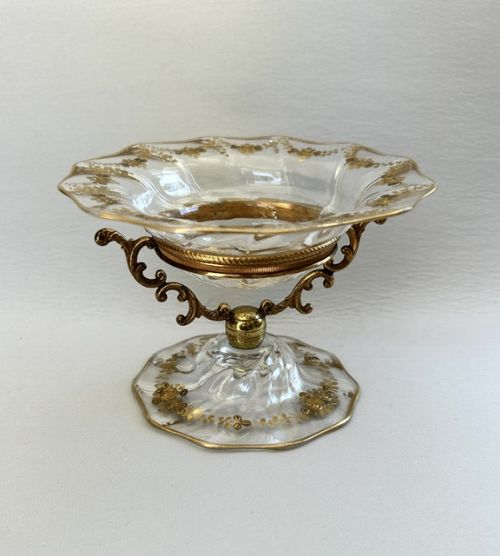
Inlaid decorative effects frequently incorporate champlevé enamel, cut crystal, coloured glass, or porcelain inserts, such as Sevres style plaques and dishes. Artisans secured these diverse elements together with threaded pins and hidden fixings to unite metal, stone, and glass.
French Bronze Tazza Retail Price Guide 2026
Typical asking prices for french bronze tazza among the pieces listed under this phrase on Sellingantiques today, from the lower quarter to the upper quarter. They describe what is for sale here now, not the wider market.
Some nineteenth-century examples incorporate unexpected figural elements, including perched cats, winged cherubs, and mermen supporting the central dishes.
What varies in quality
The choice of supporting materials significantly affects the character of the object, with dense natural stones like Siena marble or detailed champlevé enamel raising the complexity of the piece. Matching pairs and items retaining their original mercury gilding or patination hold greater material consistency.
Christofle Paris·F Barbedienne·Louis Pierre Malpass
The French Bronze Tazza Glossary
- Tazza
- A shallow saucer-shaped vessel mounted on a stem and foot, historically used for serving food or displaying items. The form was revived during the nineteenth century for decorative interior use.
- Ormolu
- Gilded bronze, produced by applying a mixture of gold amalgam to a bronze base and heating it to vaporise the mercury. The technique yields a distinctive warm golden finish.
- Champlevé
- An enamelling technique where troughs or cells are hollowed out of the metal surface and filled with vitreous enamel powder before firing. This creates coloured patterns flush with the surrounding metal.
- Comport
- A large standing dish or bowl used as a table centrepiece for fruit or confectionery. It shares a similar elevated pedestal format with the tazza.
- Grand Tour
- The traditional trip through Europe undertaken by upper-class young men in the eighteenth and nineteenth centuries, which generated a demand for portable classical antiquities and bronzes.
French Bronze Tazza: Frequently Asked Questions
What is a French bronze tazza used for?
These pieces function primarily as decorative centrepieces on dining tables, sideboards, or mantelpieces. Historically, similar vessels held fruit, sweetmeats, or visiting cards.
Today, they serve as focal points in interior decoration, often displayed empty to showcase the combination of bronze, marble, and enamel work.
How can I tell the period of a tazza?
Dating relies on stylistic clues and material combinations, such as the strict symmetry of Regency and French Empire designs compared to the ornate naturalism of later Rococo Revival pieces. The choice of secondary materials, including champlevé enamel or specific marbles, helps narrow the decade of manufacture.
Examining the casting quality and assembly methods underneath the base provides further evidence of the period.
Are these pieces made of solid gold?
No, the golden surfaces are typically ormolu, which is gilded bronze. The technique involves applying a gold and mercury mixture to a bronze substrate and heating it.
This method produces a durable golden lustre without requiring solid precious metal.
How do I care for bronze and marble?
Bronze requires gentle dusting with a soft dry cloth to protect the original patination or gilding. Moisture and abrasive cleaners should be avoided on both the metal and the stone surfaces.
Marble plinths can be wiped occasionally with a barely damp cloth and dried immediately to prevent water marks.