


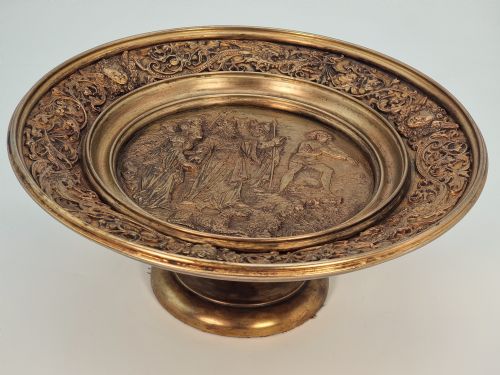


Bronze Pedestal Bowl
A bronze pedestal bowl brings formal classical presence to a table, combining cast metal with stone, crystal, or enamel.
Bronze Pedestal Bowl
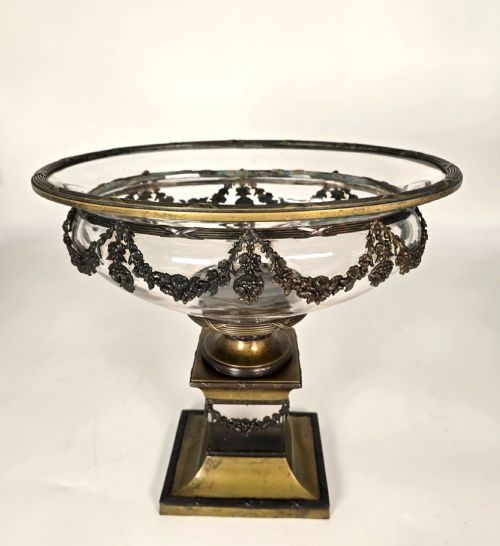
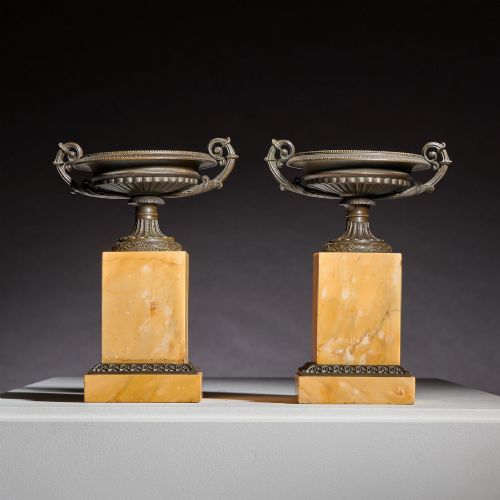
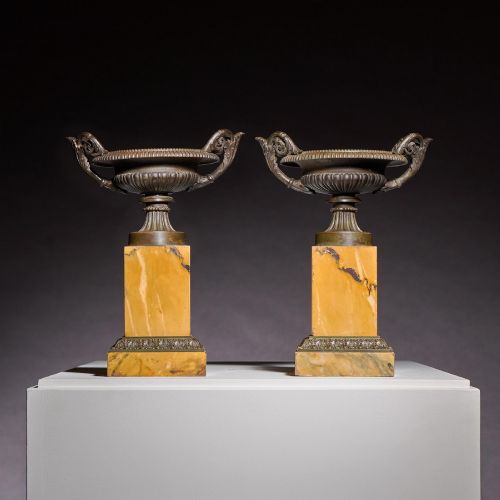
A bronze pedestal bowl functions as a centrepiece, tazza, or comport raised above the surface on a distinct foot or column. When buyers search for a bronze pedestal bowl, they encounter nineteenth-century decorative vessels originating from French workshops, Italian Grand Tour souvenirs, and occasional Asian export pieces.
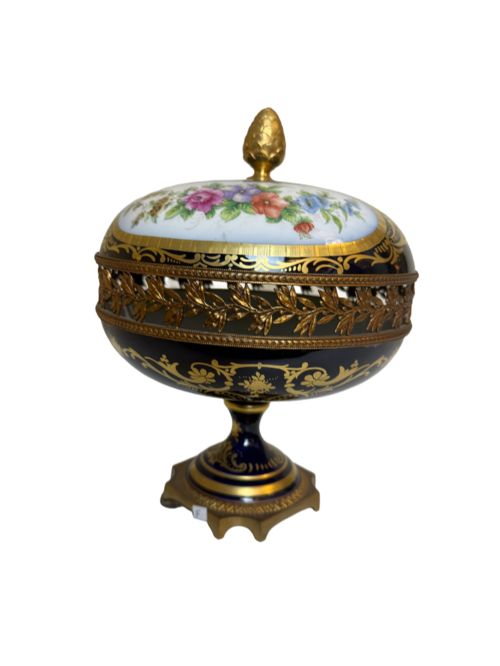
The form encompasses shallow decorative dishes, lidded vessels, and urn-style bowls designed to stand prominently on tables or mantelpieces. Materials paired with the metal include marble, cut crystal, porcelain, agate, and enamel, reflecting diverse nineteenth-century aesthetic movements.
Examples range from restrained French Empire designs to ornate Rococo Revival and Victorian Gothic creations. These objects served primarily as ornamental display pieces in period interiors, holding fruit, visiting cards, or simply standing alone.
How they were made
Maker workshops employed traditional sand casting and lost-wax methods to form the primary bronze components, finishing the metal with patination, gilding, or ormolu mounts. Gilt bronze and ormolu required meticulous application of gold leaf or mercury gilding to achieve a bright, durable surface.
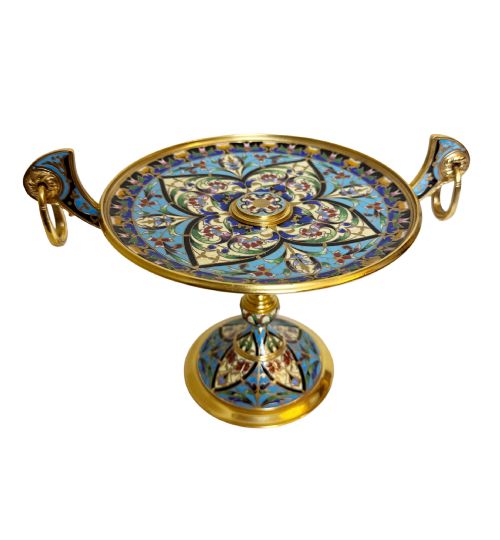
Rigid structural joints secured the metal foot to bowls fashioned from Siena marble, cut crystal, banded agate, or porcelain. Artisans integrated decorative surface techniques such as champlevé and cloisonné enamel, setting coloured vitreous pastes into recessed or wired bronze cells.
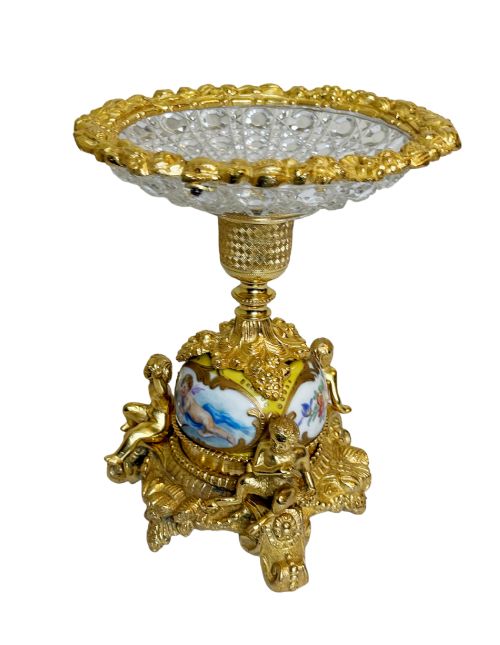
Several pieces manage to squeeze cherubs, agate cabochons, and malachite into a single pedestal.
What varies in quality
Quality rests in the crispness of the cast ornamentation, where finely chased foliage, cherubs, and classical motifs retain sharp relief without soft edges. The weight and purity of the primary bronze, alongside the richness of the gilding or patination, separate standard production items from exceptional commissions.
The choice and execution of secondary materials dictate overall merit, distinguishing simple cast brass alloys paired with common glass from heavy patinated bronze supporting carved Siena marble, malachite, or Limoges enamel plaques. Structural integrity where the bowl meets the pedestal also indicates superior manufacturing standards.
The Bronze Pedestal Bowl Glossary
- Tazza
- A shallow ornamental bowl or vase mounted on a stem and foot, originating from classical antiquity. It serves primarily as a display centrepiece.
- Ormolu
- Finely ground high-carat gold applied to a bronze base using a mercury amalgam, creating a rich golden finish characteristic of French decorative arts.
- Champlevé
- An enamelling technique where troughs or cells are carved into the surface of the bronze and filled with vitreous enamel before firing.
- Grand Tour
- Eighteenth and nineteenth-century travel by young Europeans through France and Italy, acquiring souvenirs such as classical bronze tazzas and marble specimens.
- Comport
- A raised dish or bowl used on dining tables for serving fruit or sweets, frequently paired with crystal, porcelain, or mother-of-pearl dishes.
Bronze Pedestal Bowl: Frequently Asked Questions
How were bronze pedestal bowls used?
These vessels functioned primarily as decorative centrepieces on dining tables, sideboards, and mantelpieces within nineteenth-century drawing rooms. They held seasonal fruit, sweetmeats, visiting cards, or simply stood alone to display the skill of the metalworker.
Larger versions accommodated floral arrangements or acted as grand ornamental garnitures. Their elevated form drew the eye upward and broke the monotony of flat table surfaces.
How do I identify French Empire pieces?
French Empire designs display strict classical symmetry, drawing inspiration from ancient Roman, Greek, and Egyptian motifs. Look for cast details such as laurel wreaths, sphinxes, griffins, and clean architectural lines.
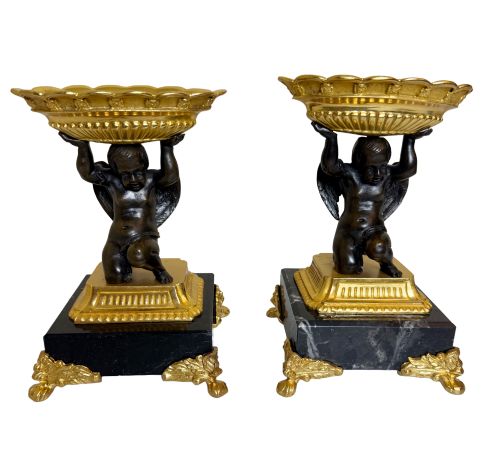
The bronze often combines deep dark patination with bright fire-gilt or ormolu highlights, creating a stark and formal contrast.
What is a Grand Tour souvenir?
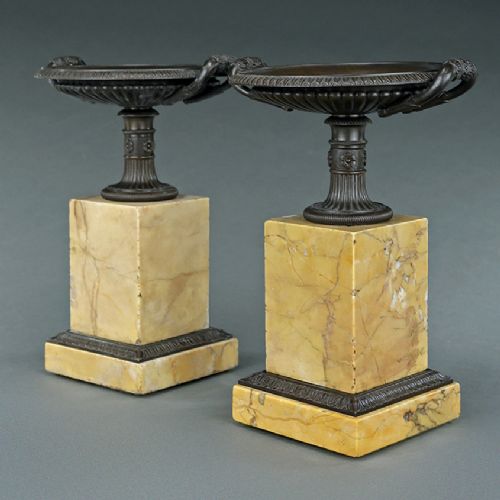
Grand Tour souvenirs are miniature or full-scale reproductions of classical antiquities purchased by travellers visiting Italy during the nineteenth century. These pieces frequently combine dark patinated bronze with coloured marbles such as Siena or rosso antico.
They capture the aesthetic of Roman ruins and classical sculpture popular among educated collectors of the period.