


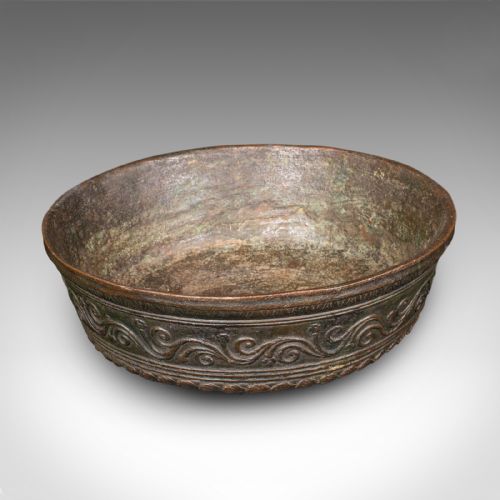


Edo Period Bronze
These pieces of edo period bronze bring Japanese metalwork and enamel into European interiors.
Edo Period Bronze
When you search for edo period bronze, you are looking at Japanese metalwork and mixed media from the Edo period onwards, often recorded alongside Victorian and Georgian periods. These pieces include decorative bowls, vases, sake kettles, jardinières, and sword guards.
You are most likely to meet heavy bronze jardinières, planters, and incense burners on this page, alongside smaller vessels with cloisonné lids and detailed tsuba. The forms reflect traditional Japanese utility and decorative arts, exported or collected in Britain during the nineteenth century.
Materials and Technique
The objects combine bronze and copper alloy with contrasting elements like cloisonné enamel and silver overlays. Metal is cast in high relief or shaped into vessels, while enamel adds colour to lids and chargers.
Surface finish is achieved through patination, precise carving, and metal inlay. Techniques such as high relief casting give depth to dragons and natural motifs on sword guards and censers.
Edo Period Bronze Retail Price Guide 2026
Typical asking prices for edo period bronze among the pieces listed under this phrase on Sellingantiques today, from the lower quarter to the upper quarter. They describe what is for sale here now, not the wider market.
The material record for these listings relies heavily on bronze, copper alloy, and cloisonné enamel, alongside porcelain and wood.
Quality and Execution
The separation between standard work and the finest output rests on the crispness of the casting and the depth of the high relief decoration. Heavy, substantial bronze vessels with intact patination and clear detail command attention.
Fine workmanship shows in the integration of mixed media, such as precise silver overlays on bronze tsuba or the clean placement of cloisonné enamel on sake kettles. The weight of the metal and the control of the surface carving define the level of craftsmanship.
The Edo Period Bronze Glossary
- Tsuba
- A Japanese sword guard, often made of bronze and decorated in high relief with motifs like dragons and pearls.
- Cloisonne
- An enamelwork technique where coloured paste is applied within wire compartments on a metal base, seen here on lids and chargers.
- Suiban
- A shallow basin used for traditional Japanese flower arrangements or bonsai displays.
- Censer
- A vessel designed for burning incense, constructed from bronze with decorative elements such as dragons.
Edo Period Bronze: Frequently Asked Questions
What is an edo period bronze?
These objects are Japanese metalwork items, including vessels, planters, and sword guards, produced during the Edo period and often recorded in European collections from the nineteenth century.
They represent traditional Japanese craftsmanship in bronze and copper alloy, frequently incorporating enamel or high relief casting.
How were these bronzes used?
Many of these pieces served practical functions in Japanese homes, such as sake kettles for warming wine, burners for incense, and vessels for water or flower arrangements.
Larger planters and jardinières held plants or bonsai, while sword guards were fitted to traditional Japanese swords before being collected as art objects.
How do I live with edo period bronze?
These metal items suit a range of interiors, acting as focal points on tables, sideboards, or mantels. Heavy jardinières and planters work well as standalone decorative items or functional plant holders.
Keep them away from direct moisture and clean only with a soft dry cloth to preserve the historic patination and metal finish.
How do I tell periods apart?
Items from this category span Japanese Edo production as well as British Victorian and Georgian recording periods, reflecting the era when they entered Western collections. Look at the weight, the style of the relief work, and any associated enamel or inlay techniques.
Late Edo pieces often align with mid-nineteenth century European trade, showing a mix of traditional Japanese forms and Victorian decorative tastes.