
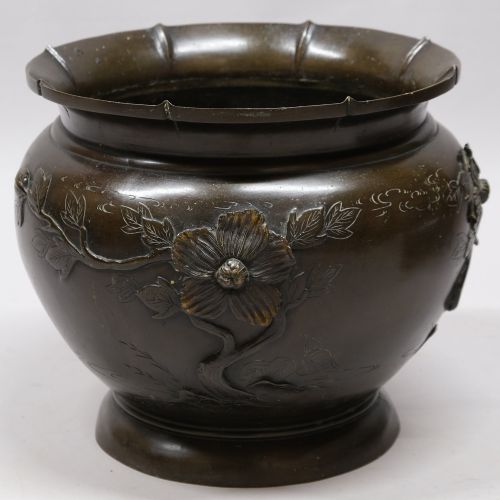


Bronze Jardiniere Bowl
A bronze jardiniere bowl brings substantial weight and refined plant display to a room, drawing the eye with dark metal and intricate surface work.
Bronze Jardiniere Bowl
A bronze jardiniere bowl serves as a heavy decorative vessel for plants, flowers, or interior centrepiece displays. These items appear across the nineteenth century, including Victorian, Georgian, and later periods from diverse international origins.
Japanese Meiji period and Chinese pieces dominate the selection, often featuring deep patination and intricate ornamentation. French Empire, Napoleon III, and Italian examples also surface, bringing distinct continental aesthetics to the category.
How they were made
Casting forms the structural core of these vessels, utilising bronze, brass, and gilt or silvered bronze. Artisans shaped thick metal walls to support heavy loads of soil and water without flexing.
Surface decoration frequently incorporates cloisonné and champlevé enamel work, alongside applied marble or cut glass elements. Patination processes achieved dark, aged tones across the bronze surfaces through chemical treatment.
Listings feature items spanning the Georgian, Victorian, and early twentieth-century periods, constructed from bronze, brass, enamel, marble, and cut glass.
What varies in quality
The precision of the metal casting and the depth of the chased decoration separate standard vessels from exceptional examples. Finer pieces display crisp relief work and tightly controlled enamel cells without bubbling or misalignment.
Weight and stability indicate the substance of the alloy used in production. Substantial mass and balanced proportions distinguish superior decorative bowls from lighter utility pieces.
Lerolle Fres
The Bronze Jardiniere Bowl Glossary
- Jardiniere
- An ornamental pot or bowl designed to hold plants or flowers. These items sit upon tables or pedestals within domestic interiors.
- Cloisonne
- An enamelling technique where metal wire forms compartments on a bronze base, which artisans fill with coloured paste and fire. The resulting surface displays intricate geometric or floral patterns.
- Patinated bronze
- Metal treated with chemical solutions to produce a darkened or aged surface colour. This finish protects the underlying alloy while enhancing visual depth.
- Champleve
- An enamelling method where troughs or cells are carved directly into the bronze surface to hold enamel before firing. The technique creates bold colour fields bordered by raised metal lines.
Bronze Jardiniere Bowl: Frequently Asked Questions
How do I clean a bronze jardiniere bowl?
Dust the surface regularly with a soft dry cloth to prevent grime accumulation on the patinated bronze.
Avoid abrasive cleaners or harsh liquids that strip the historic finish or damage enamel inlays.
Can I plant directly into the bowl?
Placing a plastic liner or smaller pot inside prevents moisture and soil acidity from damaging the interior bronze.
Direct planting risks prolonged water contact that corrodes historical metal surfaces over time.
How do I identify a Meiji period piece?
Japanese Meiji period vessels often display high-relief casting of flora and fauna alongside deep brown patination.
Consider the manufacturing techniques and stylistic motifs typical of late nineteenth-century metalwork.
Where should I place a heavy bronze bowl?
Position the vessel on a sturdy table or sideboard capable of supporting substantial weight, particularly with larger Chinese examples.
Ensure the location protects the piece from accidental knocks while allowing light to catch the metallic surface.