





Japanese Bronze Basin
These heavy, patinated vessels bring genuine craftsmanship to your home when you search for a japanese bronze basin.
Japanese Bronze Basin
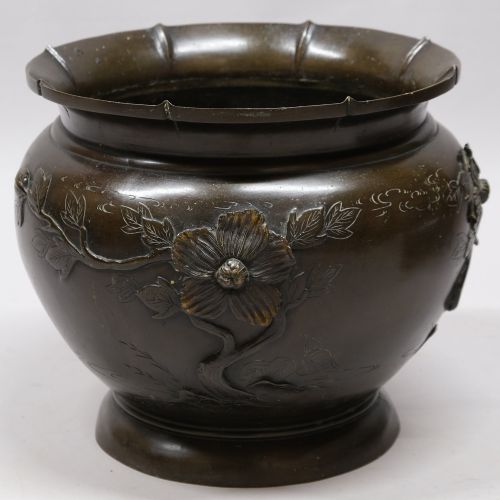
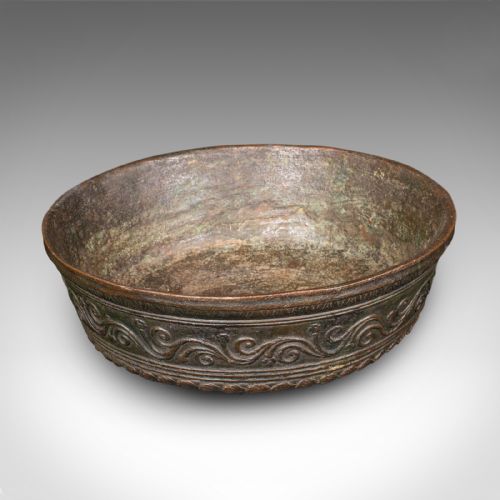
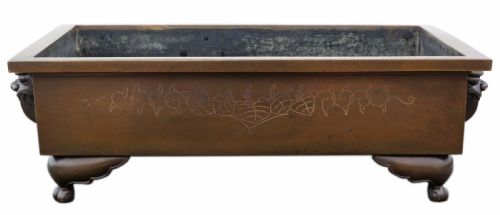
A japanese bronze basin encompasses a variety of substantial metal vessels used for planting, display, and water containment. Buyers searching this phrase encounter forms ranging from heavy garden temple vases to low suiban arrangements and deep planter bowls.
The pieces on this page span several distinct eras, notably the Edo and Meiji periods, alongside later nineteenth and twentieth-century examples. Common functional forms include jardinieres, decorative bowls, and traditional tearai vessels.
How they were made
The construction of these items relies heavily on cast bronze, often finished with a rich patina to enhance the dark metallic surface. Certain examples incorporate complementary elements of wood to support or display the heavy metal bodies.
Metalworkers utilised traditional casting techniques to achieve the thick walls and detailed surface ornamentation characteristic of these decorative bowls and jardinieres. The resulting vessels possess a sturdy physical presence suited to holding soil, water, or botanical arrangements.
Japanese Bronze Basin Retail Price Guide 2026
Typical asking prices for japanese bronze basin among the pieces listed under this phrase on Sellingantiques today, from the lower quarter to the upper quarter. They describe what is for sale here now, not the wider market.
Listings feature bronze and patinated bronze vessels spanning the Edo and Meiji periods alongside later twentieth-century forms.
What varies in quality
The standard of a japanese bronze basin depends upon the depth of the casting and the refinement of the surface patination. Pieces featuring crisp ornamental details and substantial metal thickness stand apart from simpler utilitarian vessels.
The integrity of the form and the subtlety of the colouration across the bronze surface dictate the overall desirability of each jardiniere or planter bowl. Age-related surface wear contributes character rather than detracting from the inherent craftsmanship of the piece.
The Japanese Bronze Basin Glossary
- Bronze
- An alloy of copper and tin widely used for durable decorative vessels and garden ornaments. It develops a distinct patinated surface over time.
- Jardiniere
- A large ornamental pot or container designed to hold plants or flowers. These vessels often sit on interior surfaces or garden terraces.
- Meiji Period
- A significant era in Japanese history spanning from eighteen sixty-eight to nineteen twelve, noted for expressive metalwork and decorative arts. Pieces from this time often exhibit detailed surface decoration.
- Edo Period
- The historical era in Japan lasting from sixteen hundred and three to eighteen sixty-eight, preceding the Meiji era. Items from this time frequently demonstrate restrained archaic forms.
- Suiban
- A shallow basin traditionally used in Japan for flower arrangement and display. These low bowls hold water to support ikebana presentations.
- Tearai
- A traditional Japanese hand-washing basin or water vessel. These ritual or domestic objects possess deep, heavy forms.
Japanese Bronze Basin: Frequently Asked Questions
What is a japanese bronze basin used for?
These versatile metal vessels serve multiple functions within interior and exterior spaces, primarily acting as planters, jardinieres, or decorative bowls.
Historically, specific forms like the suiban and tearai held water for floral arrangements or domestic washing routines.
Can I use these planters outdoors?
Many of these heavy metal vessels are robust enough to withstand outdoor environments as garden urns and planters.
Bronze naturally resists harsh weather, though you should consider protecting delicate patinas from extreme frost and prolonged moisture.
What makes a japanese bronze basin valuable?
Value rests primarily in the weight of the casting, the quality of the patination, and the complexity of the vessel's form.
Pieces originating from specific historical periods like the Edo or Meiji eras command strong interest from collectors of Asian metalwork.