


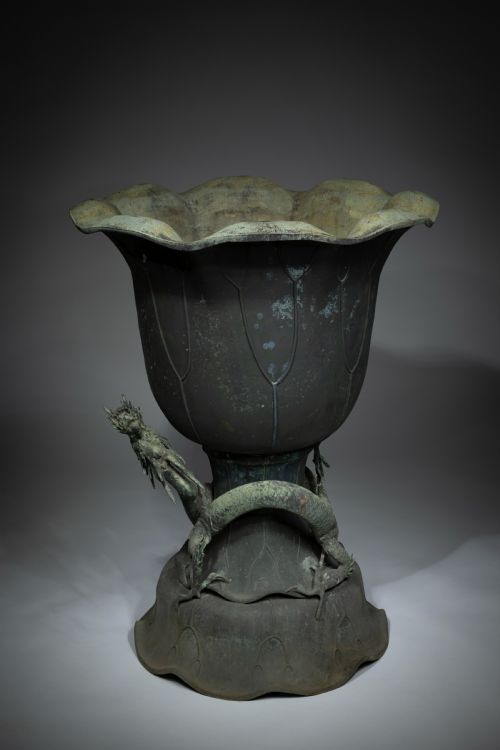
Steve Sly Japanese Works of Art has dated this Japanese Bronze Temple Vase to the 1900s.
Around the neck a separately cast and finely executed figure of a dragon with a raised head and a mouth wide open.

Provenance:
Acquired by Bayer from Bernheimer by Carl Duisberg prior to 1930 –
Condition report :
Partial age damage and surface change due to many years of presentation in the park, very solid and stable, perfectly functional condition as a large planter or would adapt to water feature .
Literature :
The lotus flower (hasu) in Japan symbolizes purity and enlightenment, rising untouched from the muddy waters to bloom in beauty. It reflects the Buddhist path to awakening, where one transcends worldly impurities to achieve clarity and wisdom. The lotus, with its beauty, embodies spiritual growth and the pursuit of inner peace. The blooming of the lotus is a highly anticipated event in Japan, especially in Buddhist temples, during the summer months. This fleeting bloom is a reminder of the transient nature of life, encouraging reflection on the impermanence of existence. As the lotus flourishes, it symbolizes the beauty of embracing the present moment and the importance of spiritual mindfulness. Its brief life, blooming in the morning and fading by afternoon, urges us to rise above life’s struggles, finding strength in the cycle of renewal and transformation.
Approximate Sizes :
Height: 46 3/4” 119 cm
Diameter: 36 “91 cm
Free UK delivery included within the price of this item, overseas buyers please ask for shipping quote.
Steve Sly Japanese Works of Art has dated this Japanese Bronze Temple Vase to the 1900s.
Specialists in japanese works of art from the meiji period 1868-1912
You can view the stock and full dealer information on the Steve Sly Japanese Works of Art Profile Page
Steve Sly Japanese Works of Art is a registered member of BADA


Monumental Japanese Garden Temple Vase / Water Feature


