
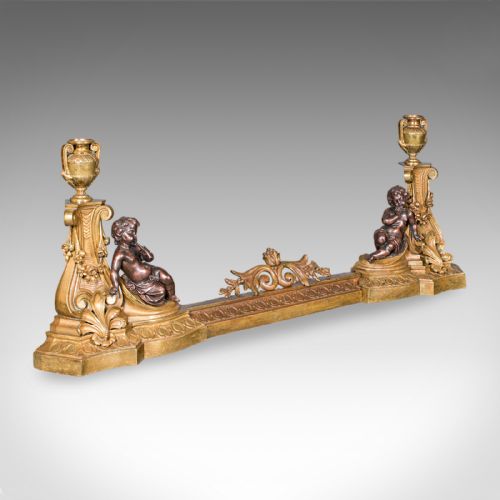
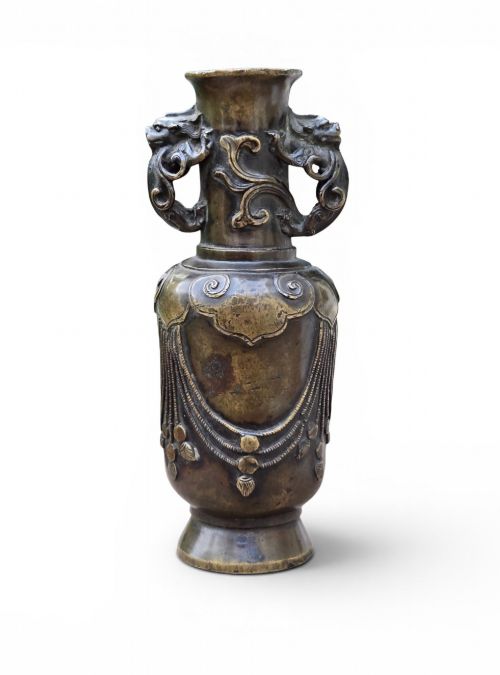


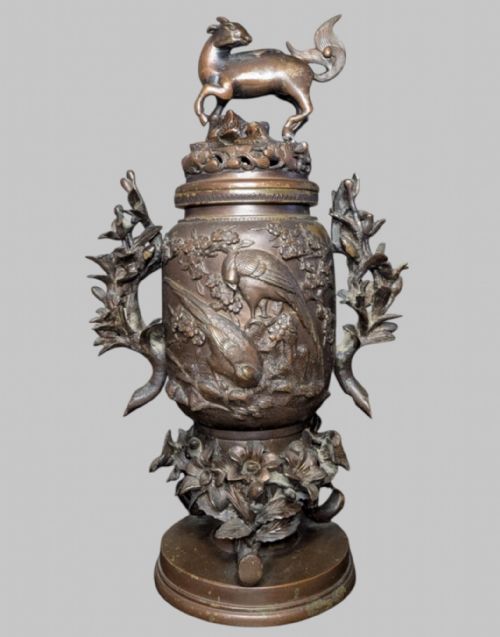


Cast Bronze Urn
These cast bronze urn are solid, heavy metal display pieces shaped in classical or oriental forms that bring architectural presence to a room.
What the cast bronze urn is
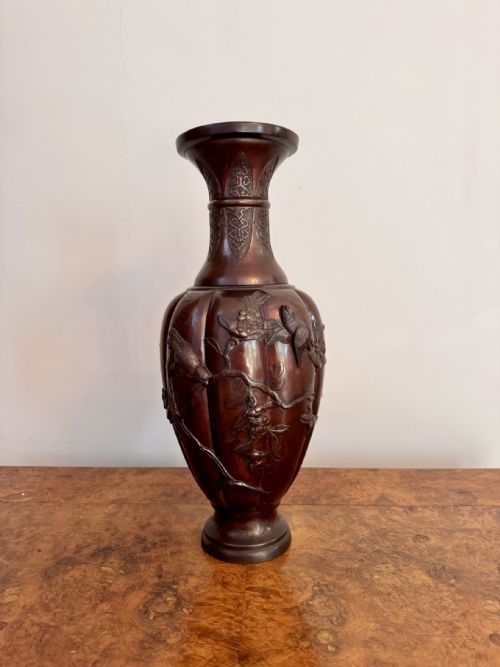
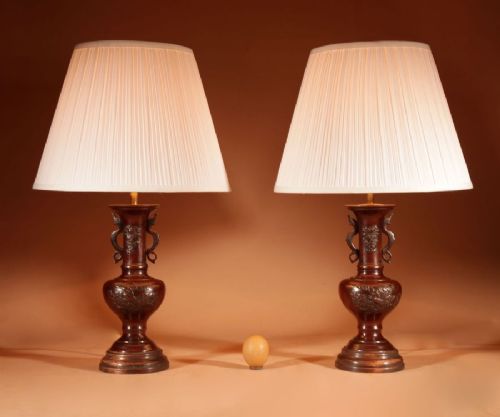
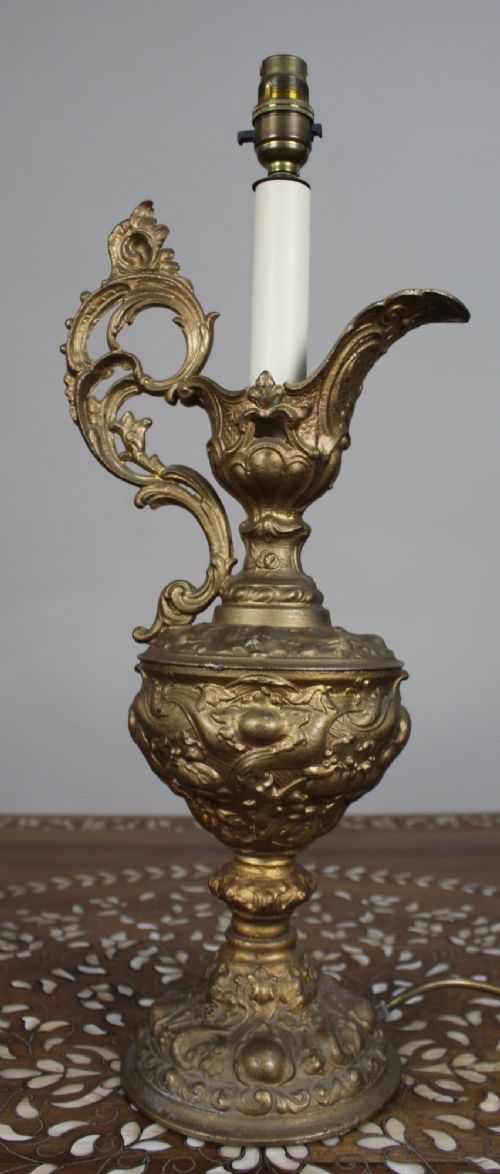
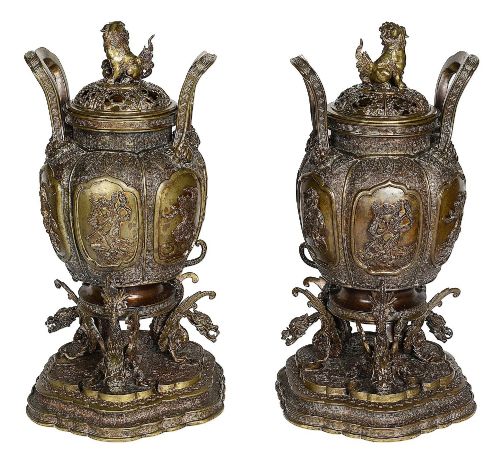
A cast bronze urn takes the form of a classical vessel, a garden ornament, or an oriental vase designed primarily for display. When you search for a cast bronze urn, you encounter nineteenth-century interpretations of ancient shapes, from Grand Tour souvenirs to Japanese temple vessels.
The pieces on this page span the Victorian era, the nineteenth century, and the Meiji period. Forms range from garden urns and planters to tsubo vases and Warwick vase reproductions.
Origins vary between European classical revivals and Asian metalwork workshops, notably Japanese and Chinese pieces that reached the West during the nineteenth century. You will find large proportions, patinated surfaces, and distinct regional ornamentation such as Chinoiserie details.
How they were made
These items rely on metalcasting techniques, utilising bronze poured into moulds to create heavy, rigid vessels. Makers applied various finishes to the metal surface, including patinated bronze, gilt bronze, and verdigris.
Many examples incorporate fine chased or carved detailing on the metal body. Some pieces are paired with carved hardwood stands, integrating organic textures with the cast metal form.
Retail Price Guide 2026
Typical UK retail prices for cast bronze urn, calculated from the Sellingantiques database of over a million retail prices indexed since 2003. This retail price guide relies exclusively on Sellingantiques data; no external sources or auction records are used, so the figures do not describe the wider market.
One dramatic sculpture depicts a solid bronze vase entirely filled with cast bronze roses.
What varies in quality
Quality rests in the crispness of the casting and the depth of the finish, where finer examples display sharp relief and deliberate patination. The precision of the surface decoration, whether classical foliage or oriental motifs, separates standard production from exceptional work.
Proportion and scale dictate the visual weight of the piece, with monumental examples and balanced classical forms commanding greater presence. The integrity of the material and the sophistication of secondary elements, such as handles or bases, determine the overall execution.
Barbedienne
The Cast Bronze Urn Glossary
- Bronze
- An alloy consisting primarily of copper, traditionally combined with tin, used for durable metal casting. It develops a stable surface patina over time.
- Patinated Bronze
- Metal treated with chemicals or heat to produce a specific surface colour and tone. This finish protects the metal and enhances visual depth.
- Gilt Bronze
- Bronze coated with a thin layer of gold, often through fire gilding or electroplating. This technique provides a bright, reflective golden surface.
- Warwick Vase
- A monumental Roman marble vase discovered in fragments and reproduced in various scales during the nineteenth century. Cast bronze versions emulate its distinctive handles and classical frieze.
- Tsubo
- A traditional Japanese vessel form characterised by a bulbous body and a narrow neck. These pieces often feature detailed cast ornamentation from the Meiji period.
Frequently Asked Questions
What is a cast bronze urn used for?
These pieces serve primarily as decorative display objects, interior ornaments, or garden planters. Their substantial weight and sculptural form allow them to anchor a room or focal point.
Historically, larger examples functioned as architectural garden ornaments or dramatic tabletop centrepieces. Today, collectors place them on pedestals, sideboards, or stone plinths to showcase their metalwork.
How do I identify a nineteenth-century piece?
Examine the casting quality, the composition of the alloy, and the nature of the surface patina. Nineteenth-century pieces often display hand-chased details and specific historical revival styles like Neo-Classical or Meiji Japanese.
Stylistic cues, such as the proportions of a Warwick vase or the specific motifs of the Meiji period, help align the piece with its manufacturing era.
What does patinated bronze mean?
Patination is the natural or induced process where the surface of the bronze changes colour due to oxidation, age, or chemical treatment. This creates tones ranging from deep brown to dark green.
Makers frequently applied controlled patination to highlight the sculptural details and give the metal an aged, dignified appearance.
Are these urns suitable for the garden?
Certain forms, particularly garden urns and planters, were designed to withstand outdoor placement. Bronze resists rust well, though it responds to outdoor environments by developing further verdigris.
For fine interior vases or gilt pieces, indoor display protects the delicate surface finishes and any applied gilding from weathering.