



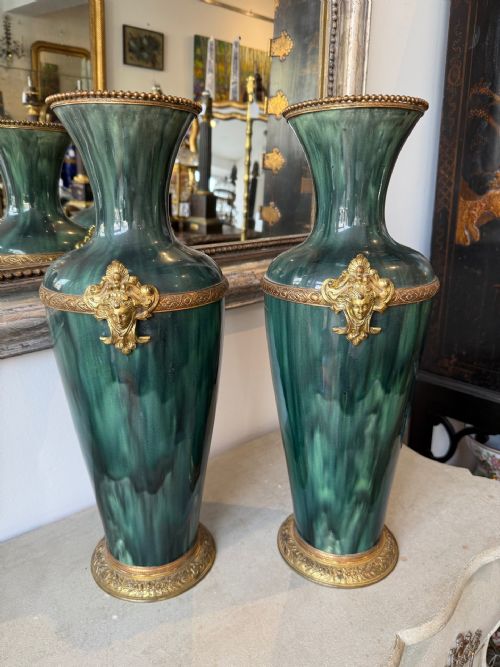


Green Bronze Vase
A green bronze vase brings classical weight and patinated depth to a room, ranging from Grand Tour souvenirs to converted lamps.
Green Bronze Vase
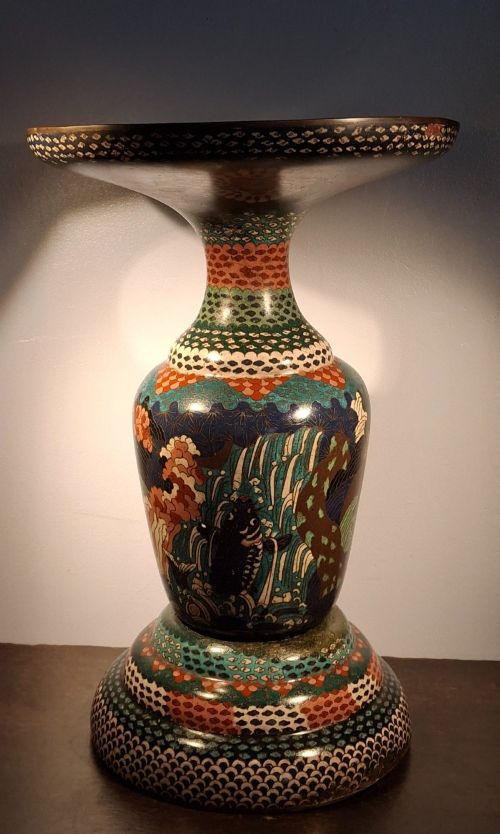
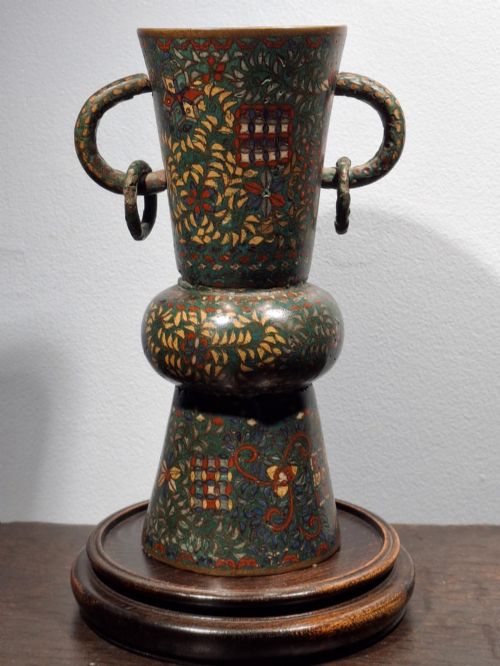
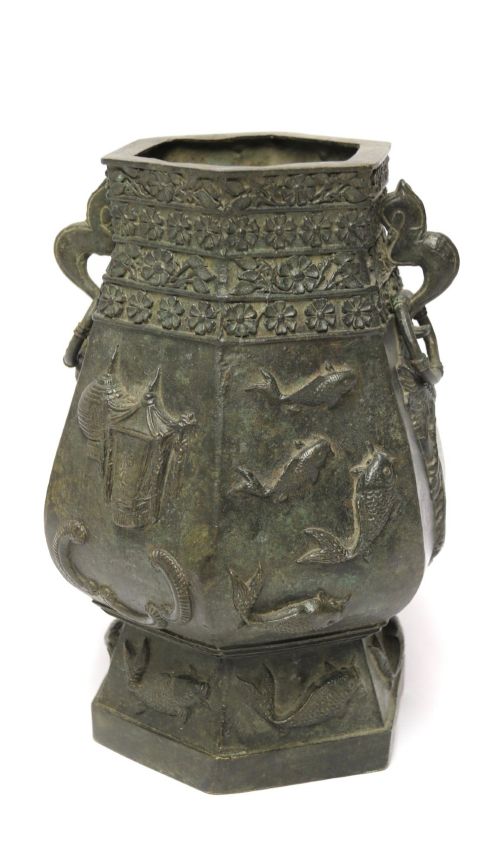
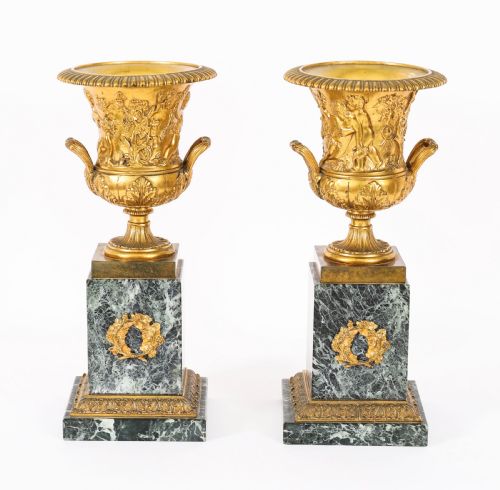
A green bronze vase search covers nineteenth century metalwork, porcelain mounted with bronze or ormolu, and carved stone vessels. The listings span Chinese archaic forms, French neoclassical designs, and Japanese garden urns alongside converted table lamps.
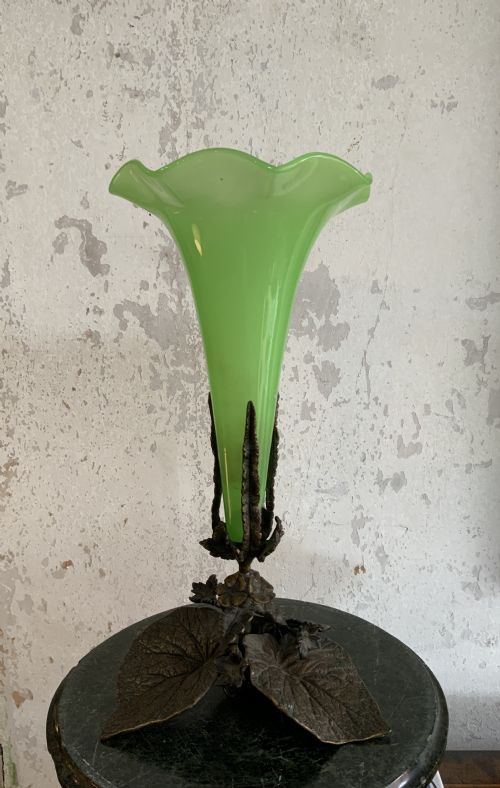
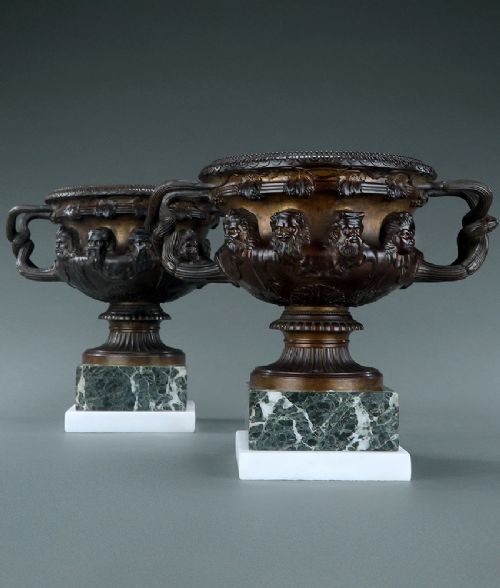
Grand Tour souvenirs dominate the metalwork alongside Chinese bronzes and celadon porcelains. Many pieces combine cast bronze with green marble plinths or incorporate uranium glass and porcelain bodies.
How they were made
Foundry cast bronze forms the backbone of these pieces, often finished with applied patination or gilt and silvered highlights. Ormolu mounts are frequently pinned or screwed to marble and porcelain bodies.
Stoneware and porcelain elements utilise celadon glazes, pate-sur-pate decoration, and famille verte enamels. Natural stone bases employ turned green marble fitted with matched metal bezels.
Green Bronze Vase Retail Price Guide 2026
Typical asking prices for green bronze vase among the pieces listed under this phrase on Sellingantiques today, from the lower quarter to the upper quarter. They describe what is for sale here now, not the wider market.
A solitary putto jug frolics among solemn classical urns and ancient temple vases.
What varies in quality
The crispness of the bronze chasing dictates the visual success of the piece, separating sharp hand-finished surface detail from softer secondary casting. Ormolu components show variation in fire-gilding depth and the precision of their fit to stone or ceramic bodies.
Material selection divides standard utilitarian vessels from sculptural works mounted on bespoke plinths. The integration of converted lamp fittings alters the original sculptural integrity of the antique.
Georges Van De Voorde
The Green Bronze Vase Glossary
- Ormolu
- Gilded bronze mounted on decorative objects and furniture, popular in French neoclassical design. The technique involves applying a finely ground high-carat gold mercury amalgam to a cast bronze base before firing.
- Cassolette
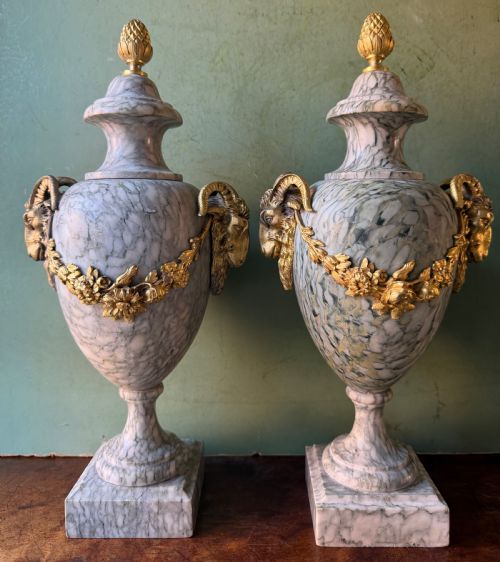
- A decorative vessel shaped like a vase or urn featuring a reversible lid that functions as a burner or solid cover. These pieces often incorporate marble bodies secured with cast metal mounts.
- Grand Tour
- Eighteenth and nineteenth century travels through Europe undertaken by upper class scholars and collectors. Souvenirs purchased on these journeys frequently replicate classical antiquities in bronze and marble.
- Usubata
- A traditional Japanese bronze vessel designed for ikebana flower arrangements featuring a wide basin and a slender stem. Examples appear in garden settings and interior displays.
- Celadon
- A ceramic glaze denoting a range of translucent green tones fired over stoneware or porcelain. The finish mimics the appearance of jade.
Green Bronze Vase: Frequently Asked Questions
How do I date a green bronze vase?
Dating relies on stylistic clues, casting techniques, and material combinations recorded across the nineteenth and early twentieth centuries. Pieces often carry neoclassical motifs or manufacturer signatures typical of specific periods.
Examination of the patina and mounting construction helps separate nineteenth century Grand Tour items from later revivals. Base materials such as green marble and ormolu provide further chronological markers.
Are converted lamps still usable?
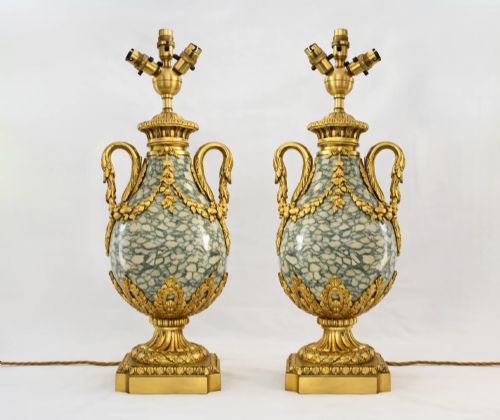
Many antique vases were adapted into table lamps during the nineteenth and twentieth centuries to suit changing domestic interiors. These pieces retain their original ceramic or bronze bodies while incorporating modern electrical wiring.
Buyers frequently choose between retaining the lamp fittings or restoring the vessel to its original dry display state. Professional rewiring ensures safe daily use in modern spaces.
What is a Grand Tour bronze?
Grand Tour bronzes are miniature replicas of classical antiquities collected by travellers touring European historical sites. These decorative objects reproduce ancient urns, tripods, and vases seen in museums and excavations.
Foundries in France and Italy produced these items using high quality casting methods. They frequently combine patinated bronze with marble plinths and gilt mounts.
How should I clean green bronze?
Dusting with a soft dry cloth preserves the historic patination and fragile surface finishes of antique metalwork. Avoid chemical polishes that strip away aged patinas or damage applied gilding.
Marble bases require mild soap and water applied sparingly, keeping moisture away from porous bronze joins. Professional conservation is recommended for fragile or damaged surfaces.