


Japanese Temple Vases
Japanese temple vases are striking ceramic vessels from the Edo and Meiji periods designed to anchor traditional interiors.
Japanese Temple Vases
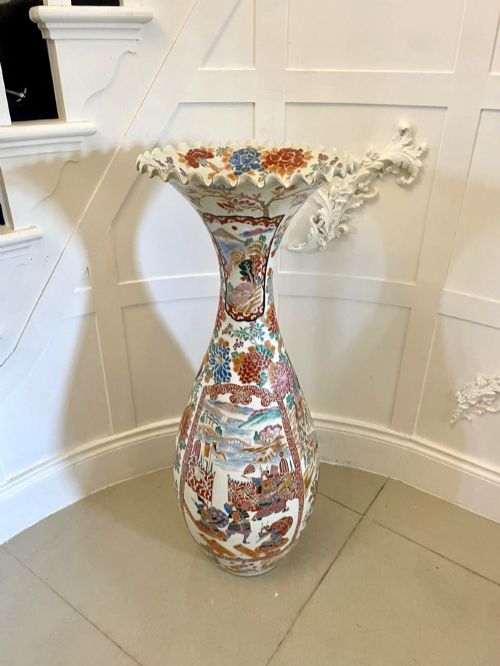
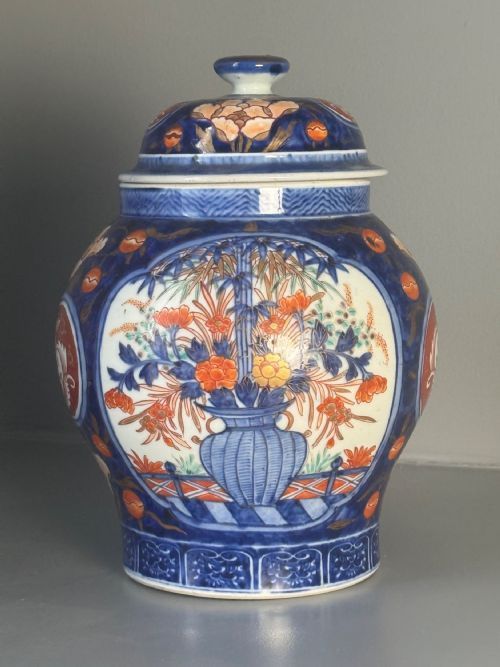
Japanese temple vases encompass large porcelain and earthenware vessels, including floor-standing vases, lidded jars, and ginger jars. These substantial pieces originate primarily from the 17th, 18th, and 19th centuries, reflecting the enduring traditions of Arita, Imari, and Satsuma production. Collectors encounter monumental floor vases alongside covered jars and garnitures designed for prominent display.
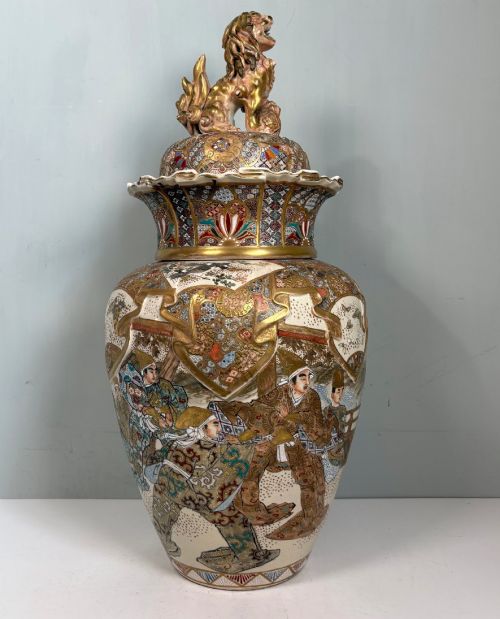
The aesthetic of these vessels spans the blue and white wares of Arita, the rich palette of Imari, and the detailed landscape or figural scenes of Satsuma and Kutani. Many examples demonstrate the influence of the Meiji period and Edo period aesthetics, incorporating lacquer panels, gilt highlights, and intricate enamel work. Buyers often select these forms to anchor a room or to add scale to a collection of Asian ceramics.
How they were made
Potters shaped these vessels from porcelain and earthenware, often constructing large forms in sections before joining and firing them. Artisans applied cobalt blue, enamel, and gold leaf directly onto the ceramic body or over a white glaze, building complex decorative surfaces. Lidded jars and floor vases received careful hand-painting, depicting landscapes, floral motifs, and traditional patterns.
Finishing techniques included the addition of gilt accents, lacquer panels, and carved wood elements that enhanced the visual depth of the pieces. Kiln operators managed high temperatures to achieve durable glazes on Arita porcelain and delicate crackle surfaces on Satsuma earthenware. Each stage relied on skilled handcrafting, which explains the subtle variations found across individual vessels.
Some towering floor vases stand taller than the average collector.
What varies in quality
The precision of the hand-painted detail and the vibrancy of the Imari palette or enamel work set superior examples apart from standard production. Artisans who invested time in intricate landscape scenes or refined blue and white decoration achieved greater depth and clarity across the ceramic surface. Scale and proportion also influence desirability, particularly in monumental floor vases and matching pairs or garnitures.
Preservation of the original glaze, enamel, and gold leaf contributes significantly to the standing of a piece within its period. Intact covers on ginger jars and lidded vases retain the intended silhouette designed by the original workshop. Superior pieces demonstrate a harmonious balance between the weight of the ceramic body and the complexity of the surface decoration.
Yamashu
The Japanese Temple Vases Glossary
- Imari
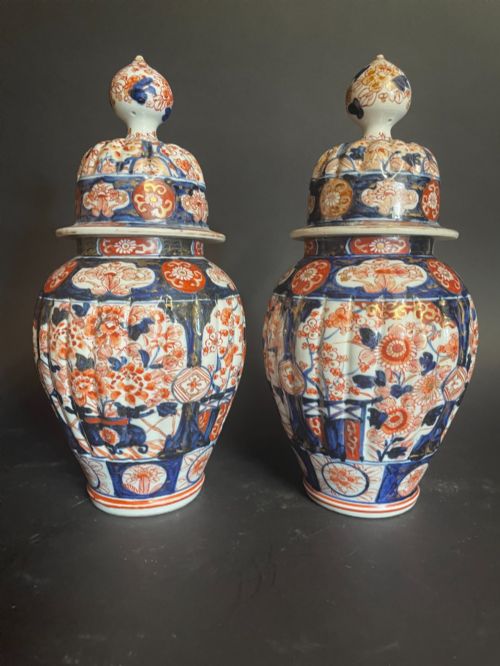
- A style of Japanese porcelain decorated in underglaze blue, iron red, and gilt, originating from the kilns around Arita. This palette became prominent during the Edo period and remained popular through the 19th century.
- Satsuma
- A type of Japanese earthenware featuring a pale, crackled ivory glaze decorated with enamels and gilding. These pieces often depict elaborate figures, birds, and landscape scenes.
- Arita
- The Japanese town and surrounding region in Hizen province where porcelain production began in the early 17th century. Arita wares include early blue and white exports as well as Imari styles.
- Garniture
- A set of matching vases or jars designed to be displayed together on a mantelpiece, shelf, or cabinet. These sets usually comprise three or five pieces of graduated or matching sizes.
- Baluster
- A vase form characterised by a bulbous lower portion that tapers towards the neck, resembling a traditional architectural baluster. This shape provides stability for large floor-standing vessels.
Japanese Temple Vases: Frequently Asked Questions
How do I date a temple vase?
Dating relies on identifying the materials, potting techniques, and decorative styles characteristic of the Edo and Meiji periods. Cobalt blue tones, glaze types, and hallmark signatures provide clues to the era of production.
Earlier examples from the 17th and 18th centuries show distinct Arita characteristics, while 19th-century pieces often reflect export tastes and heavier enamel applications.
Where should I place a large vase?
Monumental floor vases and large lidded jars work best in spacious rooms where they can stand independently as focal points. Placing them away from heavy foot traffic protects the ceramic body and surface decoration.
Pairs and garniture sets look balanced when displayed across a wide sideboard, mantelpiece, or flanking a fireplace.
What is the difference between Imari and Satsuma?
Imari wares consist of hard-paste porcelain decorated primarily in underglaze blue, iron red, and gold leaf. They present crisp patterns and durable glazed surfaces suited to utilitarian and decorative use.
Satsuma wares are earthenware bodies covered in a fine crackle-glaze, painted with detailed enamels and heavy gilding. They focus on pictorial scenes featuring figures, flora, and landscapes.