


Pair of Imari Vases
A pair of imari vases brings vibrant contrasting pigments and traditional motifs to a mantelpiece or side table.

What pair of imari vases are
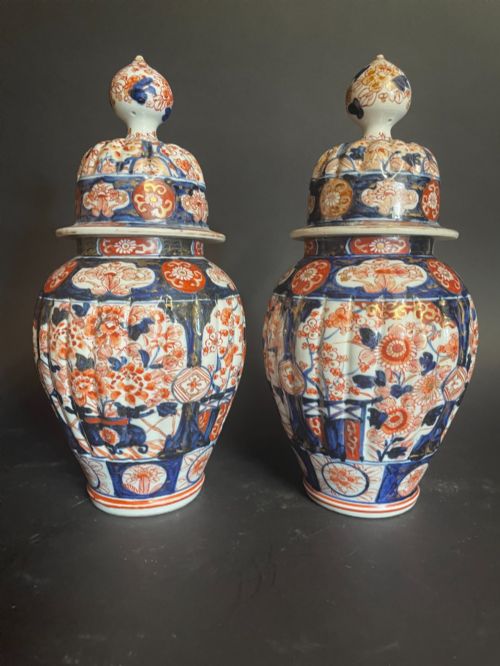
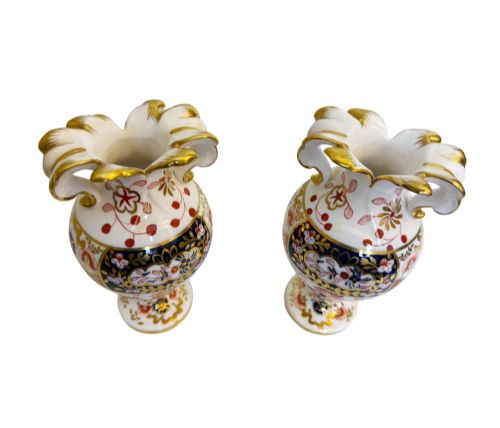
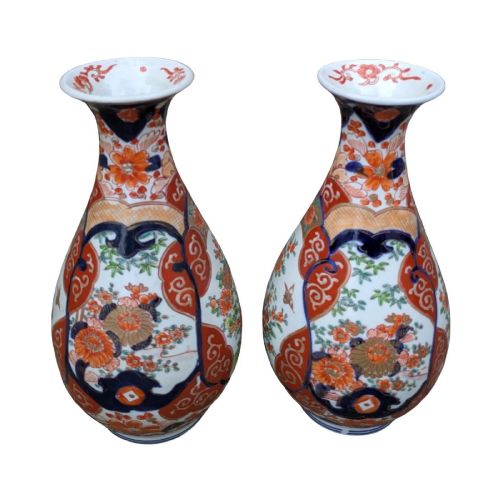
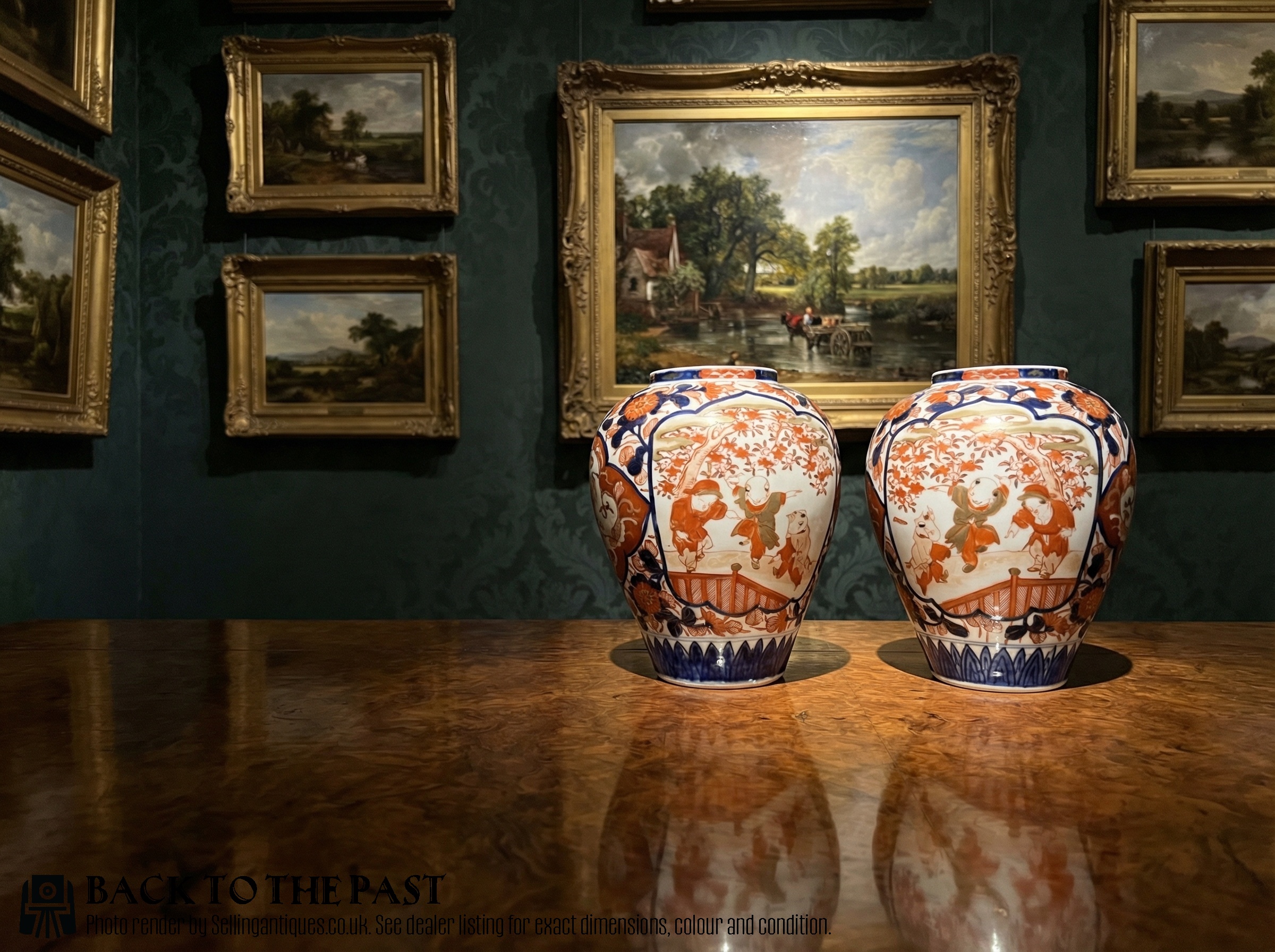
A pair of imari vases consists of matching decorative vessels created in the distinct palette associated with Japanese export wares and European adaptations. These items appear in various forms including bottle shapes, lidded jars, and urns.
The pieces on this page span the late seventeenth century through to the early twentieth century, encompassing the Edo and Meiji periods alongside nineteenth century European interpretations. Japanese export works form the majority of the available selections.
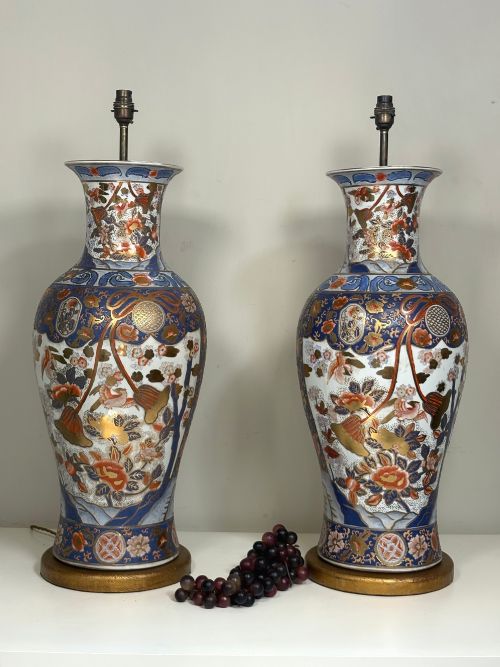
Buyers encounter both open top vessels and covered jars, sometimes accompanied by matching stands. Sizes range from small cabinet pieces up to impressively large floor or table displays.
How they were made
Potters shaped these objects from fine porcelain or bone china, throwing the clay on a wheel or forming it into moulds to achieve bottle shapes, baluster profiles, and urn forms. Artisans then applied underglaze blue pigments alongside overglaze enamel colours.
Makers integrated gold leaf and gilt highlights to enrich the surface decoration alongside the primary enamel palette. Kiln firing fixed the cobalt blue beneath the glaze before subsequent firings fused the enamel paints and gold details onto the finished ceramic.
Retail Price Guide 2026
Typical UK retail prices for pair of imari vases, calculated from the Sellingantiques database of over a million retail prices indexed since 2003. This retail price guide relies exclusively on Sellingantiques data; no external sources or auction records are used, so the figures do not describe the wider market.
Listings include porcelain and bone china vessels decorated with enamel, gold leaf, and gilt across the nineteenth and early twentieth centuries.
What varies in quality
The refinement of the painted brushwork separates standard production items from finer examples, with superior pieces showing meticulous detail in floral and geometric motifs. The crispness of the cobalt blue and the richness of the enamel and gilt layers also dictate the standing of a piece.
Proportion and scale influence value, as exceptionally large vessels or those retaining their original matching lids demonstrate greater artistic ambition. The condition of the delicate surface enamels and gold leaf remains central to the integrity of each item.
Copeland Spode·Samson of Paris
The Pair of Imari Vases Glossary
- Imari palette
- A decorative scheme utilising underglaze blue, iron red, and gilt highlights on porcelain. This distinctive colour combination originated in Japan before inspiring European factories.
- Meiji Period
- A span of Japanese history lasting from eighteen sixty-eight to nineteen twelve. Many export ceramics seen on the market date from this era.
- Baluster
- A vase form characterised by a rounded body that tapers towards the base and neck. This silhouette appears frequently among porcelain jars.
- Bone china
- A type of soft-paste porcelain incorporating animal ash. European makers utilised this material for domestic urn vases.
- Export ware
- Items manufactured specifically for international trade and overseas markets. These goods often blend eastern forms with designs intended to appeal to foreign buyers.
Frequently Asked Questions
Where should I display these vases?
These vessels suit prominent positions on mantelpieces, sideboards, or dedicated display tables where their vibrant palette can catch the light.
Pairing them symmetrically enhances their decorative impact in a traditional room setting.
How do I identify a lidded jar?
Lidded jars feature matching removable covers that complete the vertical profile of the ceramic body. They often serve as storage vessels or statement decorative centrepieces.
Checking for corresponding design patterns across both the jar and the lid confirms their original pairing.
What is the difference between Japanese and European imari?
Japanese examples originate from export production centres during periods like the Edo and Meiji eras. European versions, such as those by nineteenth century makers, interpret the traditional style using local pastes like bone china.
Examining the paste and underglaze characteristics helps distinguish the regional origin.
How do I care for antique porcelain?
Dust these items gently with a soft, dry cloth to prevent accumulation on the glazed surfaces. Avoid using harsh chemical cleaners or submerging pieces with delicate gold leaf.
Displaying them away from direct sunlight protects the overglaze enamels over time.