

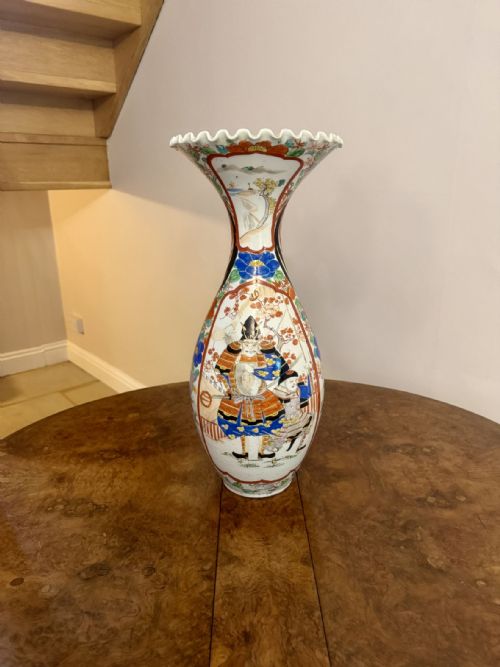


Imari Floor Vases
These imari floor vases bring heavy nineteenth-century presence to a room, offering scale and dense decoration that collectors buy to anchor a large interior.
Imari Floor Vases
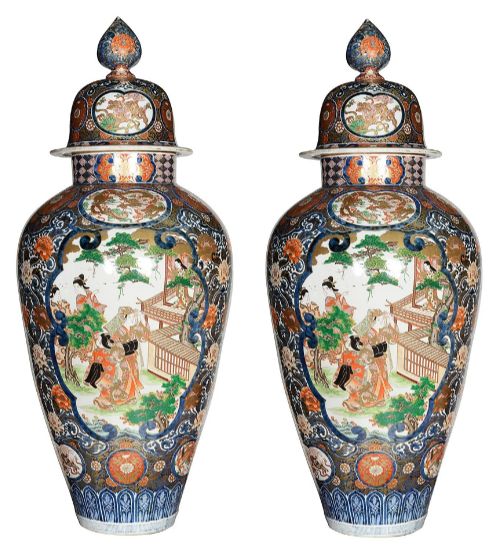
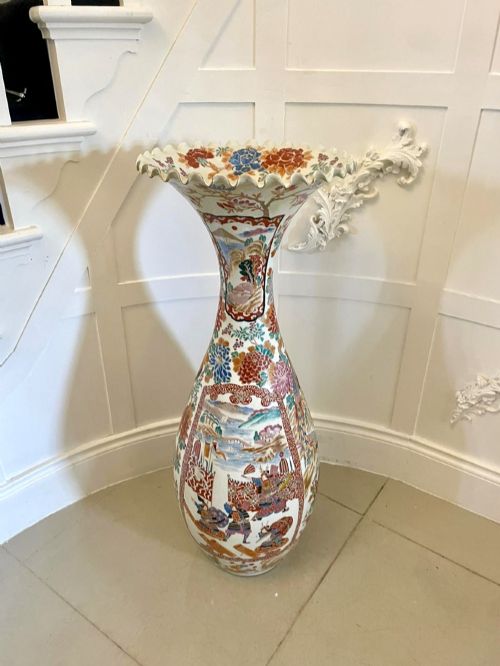
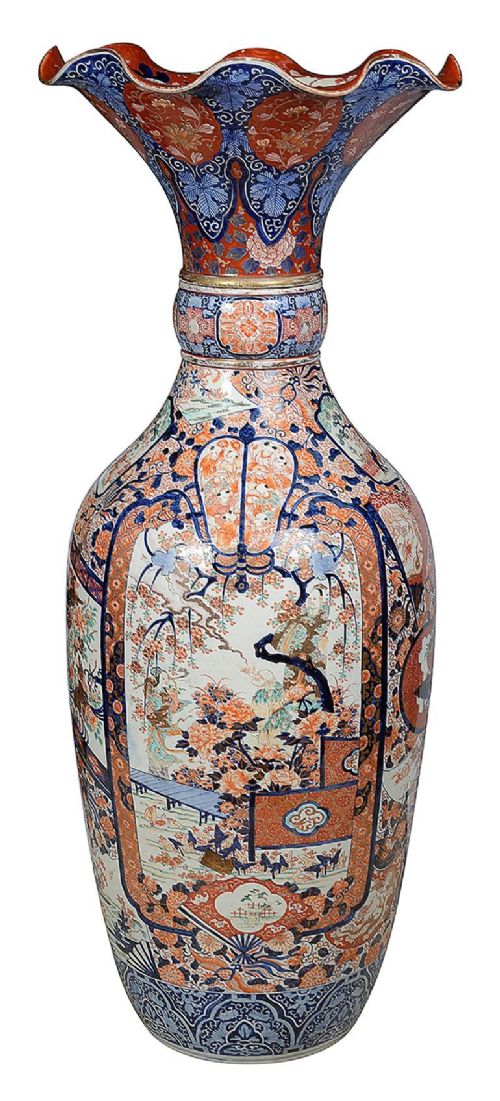
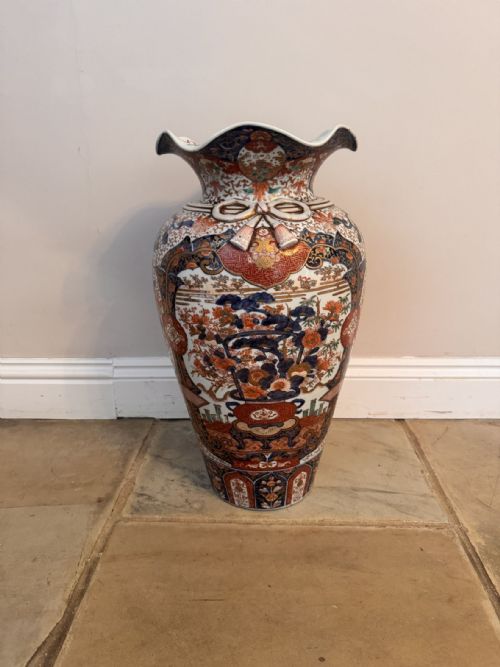
When you search for imari floor vases, you are looking at substantial vessels designed for display in larger spaces, often standing well over half a metre in height. The examples you meet on this page belong primarily to the nineteenth century, including pieces assigned to the Meiji period.
The forms vary from simple floor-standing cylinders and baluster shapes to lidded vessels and two-handled urns. Many appear as matched pairs, whilst others stand alone as singular decorative statements with deep historical roots.
How they were made
These pieces are constructed from porcelain and finished with distinct enamel painting. Artisans applied rich glazes and detailing in gold leaf, creating the traditional palette associated with the style.
The decorative schemes rely on dense hand-applied pigments that fuse with the glaze during firing. This technique produces the layered visual depth characteristic of Japanese Meiji period output.
Imari Floor Vases Retail Price Guide 2026
Typical asking prices for imari floor vases among the pieces listed under this phrase on Sellingantiques today, from the lower quarter to the upper quarter. They describe what is for sale here now, not the wider market.
Listings feature porcelain pieces decorated in the imari palette across the nineteenth century and into the early twentieth century.
What varies in quality
The standard of these works depends largely on the ambition of the scale and the crispness of the painted palette. Monumental heights and paired sets separate the grander examples from standard single vessels.
Execution of the enamel and gold leaf detailing dictates the visual impact of the surface. More successful pieces maintain clarity and balance across extensive decorative fields.
The Imari Floor Vases Glossary
- Imari palette
- A traditional decorative colour scheme employing iron red, cobalt blue, and gilt highlights. This combination creates the high-contrast look seen on porcelain from the period.
- Meiji period
- The era of Japanese history spanning from eighteen sixty-eight to nineteen twelve. Pieces from this time often display ambitious scale and intricate surface decoration.
- Baluster
- A vase shape with a rounded body that tapers toward the base and neck. This traditional form provides stability for large floor-standing vessels.
- Spill vase
- A tall, narrow vessel originally intended to hold slender wooden matches. In larger sizes, these function primarily as decorative floor or mantel objects.
Imari Floor Vases: Frequently Asked Questions
How tall are these vases?
The pieces listed on this page include substantial examples reaching significant heights, with several standing close to a metre or more.
Such scale makes them suitable for direct placement on the floor rather than on furniture.
Are these vases sold in pairs?
Several listings feature matched pairs of vessels, which offer symmetrical display options for large rooms.
Single vases also appear frequently for those seeking an independent focal point.
What period do these pieces date from?
The selection consists largely of nineteenth-century items, including works produced during the Meiji period.
Dating extends from the late eighteen hundreds into the early decades of the twentieth century.
What materials were used?
The vessels are formed from porcelain and decorated with enamel pigments and gold leaf over a fired glaze.
This combination yields the characteristic bright surface patterns typical of Japanese imari export wares.