



Arita Export Ceramics
Arita export ceramics are historic Japanese porcelain wares made for international trade, prized for their rich blue and red palettes and durable forms.
Arita Export Ceramics
Arita export ceramics encompass a diverse range of vessels and tableware created in Hizen province for overseas markets. Buyers encounter everything from robust chargers and deep bowls to lidded vases dating from the seventeenth century through the Meiji period.
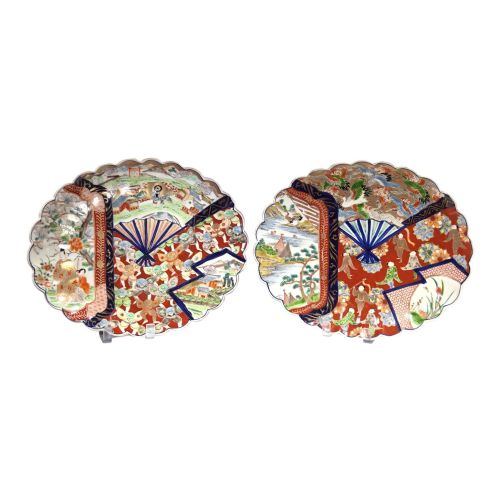
The selection on this page leans heavily towards nineteenth century and Meiji era Japanese Imari plates, alongside earlier Edo period blue and white wares. These pieces demonstrate the enduring appeal of traditional export designs that graced European interiors for centuries.
Forms vary from delicate ribbon plates and scallop edge dishes to massive garniture vases and spill vases. Each object reflects the technical mastery of Japanese kilns producing goods specifically tailored for Western tastes.
Materials and production methods
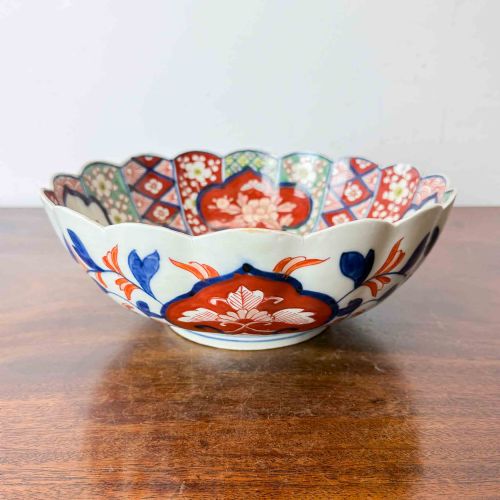
Potters utilised fine ceramic clay to form vessels that were then painted using cobalt pigment under the glaze for deep blues. Artisans added contrasting enamel colours and gold leaf over the glaze, particularly in Imari style compositions.
Pieces underwent high temperature kiln firings to fuse the mineral pigments and glazes to the porcelain body. Certain items also incorporated carved hardwood stands to display the finished ceramic vessels.
The listings span multiple centuries, uniting seventeenth century Edo period blue and white porcelain with nineteenth century Meiji era Imari chargers and vases.
Factors that distinguish the work
Quality rests upon the precision of the hand-painted decoration, where crisp cobalt lines and carefully controlled enamel placement elevate a piece. The depth and vibrancy of the glaze further distinguish standard production from exceptional examples.
The complexity of the form and the preservation of delicate overglaze enamel and gold leaf dictate the standing of an item. Superior pots retain their original crisp edges and intricate detailing across chargers, plates and vases.
Fukagawa
The Arita Export Ceramics Glossary
- Imari palette
- A traditional decorative scheme utilising underglaze cobalt blue, iron red, and gilt highlights. This combination creates the striking visual contrast characteristic of many export pieces.
- Edo period
- The historical era spanning from sixteen hundred and three to eighteen hundred and sixty seven in Japan. Wares from this time often display classic motifs and early potting techniques.
- Meiji period
- The era of Japanese history lasting from eighteen hundred and sixty eight to nineteen hundred and twelve. Ceramics from this phase frequently exhibit elaborate enamel work and ambitious scale.
- Charger
- A large decorative plate intended for display rather than routine dining use. These substantial vessels provide a wide canvas for complex painted narratives and geometric borders.
- Garniture
- A set of matching vases designed to be displayed together on a mantelpiece or cabinet. These matching groups formed an essential element of elite interior decoration.
Arita Export Ceramics: Frequently Asked Questions
How do I display Arita export ceramics safely?
Place heavier chargers and plates on sturdy plate stands or secure wall mountings designed for porcelain weight. Keep delicate overglaze enamels away from direct, harsh sunlight to preserve their rich tones.
Ensure vases and larger vessels rest on stable surfaces where they will not suffer accidental knocks. Utilising fitted hardwood stands protects both the ceramic base and your furniture.
Can I use these antique plates for dining?
Historic export ceramics are generally intended for display and decorative appreciation rather than daily culinary use. The delicate nature of nineteenth century enamels and older glazes means regular washing can cause surface wear.
Gentle dusting with a soft, dry cloth is sufficient for routine maintenance. Avoid dishwashers, harsh detergents, and soaking to protect the historical surface.
How do I date an Imari plate?
Examine the weight and thickness of the porcelain body along with the composition of the foot ring. Earlier seventeenth century pieces often show different potting characteristics compared to nineteenth century Victorian era imports.
Inspect the tones of the cobalt pigment and the application of the iron red and gold leaf. Subtle variations in brushwork and kiln marks help place a piece within the Edo or Meiji periods.
What is the difference between Arita and Imari?
Arita refers to the town and region in Hizen province where the porcelain was actually produced and fired. Imari is the port from which these finished ceramics were shipped to domestic and international markets.
Over time, the port name became synonymous with the distinct blue, red, and gold style created in the inland kilns. Thus, Imari describes the decorative palette while Arita denotes the geographical origin.