
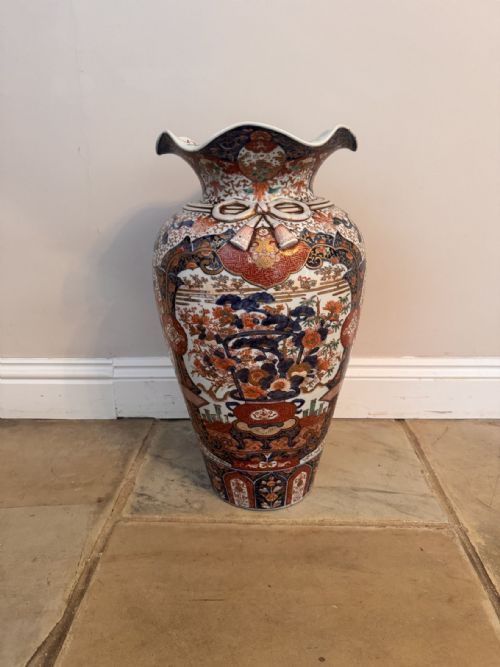


Large Imari Baluster Vases
Large imari baluster vases bring rich cobalt blue and iron red tones into a room, offering striking decorative presence from the Meiji and Edo periods.
Large Imari Baluster Vases
Large imari baluster vases encompass grand floor-standing vessels and table lamp conversions shaped with characteristic curved silhouettes. You meet examples primarily from the nineteenth century, including Japanese Meiji period output and European interpretations in the Imari style.
The evidence shows forms ranging from lidded jars to monumental pairs standing well over seventy centimetres in height. These pieces frequently display traditional Japanese Imari patterns alongside Arita porcelain origins and specific regional motifs such as bamboo.
How they were made
Potters shaped porcelain bodies into substantial baluster forms before applying hand-painted underglaze blue and iron red enamel. Artisans frequently enhanced the decoration with gold leaf and gilding to catch the light.
Mounts in ormolu, wood, brass, and silk fixtures appear on pieces adapted for later domestic use, such as lamps. Makers also produced these forms using traditional Japanese techniques alongside European ceramic traditions, as seen in Samson pottery.
Listings feature porcelain forms spanning from the seventeenth century through to the nineteenth century, including Japanese Meiji and Edo periods.
What varies in quality
The depth and execution of hand-painted enamels separate standard decorative vessels from exceptional artistic achievements. Crisp cobalt tones combined with meticulously applied gold leaf indicate superior craftsmanship.
Proportion and scale dictate visual impact, with monumental pairs displaying greater symmetry and presence. The presence of original lids and uncompromised porcelain bodies preserves the integrity of the piece.
The Large Imari Baluster Vases Glossary
- Baluster
- A vase form featuring a rounded body that tapers toward the base and swells gracefully before rising to a narrow neck. This classic silhouette provides a stable and balanced canvas for intricate surface decoration.
- Imari
- A style of Japanese porcelain originating from the port of Arita, traditionally decorated in cobalt blue, iron red, and gold. European factories later reproduced this distinct palette.
- Meiji
- The period of Japanese history spanning from 1868 to 1912, characterised by opening trade with the West and prolific ceramic production for export. Pieces from this era often display ambitious scale and vibrant ornamentation.
- Ormolu
- Gilded bronze mounts applied to decorative objects, adding weight, architectural structure, and decorative trim to ceramic bodies. This technique appears frequently on pieces adapted in Europe.
Large Imari Baluster Vases: Frequently Asked Questions
How do I date a large imari vase?
Dating relies on stylistic markers, potting techniques, and historical context recorded in the physical piece. Nineteenth-century examples often display the dense patterns typical of the Meiji period.
Earlier pieces from the seventeenth or eighteenth centuries show distinct clay bodies and softer iron red pigments. Examining the base and glaze pooling provides further clues to the period of manufacture.
Are these vases suitable for everyday use?
These substantial porcelain vessels serve primarily as decorative focal points in a room rather than functional containers. Their size and historical value make them well suited for placement on large tables or directly on the floor.
Some examples have been adapted as table lamps while retaining their original ceramic bodies. Careful placement away from heavy traffic areas ensures their preservation.
What is the difference between Japanese and European imari?
Japanese imari originates from Arita and employs native porcelain clays alongside traditional underglaze blue and iron red enamels. European makers such as Samson produced imari style pieces to satisfy Western demand.
Comparing the weight of the porcelain and the crispness of the enamel work helps distinguish regional origins. Both traditions share the iconic palette that defines the style.
How should I clean my imari vase?
Maintenance requires gentle dusting with a soft, dry cloth to protect delicate enamel and gilding surfaces. Avoid using harsh chemical cleaners or abrasive materials that could damage the antique finish.
Water should be kept away from pieces featuring silk components or antique metal mounts. Regular, careful upkeep preserves the visual richness of the hand-painted decoration.