
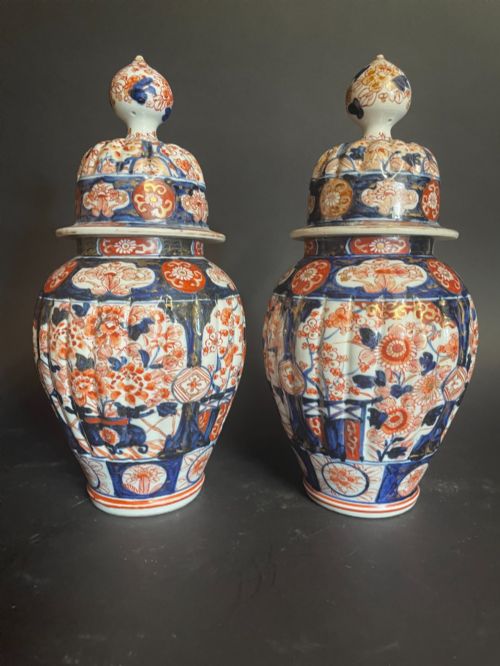
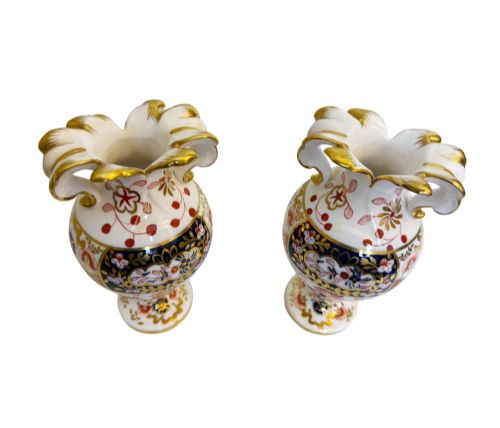
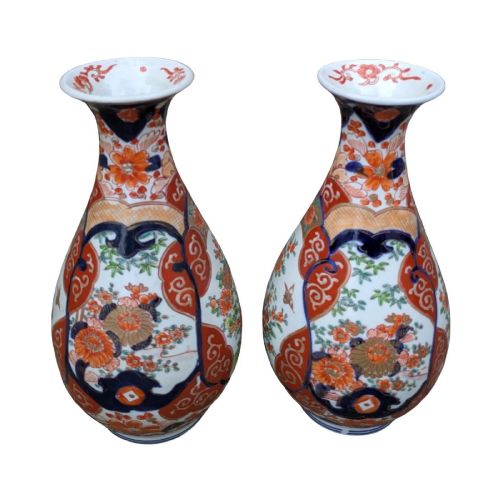


Pair Imari Porcelain Vases
When you search for pair imari porcelain vases, you find symmetrical vessels defined by distinctive cobalt blue and iron red ironmongery palettes.
Pair Imari Porcelain Vases
Pair imari porcelain vases span centuries of production, originating from Japanese kilns in Arita and extending to European imitations and adaptations. Collectors frequently encounter 19th-century Meiji period examples alongside earlier pieces from the Edo period and 18th century.
The physical forms vary widely from slender bottle shapes and double gourds to monumental temple jars with matching covers. Many surviving examples also show adaptation into table lamps while retaining their decorative bodies.
Materials and construction
The foundation relies on hard-paste porcelain shaped on the wheel or cast in moulds before receiving underglaze cobalt blue painting. Kiln firing sets this primary blue before artisans apply supplementary iron red enamel, highlighting details with gold leaf and gilt work.
Surface treatments combine translucent glaze with opaque enamel layers, sometimes incorporating brass mounts or fabric elements added during later European conversions.
Listings feature porcelain pieces spanning from the 17th century through the Edwardian era, incorporating materials like enamel, gold leaf, and brass.
Distinguishing quality
The refinement of the hand-painted brushwork dictates the upper tier of pieces, where intricate floral and geometric motifs display exceptional control and precision. Lesser examples often feature rushed, repetitive stencilling or heavy, muddy enamel applications.
The purity of the white porcelain body and the crispness of the cobalt firing separate masterworks from commercial export wares produced in high volume.
Samson of Paris·Fukagawa factory·Mason's Ironstone·Spode
The Pair Imari Porcelain Vases Glossary
- Imari
- A traditional Japanese porcelain style originating in Hizen province and shipped from the port of Imari, recognised by a palette of cobalt blue, iron red and gold.
- Mejl Period
- The era in Japanese history spanning from 1868 to 1912, characterised by a massive increase in decorative arts exported to Western markets.
- Arita
- The Japanese town and surrounding region where the clay deposits and kilns responsible for the earliest porcelain production were established.
- Baluster
- A vase form with a rounded lower body that tapers upward into a narrower neck, resembling an architectural column.
- Genroku Period
- A specific span within the Japanese Edo period lasting from 1688 to 1704, noted for opulent artistic expression and refined ceramic design.
Pair Imari Porcelain Vases: Frequently Asked Questions
How do I date an imari vase?
Dating relies on examining the clay body, the tone of the cobalt blue underglaze and the complexity of the enamel palette. Earlier pieces from the seventeenth and eighteenth centuries often show heavier potting and subtle imperfections compared to mass-produced nineteenth-century examples.
Changes in export demand also shifted decorative styles over time, helping to separate early Arita wares from later Meiji period interpretations and European revival pieces.
Were these vases made for export?
The vast majority of traditional pieces were produced specifically for trade with European markets via Dutch and Chinese merchants. Western tastes heavily influenced the scale and decorative intensity of the vessels.
European factories subsequently created their own versions to satisfy domestic demand when Japanese imports became scarce or costly.
How should I display a pair?
Displaying matching vessels benefits from balanced placement on sturdy surfaces like sideboards or mantelpieces where natural light highlights the metallic gilt details. Keeping them away from direct sunlight preserves the vibrancy of the iron red enamel.
When fitted as table lamps, ensure the wiring does not obscure the primary painted panels on the ceramic body.