



Victorian Imari Porcelain Vase
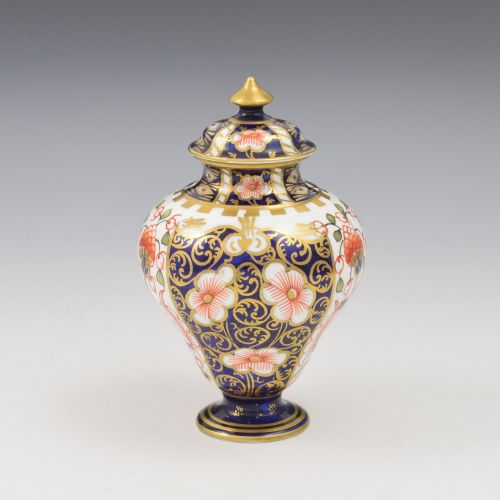
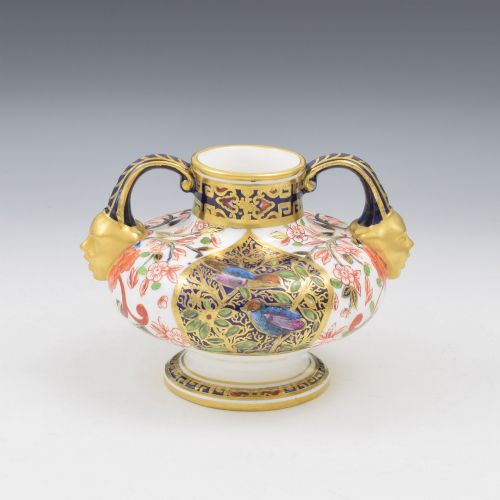
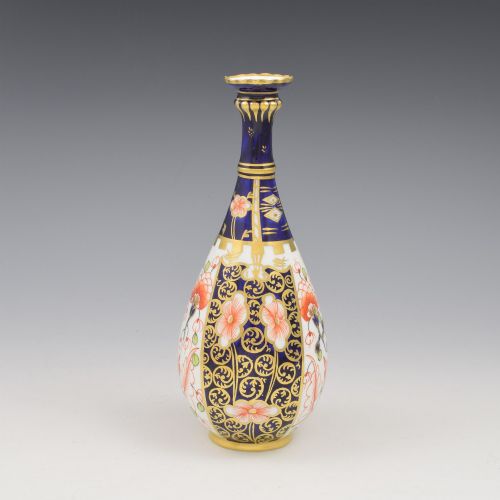
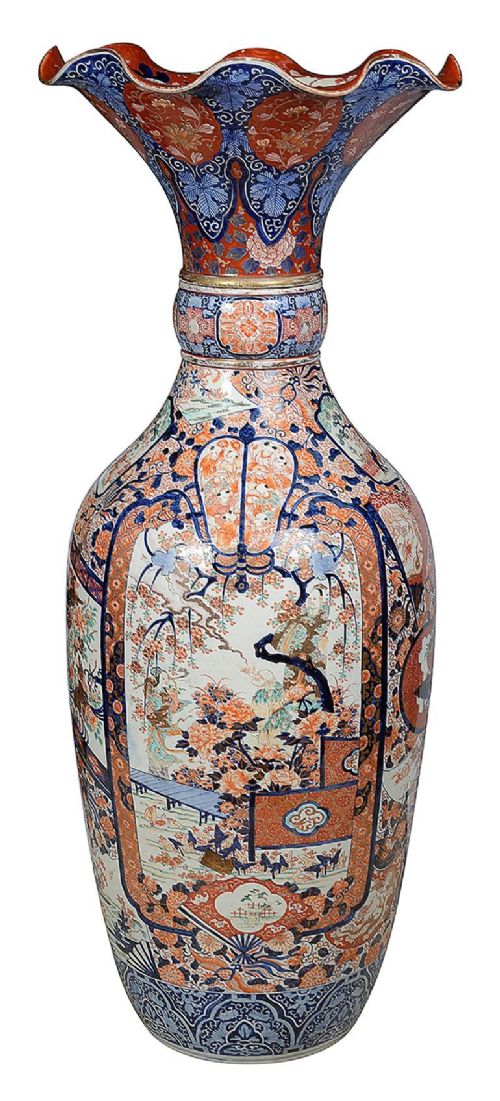
A victorian imari porcelain vase brings rich cobalt blue and iron red ironstone into a room, offering a striking display piece rooted in nineteenth-century craftsmanship.
Victorian Imari Porcelain Vase
When you search for a victorian imari porcelain vase, you enter a field defined by nineteenth-century cross-cultural design, where English potteries and Japanese workshops alike produced heavily patterned vessels. The pieces encountered here range from compact bud vases and moon flasks to substantial floor vases and lidded jars.
The aesthetic draws heavily on Japanese Imari traditions, filtered through English makers adopting rich palettes of iron red, cobalt blue, and gilt highlights. Forms vary from double gourdes and spill vases to converted table lamps, reflecting both decorative ambition and practical interior use in Victorian homes.
Most examples date across the nineteenth century, encompassing Victorian production alongside Japanese Meiji period imports available to the British market at the time. Buyers frequently encounter pairs or single large decorative vessels designed to command attention on mantelpieces or occasional tables.
Materials and construction methods
Makers utilised durable ceramic bodies, including standard porcelain, ironstone, and bone china, fired at high temperatures to create robust vessel walls suitable for intricate surface decoration. These robust clay bases supported heavy exterior glazing and detailed hand-painting.
The distinctive palette relies on underglaze cobalt blue combined with overglaze iron-red enamel, frequently accented with gold leaf and gold gilding to catch the light. Artisans applied these pigments by hand before secondary firings fixed the enamel and precious metals to the glazed surface.
Victorian Imari Porcelain Vase Retail Price Guide 2026
Typical asking prices for victorian imari porcelain vase among the pieces listed under this phrase on Sellingantiques today, from the lower quarter to the upper quarter. They describe what is for sale here now, not the wider market.
Materials recorded across the inventory encompass porcelain, ironstone, enamel, glaze, and applied gold leaf.
Factors of distinction
Excellence in these objects rests upon the precision of the hand-painted motifs and the richness of the enamel and gilding work. Superior examples display crisp cobalt lines and securely adhered gold leaf that retain their brilliance without rubbing.
Proportion and scale also dictate distinction, with large floor vases and finely potted double gourde pairs commanding greater visual presence than utilitarian vessels. The crispness of the ironstone or porcelain moulding beneath the glaze determines the sharpness of the overall silhouette.
Royal Crown Derby·Stevenson and Hancock·Mason·Davenport
The Victorian Imari Porcelain Vase Glossary
- Imari
- A style of ceramic decoration originating in Japan, characterised by a palette of cobalt blue, iron red, and gold, which heavily influenced European potteries. English makers adopted this aesthetic to satisfy Victorian tastes for exotic oriental design.
- Ironstone
- A heavy, durable type of ceramic patented in the nineteenth century as a robust alternative to porcelain. It provides a solid body for complex enamel and gilt decoration.
- Gilding
- The application of gold leaf or powdered gold to the surface of a vase. This technique highlights rims, handles, and specific motifs within the Imari pattern.
- Double Gourde
- A vase formed with two bulbous sections stacked vertically, resembling a traditional double gourd fruit. This silhouette appears frequently in Japanese Meiji period exports and their English interpretations.
- Moon Flask
- A flattened, circular flask vase with a short neck and small handles, often supported on an oval foot. This shape provides a broad canvas for complex painted panels.
Victorian Imari Porcelain Vase: Frequently Asked Questions
How were these vases used originally?
Victorian households deployed these vessels as decorative centerpieces on mantelpieces, sideboards, and occasional tables, often displaying them in matched pairs.
Larger versions stood directly on the floor in entrance halls or drawing rooms, sometimes holding dried botanicals or simply serving as pure ornament.
How do I distinguish English Imari from Japanese originals?
English pieces often utilise ironstone or bone china bodies characteristic of factories in Derby or Staffordshire, frequently bearing specific maker marks beneath the glaze.
Japanese Meiji period exports typically feature lighter porcelain bodies and distinct brushwork that adheres closely to traditional East Asian potting techniques.
Can I use these vases for fresh flowers?
While many historical pieces possess waterproof glazed interiors, antique porcelain and ironstone remain sensitive to thermal shock and accidental impact.
Using them for dry displays or artificial stems avoids moisture damage to historic bodies and protects fragile overglaze gilding from water wear.
How do I clean a painted porcelain surface safely?
Dusting with a dry, soft feather duster or microfiber cloth prevents the accumulation of grime without risking the delicate overglaze enamel and gold leaf.
Harsh chemical cleaners and abrasive cloths must be avoided entirely, as they strip away the historical pigments and gilt highlights.