
Antique Japanese Ceramic Vase
An antique japanese ceramic vase brings hand-painted colour and extraordinary relief work into a room, spanning periods from the Edo era to the early twentieth century.
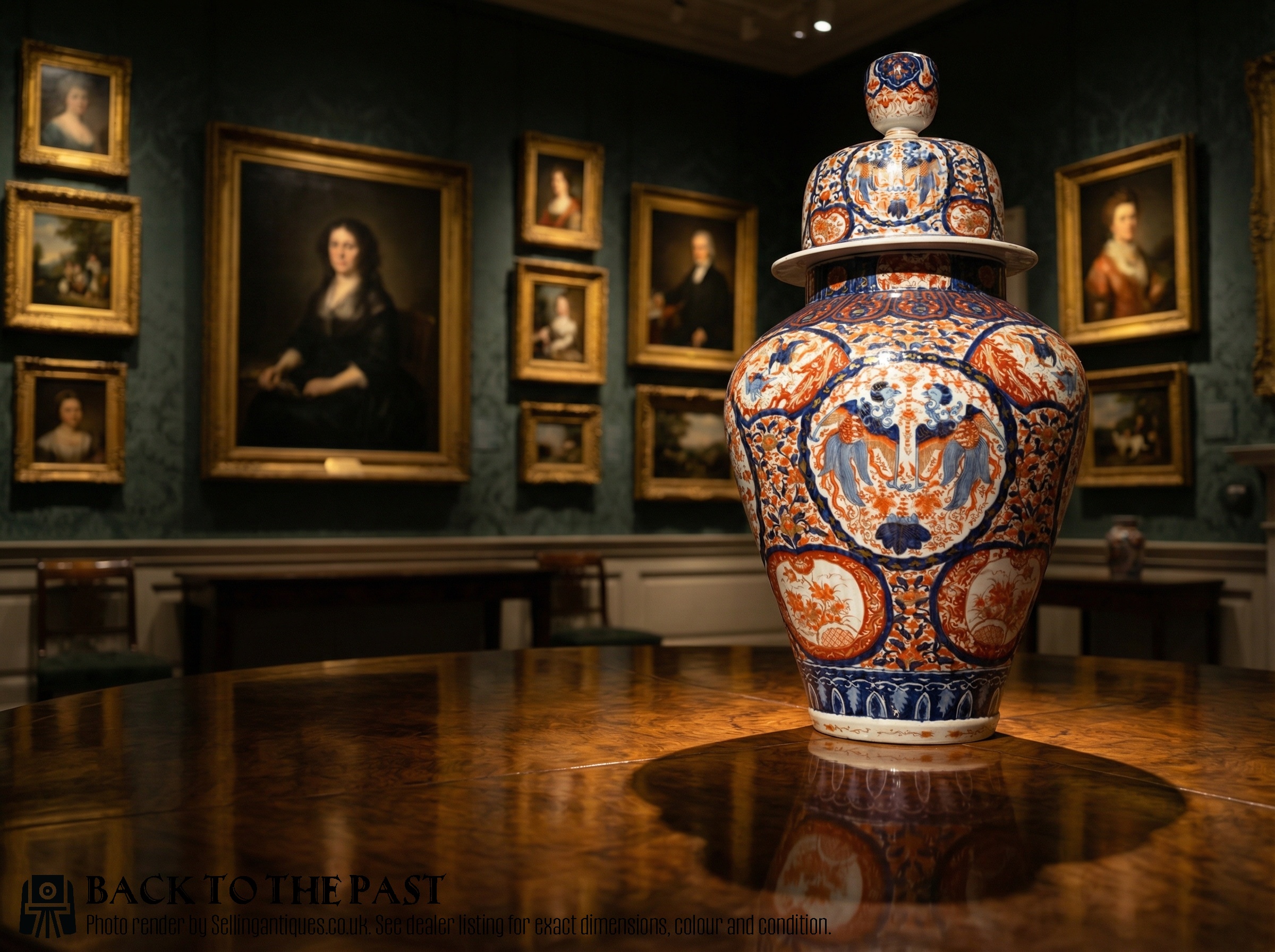
What these pieces are
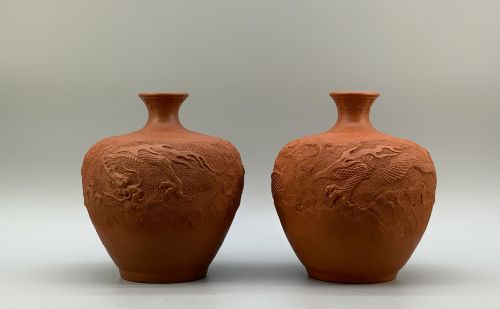
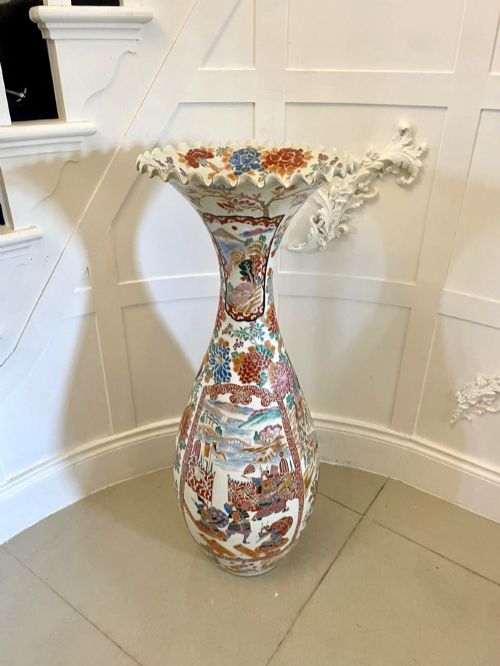
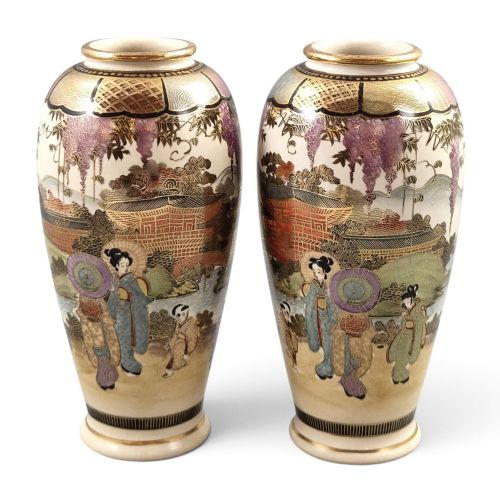
An antique japanese ceramic vase covers a remarkable range of forms, from monumental Kyoto Satsuma vessels to delicate Arita bottle vases and stout Sumida Gawa pitchers. Buyers searching this phrase encounter vessels created for display, ritual, or daily use, fashioned in earthenware, porcelain, and terracotta.
The majority of pieces seen on this page date from the Meiji and early Taisho periods, reflecting a prolific era of ceramic artistry. Alongside these, earlier examples from the Japanese Edo period appear, offering a glimpse into historical kiln traditions.
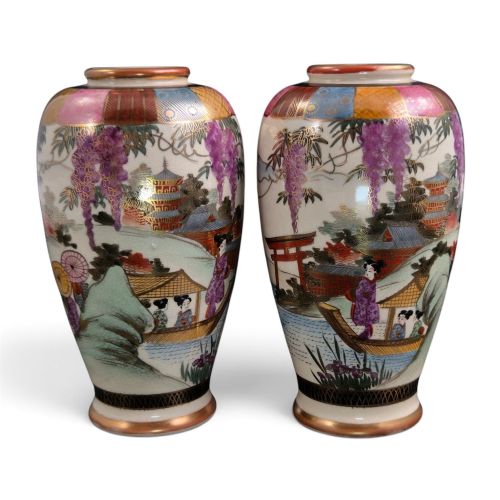
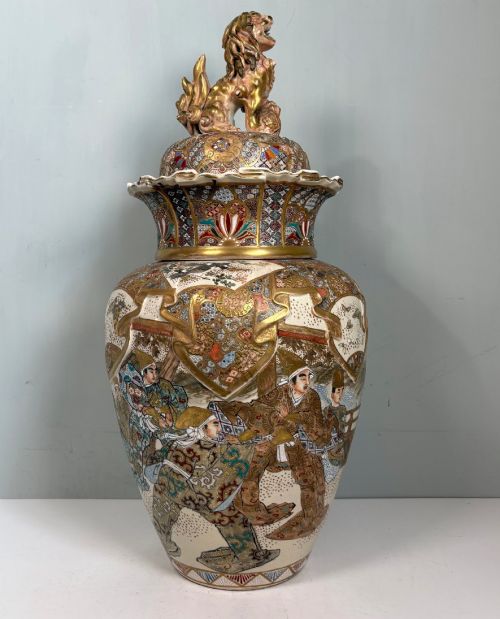
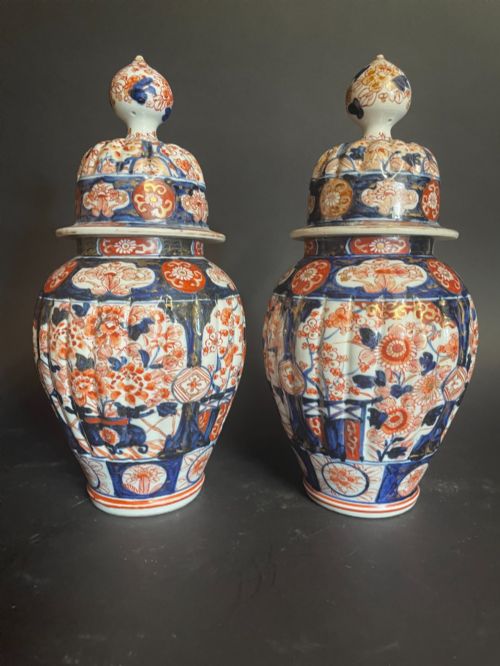
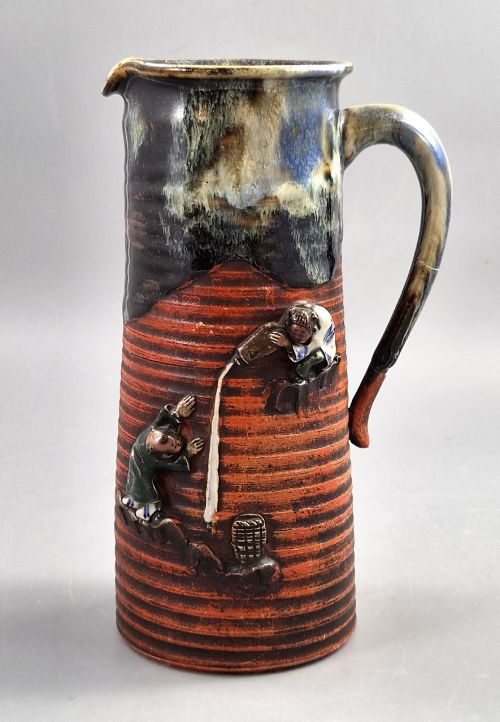
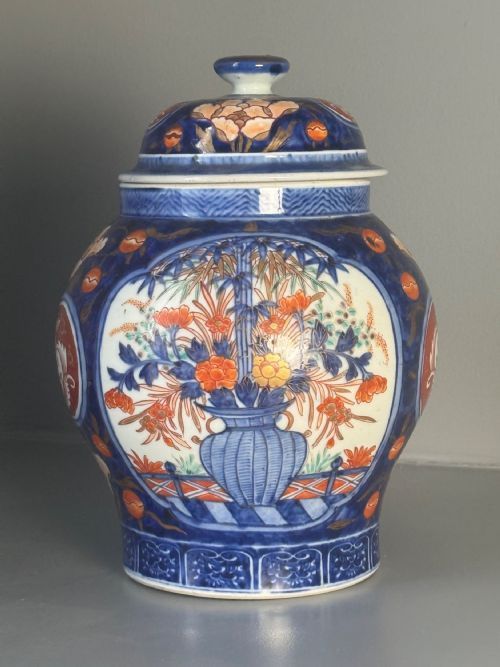
Forms vary significantly, encompassing traditional baluster shapes, lidded vases, single-stem flower holders, and pitchers with figurative scenes. Collectors find both heavily decorated wares with gold gilt and simpler, restrained bottle forms.

How they were made
Potters utilised earthenware, terracotta, and porcelain as the base bodies for these vessels, shaping them by hand or on the wheel before applying specialised ceramic glazes. Many pieces incorporate rich enamel decoration, meticulous hand-painting, and applied sculptural elements.
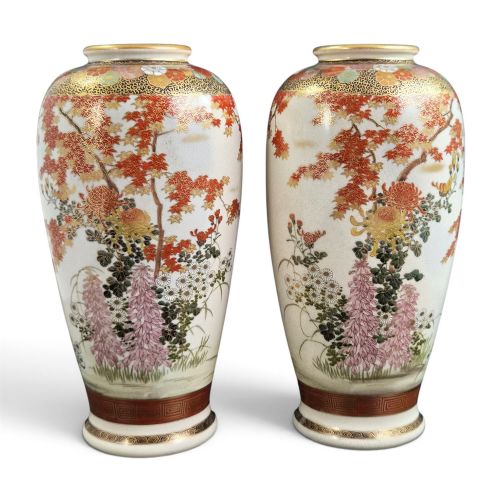
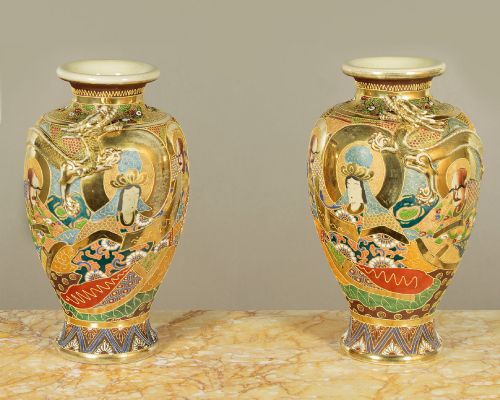
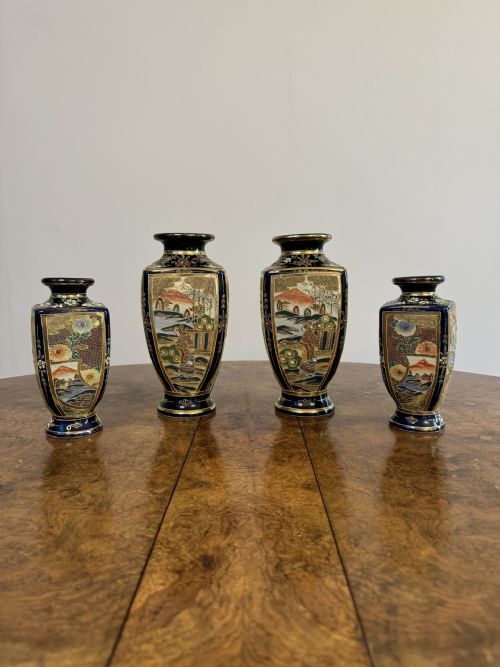
Techniques such as moriage build up raised slip decoration on the surface, creating a tactile quality that distinguishes Satsuma and related wares. Gilding with gold adds metallic contrast to complex pictorial scenes depicting figures, flowers, and natural motifs.
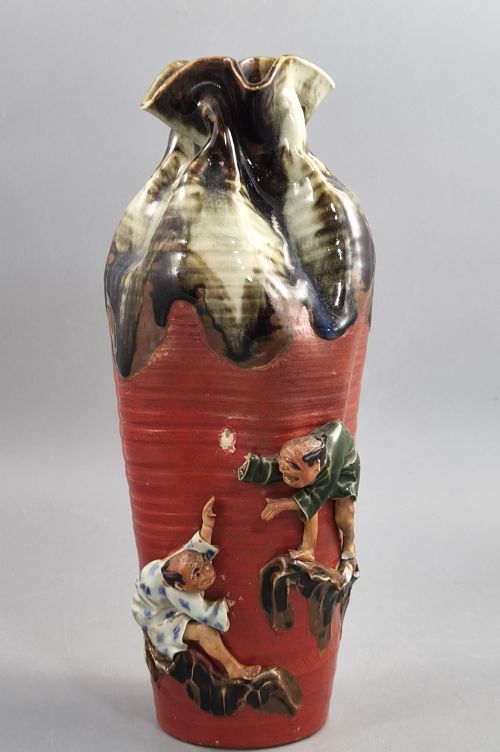
Specialised finishing methods, including lacquer details and hand-carved relief figures, demonstrate the high level of skill achieved in workshops during the nineteenth and early twentieth centuries.
Retail Price Guide 2026
Typical UK retail prices for japanese ceramic vase, calculated from the Sellingantiques database of over a million retail prices indexed since 2003. This retail price guide relies exclusively on Sellingantiques data; no external sources or auction records are used, so the figures do not describe the wider market.
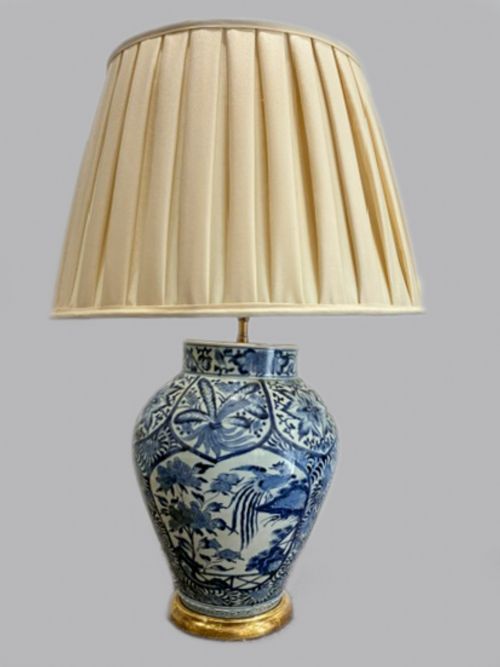
Listings span multiple centuries, capturing both seventeenth-century Arita porcelain and elaborate nineteenth-century Meiji period Satsuma wares.
What varies in quality
Quality in an antique japanese ceramic vase is defined by the precision of the hand-painting, the control of the glaze, and the intricacy of modelled details like applied figures or moriage work. Master potters demonstrated superior command over kiln temperatures, resulting in stable, luminous finishes and sharp pictorial clarity.
Signed pieces by recognised artists or notable workshops command attention for their individual artistry and documented provenance, distinguishing them from unmarked commercial output. The crispness of relief modelling and the balanced composition of multi-figure scenes separate exceptional vessels from standard decorative items.
Seiko en Chokei
The Antique Japanese Ceramic Vase Glossary
- Satsuma
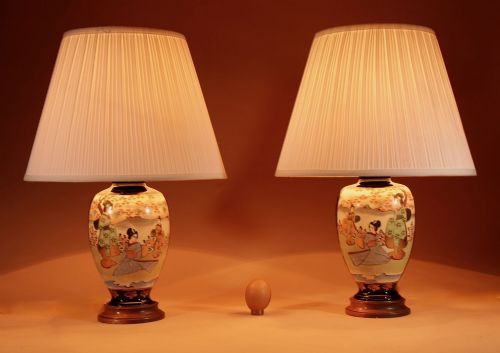
- Earthenware pottery originating from Satsuma Province, typically characterised by a crackle glaze and elaborate polychrome and gold enamel decoration.
- Imari
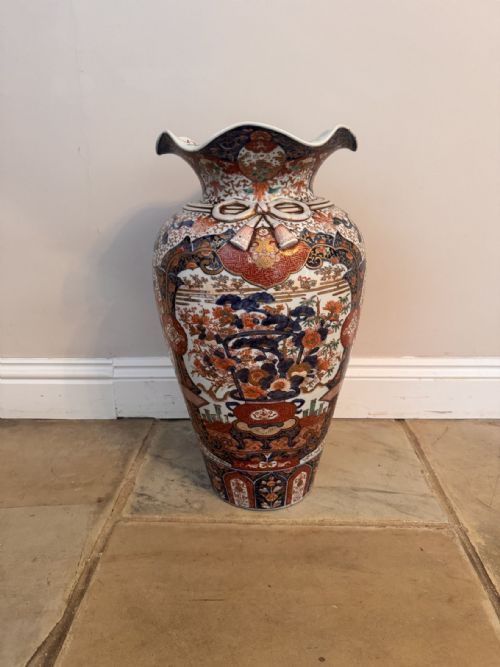
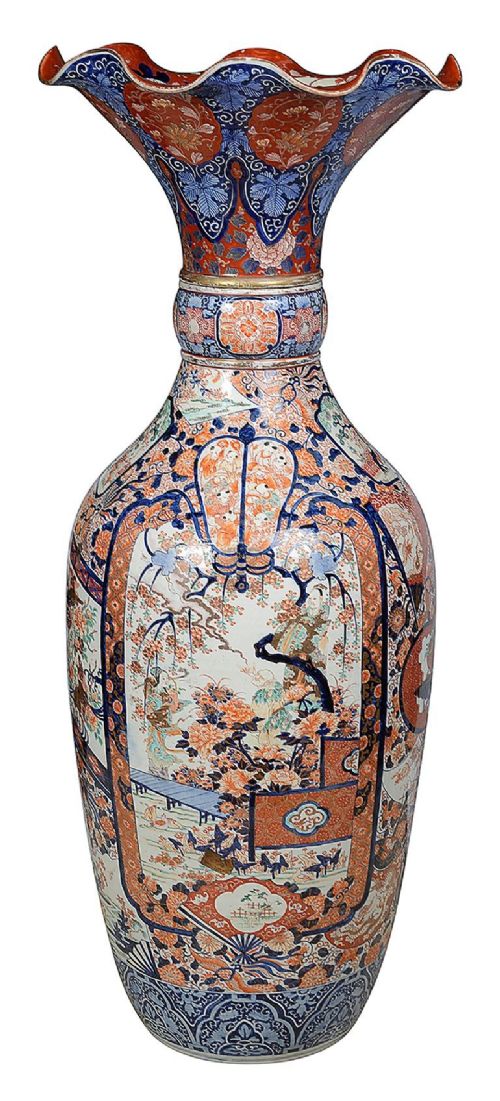
- Japanese porcelain decorated in underglaze blue and overglaze red, green, and gold, named after the port from which it was shipped.
- Moriage
- A decorative technique using clay slip piped onto pottery to create raised, textured patterns before glazing and firing.
- Meiji Period
- The era in Japanese history from 1868 to 1912, noted for opening trade with the West and producing highly detailed decorative arts.
- Baluster
- A vase shape with a rounded body that tapers toward the neck, resembling a traditional architectural baluster.
Frequently Asked Questions
How do I date an antique Japanese vase?
Dating relies on stylistic clues, historical periods such as Meiji or Edo, and specific material signatures like crackle glazes or hand-painted enamel palettes.
Kiln marks, artist signatures, and manufacturing techniques also provide clear indicators of a vessel's age and origin.
What is Satsuma ware?
Satsuma ware refers to Japanese earthenware pottery featuring a distinctive creamy, crackled glaze finished with detailed polychrome and gold enamel painting.
These pieces were heavily produced for export during the nineteenth century and remain popular for their intricate figurative and floral designs.
How were these vases used?
Many of these vessels served as decorative centrepieces in Japanese and Western interiors, displayed on stands or within alcoves to showcase fine craftsmanship.
Others functioned as flower holders for traditional arrangements or as ceremonial vessels for sake and water.
How do I care for a ceramic vase?
Keep these fragile vessels out of direct sunlight to protect delicate enamels and gold gilt from fading over time.
Dust them gently with a soft, dry cloth and avoid using water or chemical cleaners on porous earthenware or delicate surface relief.