



Large Palace Vases
Large palace vases bring monumental scale and striking visual presence to a room, standing as commanding focal points created during the nineteenth century.
Large Palace Vases
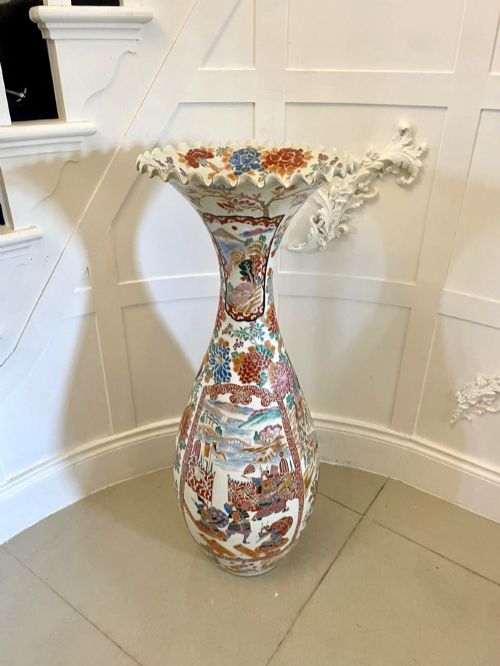
Large palace vases encompass monumental floor jars and temple vases originating primarily from nineteenth-century Chinese and Japanese workshops. Buyers searching for large palace vases encounter substantial floor-standing vessels reaching heights over several feet, designed originally for grand interior spaces.
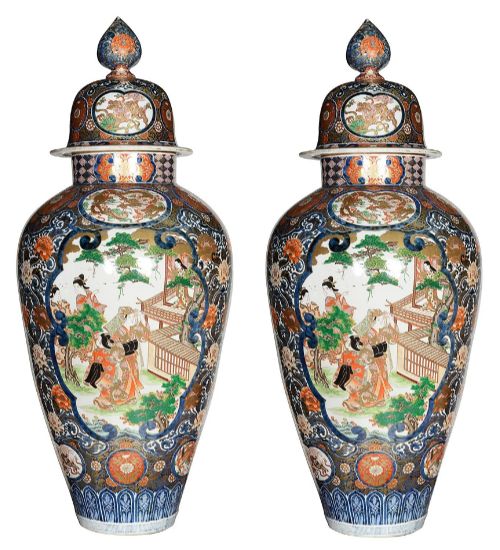
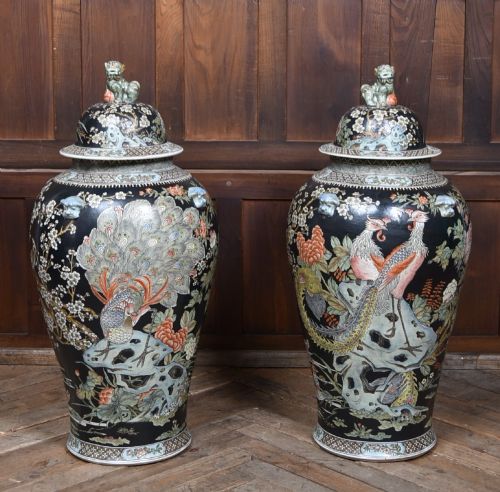
Chinese export works and Japanese Imari or Cloisonné vessels dominate the selection. These heavy ceramics and enamels showcase traditional decorative schemes such as Rose Mandarin, Rose Medallion, and Blue and White designs.
How they were made
Makers utilised porcelain and metal foundations, applying rich enamel glaze, overglaze enamel, and gold leaf to achieve complex surface ornamentation. Cloisonné examples employed wire cells soldered to metal bases to contain vibrant enamel pastes.
Wood stands often accompanied these large vessels to support their considerable weight and elevate the porcelain or lacquer bodies. Artisans combined traditional ceramic throwing with meticulous hand-painting and lacquer work.
Japanese pieces frequently integrated lacquer panels alongside traditional underglaze blue and Imari palettes. Chinese works relied heavily on elaborate hand-painted figural scenes and floral motifs executed in polychrome enamels.
Large Palace Vases Retail Price Guide 2026
Typical asking prices for large palace vases among the pieces listed under this phrase on Sellingantiques today, from the lower quarter to the upper quarter. They describe what is for sale here now, not the wider market.
Periods represented span the Qing Dynasty alongside the Edo and Meiji periods.
What varies in quality
The precision and density of the hand-painted enamel work separate standard production from finer creations. Superior examples display crisp definition in complex figural scenes, such as Rose Mandarin motifs, alongside carefully applied gold leaf highlights.
Structural scale combined with stability dictates distinction among monumental vessels. Pieces that maintain structural integrity across extreme heights, often exceeding eighty inches, demonstrate superior ceramic firing and assembly techniques.
The complexity of secondary materials, such as integrated wood elements and specialised lacquer panels, influences the overall sophistication of a piece. Finer works exhibit harmonious coordination between the primary ceramic body and any accompanying stands or mounts.
The Large Palace Vases Glossary
- Imari
- A style of Japanese porcelain featuring a distinct palette of underglaze blue, iron red, and gold. This decorative approach became widely exported to European markets during the nineteenth century.
- Cloisonné
- An enamel technique where metal wires are affixed to a base to create small compartments filled with vitreous paste. These pieces are then fired and polished to a smooth finish.
- Qing Dynasty
- The final imperial dynasty of China, lasting from sixteen-fourteen to nineteen-twelve. Ceramics from this period include notable export wares and monumental floor vases.
- Meiji Period
- A period of Japanese history spanning from eighteen-sixty-eight to nineteen-twelve. This era saw increased production of decorative arts intended for Western collectors.
- Baluster
- A tall vase form with a rounded body that tapers toward the base and swells near the lower middle. This classical shape provides stability for exceptionally large floor vessels.
Large Palace Vases: Frequently Asked Questions
Where were large palace vases displayed?
These monumental vessels were traditionally positioned in grand reception rooms, halls, and temple spaces where their imposing scale could be fully appreciated. Their substantial height commanded attention within expansive architectural interiors.
In modern settings, collectors typically place them directly on the floor in spacious hallways, drawing rooms, or entrance foyers. They function best as standalone sculptural objects rather than conventional flower holders.
How do I distinguish Chinese from Japanese pieces?
Chinese large palace vases from this era frequently feature narrative figural scenes in Rose Mandarin or Rose Medallion palettes, alongside robust blue and white export designs. The decorative focus often centres on court life and symbolic flora.
Japanese examples often showcase Imari patterns with iron red and gold, or intricate cloisonné enamel work depicting subjects like the Ho-o bird and phoenix. The integration of specialised lacquer panels also points toward Japanese Meiji and Edo craftsmanship.
What materials make up these vases?
The primary body typically consists of heavy porcelain or metal foundations designed to support extreme heights. Artisans applied surface decoration using enamel glaze, overglaze enamel, and gold leaf.
Secondary materials include wood for structural stands and specialised lacquer applied to accompanying panels. Cloisonné variants incorporate metal wirework to separate areas of vitreous enamel.
How should I care for a floor vase?
Maintenance requires gentle dusting with a soft, dry cloth to protect delicate overglaze enamels and gold leaf highlights. Avoid chemical cleaners or excessive moisture, particularly around wood stands and lacquer panels.
Due to their significant weight and height, positioning them away from high-traffic areas prevents accidental knocks. Ensuring a stable and level surface protects both the ceramic body and any fitted wooden supports.
What periods do these vases date from?
The pieces recorded here originate from the nineteenth century, encompassing the Qing Dynasty in China and the Edo and Meiji periods in Japan. Specific production dates cluster around eighteen-sixty and eighteen-eighty.
This era marked a peak in the creation of large-scale export ceramics intended for international markets. Makers refined techniques to produce monumental floor jars and temple vases without compromising structural balance.