

Nineteenth Century Vase
A nineteenth century vase brings diverse decorative traditions into a room, spanning delicate porcelain and heavy cast bronze.
Nineteenth Century Vase
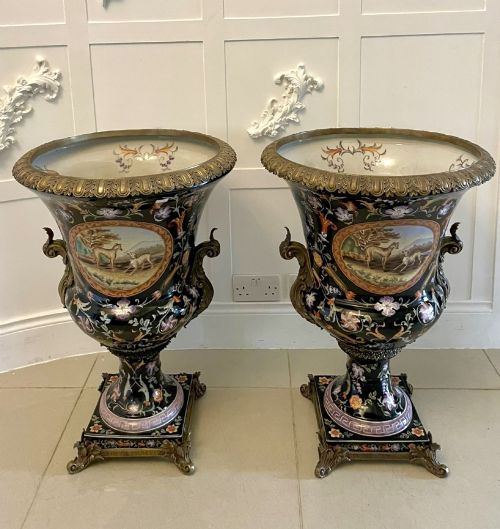
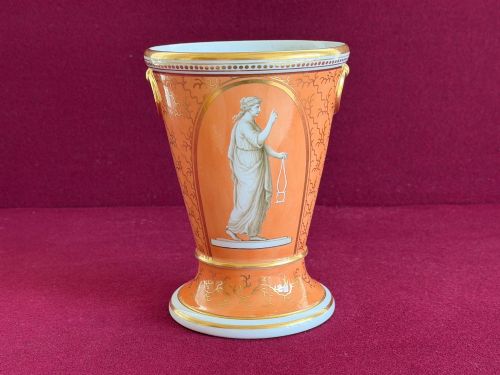
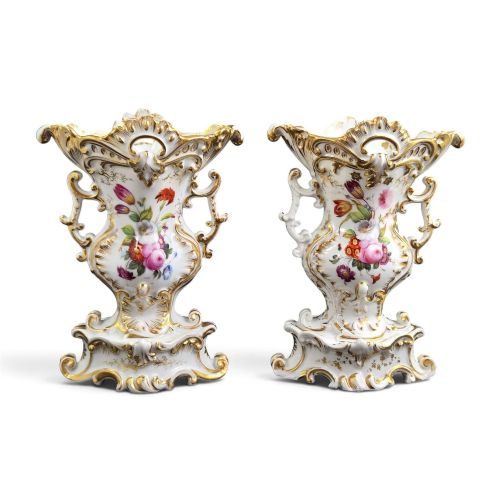
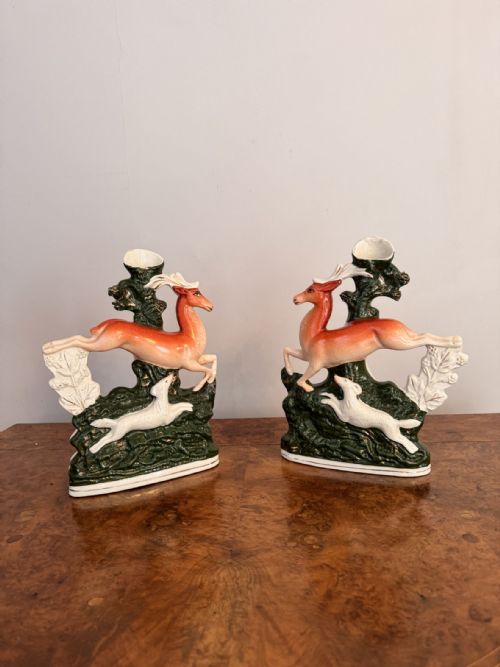
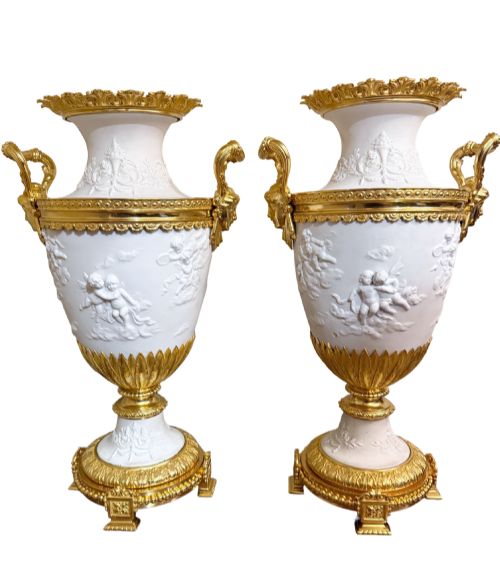
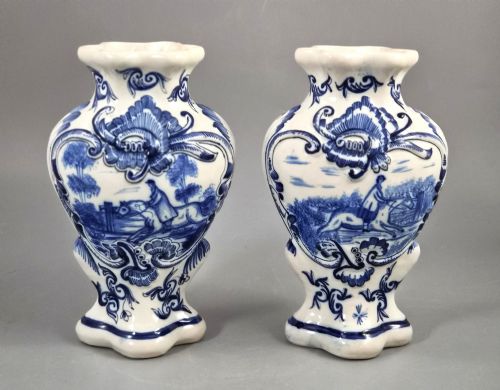
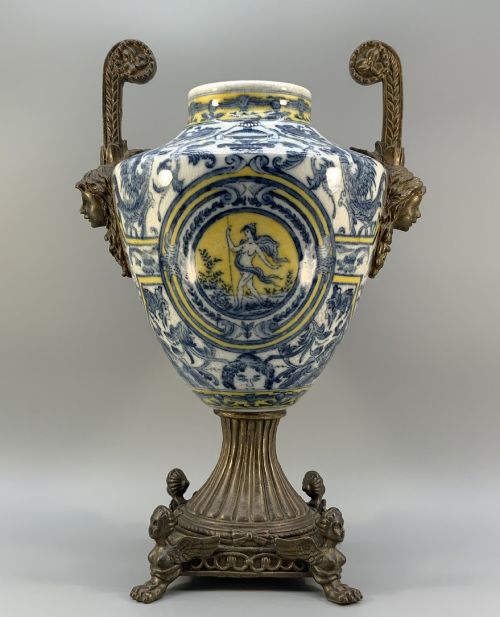
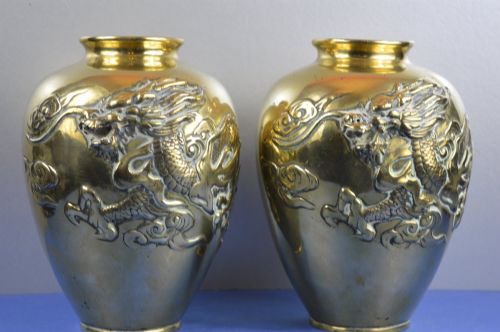
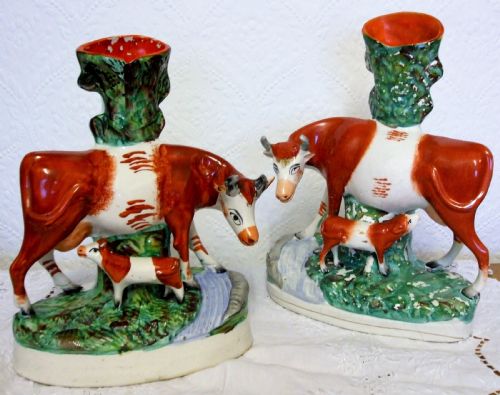
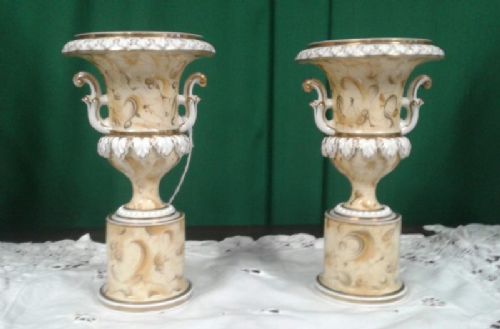
A nineteenth century vase covers a broad spectrum of ornamental forms, ranging from English earthenware spill vases to grand French porcelain urns and Japanese Satsuma ware. The pieces meeting this search phrase reflect the eclectic tastes of Victorian, Regency, and Meiji periods, utilising diverse object types such as campana urns, jardinieres, and bottle vases.
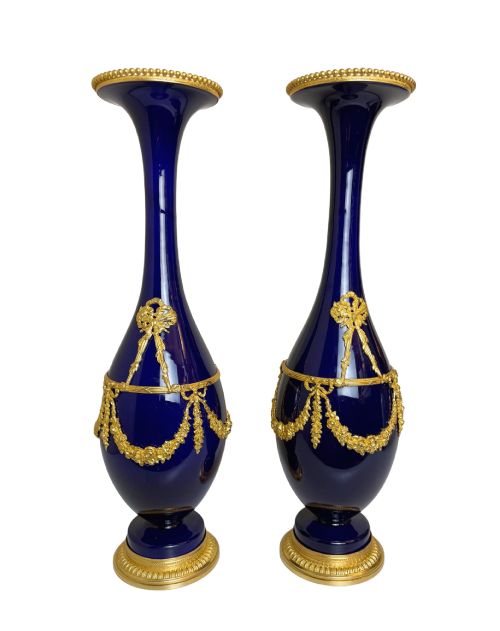
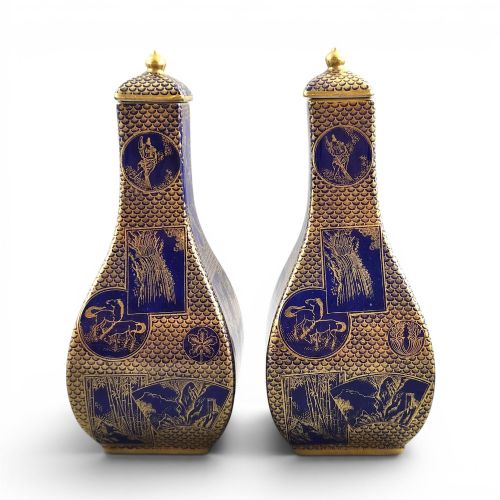
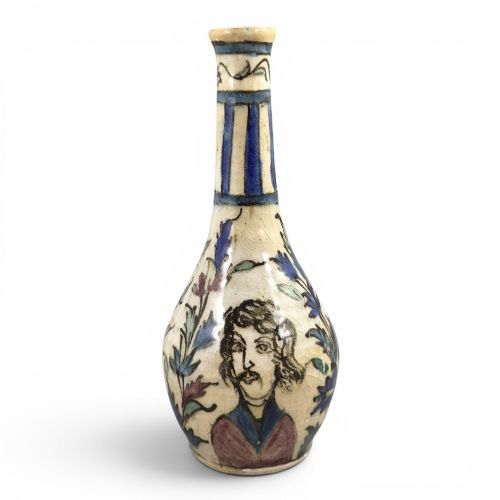
Buyers most frequently encounter Continental porcelain and earthenware examples alongside Asian ceramics and heavy cast metal vessels. These items often appear in pairs and frequently integrate decorative mounts, handles, or specialised surface treatments characteristic of their respective origins.
Materials and production methods
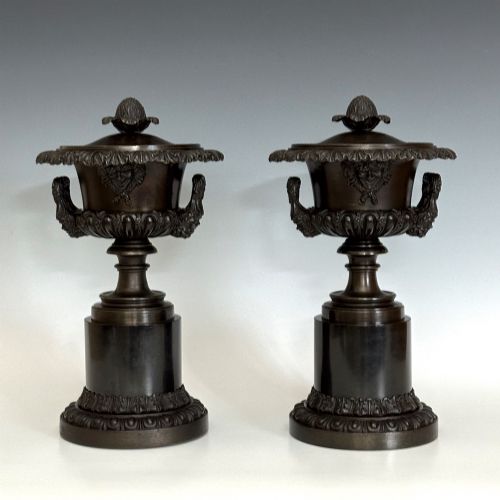
Makers shaped these objects using traditional ceramic bodies including earthenware, ironstone, faience, and fine porcelain, often finishing them with hand-painted enamels, cobalt grounds, or transfer printing. Metal versions rely on bronze, gilt bronze, or ormolu mounts, frequently combined with marble bases, copper, or spelter.
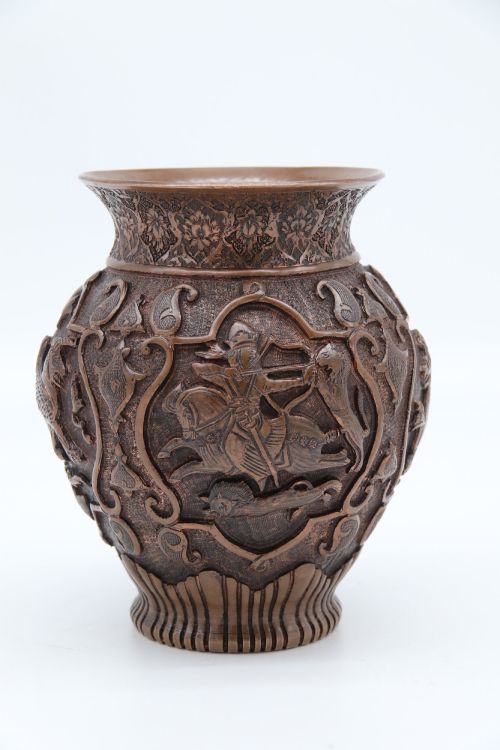
Advanced decorative techniques such as champleve enamel, cloisonne, moriage relief work, and repoussé copper give these vessels their distinct surface textures. Skilled artisans also applied gold leaf, lacquer panels, and detailed bas-reliefs to achieve the varied visual styles seen across European and Asian workshops.
English, French, German, Japanese, and Chinese workshops dominate the geographic origins of these vessels.
Distinctions in quality and execution
The standard of a nineteenth century vase rests upon the precision of its hand-painted details, the crispness of its moulded relief, and the integrity of its mounts. Pieces originating from recognised potteries or named makers display superior control over glazes, gilding, and structural balance.
The weight of the materials, the clarity of the enamel work, and the harmonious integration of bronze or ormolu mounts separate standard decorative items from exhibition-grade examples. Superior execution remains visible in the careful finishing of undersides, mounts, and interior surfaces.
Flight And Barr Worcester·Jacob Petit·Fourmaintraux Courquin·Mason·Spode·Sitzendorf·Tunnicliffe·Nanzan
The Nineteenth Century Vase Glossary
- Campana
- A bell-shaped vessel with a flaring rim and a footed base, frequently produced in ironstone, porcelain, or bronze during the period.
- Ormolu
- Finely ground high-carat gold applied in a mercury amalgam to bronze, creating a rich golden surface finish on decorative mounts.
- Cloisonne
- An ancient metalworking technique where fine wire compartments are soldered to a base and filled with enamel pastes before firing.
- Faience
- Tinned-glazed earthenware originating from European traditions, often decorated with hand-painted blue and white motifs.
- Moriage
- A Japanese ceramic technique using raised slip decoration to create textured, tactile patterns of figures, foliage, or dragons.
- Cassolette
- A decorative vessel featuring a pierced cover, designed to serve alternately as a vase or a container for burning perfumes.
Nineteenth Century Vase: Frequently Asked Questions
How do I identify a French ormolu mount?
French ormolu mounts display a heavy, warm golden lustre and precise hand-chasing after casting, which sharpens the fine details of the foliage or scrollwork. They feel substantial to the touch and are mechanically secured to the ceramic or marble body with threaded pins rather than modern adhesives.
Closer inspection often reveals subtle tooling marks left by the artisan who refined the gilt bronze surface before assembly.
Were these vessels used for cut flowers?
Many nineteenth century vase forms served primarily as decorative garnitures for mantelpieces rather than functional vessels for water and fresh stems. Spill vases held wooden tapers for lighting fires, while large urns and cassolettes remained dry to display painted scenes or sculptural metalwork.
Functional ceramic pieces do show interior wear, but grand exhibition pieces were designed purely for visual display.
What is the difference between Satsuma and Imari ware?
Satsuma ceramics feature an ivory-colored, crackle-glazed earthenware body decorated with detailed enamel paintings and raised moriage figures. Imari ware utilises a porcelain or dense ceramic body painted in a distinct palette of underglaze cobalt blue, iron red, and gilt.
Both styles date heavily to the late nineteenth century but rely on completely different clay bodies and colour schemes.