



High Relief Vase
When you search high relief vase, you are looking at metalwork, stoneware and glass vessels where ornament projects boldly into the room.
High Relief Vase
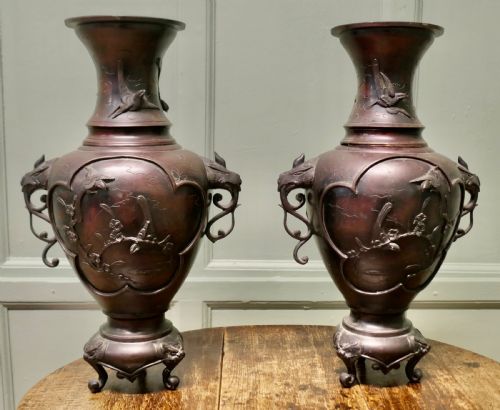
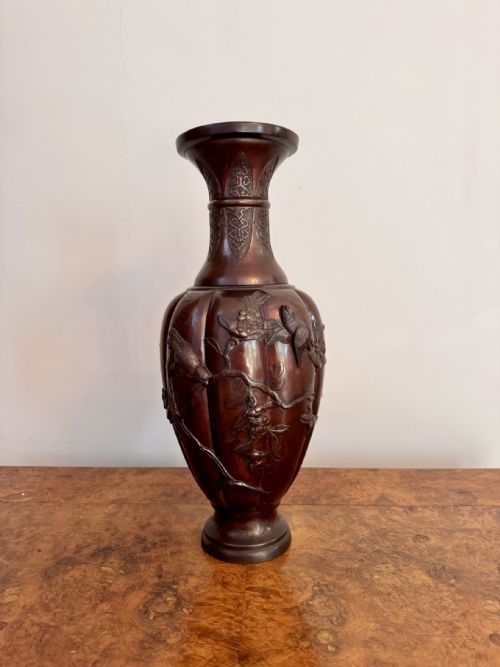
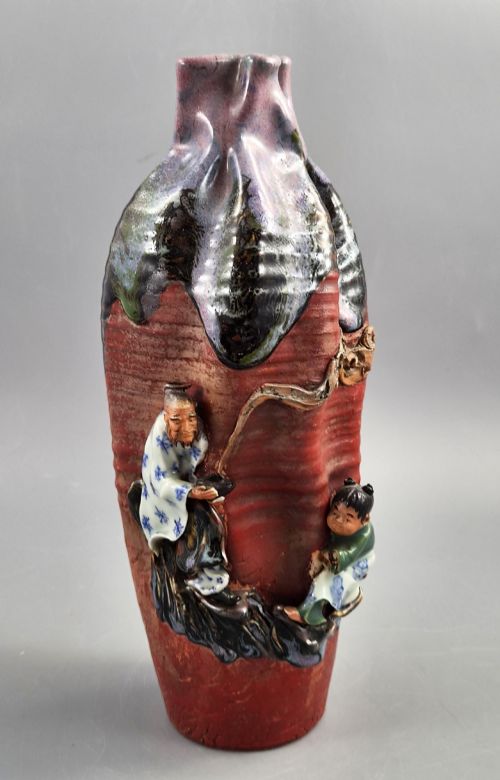
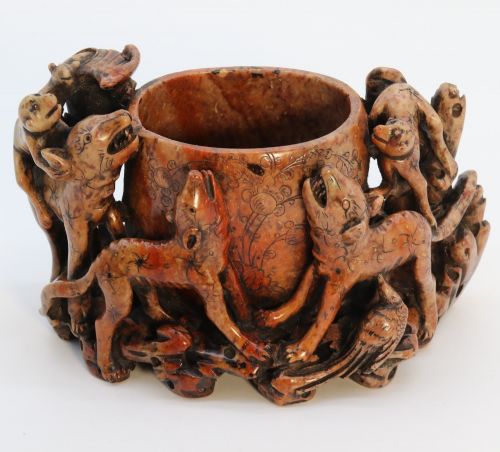
A high relief vase presents figures, animals or foliage that stand well clear of the vessel body, catching the light and creating deep shadows across the surface. When you search high relief vase on this page, you meet works primarily from the nineteenth century and the early decades of the twentieth century, originating in Japan and China alongside European workshops.
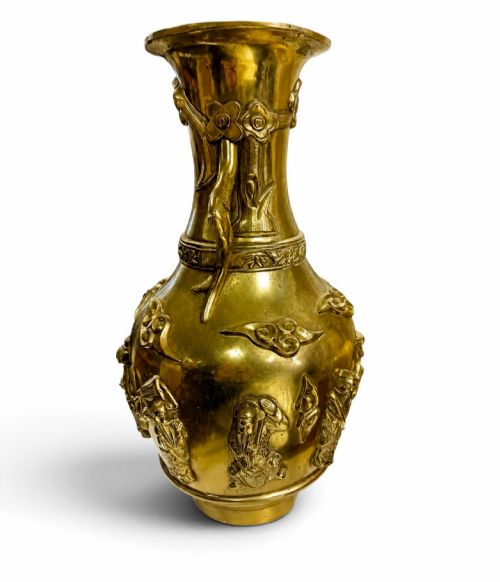
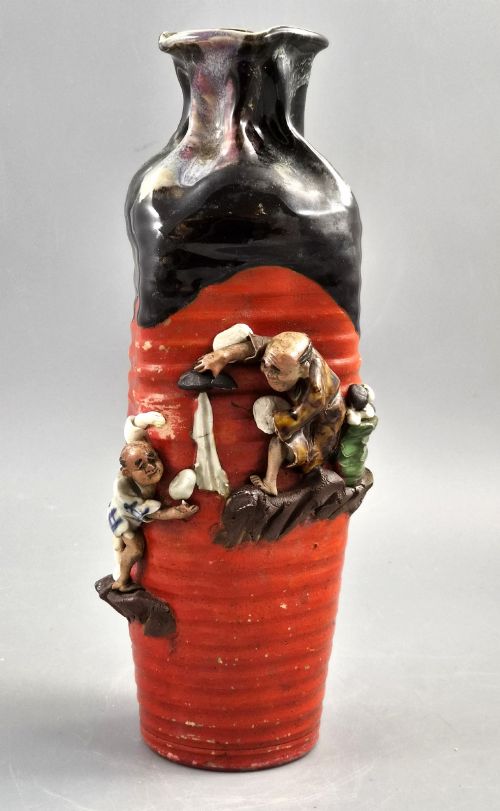
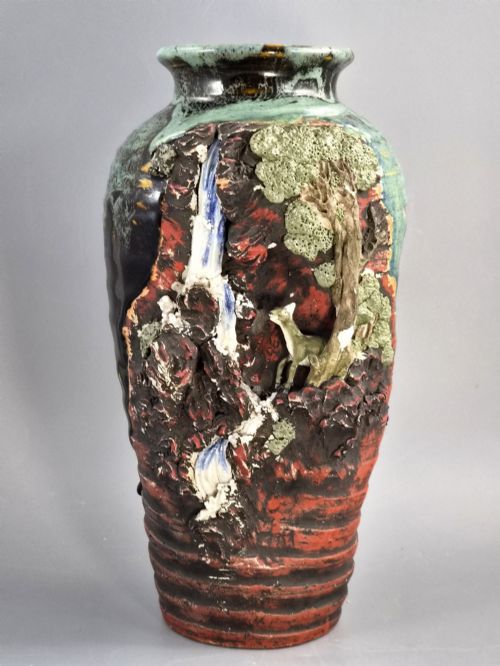
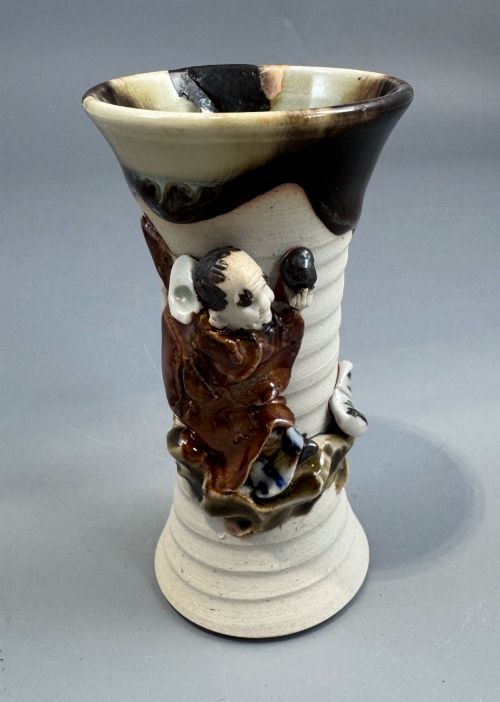
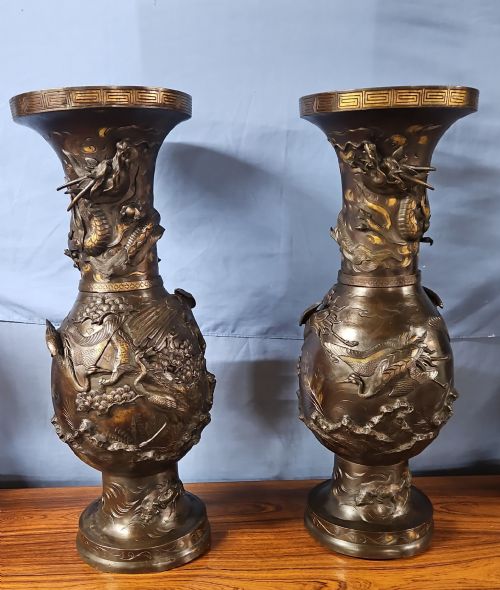
The Japanese examples, particularly from the Meiji period, dominate the selection with cast bronze, mixed metal work and distinctive Sumida Gawa stoneware featuring sculpted figures climbing the sides. Alongside these stand Chinese copper-alloy baluster vases and dragon vessels, plus occasional European pieces like Gallé cameo glass.
Forms range from modest fifteen-centimetre posy urns and brush pots up to monumental pairs standing nearly half a metre tall. These vessels served as centrepieces in Victorian interiors and continue to anchor modern rooms through their sculptural weight and textured detail.
How they were made
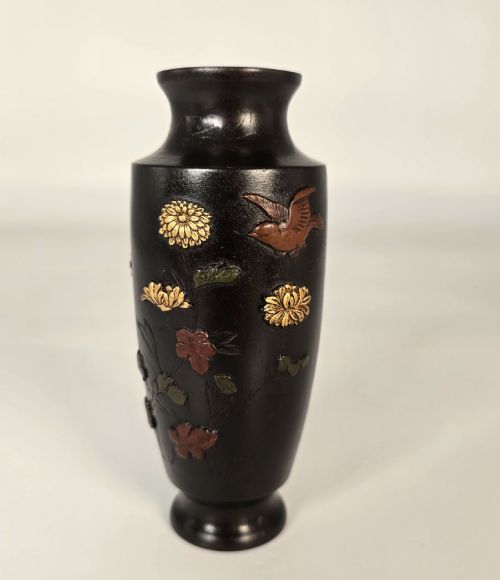
Bronze and copper alloys dominate the construction, cast and hand-finished with meticulous chiselling to define feathers, scales and robes before the application of patination or gold inlay. Mixed metal techniques bring contrasting tones of copper, brass and silver into the raised design.
Stoneware versions rely on thick flambé glazes and applied modelled elements, where potters shaped figures separately and attached them to the wet body before firing. Cameo glass pieces utilise multiple layers blown together and acid-etched or wheel-carved until the raised floral motif emerges in sharp contrast.
Signatures and base marks are frequently cast or incised directly into the metal or ceramic during creation, identifying the foundry, potter or workshop responsible for the piece.
Periods represented include the Meiji and Qing dynasties alongside Victorian and Art Nouveau aesthetics.
What varies in quality
The distinction between ordinary production and exceptional work lies in the depth and undercut of the modelling, where superior pieces show limbs and drapery standing entirely free from the vessel wall rather than simply bulging outward. Crisper chiselling in the metalwork and more subtle gradation in patinas separate master foundry output from standard commercial output.
Completeness of pairs and the preservation of original patination or complex glaze effects dictate collector standing. Signed works by documented makers command greater attention due to the assured proportion and refined detailing inherent in their creation.
Ban-ni·Inoue Ryōsai·Genryusai Seiya·Ryōsai·Galle
The High Relief Vase Glossary
- Meiji Period
- The era in Japanese history spanning from 1868 to 1912, noted in these listings for ambitious bronze casting and sculptural ceramics. Works from this period often display extraordinary technical refinement.
- Sumida Gawa
- A style of Japanese pottery featuring heavy, dripping flambé glazes and highly modelled figures climbing the exterior. These vessels are instantly recognisable by their tactile, sculptural surfaces.
- Baluster
- A vase form with a rounded body that tapers toward a narrow neck and flares at the rim, resembling the shape of an architectural baluster. This silhouette provides a stable base for heavy relief ornament.
- Patinated Bronze
- Metal treated with chemicals and heat to produce a stable, decorative surface colour ranging from deep brown to rich green. The patination accentuates the contours of the raised decoration.
- Cameo Glass
- Glass vessels created by fusing layers of different colours and carving away the exterior layer to leave a raised design. This technique allows light to pass through the background while the motif remains opaque.
High Relief Vase: Frequently Asked Questions
What materials are high relief vases made from?
The listings show a strong concentration of bronze and copper alloys, alongside stoneware, brass and occasional glass examples.
Surface treatments include gold inlay, enamel and patinated finishes that enhance the three-dimensional ornament.
Are these vases usually found in pairs?
Many of the bronze and ceramic listings appear as matched pairs, which were originally intended for display on mantelpieces or pedestals in Victorian interiors.
Single vessels also appear frequently across both Asian and European origins.
How do I identify a Meiji period bronze vase?
Meiji period bronzes are characterised by dense, heavy casting with deeply undercut relief depicting dragons, immortals, birds and floral sprays. Many pieces bear artist signatures or foundry marks on the base.
The period spans from the late nineteenth into the early twentieth century.
What is Sumida Gawa pottery?
Sumida Gawa refers to Japanese stoneware vessels featuring thick, runny flambé glazes and applied sculptural figures such as sages and karako. Inoue Ryōsai and Ban-ni are among the makers associated with this style.
The pieces have a distinctly tactile surface where figures climb across the glazed body.
How should I display a heavy bronze vase?
Because many of these vessels weigh several kilograms, they require sturdy furniture or dedicated stands that can support their considerable mass safely.
Positioning them where side lighting can catch the raised relief work allows the details of the metalwork to stand out.