
Bronze Decorative Urn
A bronze decorative urn brings neoclassical presence and disciplined weight to a room, uniting classical form with the rich textures of patinated metal and stone.
Bronze Decorative Urn
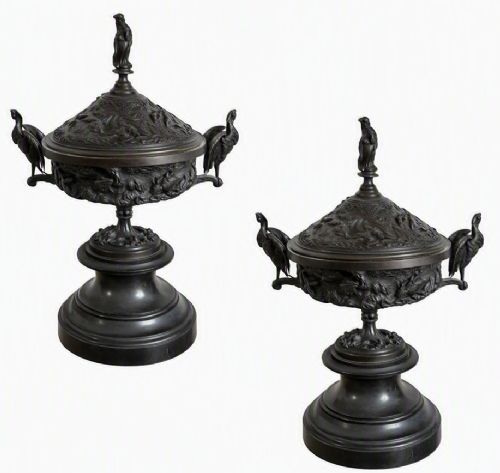
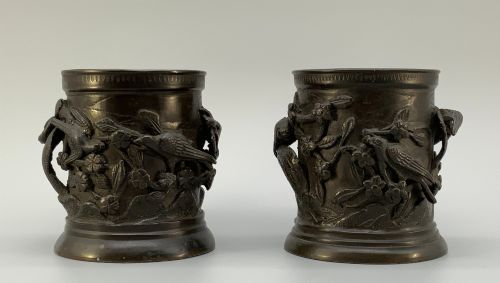
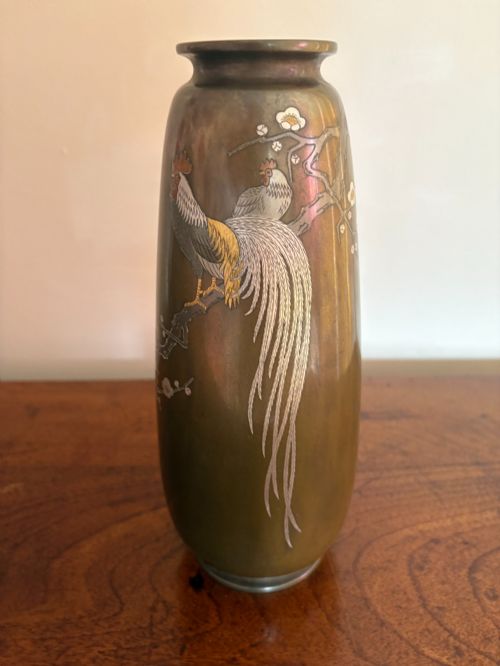
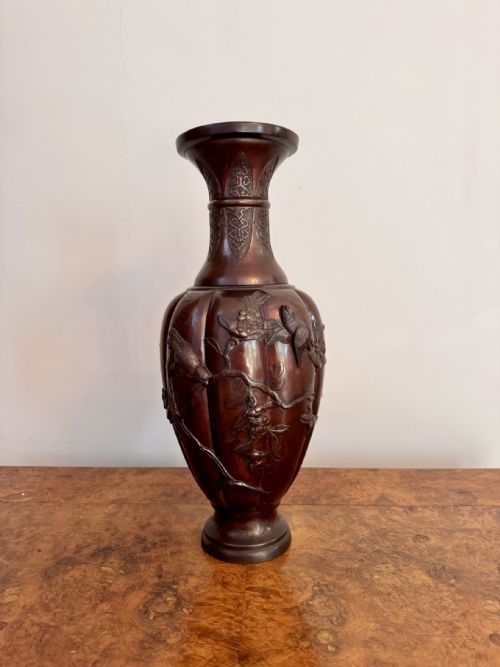
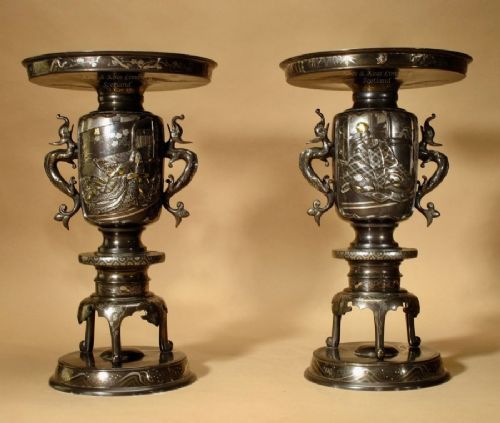
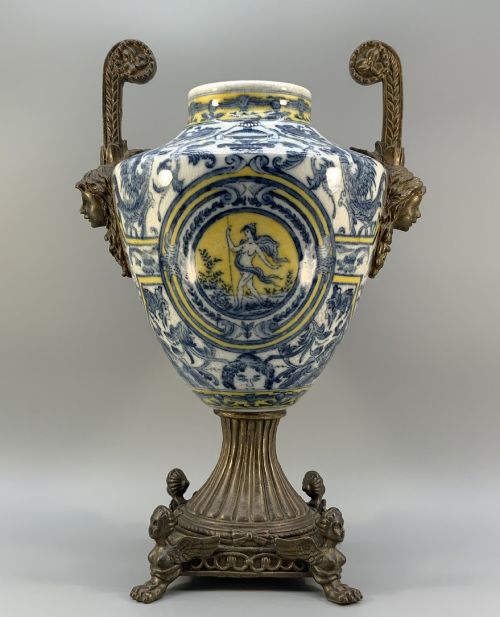
A bronze decorative urn typically takes the form of a classical vessel, a grand tour souvenir, or an Asian export object rooted in the nineteenth century. These objects function primarily as visual centerpieces rather than utilitarian vessels, drawing heavily on neoclassical, French Empire, and Meiji period vocabularies.
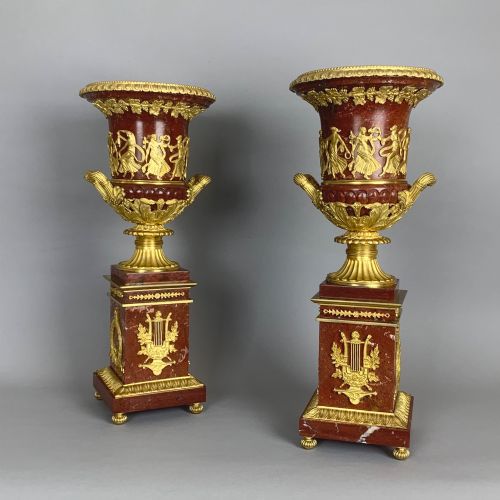
The version most commonly encountered on this page is the nineteenth-century French or Japanese creation, frequently paired with marble pedestals, ormolu mounts, or intricate enamel work. Such pieces channel classical antiquity through the aesthetic lenses of the Victorian era, Louis XVI revival, and Qing dynasty tastes.
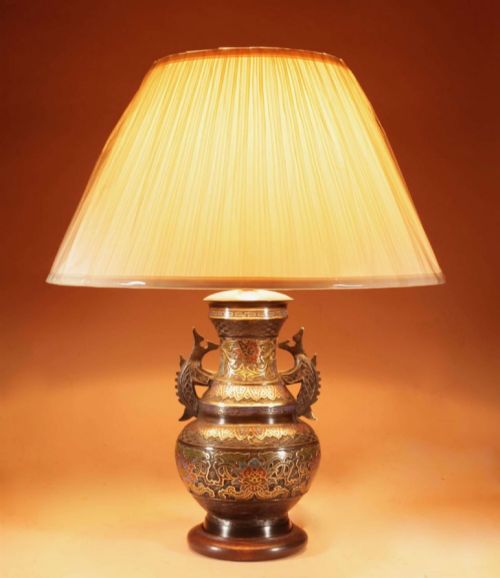
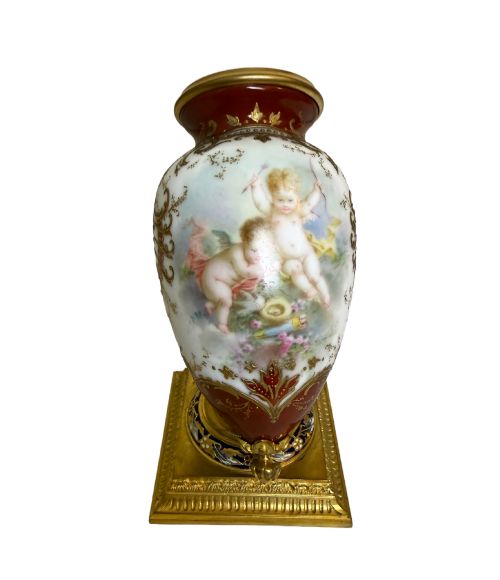
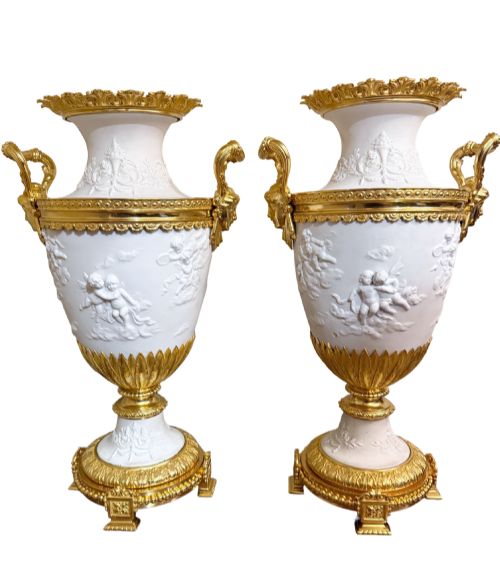
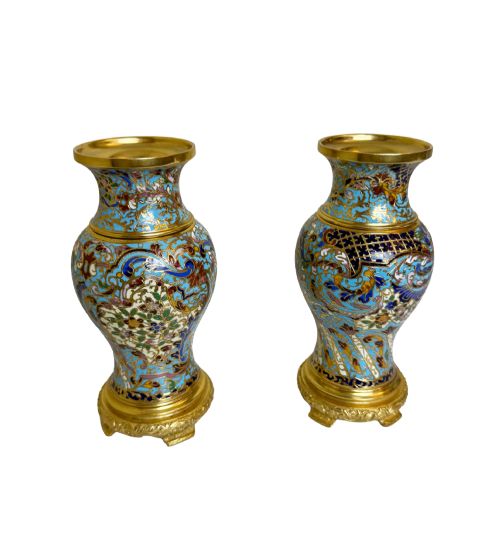
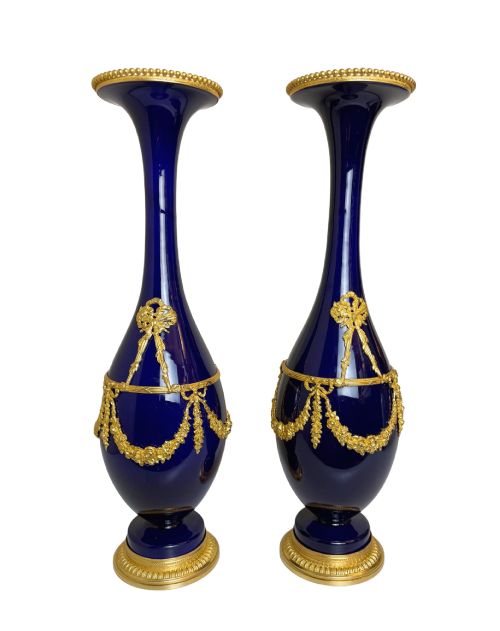
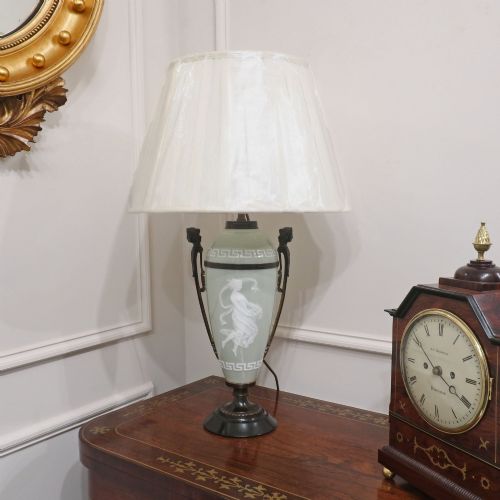
The selection ranges from grand tour reductions of antique monuments like the Warwick vase to champlevé-decorated table lamps and porcelain bodies trimmed with gilt bronze. Buyers encounter these forms as single display objects, matched pairs, or functional vessels adapted for interior illumination.
Materials and construction methods
Makers shaped these vessels using cast bronze, copper alloy, and patinated or gilt metal surfaces, frequently combining them with contrasting natural materials. White and blue porcelain, Limoges ceramics, cloisonné enamel, and dense stones like Siena marble and green onyx provide structural bases and contrasting colour fields.
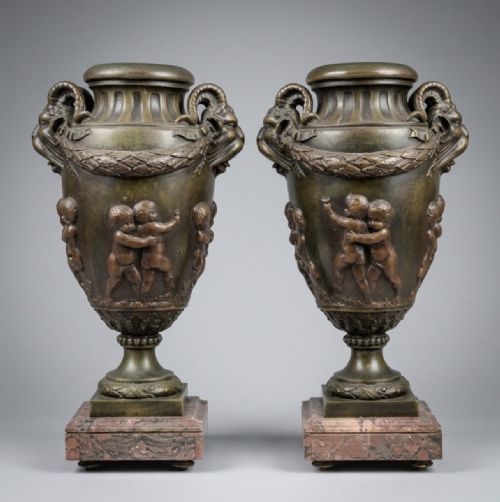
Surface enrichment relied on meticulous hand-finishing techniques, including fire-gilding to create ormolu, champlevé enamel detailing, and high-relief casting. Artisans integrated cast components such as ram's head masks and putti directly into the metal mounts, securing them to stone pedestals with threaded pins and brass screws.
Bronze Decorative Urn Retail Price Guide 2026
Typical asking prices for bronze decorative urn among the pieces listed under this phrase on Sellingantiques today, from the lower quarter to the upper quarter. They describe what is for sale here now, not the wider market.
Daoist immortals and Bacchic putti occasionally share shelf space within the same catalogue.
Distinctions in craftsmanship and design
Quality reveals itself in the crispness of the cast ornamentation and the depth of the chased details, where sharp relief work on figures and foliage separates superior workshops from routine production. The fidelity of grand tour reductions to their ancient prototypes dictates the aesthetic success of neoclassical models.
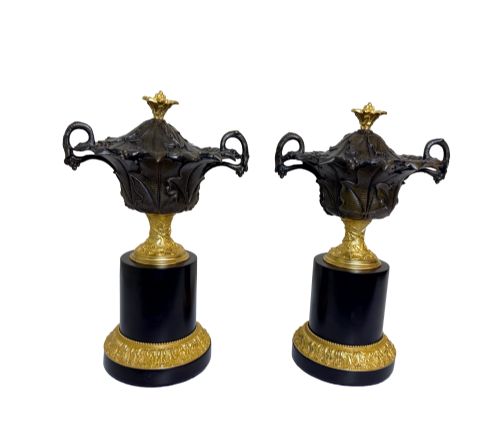
The harmonious integration of disparate elements, such as the exact alignment of gilt bronze mounts to porcelain bodies and the selective use of fire gilding against patinated surfaces, governs the visual authority of the piece. Heavier gauge metalwork and substantial marble or onyx bases provide both physical stability and a more convincing architectural presence.
KANASAWA
The Bronze Decorative Urn Glossary
- Ormolu
- Gilt bronze created by applying a finely ground high-carat gold-mercury amalgam to a bronze object before firing. This technique produces a durable, rich golden surface typical of French decorative arts.
- Champlevé
- An enamelling technique where troughs or cells are hollowed out of the metal surface and filled with vitreous enamel powder before firing. The resulting coloured patterns sit flush with the surrounding bronze borders.
- Tazza
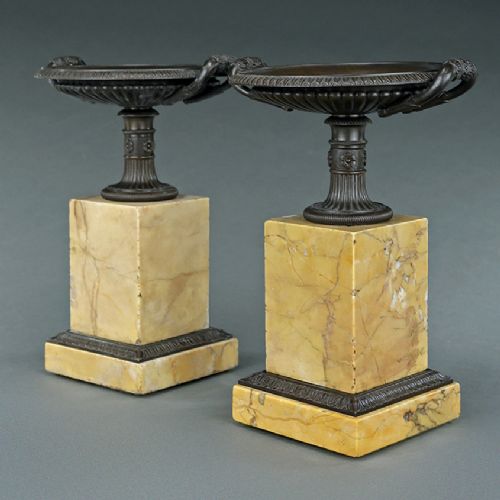
- A shallow saucer-like vessel or cup mounted on a stem and foot, originating in classical antiquity. Nineteenth-century examples often combine bronze bowls with marble pedestals to serve as decorative centerpieces.
- Grand Tour
- A cultural journey undertaken by wealthy young Europeans to study classical antiquities, inspiring the production of miniature bronze vases and urns for home display. These souvenir pieces replicate famous Roman and Greek monuments.
- Spelter
- A zinc alloy frequently used as a cost-effective substitute for bronze in nineteenth-century decorative metalwork. It is typically given a bronze-like surface finish to mimic heavier copper alloys.
Bronze Decorative Urn: Frequently Asked Questions
What is a grand tour urn?
A grand tour urn is a nineteenth-century reduction of a famous classical antiquity, such as the Warwick or Albani vase, collected by travellers returning from Italy.
These bronze and marble objects were produced by European workshops to bring the prestige of classical archaeology into nineteenth-century drawing rooms.
How do I distinguish bronze from spelter?
Bronze offers a heavier weight, greater tensile strength, and a deeper, more resonant metallic structure than zinc-based spelter alloys.
Spelter items often display a lighter feel and may show surface flaking of their applied bronze-coloured finish where wear has occurred.
What is the difference between an urn and a vase?
Urns traditionally feature a covered or uncovered vessel form mounted on a distinct pedestal foot, often incorporating classical handles such as masks or loops.
Vases encompass a broader category of open-topped display vessels designed for holding flowers or standing alone as sculptural objects.
How should I clean a gilt bronze mount?
Dust gilt bronze mounts gently with a soft, dry bristle brush to prevent the accumulation of grit within recessed chased details.
Avoid commercial metal polishes entirely, as abrasive liquids will strip away the historic ormolu surface and expose the base metal underneath.