




Bronze Bird Vase
A bronze bird vase brings together animal ornamentation and cast metalwork, predominantly rooted in nineteenth-century Japanese Meiji production.
Bronze Bird Vase
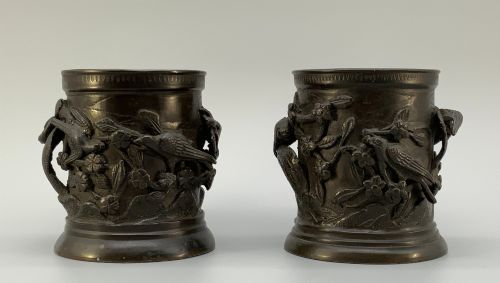
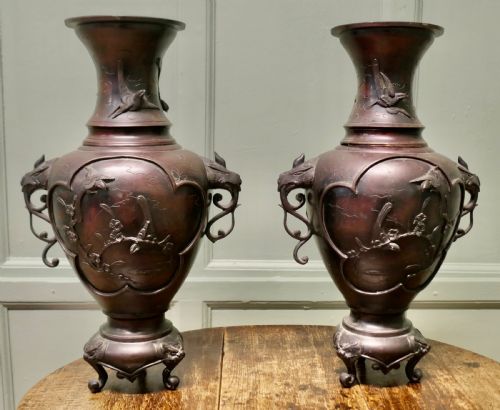
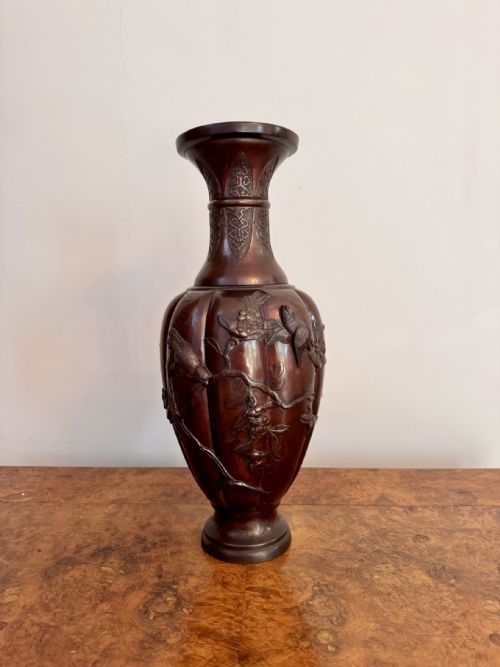
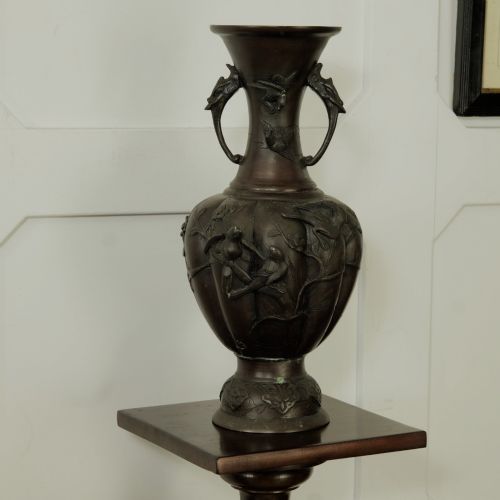
When searching for a bronze bird vase, collectors encounter vessel forms created primarily during the nineteenth century and the Meiji period. These objects span decorative stem vases, baluster urns, and large twin-handled presentation pieces decorated with avian motifs.
The majority of items originate from Japanese workshops, alongside examples from Chinese and European makers. They function as ornamental vessels, often incorporating raised detail depicting birds and blossom.
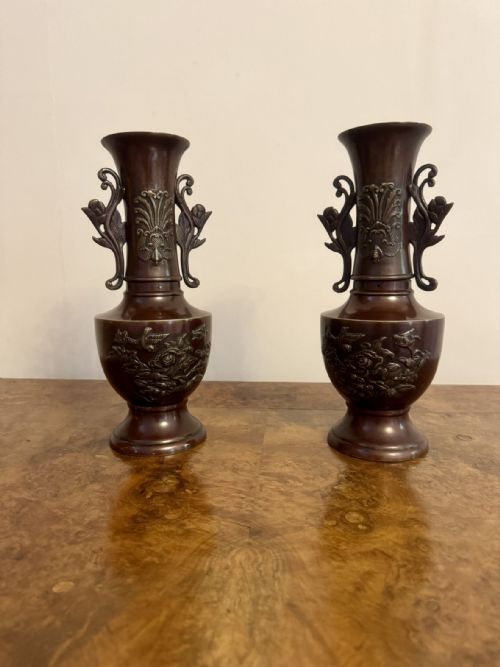
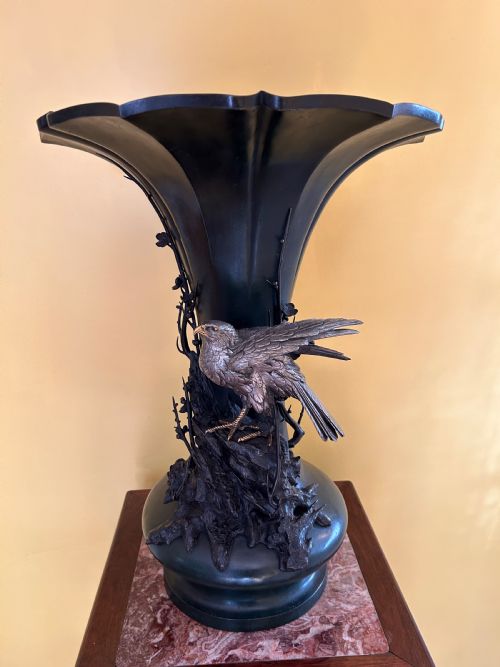
Vessels on this page range from small cabinet pieces measuring fifteen centimetres to substantial seventeen-inch urns and jardinieres. Pairs designed for mantel settings appear frequently alongside single decorative examples.
How they were made
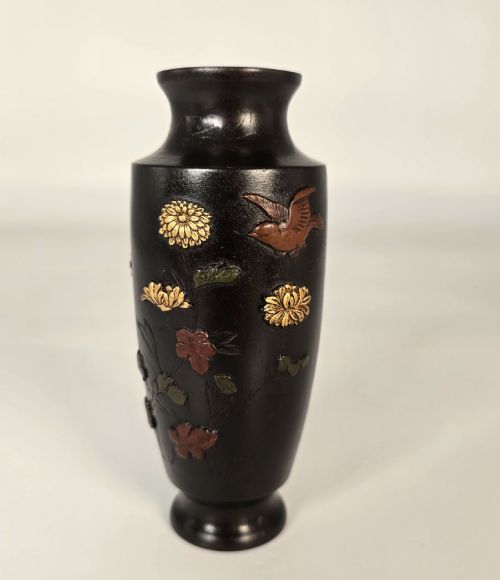
Artisans utilised bronze, patinated bronze, and mixed metal alloys, occasionally integrating gold inlay, brass, and enamel details. Surfaces were cast and finished to produce textured backgrounds against which raised avian and floral elements stand out.
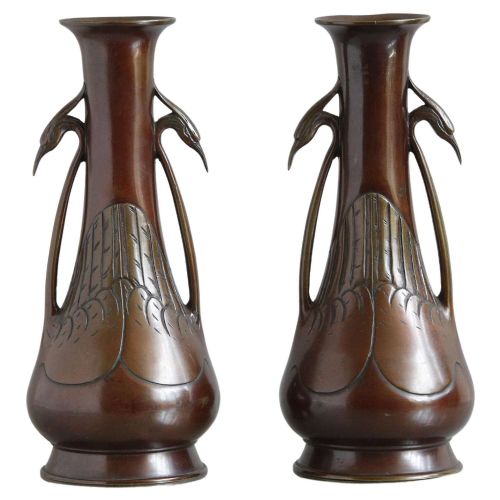
Handles often took the form of sculpted birds, such as egrets, integrated directly into the body or applied during assembly. Mixed metal techniques allowed makers to introduce contrasting tones to the plumage and foliage.
Object forms include baluster urns, stem vases, and jardiniere planters decorated with raised bird and blossom motifs.
What varies in quality
Quality rests in the precision of the casting and the depth of the metalwork relief. Finer examples display meticulous rendering of feathers, flora, and handles without surface blurring.
The sophistication of the mixed metal inlay and the richness of the dark patina distinguish superior production from standard decorative ware. Heavier, well-balanced proportions indicate superior craftsmanship in larger urns and vases.
The Bronze Bird Vase Glossary
- Meiji Period
- The era in Japanese history spanning from 1868 to 1912. Metalwork from this timeframe is noted for intricate casting and naturalistic decoration.
- Patinated Bronze
- Bronze treated with chemical solutions to produce a specific surface colour or aged finish. This process highlights relief details on avian ornamentation.
- Mixed Metal
- A decorative technique combining bronze with contrasting metals such as copper, brass, and gold inlay. It creates multicoloured visual effects across the vessel body.
- Baluster Urn
- A vase form characterised by a bulbous lower body tapering to a narrow neck and flared rim. This shape frequently serves as the foundation for bird and blossom ornamentation.
- Cloisonné
- An enamelwork technique where wires are soldered to a metal base to create compartments filled with coloured paste. Examples on this page apply this method alongside traditional bronze casting.
Bronze Bird Vase: Frequently Asked Questions
What periods do these vases come from?
The pieces originate predominantly from the nineteenth century, with a strong representation from the Meiji period in Japan. Victorian and Edwardian dates also appear frequently in the listings.
Production spans from the late nineteenth century into the early twentieth century, reflecting traditional manufacturing periods in East Asian metalwork.
How were bird motifs incorporated into the metal?
Avian decoration appears either as raised relief cast directly onto the vase body or sculpted three-dimensionally as handles. Egrets and general bird and blossom scenes are common.
Makers utilised mixed metal techniques and gold inlay to accentuate the plumage and differentiate the birds from the surrounding bronze surface.
Are these vases usually found in pairs?
Many listings feature matching pairs designed for symmetrical display on mantelpieces or altars. Single vessels also appear regularly across different sizes.
Pairs often share identical cast decoration, though individual dimensions and weights can vary slightly due to the manufacturing process.
What materials are used besides bronze?
While bronze forms the primary structure, listings include patinated bronze, brass, copper, and mixed metal compositions. Enamel and gold inlay are also present on select decorative surfaces.
Some examples incorporate cloisonné work alongside cast bronze elements to add colour and texture to the floral designs.