
Pair of Bronze Urns
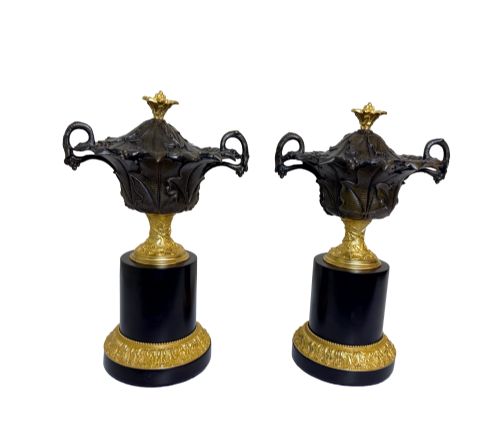
These heavy, symmetrical pair of bronze urns bring classical dignity and ornamental weight to a room.
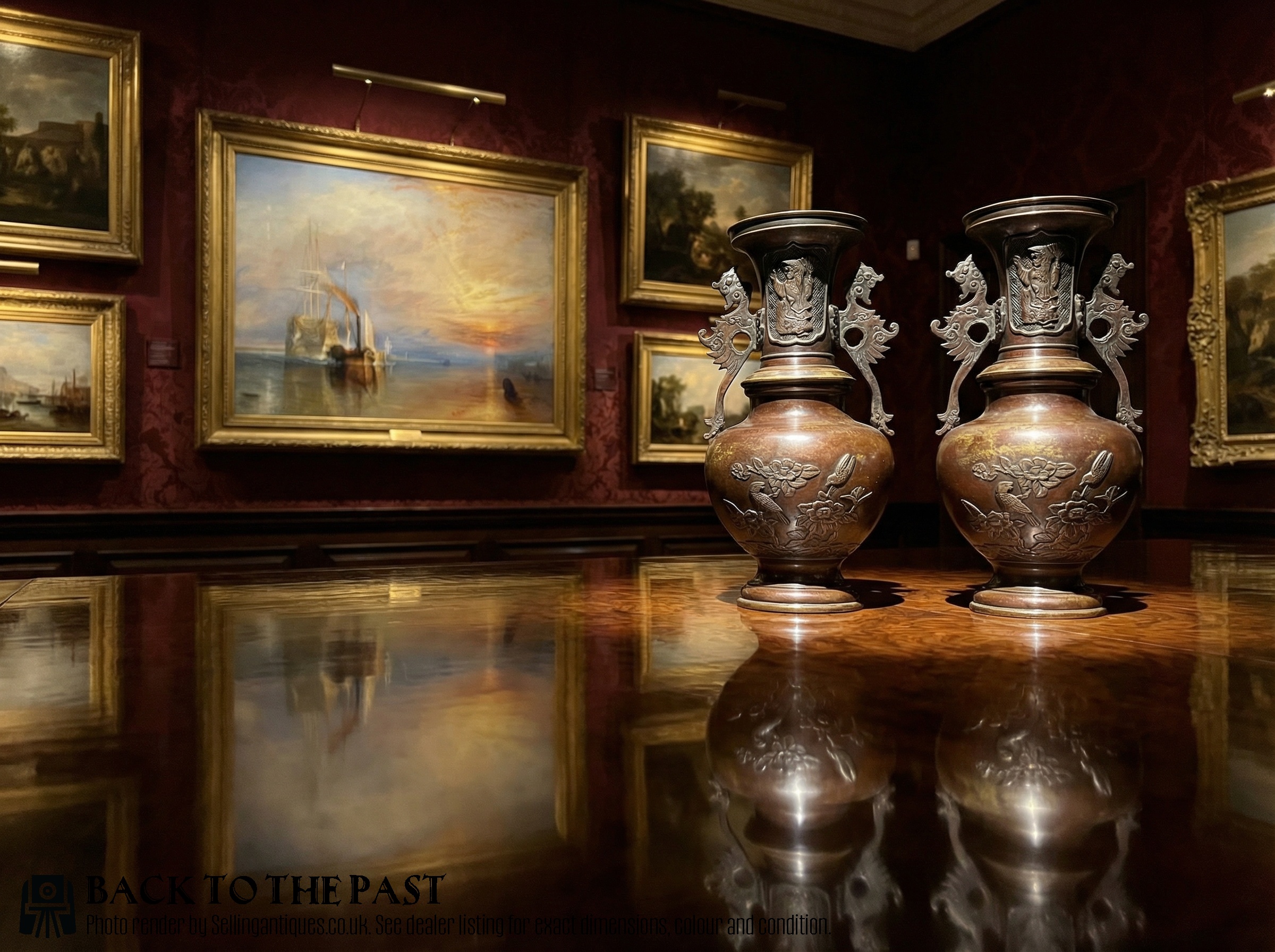
What a pair of bronze urns offers
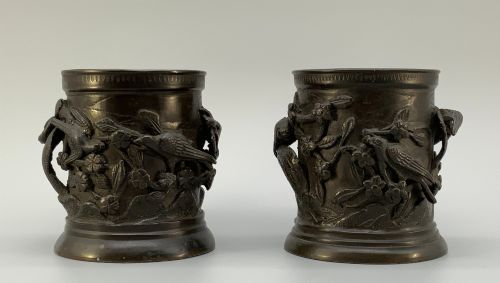
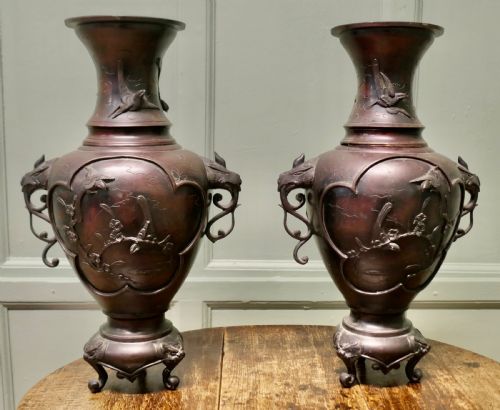
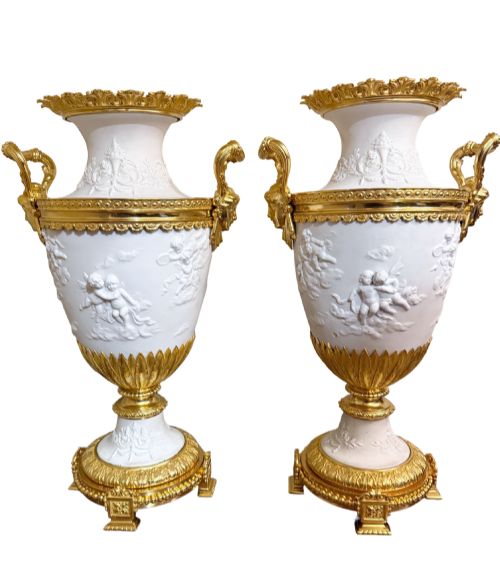
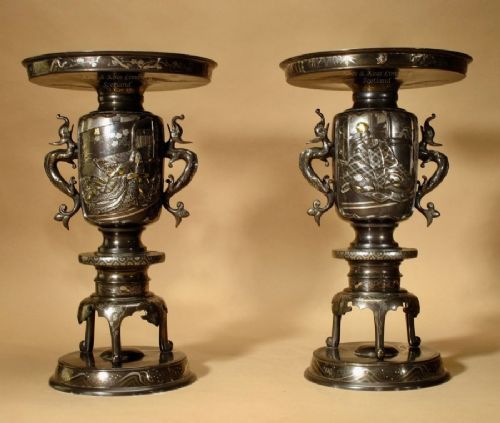
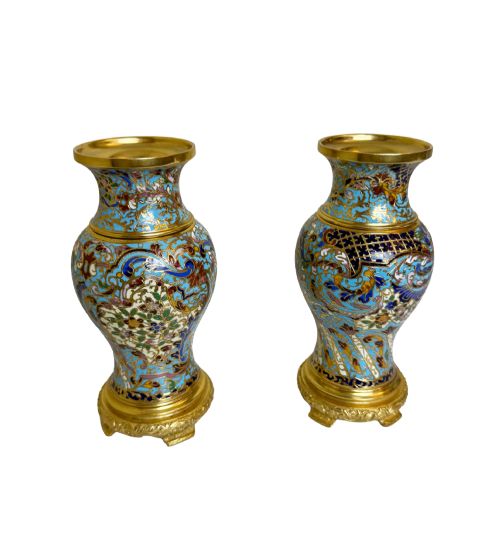
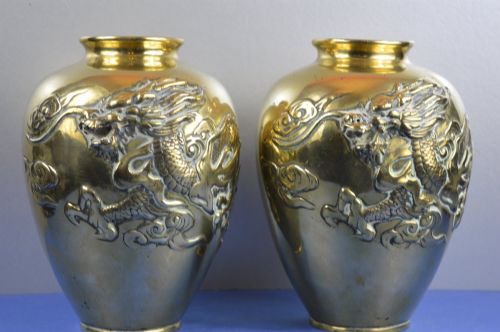
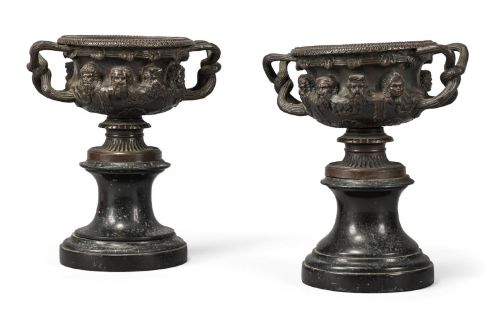
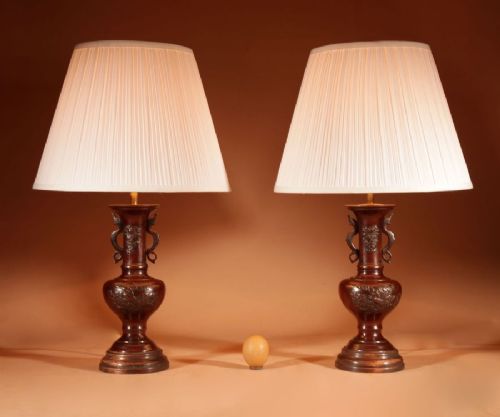
A pair of bronze urns comprises matching decorative vessels designed to sit symmetrically as mantel ornaments, table centrepieces or architectural accents. When searching for a pair of bronze urns, a buyer encounters forms ranging from classical campana shapes and Grand Tour souvenirs to Japanese Meiji period lidded vases.
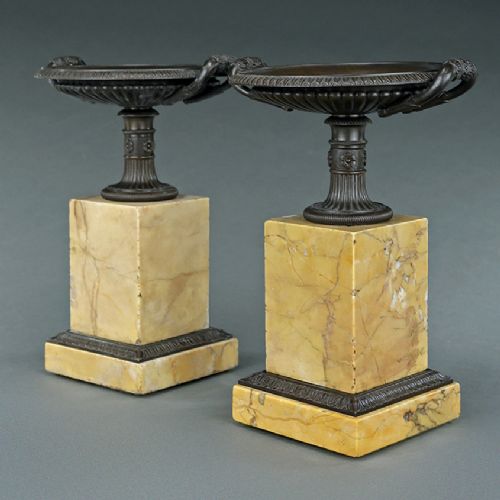
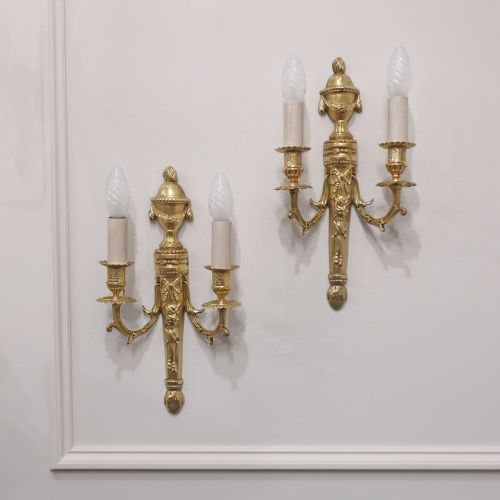
The materials span plain patinated bronze, gilt bronze, and combinations with marble plinths, porcelain or stone. Origins stretch from English Regency and French neoclassical workshops to Japanese Meiji and Edo periods.
Victorian and nineteenth-century examples dominate the selections, offering classical inspiration derived from antiquity, French palace designs and Italian archaeological finds.
Materials and construction
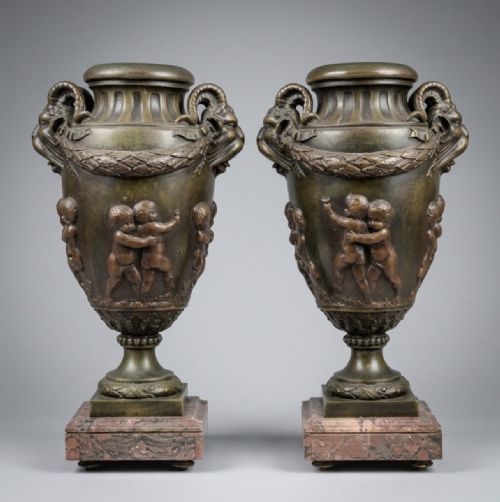
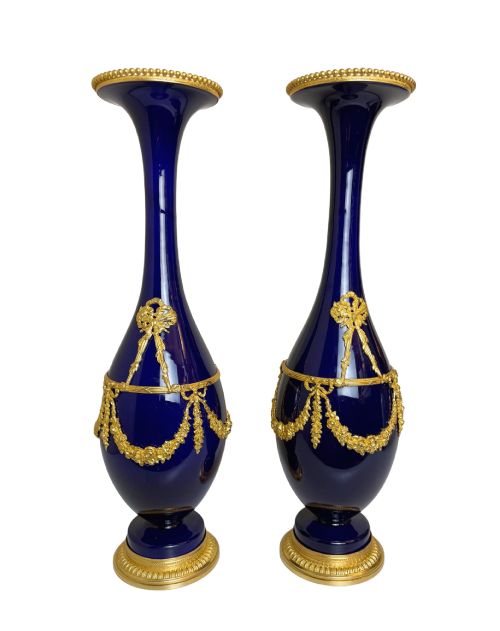
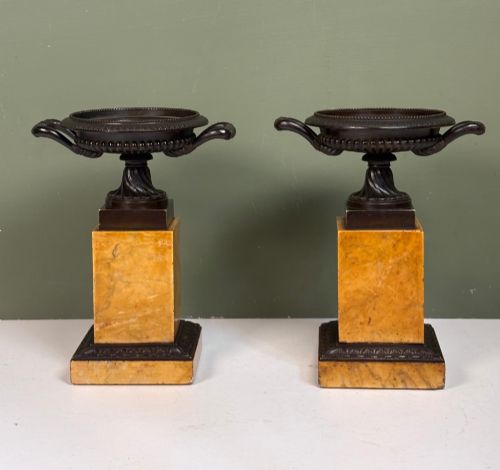
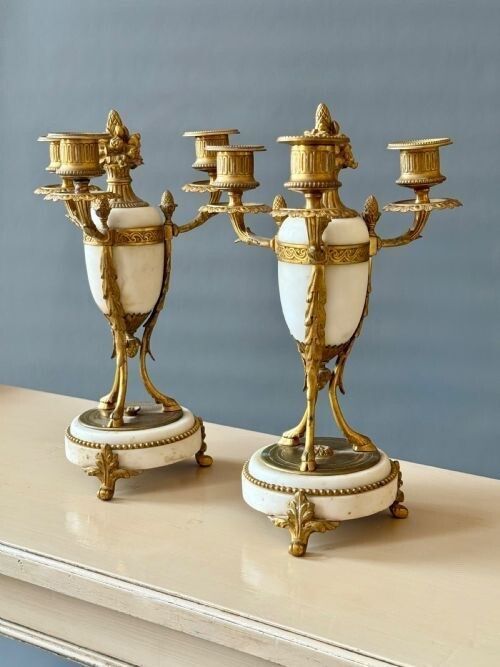
Craftsmen cast these vessels in bronze, utilising both patinated finishes and fire-gilded ormolu or gilt bronze highlights. Many examples incorporate contrasting materials, pairing dark or patinated bronze with white, green or black marble bases, siena marble plinths and porcelain bodies.
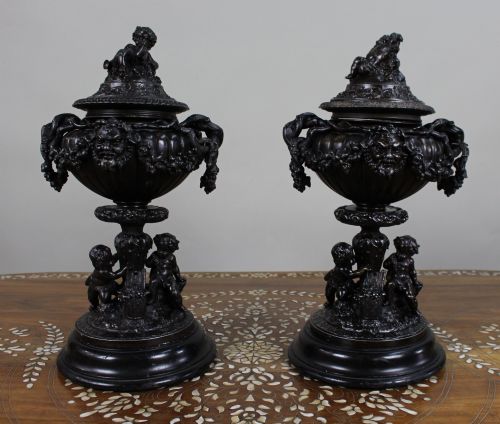
Casting methods produced hollow vessels, twin-handled vases, lidded urns and cassolettes, often finished with applied decorative friezes, classical handles and bronze mounts. Surface detail includes crisp chasing, relief work and patination ranging from deep black to warm brown.
Retail Price Guide 2026
Typical UK retail prices for pair of bronze urns, calculated from the Sellingantiques database of over a million retail prices indexed since 2003. This retail price guide relies exclusively on Sellingantiques data; no external sources or auction records are used, so the figures do not describe the wider market.
One historical pair immortalises Scottish literary figures Sir Walter Scott and Robert Burns cast in gilt bronze on marble bases.
What separates the finest examples
The distinction between ordinary production and superior craftsmanship lies in the crispness of the casting and the precision of the chasing. Finer examples display deeply undercut foliage, sharply defined classical figures and meticulous surface finishing that rewards close inspection.
Material integration also dictates status, where solid marble bases, heavy cast mounts and fire-gilt ormolu surfaces elevate a pair far above simple patinated casts. The weight of the metal and the harmony of the matching pair determine the overall presence.
Claude Ballin·L. Moreau
The Pair of Bronze Urns Glossary
- Campana
- A bell-shaped vessel with a flared rim and foot, commonly associated with classical antiquity and nineteenth-century decorative urns.
- Ormolu
- Finely ground high-carat gold applied to bronze through a mercury amalgamation process, creating a durable golden finish seen on French neoclassical mounts.
- Grand Tour
- A traditional trip through Europe undertaken by upper-class scholars and collectors who purchased classical bronzes and architectural models as souvenirs.
- Meiji
- A period in Japanese history spanning from eighteen sixty-eight to nineteen twelve, known for intricate bronze casting and decorative metalwork exported to Western markets.
- Patination
- The surface colour and texture developed naturally over time or applied artificially by chemical treatment on bronze.
Frequently Asked Questions
Where should I display a pair of bronze urns?
These matching vessels work best displayed symmetrically on a mantelpiece, sideboard or heavy console table where their weight and form command attention.
Because many sit on marble plinths, ensure the supporting surface is stable enough to bear the substantial metal and stone weight.
How do I distinguish French neoclassical urns from Japanese Meiji pieces?
French neoclassical urns typically draw inspiration from Roman architecture, featuring campana shapes, ormolu mounts and marble bases.
Japanese Meiji pieces often showcase intricate patinated bronze work, lidded designs and distinct decorative motifs rooted in Eastern traditions.
What does Grand Tour style mean for these urns?
Grand Tour items are nineteenth-century European souvenirs modelled after classical antiquities seen by travellers visiting Italy and Greece.
These pieces capture the aesthetic of ancient ruins and classical sculpture, cast in bronze for domestic display.
How should I clean patinated bronze and gilt surfaces?
Dust bronze urns gently with a soft, dry cloth to protect the historic patination and delicate gilt details.
Avoid commercial metal polishes, water and abrasive cleaners, which can strip away the original finish and historical surface character.